metal
Distorted guitars, crazy rhythms, dense bass, and insane vocals. What it means to be a metal head.
The Secret Pain Robin Williams Hid Behind Every Laugh
He was the man who brought joy into millions of homes. The genie who made us giggle. The teacher who told us to seize the day. The doctor who healed with humor. Robin Williams was all of that—and more. But beneath the smiles, the wild improvisations, and the unforgettable characters… was a man hiding his own pain. --- The Man Who Gave the World Joy Robin McLaurin Williams was born in 1951 in Chicago, Illinois. He was shy as a child, often playing alone with toy soldiers, inventing voices for them, creating worlds. That creativity would one day launch him into stardom. But he didn’t just become famous—he became unforgettable. From Mork & Mindy to Good Morning, Vietnam, from Dead Poets Society to Mrs. Doubtfire, Robin had a unique ability to make you laugh one second—and cry the next. He wasn’t just funny. He was honest. Real. Vulnerable. And maybe that’s why we loved him so much. --- The Mask of Laughter What the world didn’t know—what most people couldn’t even guess—was that Robin Williams battled depression for years. He once said, “I think the saddest people always try their hardest to make people happy because they know what it feels like to feel absolutely worthless.” And he knew that feeling well. Despite his success, Robin often felt empty inside. He spoke openly about addiction—his struggles with alcohol and drugs in the early 1980s, and how comedy became a coping mechanism. The louder the audience laughed, the quieter his pain seemed to be. But pain doesn’t disappear. It waits. And eventually, it knocks again. --- The Quiet Acts of Kindness While fans adored him for his talent, those closest to him knew him for his heart. Robin didn’t just make people laugh—he made them feel loved. He had a rule written into his contracts that every film he worked on had to hire a certain number of homeless people. He regularly visited sick children in hospitals, always without cameras, always without fanfare. There’s a story of a fan whose terminally ill child loved Aladdin. Robin called the boy personally and spoke to him for 20 minutes in the Genie’s voice. The boy smiled for the first time in weeks. Robin hung up—and cried. --- The Final Role In his final years, Robin took on more serious roles—The Butler, Boulevard, The Angriest Man in Brooklyn. His performances had more gravity, more silence between the words. Looking back, you can see the sadness in his eyes. And then came the diagnosis. In 2014, Robin was diagnosed with Lewy body dementia—a rare, aggressive brain disease that affects memory, movement, and behavior. It is often misdiagnosed as Parkinson’s. Robin had both. He was losing his grip on reality. He was aware of what was happening. And he was terrified. His wife, Susan Schneider, later said, “It was not depression that killed Robin. It was the disease. Depression was just one of the many symptoms.” But Robin never let the world see that side. He kept smiling, kept joking, kept giving—until he no longer could. --- August 11, 2014 Robin Williams was found dead in his California home. The news broke hearts around the world. How could someone so full of life be gone? How could someone who brought laughter to millions die by suicide? It didn’t make sense. Until people learned the truth. The disease was destroying him. He was losing himself. But he didn’t want the world to see that version of him. In one of his final interviews, he said softly: “I’m not afraid to die. I just don’t want to leave this world in pain.” --- A Legacy Larger Than Comedy Robin Williams was more than a comedian. He was a healer, a teacher, a mirror for our own joy and sorrow. His characters taught us lessons that still echo today: In Dead Poets Society, he told us: “Carpe diem—seize the day.” In Good Will Hunting, he reminded us: “It’s not your fault.” In Patch Adams, he showed us that “laughter can heal the soul.” And maybe, just maybe, his greatest lesson was this: Even those who make the world laugh might be silently crying inside. --- Check on the “Funny One” We all know someone like Robin. The funny one. The loud one. The one who lifts everyone else up. Check on them. Sometimes the brightest smiles hide the deepest wounds. Sometimes the people who make you laugh are the ones who need kindness the most. --- If This Story Touched You… Please like, comment, and share it. Let’s keep Robin’s light alive—not just by remembering his roles, but by spreading his compassion. And if you’re struggling, know this: You’re not alone. You matter. And your story isn't over yet. ---
By Muhammad Riazabout a year ago in Beat
The Crazy Train of Life:
I was born in 1984. Two of my favorite uncles introduced my parents, and both of them were really into the music scene in Oregon (yes, connected to things like the Grateful Dead and the Cherry Poppin’ Daddies, for context). They were also very into wrestling. Often, both of these uncles, who were my favorites when I was a kid, would babysit me.
By Sai Marie Johnsonabout a year ago in Beat
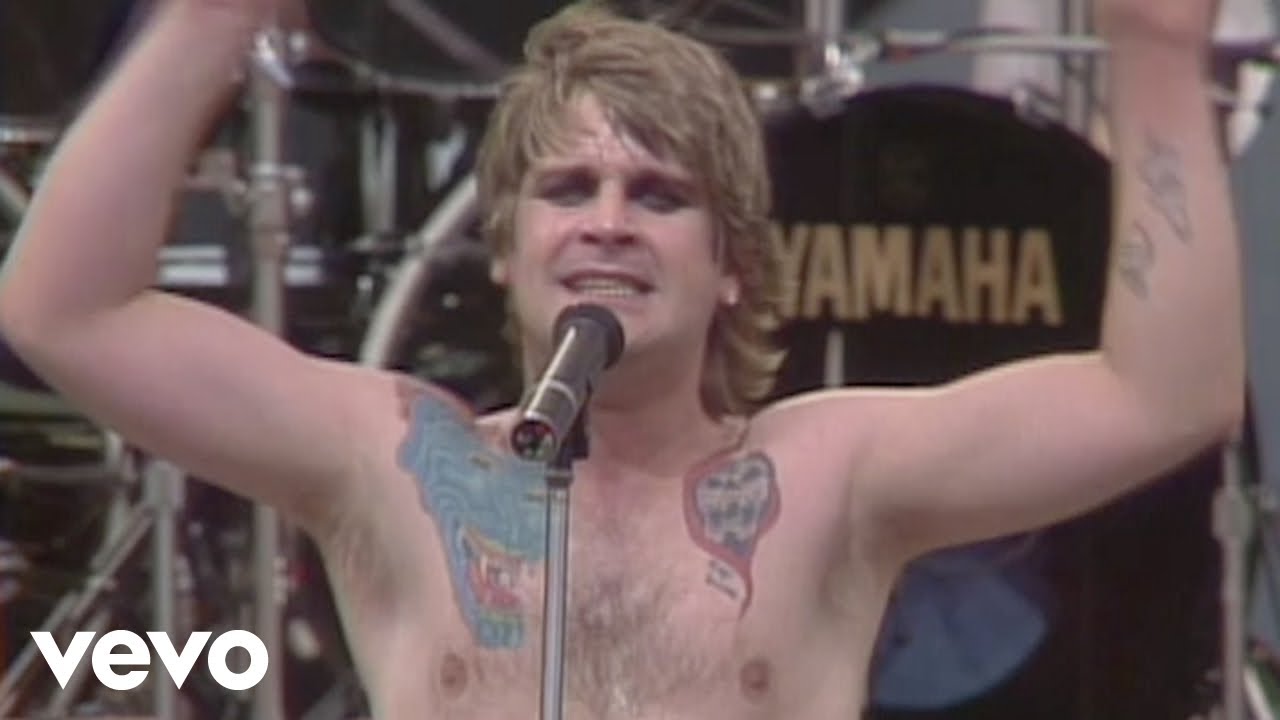
Louder Than Legends: Why Ozzy Osbourne and Black Sabbath Were More Influential Than The Beatles
When it comes to musical influence, The Beatles are often worshipped as untouchable gods—the Mount Olympus of rock and pop. Their melodies, mop-tops, and psychedelic studio wizardry are burned into music history. But let’s be real: for countless working musicians, especially those who actually plug in an amp and bleed calluses onto their fretboards, Ozzy Osbourne and Black Sabbath rewired the entire musical universe in ways The Beatles never could.
By Michael Phillipsabout a year ago in Beat