instruments
All about musical instruments, their tunes, and the people that play them.
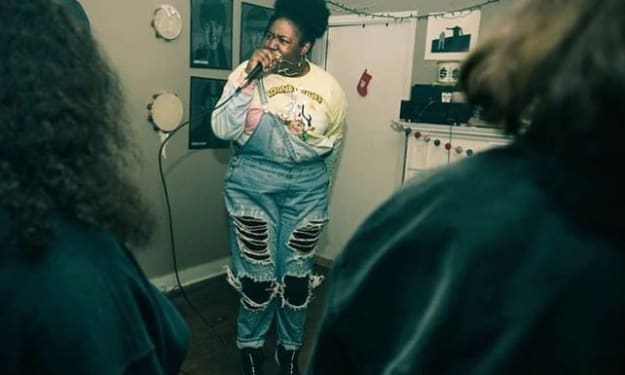
El Pablo 1x Ignites Memphis Music Scene
Memphis, TN – El Pablo 1x is back, and the music world is feeling the energy. Fresh off a feature on Fox and a Midwest tour with Bubba Startz, El Pablo 1x is not just performing—he’s leading a movement. With his roots deep in Memphis, family close, and community at the heart of everything he does, he’s turning every project into a high-voltage experience.
By Independent Indie Artist Radarabout a year ago in Beat
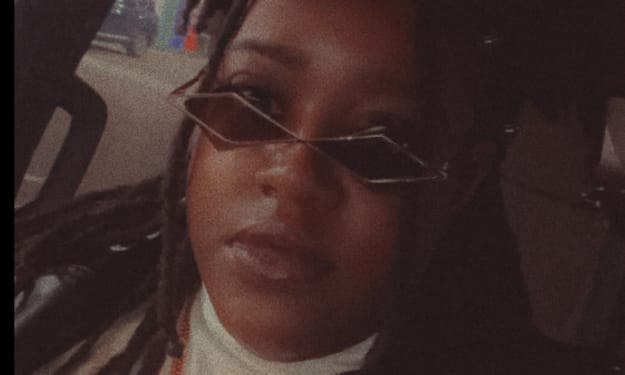
Breaking Barriers, Building Legacy: Moet Ro$e is A Rising Force
When it comes to artists who embody energy, passion, and vision, Moet Ro$e is proving herself to be a rising force you can’t ignore. From captivating performances to bold new partnerships, she is blazing her own trail in the music scene—and fans everywhere are taking notice.
By Independent Indie Artist Radarabout a year ago in Beat
Moet Ro$e Is Redefining Hip Hop and Soul on Her Own Terms
Moet Ro$e is more than an artist—she’s a movement in the making. With roots in gospel choirs and a foundation shaped by both discipline and faith, she has crafted a sound that transcends genre lines. Her music fuses the raw honesty of hip hop with the soul-stirring richness of gospel-inspired vocals, creating a style that is at once authentic, ambitious, and deeply resonant. From her early days directing choirs and DJing campus events to building a growing catalog supported by her label, Moet Ro$e has proven that she doesn’t just perform music—she embodies it. Every verse carries her story, every note echo resilience, and every stage she steps on becomes a space for connection.
By The Blacksheepkid Collective by: El Pablo 1xabout a year ago in Beat
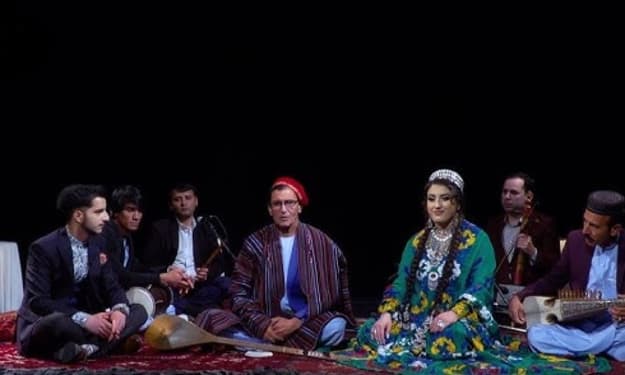
Afghan Music: Between Cultural Commonalities and Dependencies in the Heart of Asia
Afghan Music: Between Cultural Commonalities and Dependencies in the Heart of Asia Author: Professor Islamuddin Feroz, Former Professor of the Department of Music, Faculty of Fine Arts, Kabul University
By Prof. Islamuddin Ferozabout a year ago in Beat
Audio Visual Production: My Experience in Orlando. AI-Generated.
Audio visual production is more than just setting up microphones, speakers, and screens. From my experience, it is about creating an environment where sound, video, and lighting work together to deliver a clear and engaging experience. In Orlando, where events range from corporate conferences to concerts and private gatherings, professional audio visual services are essential.
By James Brownabout a year ago in Beat
d4vd: The Rise of David Anthony Burke, Beyond Rumors and Viral Searches
The internet moves fast. In the age of TikTok trends and overnight fame, artists like David Anthony Burke, better known as d4vd, have emerged as powerful voices in the music industry. But along with fame comes another side of online culture: viral misinformation.
By KAMRAN AHMADabout a year ago in Beat
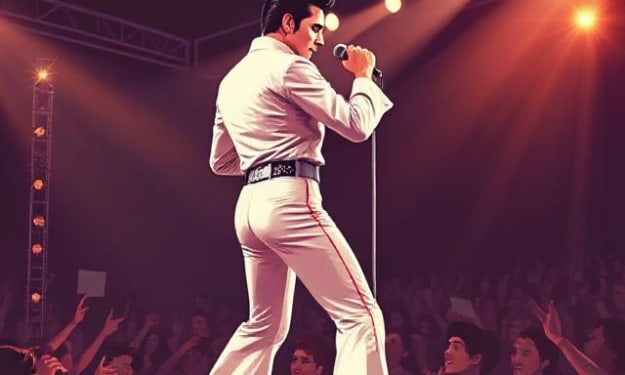
When Elvis Presley Shook the World with His First TV Performance
When Elvis Presley stepped onto the stage of The Milton Berle Show on June 5, 1956, America wasn’t ready for what was about to happen. The world had seen singers before. They had seen dancers before. But they had never seen someone like Elvis Presley. With one song, “Hound Dog,” and one set of electrifying moves, Elvis didn’t just perform — he ignited a cultural revolution. That night, Elvis didn’t just sing. He shook. And with every shake of his hips, he transformed the future of rock and roll, shocked conservative America, and defined what it meant to be a superstar. --- The Shockwave of the Shake Elvis had already been rising in popularity with hits like “Heartbreak Hotel,” but television was a new battlefield. When the cameras focused on him that night, millions of households witnessed a young man who radiated energy, charisma, and rebellion. As he sang, his legs shook, his body swayed, and his hips moved in ways that no one had seen on national TV before. For fans, it was thrilling. For critics, it was scandalous. Parents gasped. Teenagers screamed. Television censors panicked. But Elvis? He just kept on singing. The audience wasn’t just listening — they were experiencing a performance that felt dangerous and alive. It was music, movement, and raw emotion rolled into one. Elvis was no longer just another singer; he had become a cultural earthquake. --- Behind the Move: The Making of a Legend Elvis hadn’t planned to shock the world — at least not in the way it happened. His moves were born out of pure instinct, a natural rhythm he couldn’t contain. Growing up in Memphis, surrounded by gospel, blues, and country, Elvis had soaked in every sound and style. When he sang, he let the music take control. His hips weren’t rehearsed; they were real. And that authenticity is what made it unforgettable. Behind the stage, Elvis wasn’t thinking about scandal or controversy. He was simply letting himself be carried by the rhythm of “Hound Dog.” But once America saw it, there was no turning back. --- A Divided America The reaction was explosive. Newspapers called his performance “vulgar” and “obscene.” Religious groups protested. Television executives demanded that future broadcasts only show Elvis from the waist up. But while some were outraged, teenagers across America were falling in love. For them, Elvis wasn’t corrupting the culture — he was creating it. He represented freedom, rebellion, and the thrill of being young. Suddenly, Elvis wasn’t just a singer; he was a symbol of change. In a country balancing tradition and transformation, his hip-shaking became the dividing line. Parents saw danger. Young people saw possibility. --- The Cultural Earthquake Elvis’s performance didn’t just change music. It changed everything. It opened the door for rock and roll to dominate the airwaves. It paved the way for artists like The Beatles, The Rolling Stones, and Michael Jackson decades later. He showed the world that a performer wasn’t just a voice — they were a movement, a symbol, a spark of energy that could inspire millions. That one performance, with all its controversy, became the foundation of modern pop stardom. The music industry realized that television wasn’t just a platform for music; it was a stage for spectacle, image, and identity. From that night on, no one would ever think of live performance the same way again. --- The King of Rock and Roll In the years that followed, Elvis would go on to conquer music, movies, and live performances. His Las Vegas shows, Hollywood films, and record-breaking singles made him a household name across the globe. But that June night on The Milton Berle Show remained the turning point. It was the moment Elvis went from being a rising star to becoming The King of Rock and Roll. When he shook his hips, he shook the world. And the echoes of that movement can still be felt today — in every rock concert, in every dance move, and in every performer who dares to be different. --- The Legacy Lives On Even now, nearly seven decades later, Elvis’s first televised hip shake is remembered as one of the most iconic moments in entertainment history. Clips of that performance continue to circulate online, reminding us of the night a young man from Mississippi forever changed the face of music. Elvis didn’t just sing “Hound Dog” that night. He sang the anthem of a generation ready to break free. And in doing so, he moonwalked, twisted, and shook his way into immortality. For young performers, learning about Elvis isn’t just about music history. It’s about understanding the power of authenticity, passion, and risk-taking. He didn’t follow the rules — he rewrote them. And in doing so, he gave permission for every artist after him to do the same. Today, when we watch stars like Beyoncé, Bruno Mars, or even K-pop idols perform with full choreography and stage presence, we are witnessing the ripple effect of what Elvis started in 1956. The King of Rock and Roll proved that music could be more than sound — it could be sight, motion, and feeling all at once. --- Final Thoughts Elvis Presley’s first TV performance wasn’t just a show — it was a statement. It was a line in the sand between old America and the new, between tradition and rebellion. He didn’t just move his hips; he moved an entire generation. He didn’t just perform a song; he performed a revolution. And while critics tried to silence him, history crowned him the King. That night in June 1956, when Elvis Presley shook before the cameras, the world of music and culture shook with him — and it has never stopped trembling since. ---
By Muhammad Riazabout a year ago in Beat
Finding Harmony in Hardship: An Interview with 16-Year-Old Independent Musician Sajad Abdi Toa
Introduction In recent years, the global music scene has welcomed an extraordinary wave of young talents from unexpected corners of the world. One such rising voice is Sajad Abdi Toa, a 16-year-old independent musician from Ardabil, Iran. His story is not just about creating music—it is about resilience, independence, and the courage to transform pain into art.
By Amir Shamsabout a year ago in Beat
The Guitar
I decided to learn to play the guitar out of spite. My parents had bought one for me, years ago, but two separate instructors had been determined to use it as a means of teaching me to identify key signatures via Mary had a little lamb, London bridge is falling down, and various beige flavored compositions by other music tutors. I lost interest quickly. All of that changed on the night of my fifteenth birthday.
By Daniel Bradburyabout a year ago in Beat
Sierra Hull interview
By Brian D’Ambrosio On Friday nights in Pickett County, Tennessee—the smallest county in the state, tucked up against the Kentucky border—you could find a young Sierra Hull squeezed into a crowded community center, mandolin in hand. The room smelled of hamburgers and hot dogs from the concession stand, and local bands played while neighbors filled the folding chairs. Hull, barely tall enough to see over the microphone stand, was already a fixture on stage.
By Brian D'Ambrosio about a year ago in Beat