country
The Heartbeat of the City
M Mehran The city was alive long before the sun rose. You could hear it in the rhythm of footsteps echoing in subway tunnels, in the rumble of buses on cracked pavement, in the soft hum of neon signs still buzzing from the night before. For Maya Johnson, that rhythm wasn’t just background noise—it was music. It was the beat that shaped her life. Maya grew up in a neighborhood where opportunity felt scarce but creativity overflowed. On hot summer nights, kids would gather on stoops and create songs by drumming on trash cans, their voices rising like anthems against the city skyline. Her earliest memories were of her older brother tapping out rhythms on the kitchen table while their mother cooked dinner. The beat was everywhere—constant, grounding, a language that needed no translation. By the time Maya was a teenager, she had discovered drums. At first, she begged her brother to teach her, but soon she surpassed even his skill. She spent hours practicing, the sticks blistering her hands until calluses formed. Each strike on the drum was a release of everything she couldn’t say out loud—the frustration of poverty, the grief of losing friends to violence, the quiet hope that music might carry her somewhere safer. Her high school music teacher noticed her talent and gave her access to the dusty band room whenever she wanted. There, surrounded by battered instruments and faded posters of jazz legends, Maya found her sanctuary. She experimented with rhythms, blending hip-hop beats with jazz syncopations, traditional African drumming with modern electronic loops. To her, rhythm wasn’t bound by genre. It was a heartbeat, universal and unbreakable. But outside the band room, life was harder. When her mother fell ill and bills piled up, Maya considered giving up music altogether. What good were rhythms when the world demanded survival? She took part-time jobs, worked late nights, and watched her dream slip further away. Yet every time she tried to put her sticks down, she felt the silence grow heavier, almost suffocating. Then came the night that changed everything. A local community center was hosting an open-mic event, and a friend begged Maya to come. She resisted at first—she wasn’t a singer, and she didn’t see herself on stage. But when the organizers saw the drumsticks peeking from her bag, they asked her to join a freestyle jam session. Nervous, Maya sat behind the kit, the spotlight blinding her for a moment. Then she struck the first beat. It started as a simple rhythm, steady and cautious. The audience clapped along, encouraging her. She loosened, letting her body guide her hands. The rhythm grew more complex—rising, falling, pulsing like a heartbeat. Musicians around her joined in: a saxophone weaving melodies, a rapper flowing effortlessly to her tempo. The room vibrated with energy, strangers moving together in perfect time. For Maya, it was transcendence. She wasn’t just playing drums. She was speaking. That night, people approached her with compliments, invitations, even offers to collaborate. For the first time, she saw a path—uncertain, but possible. Music wasn’t just a dream. It could be her life. Maya began performing regularly at open-mics and small clubs. She created beats for local rappers, collaborated with jazz musicians, and uploaded tracks online. Her sound was raw but distinct—a fusion of cultures and influences that mirrored the city itself. Slowly, her audience grew. But more importantly, her purpose grew. Maya realized the beat wasn’t just hers to carry. It belonged to her community. She started teaching drumming workshops for kids at the same community center where she had found her voice. She watched shy children light up when they struck a drum for the first time, their faces glowing as they discovered rhythm within themselves. “The beat is already inside you,” she told them. “You just have to let it out.” Years later, when asked in an interview what music meant to her, Maya didn’t talk about fame or success. She said, “The beat is survival. It’s how we keep going when the world tries to silence us. It’s the sound of resilience.” Her story spread—first locally, then nationally. She wasn’t a household name, but she didn’t need to be. She had built a career rooted not in chart rankings but in authenticity. Her beats carried stories: of her family, her neighborhood, her struggles, and her triumphs. Onstage, when Maya closed her eyes and let her hands move, she could still hear the city around her—the subway, the buses, the voices of kids drumming on trash cans. The heartbeat of the city had become her heartbeat, and through her music, it kept pulsing, louder and stronger than ever. Because in the end, the beat never stops. It changes, evolves, passes from one set of hands to another. And as long as there are people like Maya who listen, translate, and share it, the beat will continue—an endless song of resilience, unity, and hope.
By Muhammad Mehranabout a year ago in Beat
Worship Without Walls — Taking Praise to Festivals, Bars, and Streets
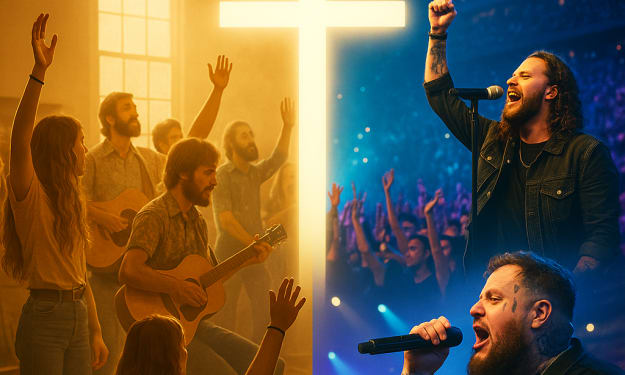
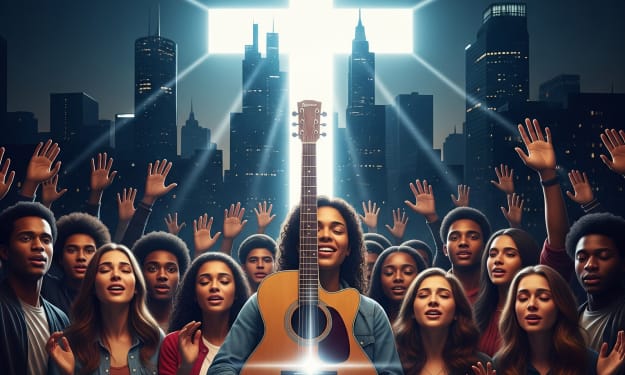
The Church Without a Ceiling For centuries, worship has been synonymous with sacred spaces: vaulted cathedrals, polished pews, stained glass windows. But if the past few years have taught us anything, it’s this: God is not limited by walls.
By Sunshine Firecracker™about a year ago in Beat
The Movie vs. The Movement: Learning from Jesus Revolution
A Film That Sparked Nostalgia In 2023, the release of the film Jesus Revolution brought the story of Pastor Chuck Smith, Greg Laurie, and Lonnie Frisbee to the big screen. For many, it was a fresh reminder of a time when the church cracked open its doors to an unlikely group of barefoot seekers. The movie became more than a faith-based film; it was a cultural moment that reignited conversations about revival.
By Sunshine Firecracker™about a year ago in Beat
Music at the Margins: Why the Church Needs Outsiders to Lead Revival
God Moves at the Edges History makes one truth clear: revival rarely begins at the center of power. It begins at the margins, among those dismissed, overlooked, or rejected by polite society.
By Sunshine Firecracker™about a year ago in Beat
Jelly Roll: A Tattooed Prophet in the Pews
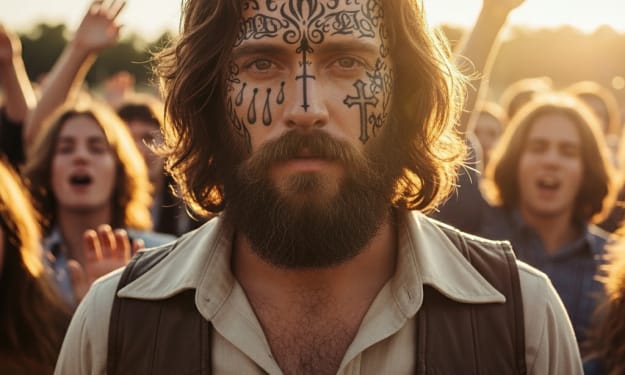
In every generation, God has a way of raising up voices from the margins—unlikely prophets who carry the raw honesty that traditional institutions often lack. In the late 1960s, it was the barefoot hippies walking into Calvary Chapel. Today, it may just be a heavily tattooed country-rap artist named Jelly Roll.
By Sunshine Firecracker™about a year ago in Beat
Brandon Lake: The Chuck Smith of a New Generation?
Is Brandon Lake sparking a Jesus Revolution 2.0 as the Chuck Smith of our time? The original Jesus Revolution began when Chuck Smith welcomed the outsiders of his day into Calvary Chapel. Today, worship leader Brandon Lake may be playing a similar role—tearing down barriers through music, radical love, and collaborations that reach the margins. Could his ministry be the beginning of a new awakening?
By Sunshine Firecracker™about a year ago in Beat
Brett Bonnor: A Musical Journey of Transformation and Determination
Brett Bonnor is an emerging talent in the music scene, showcasing a rich blend of experiences and a deep passion for his craft. With a diverse array of musical interests that include Rock and Roll, Country, Country Rap, and Heavy Metal, Brett's story began on the shores of Kurrimine Beach, Queensland, where he first connected with his spiritual essence as a child.
By Quentin Pereraabout a year ago in Beat
Brandon Lake’s Sevens: A Prophetic Anthem of the Jesus Revolution 2.0
Introduction: The Sound of Truth When the first riff of Brandon Lake’s Sevens from his King of Hearts album drops, it doesn’t feel like the start of a worship set — it feels like a revolution. 🔥 The guitars roar, the drums thunder, and the lyrics cut straight to the heart. This isn’t polished background music for Sunday morning; it’s prophetic fire wrapped in heavy rock. And that’s the point. Brandon Lake is stepping into the role of a modern-day prophet, using raw sound and unflinching truth to awaken a generation.
By Sunshine Firecracker™about a year ago in Beat
Three Wooden Crosses and the Power of Country Music. AI-Generated.
Country music has always lived in the background of mainstream culture, often dismissed as a niche genre or reduced to cliches about cowboy hats and pickup trucks. Yet beneath the surface lies a deeply emotional and culturally rich form of music that has shaped generations. Its roots stretch back to folk ballads, blues traditions, and working-class stories, giving it a unique authenticity that few genres can match. Country music is not just entertainment - it's the underrated soundtrack of life itself.
By Seth Eaglesabout a year ago in Beat
More Than a Melody: Finding God's Plan in the Music of Brandon Lake
There are moments when the blueprint for your life feels like it’s been shredded. A closed door, a delayed promise, a dream that shatters in your hands—we’ve all stood in the rubble, wondering if the architect has abandoned the project. As the voice behind Sunshine Firecracker, I’ve always sought out art that speaks to resilient faith. It's in those moments of uncertainty that a song like Brandon Lake's "Plans" becomes more than a melody. It becomes an anchor. It’s a testimony that God’s design still holds, even when our path is covered in debris.
By Sunshine Firecracker™about a year ago in Beat
Why Brandon Lake's 'Count 'Em' is the Anthem for Survivors of Narcissistic Abuse
When Brandon Lake’s song ‘Count ’Em’ hit the airwaves, it landed differently. It wasn't just another worship anthem; for those who have survived narcissistic abuse, it felt like a war cry. If you've endured the isolating terror of a smear campaign, covert abuse, or the systemic silencing that follows, you know this song is more than music. It’s a ledger. It's the validation you fought for. It’s a refusal to let an abuser's gaslighting rewrite your history.
By Sunshine Firecracker™about a year ago in Beat