
TH3ION — Arachnephilia
Harsh EBM as a descent through memory and oblivion — ten instrumental rites under the spider's web, where the bite that maddens becomes the cure, from the sulphur-breathing earth of Salento.

To love the spider is the first step of the rite. The bite that takes the mind is the same that gives it back — but only to those who follow the thread all the way down.
Arachnephilia is a descent. The rite goes inward and under — into memory, into the dark, into the patient geometry of the web. Ten instrumental movements of harsh EBM, mechanical and hypnotic, trace a single passage: from the first surfacing of what was buried, through oblivion and the oracle of the dead, to the moment the weaver shows herself at last.
The Earth That Breathes Sulphur
This rite is bound to the earth — not the soil of the harvest but the cracked, exhaling ground of the solfatara, where the land itself breathes brimstone and the underworld leaks into the open air. There is an old secret folded into the name TH3ION: in Greek, theion means the divine — and theion also means sulphur. Holiness and brimstone, the sacred and the chthonic, written with the very same letters. The solfatara is where that double word becomes a place: the divine and the sulphurous rising together from one vent. To stand there is to breathe the god and the poison at once.
Anamnisia — the Surfacing
The album's pilot, and its one vision in motion, is Anamnisia — reminiscence, the act of remembering, caught here in its hallucinated form. Its pulse is the whole album in miniature: a mid-tempo EBM, mechanical yet strangely soft, sensual beneath its steel — the sound of something rising slowly from the deep floor of the mind. In its film the solfatara smokes and the spider moves through the frame; a priestess in lace and leather turns her ritual dance, intercut in strobing monochrome with temples and the relief-carved memory of older rites. Memory does not arrive gently here. It surfaces the way a body surfaces in dark water — all at once, and changed.
The Threads of Fate
The spider is no monster in this telling. Ernesto De Martino, mapping the terra del rimorso, found in Salento an entire pharmacology of the bite: the tarantula's poison that could be unwound only by music and dance, the morso answered with rhythm until the venom had spent itself. The web is the image of that knowledge — the wisdom of silk, the invisible threads that bind the living to the dead, the present to the ancestral line, every dancer to the ones who danced before. To enter the web is to admit you were always already inside it.
The Oracle of the Dead
Deeper down waits the nekromanteion, the oracle where the living once went to question the dead. This is the rite's dark middle: divination bought with oblivion, knowledge that begins as un-knowing. Before the spider can speak, the self must be emptied — what Mircea Eliade called the abolition of profane time, the death-before-rebirth at the heart of every initiation. The tarantism of Salento is the late heir of those mysteries — the Bacchic frenzy, the Eleusinian descent, the Orphic journey of a soul passing through the dark to be freed. So the album moves between remembrance and forgetting, gnosis and its loss, and refuses to choose between them — because in the older vision the lucid god and the god of ecstasy, light and its absence, were never two. They were one face, turned twice.
The Glyph on the Cover
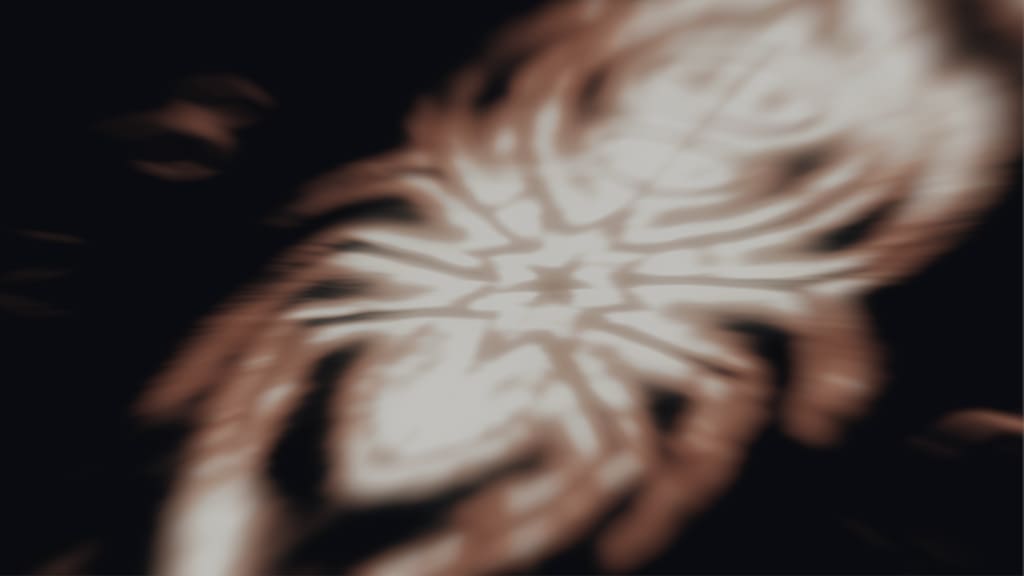
Look before you listen. The cover is all soft focus and dim sepia, as if seen through gauze or silk — and at its centre, half-dissolved in the blur, a single sign resolves: the glyph of a spider. Not a drawing of an animal but a sigil, an archaic mark of the kind once traced to summon a power and to keep it near. It is the rite's true name, set down before a single note sounds. Hold your eyes on it, and the soft veil of the image begins to feel like a web you are already caught in.
The Manifestation
At the end, the weaver arrives. The spider made manifest, the possession breaking open — and then the final turning: the cure of the spider, the venom of the web revealed as remedy. This is the secret the taranta always kept: the bite that drives you mad is the bite that heals, if only you will dance it through. What the venom takes, the rite returns. The eternal return is the law of this descent as well — nothing ends, everything comes back transfigured, and no one leaves the web as they entered it.
Arachnephilia is not a set of tracks. It is a thread to follow into the dark. Take it. Love the one who weaves.
The bite is the cure. Surrender.
— TH3ION
About the Creator
TH3ION
TH3ION, born in Salento — land of Tarantism. Harsh EBM reinventing chthonic myth as a dark erotic rite, fusing primordial ritual with fractured modernity: a neo-noir portal where ancient ecstasy is reborn amid marble ruins and fatal beauty.
Enjoyed the story? Support the Creator.
Subscribe for free to receive all their stories in your feed.
Comments
There are no comments for this story
Be the first to respond and start the conversation.