
SulkyMan's “The Things I Said” - Thirty Years On, Chris Pascoe Uncovers a Lost Corner of His Musical Past, Bringing Four Raw, Melodic Recordings Back into The Light
Four rediscovered songs reveal the raw creativity, restless experimentation and enduring melodic instincts of London musician Chris Pascoe.

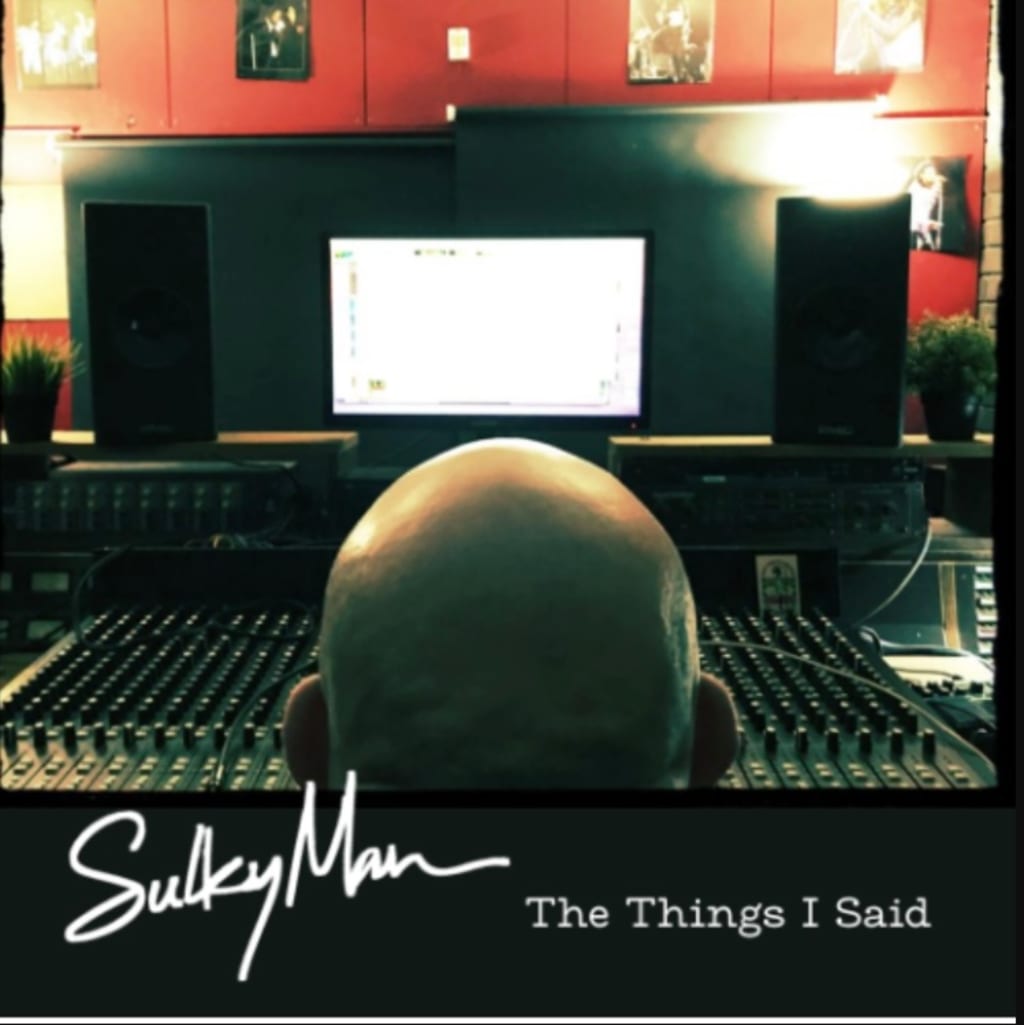
Somewhere in the vast collection of forgotten recordings that musicians accumulate over a lifetime, there are bound to be songs that deserve another chance. Not every piece of music needs a grand re-discovery narrative, of course, but there is something particularly compelling about hearing work created decades ago by an artist who has since travelled a very different musical road. SulkyMan, the solo project of London musician Chris Pascoe, offers exactly that opportunity with The Things I Said, a collection of four recordings made around 1995 that have finally found their way into the world.
Recorded on a Yamaha MT50 four track analogue recorder, these songs carry the unmistakable character of their origins. There is a looseness to the performances, a pleasing grain to the sound and a sense that the music was allowed to develop according to its own instincts rather than being forced into a predetermined shape.
Yet this is not simply a case of nostalgia making old recordings seem more interesting than they actually are. What emerges is a set of songs with enough melodic character and musical individuality to justify their return on their own merits.
The title track establishes the collection’s appeal through a combination of jangling guitars, warm bass and an easy melodic flow. There is a distinctly British indie sensibility at work, recalling a time when guitar music could be adventurous without sacrificing its ability to connect with a listener. The arrangement has room to move, with each instrument contributing to the atmosphere rather than competing for attention. Its charm lies partly in that balance: the song is understated without becoming anonymous, and its melodic instinct gives it an immediacy that survives the years between its recording and release.
“I Wonder Why” moves into more unsettled territory. The guitars feel wirier and less predictable, bringing a post punk edge to the composition, while the bass supplies a fluid line beneath the shifting arrangement. There is a tension between melody and dissonance that prevents the song from settling into comfortable familiarity.
It hints at the darker, more atmospheric side of alternative music, yet retains enough rhythmic movement to keep it engaging. Pascoe seems drawn to the moment when a song starts to pull in two directions, allowing its contradictions to become part of its personality.
“Nothing Is Easy” offers another perspective, with angular guitar work and a more biting delivery offset by melodic turns that introduce an element of playfulness. Its rougher exterior never quite obscures the pop sensibility underneath. Indeed, that contrast is one of the most appealing aspects of the collection. Pascoe does not appear particularly interested in choosing between the directness of a memorable tune and the more experimental possibilities of alternative rock. Instead, he allows both instincts to coexist, giving the music a character that is difficult to reduce to one particular influence or genre.
“Never Change” rounds things off with a tauter new wave feel. Its restless energy gives the final track a slightly unresolved quality, as though the music is reluctant to stand still long enough for everything to be neatly explained. It is a fitting conclusion to a collection that seems more interested in preserving the excitement of discovery than presenting a perfectly polished retrospective.
Pascoe’s wider musical history makes this diversity all the more interesting. His early years included playing bass in London anarcho punk band Part 1, followed by involvement in the underground tech-house scene before he developed SulkyMan into a solo project. These are very different musical environments, but the recordings on The Things I Said suggest an artist who has never been particularly concerned with staying inside established boundaries. Across the four songs, there is a willingness to explore different textures and moods while keeping songwriting at the centre of the experience.
What gives the release its emotional pull, however, is the distance between the person who made these recordings and the musician bringing them forward today.
Thirty years can transform the way we understand our own creative work. A lyric or melody created in one set of circumstances can acquire an entirely different resonance when heard much later, carrying traces of a younger self that might otherwise have faded from memory. These songs preserve a moment in Pascoe’s development.
There is no need to pretend that the passage of time has made every detail better, or that the limitations of four track recording are somehow superior to modern technology. The appeal is more straightforward than that. The recordings have character, the songwriting has substance, and the imperfections are part of their identity rather than obstacles to be overcome.
With The Things I Said, SulkyMan has opened a small window into a musical past that might otherwise have remained unheard. For listeners drawn to inventive guitar music, independent songwriting and the enduring appeal of rough edged melodies, these four tracks offer an enjoyable reminder that the relationship between a musician and a song does not necessarily end when the recording is put away.
Sometimes, years later, the music finds its way back, ready to be heard in an entirely new light.
About the Creator
Whitney Miller
🌎 Adventurous & Musical
Stories shaped by places, music & life
Poetry, fiction, memoir & lived experience
Written without A.I.
© Whitney Miller
Enjoyed the story? Support the Creator.
Subscribe for free to receive all their stories in your feed.
Comments
There are no comments for this story
Be the first to respond and start the conversation.