
Redefining Creative Boundaries: How AI Music Generation Is Transforming the Way We Create and Experience Sound in 2026
AI Music Generation
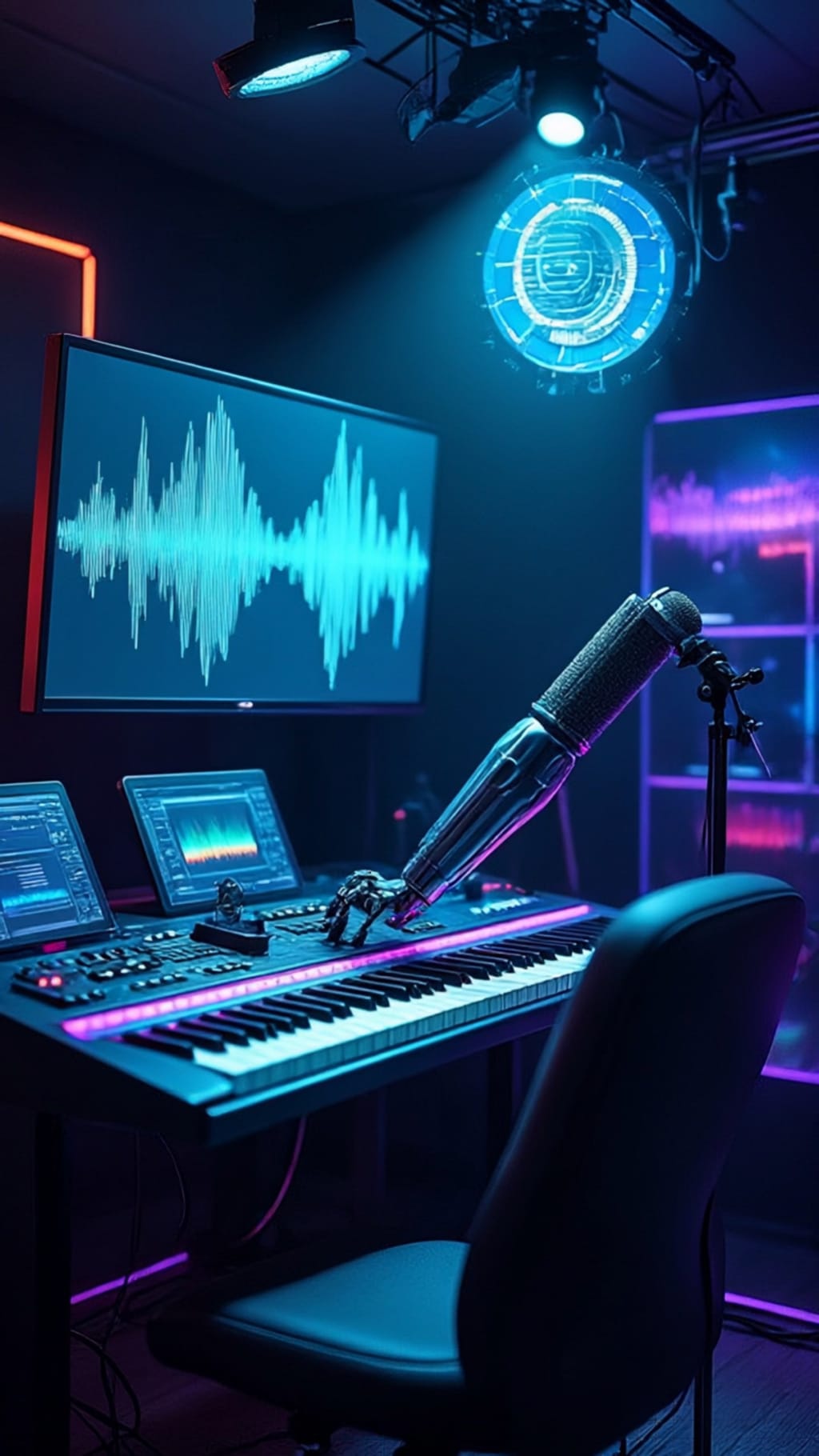
In 2026, the idea that “you need years of training to make music” is quietly fading. What once required expensive studio equipment, deep knowledge of music theory, and countless hours of practice can now begin with a simple idea and a few clicks. The rise of the AI music generator has not just streamlined the process—it has fundamentally reshaped who gets to participate in music creation.
We are entering an era where creativity is no longer limited by technical skill. Instead, it is driven by imagination, emotion, and intent. From hobbyists experimenting with melodies to content creators producing custom soundtracks, AI is enabling a new kind of musical expression—one that feels more personal, immediate, and accessible than ever before.
The Democratization of Music Creation
For decades, music production was gated by complexity. Digital Audio Workstations (DAWs), synthesizers, mixing techniques, and mastering processes formed a steep learning curve that discouraged many aspiring creators. While platforms gradually became more user-friendly, the barrier to entry remained significant.
Today, the AI music generator is changing that equation.
Instead of requiring users to understand chord progressions or sound design, modern AI systems interpret simple inputs—text prompts, mood descriptions, or reference styles—and transform them into fully realized compositions. A user might describe a “nostalgic piano melody with soft rain ambiance,” and within moments, receive a track that captures that exact feeling.
This shift represents more than convenience. It marks a transition from technical creation to conceptual creation. The role of the user evolves from operator to storyteller.
As a result, we are witnessing a broader cultural shift: more people are participating in music-making, not as professionals, but as expressive individuals. Music is becoming less of a specialized craft and more of a universal language once again.
From Algorithms to Emotion: The Evolution of AI Composition
Early attempts at AI-generated music often felt mechanical—technically correct but emotionally flat. The compositions followed predictable patterns, lacking the nuance that defines human artistry.
That is no longer the case.
Recent advancements in deep learning, particularly in transformer-based models and diffusion systems, have significantly improved the emotional depth of AI-generated music. These systems are trained on vast and diverse datasets, allowing them to understand not just musical structure, but also stylistic subtleties and emotional cues.
For example, when generating a track using an ai rap generator, the system doesn’t simply produce rhyming words over a beat. It can now:
Mimic flow patterns and cadence variations
Adjust lyrical tone based on mood (e.g., introspective vs. energetic)
Align rhythm with instrumental dynamics
Create hooks that feel cohesive and memorable
What emerges is not just a song, but a piece of content that resonates on a human level. The gap between machine-generated and human-created music is narrowing—not because AI replaces emotion, but because it is becoming better at interpreting and expressing it.
AI and the Content Creation Ecosystem
The rise of AI-generated music is closely tied to the explosion of digital content. In 2026, creators across platforms—video, podcasting, gaming, and social media—require a constant stream of fresh, original audio.
Traditional music licensing models struggle to keep up with this demand. Licensing can be expensive, restrictive, or time-consuming. AI offers an alternative: instant, customizable, royalty-free sound.
This is where the AI music generator becomes a critical tool in the content ecosystem.
A YouTuber can generate background music tailored to a specific scene. A game developer can create adaptive soundtracks that shift with gameplay. A podcaster can design unique intros and transitions without worrying about copyright issues.
The impact is profound:
Speed: Music can be generated in seconds rather than days
Customization: Tracks can be adjusted to fit exact timing and mood
Scalability: Large volumes of content can be supported without additional cost
In this sense, AI music is not replacing traditional composition—it is filling a gap that traditional methods cannot efficiently address.
Personalization as the New Creative Frontier
Perhaps the most intriguing aspect of AI music in 2026 is its ability to create deeply personalized experiences.
Music has always been personal, but creating a song tailored to a specific individual was once a rare and expensive endeavor. Now, anyone can generate a custom track that reflects a memory, a relationship, or a moment in time.
Consider the idea of gifting a song.
Instead of buying a generic present, someone can describe a shared experience—“a summer road trip, laughter, late-night talks”—and transform it into a musical narrative. With tools like an ai rap generator, even storytelling through rap becomes accessible, allowing users to craft lyrical journeys that feel authentic and unique.
This trend is reshaping how we think about music:
Music becomes a medium for storytelling, not just entertainment
Listeners become participants in creation
Emotional value takes precedence over production complexity
The best “gift” in this context is not a physical object, but an experience—something that captures meaning in a way words alone often cannot.
Ethical and Creative Considerations
As with any transformative technology, AI music generation raises important questions.
One of the most discussed issues is authorship. Who owns a piece of music generated by AI? Is it the user who provided the input, the developers who built the model, or the dataset that trained it?
There are also concerns about originality. If AI models are trained on existing music, how do we ensure that generated content does not unintentionally replicate copyrighted material?
Beyond legal considerations, there is a philosophical debate: Does the ease of creation diminish the value of music?
Interestingly, the opposite may be true.
When barriers are lowered, more people engage with the creative process. This does not eliminate the need for skilled musicians; rather, it highlights their expertise. Professional artists can use AI as a tool to enhance their workflow, experiment with new ideas, and push creative boundaries even further.
AI does not replace creativity—it redistributes it.
A Glimpse Into the Future
Looking ahead, the trajectory of AI music generation suggests even deeper integration into our daily lives.
We can expect:
Real-time music adaptation: Soundtracks that change based on mood, environment, or biometric data
Collaborative AI systems: Tools that work alongside human artists in a more interactive and intuitive way
Cross-modal creativity: Generating music directly from images, videos, or even text narratives
The concept of an AI music generator will likely evolve from a standalone tool into an embedded feature across platforms—part of how we communicate, create, and share experiences.
Similarly, the ai rap generator may expand into broader forms of lyrical expression, blending spoken word, storytelling, and music into entirely new genres.
Conclusion: Creativity Without Barriers
The transformation brought by AI music generation is not just technological—it is cultural.
By lowering the barriers to entry, AI is inviting more people into the world of music creation. It is shifting the focus from technical skill to creative vision, from complexity to accessibility, from exclusivity to inclusivity.
In 2026, being a composer is no longer defined by formal training or professional status. It is defined by the desire to express something meaningful.
And perhaps that is the most significant change of all.
Music is no longer something we only listen to.
It is something we all can create.
About the Creator
Enjoyed the story? Support the Creator.
Subscribe for free to receive all their stories in your feed.
Comments
There are no comments for this story
Be the first to respond and start the conversation.