
Raffaele Scoccia Returns to “Il Postino” with a Tender Tribute to the Maestro Who Helped Shape His Musical Journey
Revisiting Luis Bacalov’s Oscar-winning composition, the Italian pianist brings a deeply personal sense of memory, admiration and gratitude to one of cinema’s most enduring melodies.

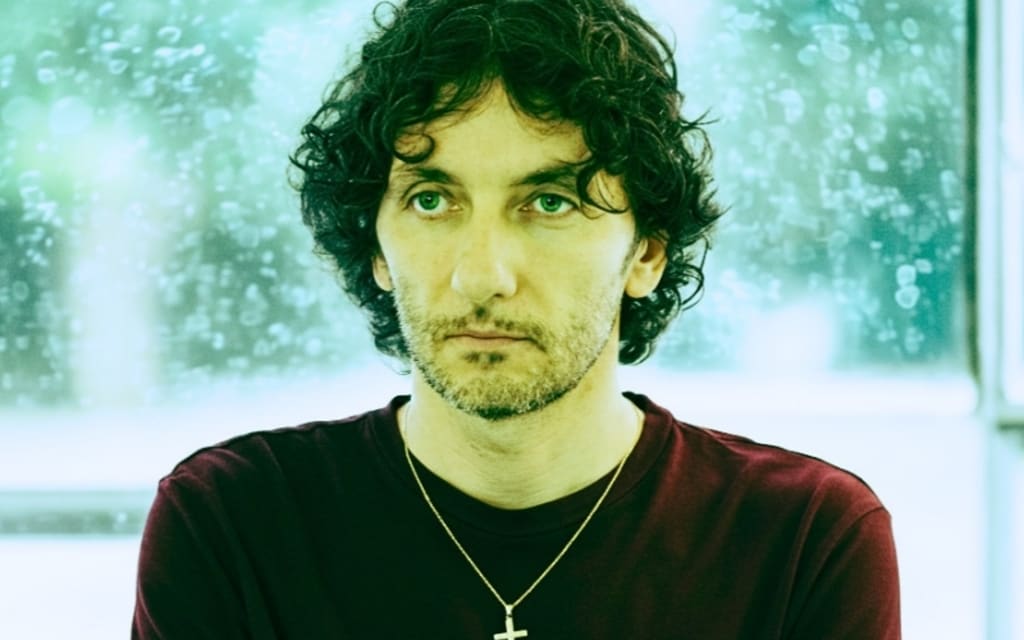
There are some pieces of music that seem to carry their own sense of place. Luis Bacalov's Il Postino is one of them. Its melody immediately evokes the Mediterranean, romance and a certain bittersweet nostalgia, while retaining the distinctive character of a composer whose musical language crossed continents and traditions.
For pianist Raffaele Scoccia, revisiting the piece carries an additional significance: Bacalov was not simply the composer of an Academy Award-winning soundtrack, but a teacher and mentor who played an important role in Scoccia's own musical development.
Scoccia's recording approaches Il Postino with considerable respect for its original character.
Written for Michael Radford's 1994 film Il Postino, starring Massimo Troisi, Bacalov's score occupies an unusual space between film music and a broader European musical tradition. Argentine influences sit alongside Italian melody, with hints of tango, jazz and folk music creating a sound that feels both intimate and expansive. There is romance in the piece, certainly, but also melancholy and reflection, giving the melody an emotional ambiguity that prevents it from becoming simply sentimental.
That balance is central to Scoccia's interpretation. His performance feels less like an attempt to put a personal stamp on a famous composition and more like a return to something familiar. Knowing that Scoccia studied piano with Bacalov gives the recording another dimension. Every phrase becomes part of a conversation between student and teacher, even though the teacher is no longer there to hear it.
Listen here:
The result is understated rather than showy. Scoccia recognises that the strength of Il Postino lies in its simplicity and emotional clarity. There is no need to crowd the arrangement with unnecessary embellishment. The melody carries enough history of its own.
It is also difficult to separate the music from the imagery that inspired it. Il Postino belongs to a film remembered for its warmth, humour and sadness and Bacalov's score helped give that world its emotional identity. Yet Scoccia's performance stands comfortably away from the screen. Heard on its own, the piece still communicates longing, tenderness and the feeling of remembering somewhere, or someone, that can no longer quite be reached.
This is ultimately what makes the recording more than a straightforward revisit of a familiar soundtrack. It is an act of musical remembrance. Scoccia has chosen to honour Bacalov by staying close to the spirit of his composition, approaching it with the admiration of a former student rather than the ambition of someone trying to replace what came before.
There is something quite moving about that decision. In returning to Il Postino, Scoccia keeps Bacalov's melody alive while adding his own chapter to its story. It is a respectful, heartfelt performance that demonstrates how music can preserve not only a composition, but a connection between two musicians across generations.
About Raffaele Scoccia
Raffaele Scoccia is an Italian composer, pianist and producer based in Trento, Italy. Classical piano was his first instrument and his first musical love, although his career has taken him through electronic music, production and international collaborations. During his time in New York, he developed his Moon Rocket project and founded Moon Rocket Music.
In recent years, Scoccia has returned to solo piano, developing a more intimate and direct approach to composition. His original works explore nature, memory, time, introspection and the emotional experience of being human, often moving between classical, contemporary and atmospheric influences.
His recording of Philip Glass’s “Etude No. 6” forms part of this renewed relationship with the piano, placing Scoccia’s own musical journey alongside the work of one of the most influential composers of contemporary music. Glass’s Etudes were written across more than two decades and are regarded as among his most personal piano works.
Connect with Raffaele Scoccia on Instagram
About the Creator
Whitney Miller
🌎 Adventurous & Musical
Stories shaped by places, music & life
Poetry, fiction, memoir & lived experience
Written without A.I.
© Whitney Miller
Enjoyed the story? Support the Creator.
Subscribe for free to receive all their stories in your feed.
Comments
There are no comments for this story
Be the first to respond and start the conversation.