
'Olias of Sunhillow' Climbs 50 Summer Mornings
There Stands Olias

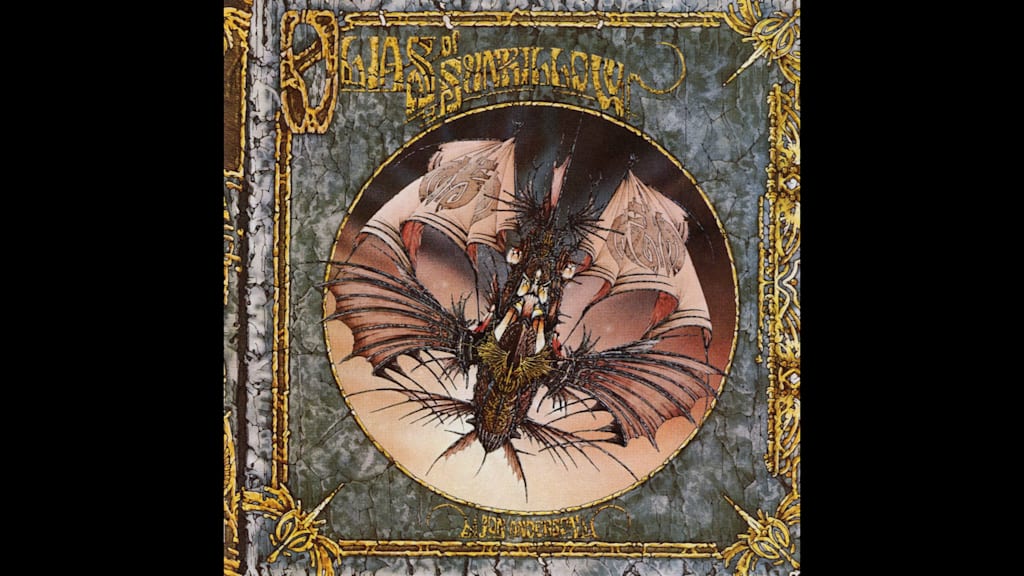
In the period from 1975 to 1976, following the release of and touring for progressive rock band Yes' Relayer album, the members of the band each went on to do their own solo album. One of them, which is the topic here, is lead vocalist Jon Anderson's Olias of Sunhillow, released around the time of this article 50 years ago. This was the last of those five solo albums released during that period, and Anderson has talked about how he locked himself up for months to finish the album. The result, an album where all the singing voices are Anderson, and where he plays all of the instruments, as arguably as solo as one can get.
People have their favorites of the solo albums, and Olias of Sunhillow is my favorite not only of that period, but of Jon Anderson's solo discography, and of all solo albums I have heard from anyone. (I even named my dog who lived for 17 years Olias.) I listened to this album 2007-2008, when I was in middle school and checking out what Yes' band members had done outside of the band. It really blew me away and was my gateway to the New Age genre I would encounter in some of Anderson's other solo works and collaborations. It was one of those albums that encouraged me to branch out further.
With such a huge legacy, it can feel daunting to sum up an album of this magnitude. At a certain point, one has to let go of trying to sum up the narrative context of the concept album and the history behind it in a comprehensive fashion. I am not aiming to shine a light on huge revelations about this album or pull quotes from every interview about it, but rather sharing a bit about what I think about the music and how it makes me feel.
1. "Ocean Song"
The opening track begins with very earthy and airy noise, not too dissimilar from the vibe of the original first seconds of Yes' Tales from Topographic Oceans before being cut for time. Then there is a little crash, and then some tranquil notes coming at a meditative pace. An appearance of three notes repeating change things up a little bit, and assure us that we are in for a journey.
2. "Meeting" / "Sound Out the Galleon"
The opening music of the next track feels ominous, but then we are greeted by Jon's soothing voice at last, chanting "Meeting" over and over as more substantial instrumentation sounds off in the background. As the pace of the music picks up, so does the pace of the singing for the "Sound Out the Galleon" section. It is the type of singing and music that one can imagine a travelling medieval minstrel relaying to fellow travelers. There are multiple voices throughout, and they are all Anderson.
We are introduced to different characters of the narrative. Prominent in the overall story are Olias, Ranyart, and Qoquac, working together to save their people from a volcanic eruption breaking apart the world of Sunhillow. And as if to channel the likes of Tolkien and such, Anderson introduces his own language from this world, his multiple voices singing with such power, "Do ga riytan sha too raytan." This is not the first time he has tried his own type of foreign language or anything of the like, as some may recall the words sung at the end of Yes' "To Be Over" on Relayer.
3. "Dance of Ranyart" / "Olias (To Build the Moorglade)"
"Dance of Ranyart" is a very calm instrumental, one that can be imagined during a peaceful day, accompanied by rays of sunshine. To this listener, it sounds more like an extension from "Sound Out the Galleon," as the other piece attached to this track, "Olias," feels very different and jarring in how it just comes crashing in with alien-sounding synthesizer types of noises. Disjointedness aside, the "Olias" piece does lead to an epic feel, ushering in Anderson's sung explanation of the Moorglade Mover that has to be built for travel.
4. "Qoquaq Ën Transic"/"Naon"/"Transic Tö"
This next track has a trilogy of pieces. "Qoquaq Ën Transic" feels more akin to the vibe of "Ocean Song" without repeating the exact same piece. It feels very outer space-like. Then a bit more of an intense vibe filled with percussion arrives in the piece titled "Naon."Anderson's voices are more in the background here, but sound no less important. I used to think Anderson was singing "hurry on" or something similar, but he actually repeats "Arya." Things escalate, as if the voices are flying away out of this world. Then we get to another more instrumental piece, "Transic Tö," essentially a reprise of "Qoquaq Ën Transic." Overall, we got intensity bookended by calm reassurance.
5. "Flight of the Moorglade"
"Flight of the Moorglade" does contain sounds that may make one think of alien technology, but it is perhaps the most accessible track on the album. The verses are very catchy, but not without such creative words as "Talloplanic Views" or "Such a moment kindly lingered / They set sail from Tallowcross." As it updates us on the journey, this track is an effective way to close side one of the album.
6. "Solid Space"
"Solid Space" begins with a fade-in of the sparkling sounds heard at the end of the previous side, though those fade away. The background noise makes me think of a ship moving along. The music that comes in really evokes the feeling of a journey through the figurative seas of outer space. One cannot help but continuously be impressed with what Anderson can make out of such brief words within each verse:
"Hold my life
Cross the path
Course and curl my dreams away
Fast the soul
Make the break
As even as the stars that form the way"
7. "Moon Ra" / "Chords" / "Song of Search"
Next, we get a 12-minute track made up of three pieces. First we have "Moon Ra." After what sounds like thunder, we get some chanting fading in accompanied by appropriately mysterious music. The words sound like "From the moongate." We eventually get Anderson singing the following and so-forth:
Worlds that lie between
Are simply seconds of words we do not mean
Cast a pastel sky
Or simply wonder until the day you die
There is also a little bit of scat singing that sounds very reminiscent of scat singing present in "Sweetness" from Yes' self-titled debut album back in 1969. I do wonder whether this is intentional.
Eventually, the mood shifts into a more hopeful tone, as if the Moorglade has passed through a storm and emerged in one piece on the other side. It really does feel like the different tribes are being enlightened. I used to believe that this more hopeful section was the "Chords" section because it feels like such a different mood, but it is actually still part of "Moon Ra," which ends with mentions of dawn, peace, and love.
"Chords" is when the calmer notes are strummed from strings. It is a very brief section, but one that feels very necessary to complete the piece.
Then we get "Song of Search," which feels like it very well could stand on its own. To me, the flute playing and wind-like sounds make this instrumental feel melancholic, as if one is looking at an empty place that once was. I know that, for my part, I have listened to this piece whenever I have felt very deep feelings of sorrow. Even if the piece was not made with that intention, there is something to be said about how music can really help one work through their emotions when they need it.
8. "To The Runner"
With the closing track, we are taken to an undoubtedly happier vibe, somewhat echoing the music of "Flight of the Moorglade" in that tone. We get more of Anderson putting words together that may not seem so straightforward. Something I have always scratched my head about was "In it all / To the devil take." And I came to a point where I thought perhaps these words are meant to suggest the quelling of evil by displaying the positive. While this may not all be clear, I do adore the keys at the end, which sound very cinematic, saying that the story is over, and all is well, giving us peace of mind.
Conclusion
Even 50 years later, Olias of Sunhillow amazes its listeners, and could perhaps still impress new listeners. I even had the good fortune of seeing bits of the album performed on Jon Anderson's 1000 Hands Tour, as the show opened with "Ocean Song," included a rendition of "Flight of the Moorglade," and inserted a bit of "Solid Space" within "Starship Trooper." It would be amazing to see the entire album performed live, for sure.
Since 1999, Anderson has worked on or talked about a sequel titled The Songs of Zamran: Son of Olias. Pieces from this work in progress have popped up online here and there over the years, but the project still has yet to see a final form. Anderson has talked about it being over four hours of music. The impression I get is that it would sound like a bigger production than Olias of Sunhillow, though I must say, as space-y and alien as Olias can get, that original album still has an earthly quality I quite admire. All that being said, I do hope we get to hear all of Zamran at some point. It would surely be somewhat different, but no less of an epic adventure.
About the Creator
Steven Shinder
Author of fantasy horror comedy novel series Standalones and Stepping Stones, available on Amazon. You can also read excerpts at stevenshinder.com and check out facebook.com/StevenShinderStorytelling.
Enjoyed the story? Support the Creator.
Subscribe for free to receive all their stories in your feed.
Comments
There are no comments for this story
Be the first to respond and start the conversation.