
Margo Messenger Talks "Viva La Vida," Upcoming Release, and More
With “Viva La Vida” out now, we took some time to hear from Margo Messenger. Read below to learn more about Margo Messenger, the story behind “Viva La Vida,” and what’s to come.

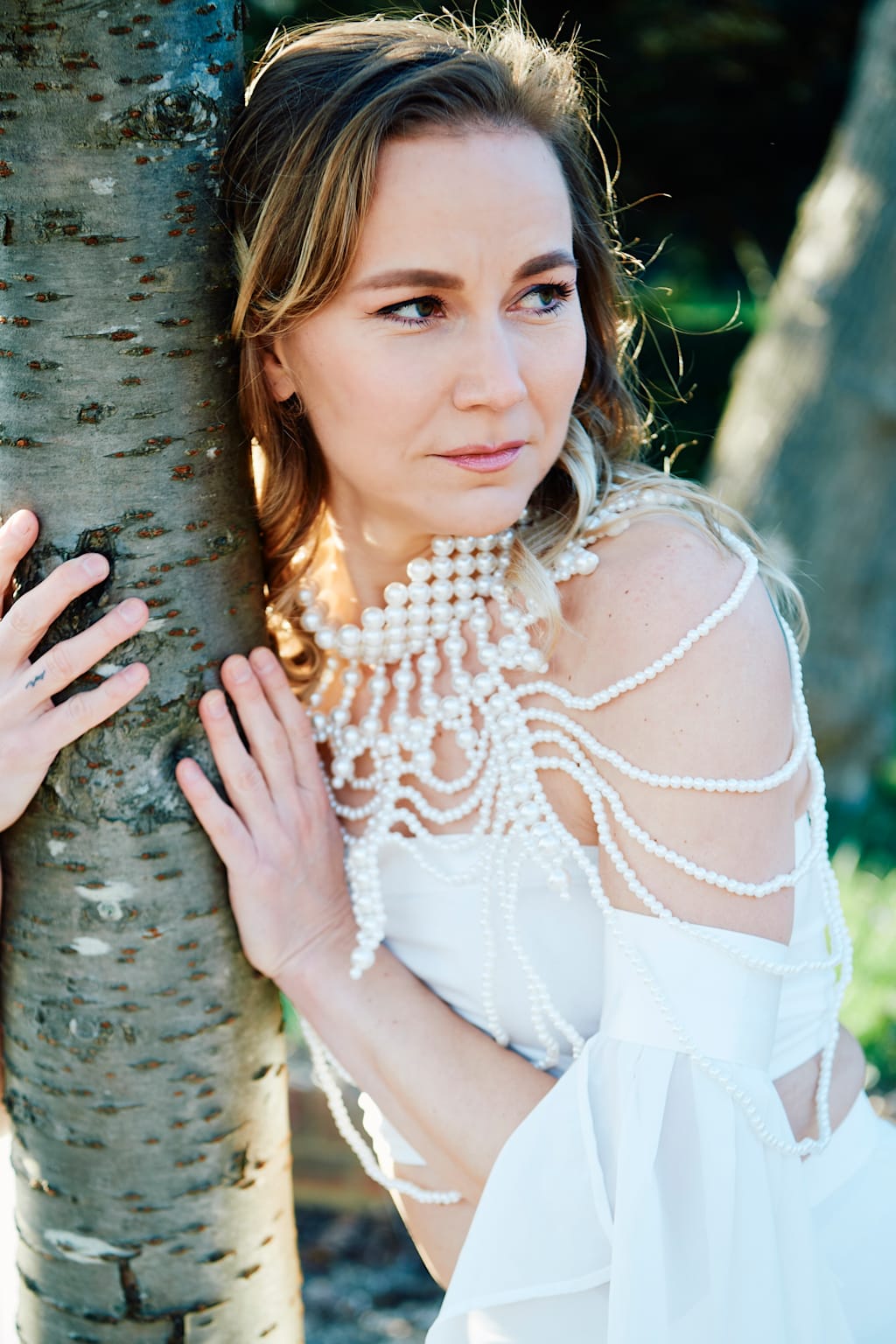
Award-winning singer-songwriter, pianist, and multi-instrumentalist Margo Messenger creates music that bridges heartfelt storytelling, cinematic imagery, and uplifting pop melodies. Originally from Kaliningrad, Russia, her music is deeply influenced by her Slavic roots, blending folk-inspired emotion with contemporary pop production to create songs that celebrate resilience, friendship, and the beauty of being alive.
Margo Messenger began studying classical piano as a child before touring internationally with the vocal group Amber Wave, earning awards at festivals throughout Russia and Eastern Europe. She later fronted the rock band, Ghosthill, releasing two studio albums before expanding into jazz, songwriting, and an international career as a singer-pianist aboard cruise ships.
After several years in Los Angeles, where she refined her songwriting craft and discovered the Alexander Technique, Margo Messenger launched her solo career with the singles, "Trust," "Here's to Love," and "Viva la Vida." Alongside her music, she has developed a distinctive visual style, independently producing and directing music videos that combine nature, movement, symbolism, and storytelling.
Her work has received international recognition, including:
Best Music Video – Peshawar International Film Festival ("Here's to Love")
Best Director – Music Video – Sweden Film Awards ("Here's to Love")
Bronze – Global Music Awards ("Viva La Vida")
1st Place, Music Video – Global Time Talent ("Trust")
1st Place, Singer-Songwriter – Global Time Talent ("Here's to Love")
2nd Place, Pop – Global Time Talent ("Viva La Vida")
1st Prize, Rock/Rap & 2nd Prize, Pop – International Competition "The Song”
Today, Margo Messenger balances performing internationally as a singer-pianist with writing and recording original music while training in the Alexander Technique. Her performances increasingly combine live music with movement, choreography, LED visuals, and mindful stagecraft, creating immersive experiences that invite audiences to reconnect with themselves through music, nature, and authentic human connection.
Hi Margo! Let’s start with how did you choose your artist name?
That was actually an easy one because it's my real name! I did shorten my first name, Margarita, to Margo after moving to the United States. I discovered that names with more than two syllables can be a bit of a mouthful for Americans! Haha.
As for my last name, I kept it after my first marriage. I always thought "Messenger" was the coolest surname, and I even told my ex that if things didn't work out, I was keeping the "Messenger" part! Haha.
In a way, I feel like the name found me. It reflects what I see as my life's purpose: to connect people, to unite them, and to be a messenger through music and art.
Where are you originally from?
I have quite an international background. I’m ethnically Russian-Belarusian, was born in Germany, and grew up in Kaliningrad, a Russian region on the Baltic Sea. Later, I spent eight years living in the United States. It feels like I was destined to have an international life from the very beginning.
Where are you based now?
For the past three years, I've embraced a nomadic lifestyle, dividing my time between London, my hometown of Kaliningrad, and working aboard international cruise ships. It's certainly not the easiest lifestyle, but it has given me countless stories to tell, wonderful friendships to cherish, and endless inspiration to draw from.
What’s the most interesting place that you’ve ever visited?
That's a great question! I'd have to say the Big Island of Hawaii left the biggest impression on me. I was incredibly happy there. The nature is breathtaking: lush jungle, endless ocean, dramatic lava cliffs... It felt wild, peaceful, and deeply inspiring all at once. I'd love to go back someday.
How has a life of constant movement influenced your songwriting?
It’s a very dramatic lifestyle, with both incredible rewards and significant challenges.
On one hand, I’ve been exposed to many different cultures, ways of thinking, and musical traditions, which has enriched my songwriting in ways I could never have imagined.
On the other hand, constantly moving makes it difficult to build the sense of stability that is often essential for creating. Sometimes it’s as simple as having a piano, a guitar, or a small studio space that is always there waiting for you. It takes time to create that feeling of home.
I’m getting better at finding that balance, though, and I’ve been so fortunate to have great friends who have supported me throughout the journey.
How does it feel to be a cruise ship musician?
One of the biggest advantages is that I get to constantly hone my craft. When you're performing almost every day for months at a time, you can't help but grow as a musician.
I also love sharing my music with an international audience. Over the years I've made friends from all over the world, and I genuinely feel like I'm part of a beautiful global community that has supported both me and my music.
The challenge is that performing every day requires you to give a lot of yourself. As someone who's quite sensitive, constantly being surrounded by people can sometimes be overwhelming. You really have to learn how to take care of yourself, both physically and mentally.
That's actually how I discovered the Alexander Technique, and it completely changed my life. I'm incredibly grateful for it.
Can you tell us more about Alexander Technique?
I'd be happy to...although, I could probably talk about it for hours!
Basically, the Alexander Technique is an educational method, a somatic hands-on modality. A trained teacher helps you develop more efficient, effortless ways of moving and doing things like singing or playing an instrument. The idea is simple: do less, but do it better.
It has made me far more resilient to the demands of life on cruise ships, and its benefits have extended well beyond music into every aspect of my life.
At what point in your life did you decide to pursue a career in music? How did you get started?
I started writing songs when I was sixteen, and the encouragement I received from friends gave me the confidence to keep going. Ironically, I studied economics because I thought I should pursue a "real" career. I guess I had some commitment issues...haha. But music was always my true passion, so I continued to immerse myself in creative projects, from fronting my metal band, Ghosthill, to performing in musical theatre and later singing with a jazz quartet on cruise ships.
As my career gradually unfolded, it finally dawned on me that I really did have something to say. I began writing more, learned to accompany myself on the piano and guitar, and eventually met the right people to help bring my original music to life.
Looking back, it sometimes feels as though music chose me rather than the other way around.
How would you describe your sound?
I love borrowing ideas from different genres rather than limiting myself to just one or two. I feel like my music carries a gentle nostalgia for the '90s, blending dance-pop, pop-rock, and contemporary indie influences with subtle echoes of my Slavic roots. It's intentionally uncomplicated, yet full of little surprises that keep listeners engaged.
There's often a touch of melancholy beneath the surface, but my songs ultimately celebrate life. I love writing memorable hooks that stay with people and grooves that make them want to dance, while hopefully helping them connect with their feelings.
How has your upbringing played a role in shaping who you are and defining your sound?
I owe so much of my musicality to my mother, who is a music teacher and has been one of the biggest influences in my life. She directed the vocal group I was part of throughout my childhood and teenage years. Festivals, concerts, and rehearsals were simply our way of life. I grew up on stage, performing several times a week, and looking back, I realize what a wonderful childhood that was.
My parents also encouraged me to study piano when I was six years old. Those early years immersed me in Eastern European classical music and Slavic folk traditions, which became part of me, - I hear them in everything I write today.
What do you do to stay creative?
I love dancing, practicing yoga, and meditating to keep my mind open and receptive to inspiration. I'm fascinated by different art forms because I see how they all feed one another creatively. Recently, I discovered contact improvisation, which has taught me so much about listening, trust, and human connection. Whenever I feel creatively stuck, movement helps me find my way back into flow. And perhaps most importantly, it reminds me not to take life too seriously.
Do you think of yourself primarily as a musician or as a multidisciplinary artist?
I've noticed that the less pressure I put on myself to "be a professional musician," the more creative freedom I experience, and that freedom always finds its way back into my music.
In my live performances, I love experimenting with dance, LED wings, light whips, LED goggles, and other visual elements. They all become part of the storytelling.
So, I'd say I'm a multidisciplinary artist. Life is far too rich and fascinating to limit yourself!
What’s one of the proudest moments of your music career so far?
I remember when my first music video with my former metal band, Ghosthill, was released. At the time, I felt so accomplished that I thought, "If this is all I ever achieve, that's already a lifetime's worth of memories."
Since then, I've been lucky enough to keep collecting moments that remind me why I do this. Most of them aren't awards or milestones, but the way audiences respond to my performances. Seeing a song resonate with someone is an incredible feeling.
That said, I still like to believe my proudest career moment hasn't happened yet. I can't wait to find out what it will be.
What’s your biggest music aspiration?
That's a difficult question! For years I've dreamed of winning a Grammy Award. That would be incredible, of course. I'd also love to collaborate with artists I deeply admire, like Jacob Collier, Sting, and Vulfpeck.
And...I'd absolutely love to have my own band. There's nothing quite like making music live and co-creating with other musicians. That sense of connection and shared creativity is something I really miss.
What would you say are the greatest lessons that you've learned so far?
One lesson that I keep coming back to is the power of authenticity. I think we all try, to some extent, to control how others perceive us, but our true nature always finds a way through. The less we resist it, the easier life becomes. Of course, that's easier said than done. Being vulnerable can be scary. I'm still learning how to listen, adapt, and trust the process, and I suspect that's a lesson that lasts a lifetime.
Now onto your release, "Viva La Vida." What inspired this song? What is it about?
"Viva la Vida" is a love letter to my homeland and to the childhood I spent beneath the linden trees of Kaliningrad, on the Baltic Sea. When I wrote the song, I had been away from home for almost six years. I found myself longing for the place where I grew up, and the melody arrived almost on its own. It began as something quiet and reflective before growing into an uplifting Eurodance chorus.
At its heart, "Viva la Vida" is about choosing life. It's about friendship, belonging, remembering where we come from, and believing that it's never too late to choose hope, love, and human connection. I wanted it to feel like both a celebration and a homecoming.
What was the inspiration behind the cover artwork for "Viva La Vida?"
My friend, Annaliisa Asveit, introduced me to the wonderful photographer, Al Stuart. We did the photoshoot in London in early spring, and it was freezing! I remember trying to smile naturally while shivering in the cold wind.
Nature is at the heart of "Viva La Vida," and the image I picked captures the feeling of harmony and co-creation with the natural world that inspired the song.
A fun coincidence: during that photoshoot, it suddenly occurred to me that Annaliisa would be perfect for the "Viva La Vida" music video. She ended up becoming a central character in the story, and I'm so grateful she joined the project. The video will be released soon.
What story are you hoping viewers will discover beneath the surface of the music video?
I don't want to give away too much! I'll just say it features forests, LED wings, and my friend, Annaliisa. I'd love everyone to discover their own meaning in it. I'm actually very curious to see how people interpret the story.
What was the creative process like when making "Viva La Vida?"
I wrote the first version of "Viva La Vida" on guitar. I wanted to explore darker, minor harmonies, and the song began with a simple, solemn melody built around three minor chords, definitely inspired by my Slavic musical roots.
The lyrics went through several rewrites, evolving from direct messages about hope into more poetic imagery rooted in nature. At the same time, I knew I wanted the chorus to explode into something uplifting and unmistakably Eurodance.
My friend and producer, Katie Cole, was instrumental in bringing that vision to life. Katie is a drummer and a fellow lover of '90s Eurodance, so we immediately connected over that shared passion. One of my favorite details is that we included the sound of a balalaika in the bridge as a small tribute to my Russian roots - Katie’s idea!
How long did it take to complete "Viva La Vida?"
It was definitely a journey.
From the first acoustic guitar demo to the final release, the song took about two years to complete. Along the way, I paused the project while performing on cruise ships, returned to rewrite the lyrics, and went back into the studio for a second production session.
Looking back, I'm actually glad it took that long. Some songs need time to mature before they're ready to meet the world.
What is your favorite lyric in "Viva La Vida," and why?
"I know it's not too late for us to try."
Because I genuinely believe it's never too late to repair relationships, reevaluate, and choose love.
What do you hope fans take away from "Viva La Vida" and your music in general?
If "Viva La Vida" encourages someone to reconnect with a friend, reconnect with their own feelings, take a walk in nature, or simply remember that life is worth celebrating even during its most difficult seasons, then it's done its job.
And above all, I hope "Viva La Vida" makes people dance, sing along, and rediscover their sense of play!
What’s next for you? Are you working on any upcoming projects?
I'm currently preparing my next release, a duet with my friend, Annaliisa. It's one of the most personal projects that I've worked on so far, and I was involved in nearly every stage of its creation, from writing to the visual concept.
We're also finishing a music video to accompany the song. It's quite different from anything that I've released before, a little bold and provocative, and I'm genuinely excited (and a little nervous!) to see how people respond.
Where can we follow you on social media?
Facebook: https://www.facebook.com/musicwithmargo
Instagram: https://www.instagram.com/musicwithmargo
TikTok: https://www.tiktok.com/@musicwithmargo
YouTube: https://www.youtube.com/@musicwithmargo
Thank you for the great interview; wish you much continued success!
About the Creator
Enjoyed the story? Support the Creator.
Subscribe for free to receive all their stories in your feed.
Comments
There are no comments for this story
Be the first to respond and start the conversation.