
Josie and the Pussycats turn 25
25 years since this film explores on music, fashion, friendship and the reality behind the music industry.

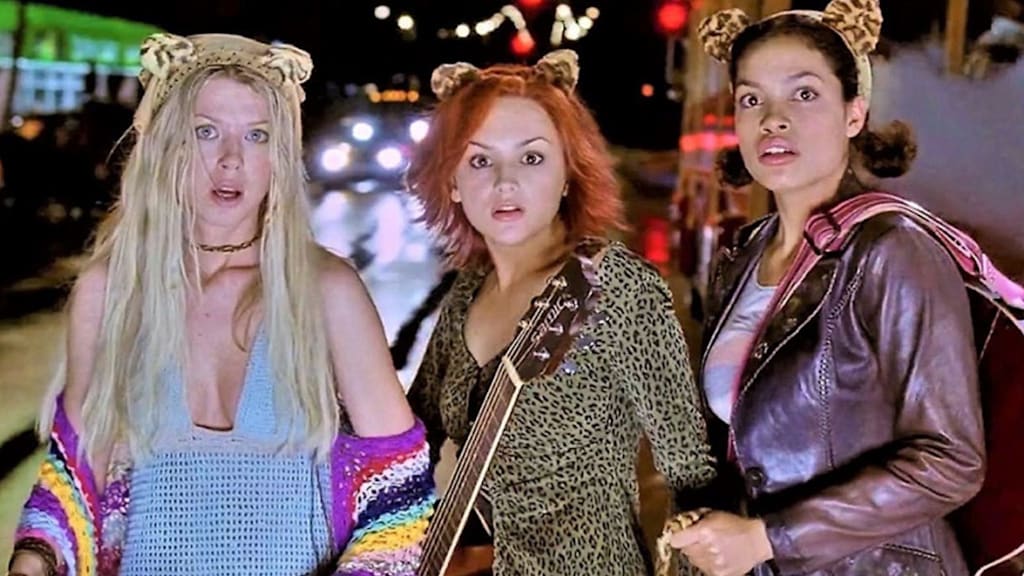
25 years ago, Joise and the Pussycats, based on the Archie comic, premiered in theatres making it a cult hit despite the film critics criticizing the film. This nostalgic Y2K film is ahead of its time.
The 2001 cult film Josie and the Pussycats offers a brightly colored, satirical take on the music industry, but beneath its comedic surface lies a question that continues to resonate: how much of its portrayal reflects reality? While the movie exaggerates its premise for humor, many of its core ideas mirror genuine dynamics within the modern entertainment business.
In the film, a fictional record label engineers the rise and fall of pop stars while embedding subliminal messages in their music to manipulate consumer behavior. This concept, though presented in an absurd and conspiratorial way, speaks to a broader truth about the power structures that shape popular culture. Major labels such as Universal Music Group and Sony Music Entertainment wield significant influence over which artists are promoted, which songs receive radio play, and ultimately what reaches mainstream audiences. Through strategic marketing, playlist placement, and partnerships, these corporations help determine trends rather than simply respond to them.
The notion of “manufactured” artists, another central theme in the film, also has real-world parallels. While many musicians are authentic creators, the industry often plays a substantial role in shaping an artist’s image, sound, and public identity. Songwriters, producers, stylists, and branding teams collaborate to craft a persona that resonates with target audiences. This does not necessarily make the artist inauthentic, but it does highlight how commercial considerations influence artistic output. The line between organic success and calculated development can be difficult to distinguish.
Where the film diverges most sharply from reality is in its depiction of subliminal messaging as a form of mass mind control. There is no credible evidence that record labels embed hidden commands in music to influence listeners’ behavior in such a direct and covert manner. However, the movie’s exaggeration points toward a subtler truth: marketing psychology is deeply embedded in the music industry. Catchy hooks, repetitive lyrics, and strategic branding are designed to capture attention and encourage consumption. Rather than controlling minds, these techniques shape preferences over time.
Perhaps the most accurate aspect of the film is its portrayal of artists as disposable commodities. The music industry is highly competitive and driven by profit, and artists who fail to maintain commercial success may quickly lose support from their labels. Contracts often favor the company, and creative control can be limited, particularly for emerging performers. Numerous musicians have publicly discussed the pressures of sustaining relevance and the consequences of falling out of favor with industry gatekeepers.
Ultimately, Josie and the Pussycats functions less as a literal depiction of the music business and more as a critique of its underlying mechanisms. Like other satirical works that examine media and consumer culture, the film amplifies real concerns to provoke thought. It suggests that audiences are not merely passive consumers but participants in a system where tastes can be influenced and trends can be engineered.
The “dark truth” the film hints at is not a hidden conspiracy but a structural reality: the music industry, like many others, is shaped by corporate interests, strategic decision-making, and the constant pursuit of profit. While creativity and authenticity remain vital, they often coexist with calculated efforts to capture and retain audience attention. In this sense, the film’s message endures not because it reveals a secret plot, but because it reflects the complex interplay between art, commerce, and influence in modern popular culture.
No lie I hate listening to the critics when it comes to this film. When I first started watching this film, I started to get the picture of the reality of the music industry. Luckily, I still have the DVD :).
About the Creator
Gladys W. Muturi
Hello, My name is Gladys W. Muturi. I am an Actress, Writer, Filmmaker, Producer, and Mother of 1.
TALES & CONFESSIONS OF A HIGH SCHOOL NOBODY COMING SOON
Enjoyed the story? Support the Creator.
Subscribe for free to receive all their stories in your feed. You could also become a paid subscriber, letting them know you appreciate their work.
Comments
There are no comments for this story
Be the first to respond and start the conversation.