
John Phillips: The Dark Legacy Behind the Music — Abuse, Addiction, and the Human Cost of a 1960s Icon

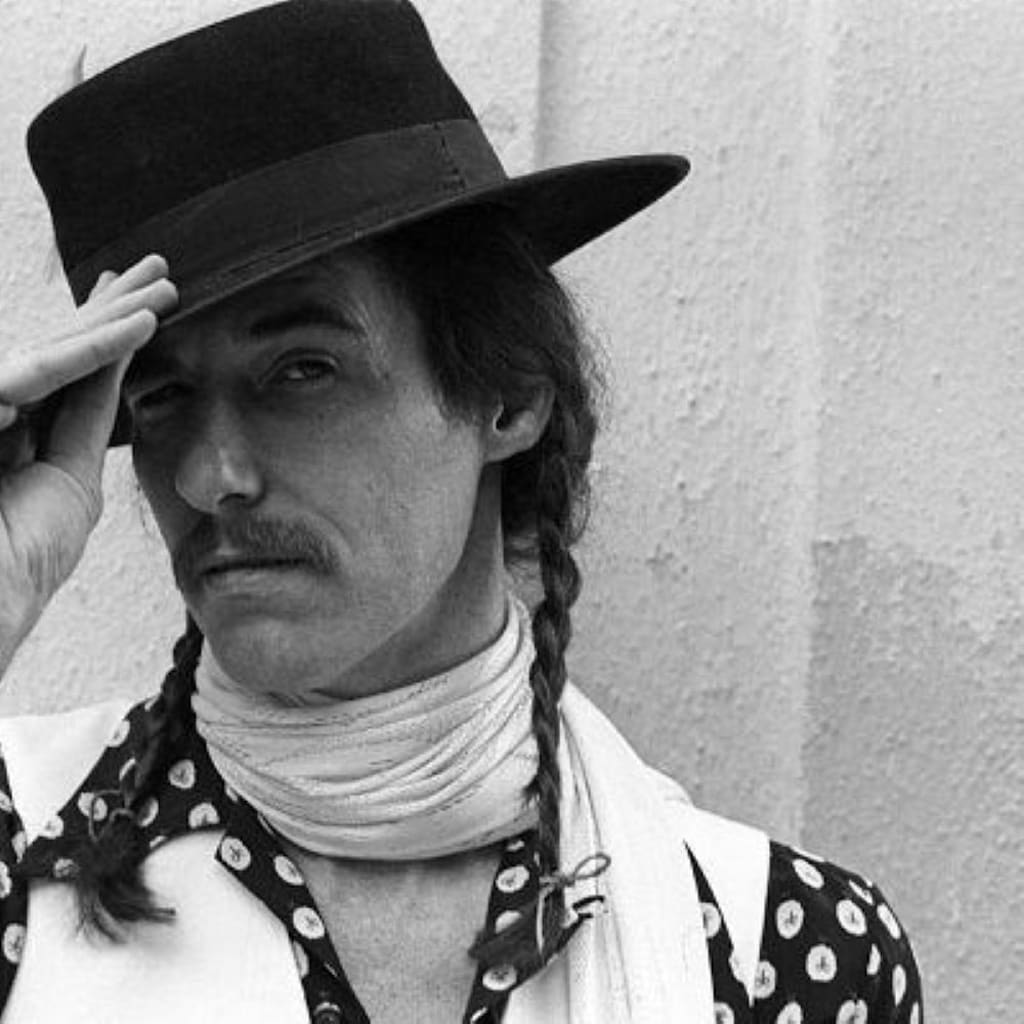
John Phillips is often remembered as the charismatic, handsome, effortlessly cool leader of The Mamas & the Papas, the man who wrote “California Dreamin’,” “Monday, Monday,” and helped define the sound of the 1960s. His public image was that of a creative genius, a bohemian visionary, and a central figure in the Laurel Canyon scene. But behind the mythology lies one of the darkest personal histories in American music. Phillips’ life was marked by cruelty, manipulation, rampant drug abuse, and a pattern of destructive behavior that devastated his band, fractured his family, and left a legacy of trauma that continues to reverberate decades after his death.
The story of John Phillips is not simply a tale of a flawed artist. It is a story of a man whose power, ego, and addictions enabled him to harm nearly everyone around him. From bandmates he belittled and controlled, to children he exposed to drugs, to the daughter who later accused him of years of incestuous abuse, Phillips’ life reveals a pattern of behavior that stands in stark contrast to the sunny harmonies he helped create.
The Mamas & the Papas were formed in 1965, and from the beginning, Phillips positioned himself as the group’s leader. He wrote the songs, arranged the harmonies, and controlled the creative direction. But his leadership was not benevolent. Band members later described him as domineering, dismissive, and often cruel. Cass Elliot, whose voice was central to the group’s sound, was subjected to constant ridicule about her weight. Michelle Phillips, John’s wife and the group’s other female vocalist, endured his infidelity, emotional manipulation, and controlling behavior. Denny Doherty, the group’s tenor, struggled under Phillips’ authoritarian approach and the emotional chaos that surrounded the band.
Phillips’ treatment of Cass Elliot was particularly vicious. Despite her extraordinary vocal talent, he frequently mocked her appearance, excluded her from decisions, and treated her as though she were lucky to be included at all. Elliot’s friends later said that Phillips’ cruelty contributed to her lifelong insecurity and emotional pain. Michelle Phillips, meanwhile, was trapped in a marriage defined by John’s dominance. His jealousy, affairs, and controlling behavior created a toxic environment that spilled into the band’s professional life. The Mamas & the Papas were known for their beautiful harmonies, but behind the scenes, Phillips’ behavior created constant tension, resentment, and instability.
As the band’s fame grew, Phillips’ drug use escalated. He became heavily involved in the Los Angeles drug scene, and his home became a hub for musicians, dealers, and hangers‑on. His addiction was not a private struggle. It was a force that shaped his relationships, his work, and his family. Phillips’ children grew up in an environment where drugs were not only present but normalized. Mackenzie Phillips, his daughter from his first marriage, later described a childhood filled with chaos, neglect, and exposure to adult behavior long before she was emotionally equipped to understand it.
Mackenzie’s account of her father’s drug use is harrowing. She described being introduced to drugs as a young teenager, with her father offering her substances as casually as if he were offering a drink. Her memoir recounts scenes of drug‑fueled parties, emotional volatility, and a household where boundaries simply did not exist. Phillips’ addiction was not just self‑destructive; it was destructive to everyone around him.
But the darkest part of John Phillips’ legacy emerged in 2009, when Mackenzie Phillips publicly alleged that her father had sexually abused her for years, beginning when she was nineteen and continuing for a decade. The revelation shocked the public, but for many who knew the family, it was tragically unsurprising. Mackenzie described the abuse as beginning on the eve of her wedding, when her father allegedly raped her while both were heavily intoxicated. She said the abuse continued for years, becoming what she called a “consensual” relationship only in the sense that she was too traumatized, too conditioned, and too dependent to resist.
Her allegations were met with a mixture of horror, disbelief, and denial. Some members of the Phillips family rejected her account. Others remained silent. But in the years that followed, new information emerged that supported Mackenzie’s claims. In 2026, multiple outlets reported the existence of a letter written by a close family member decades earlier, corroborating Mackenzie’s account of incestuous abuse. The letter, described in detail by Fox News and Wonderwall, stated that the writer had been aware of the abuse and had confronted John Phillips about it. According to these reports, Phillips did not deny the allegations when confronted. The existence of this letter provided independent confirmation of Mackenzie’s story and cast a harsh light on the family’s long history of denial and secrecy.
The corroborating letter was not the only evidence supporting Mackenzie’s account. In 2024, Yahoo Entertainment published a retrospective examining the Phillips family’s history of addiction, trauma, and abuse. The article highlighted patterns of dysfunction that spanned generations, including substance abuse, emotional instability, and a culture of silence around the family’s darkest secrets. In 2025, Todo Noticias published a detailed report on Mackenzie’s allegations, including her claim that she had become pregnant during the period of abuse and had undergone an abortion. The report emphasized the power imbalance, the drug‑fueled environment, and the psychological manipulation that made resistance nearly impossible.
Phillips’ behavior toward his children was not limited to Mackenzie. His son, Jeffrey, struggled with addiction and emotional instability throughout his life. His daughter Bijou Phillips, born to his third wife, also grew up in an environment shaped by drugs, instability, and emotional chaos. Bijou later became known for her own struggles with addiction and for relationships marked by volatility and controversy. The Phillips family became a tragic example of how trauma and addiction can echo across generations.
Phillips’ public image, however, remained largely intact during his lifetime. He continued to be celebrated as a 1960s icon, a musical innovator, and a cultural figure. His role in organizing the Monterey Pop Festival, his songwriting contributions, and his place in the Laurel Canyon mythology overshadowed the darker aspects of his life. Even after Mackenzie’s allegations became public, some fans and commentators attempted to separate the art from the artist, arguing that his musical contributions should not be overshadowed by his personal behavior. But the weight of the evidence, the corroborating accounts, and the long history of trauma within his family make it impossible to ignore the human cost of his actions.
John Phillips died in 2001, long before the full extent of his behavior became public. He never faced legal consequences for the abuse Mackenzie described. He never publicly acknowledged the harm he caused to his bandmates, his children, or the people who trusted him. His legacy is now a complicated one, marked by both artistic achievement and profound personal cruelty. The sunny harmonies of The Mamas & the Papas cannot erase the darkness behind them.
Understanding Phillips’ life requires confronting the uncomfortable truth that some of the most celebrated figures in music history were also capable of extraordinary harm. The industry’s culture of permissiveness, its glorification of excess, and its tendency to protect powerful men created an environment where abuse could flourish unchecked. Phillips was not an anomaly. He was part of a larger pattern. But his story is uniquely disturbing because of the depth of the harm he inflicted and the vulnerability of the people he hurt.
The legacy of John Phillips is not simply a matter of historical record. It is a reminder of the importance of believing survivors, of recognizing the long‑term impact of trauma, and of refusing to allow artistic achievement to overshadow human suffering. Mackenzie Phillips’ courage in speaking out forced the world to confront a truth that had been hidden for decades. The corroborating evidence that emerged in the years that followed confirmed what she had endured and exposed the culture of silence that had protected her father.
John Phillips helped create some of the most beautiful music of the 1960s. But the beauty of his art cannot erase the ugliness of his actions. His story is a cautionary tale about power, addiction, and the devastating consequences of unchecked cruelty. It is a story that must be told honestly, without nostalgia, without excuses, and without the mythologizing that so often surrounds figures from the past. The truth is darker, more painful, and more important than the legend.
References
Fox News (2026). Coverage of corroborating letter supporting Mackenzie Phillips’ allegations.
Yahoo Entertainment (2024). Retrospective on Phillips family addiction and abuse history.
Wonderwall (2026). Report on corroborating letter and family confrontation.
Todo Noticias (2025). Detailed report on Mackenzie Phillips’ allegations, pregnancy, and abortion.
AOL (2026). Coverage of corroborating evidence and family denial dynamics.
About the Creator
Julie O'Hara - Author, Poet and Spiritual Warrior
Thank you for reading my work. Feel free to contact me with your thoughts or if you want to chat. [email protected]
Enjoyed the story? Support the Creator.
Subscribe for free to receive all their stories in your feed.
Comments
There are no comments for this story
Be the first to respond and start the conversation.