
John Fogerty Did This: The Abuse, Betrayal, and Pettiness Behind a Rock Legend

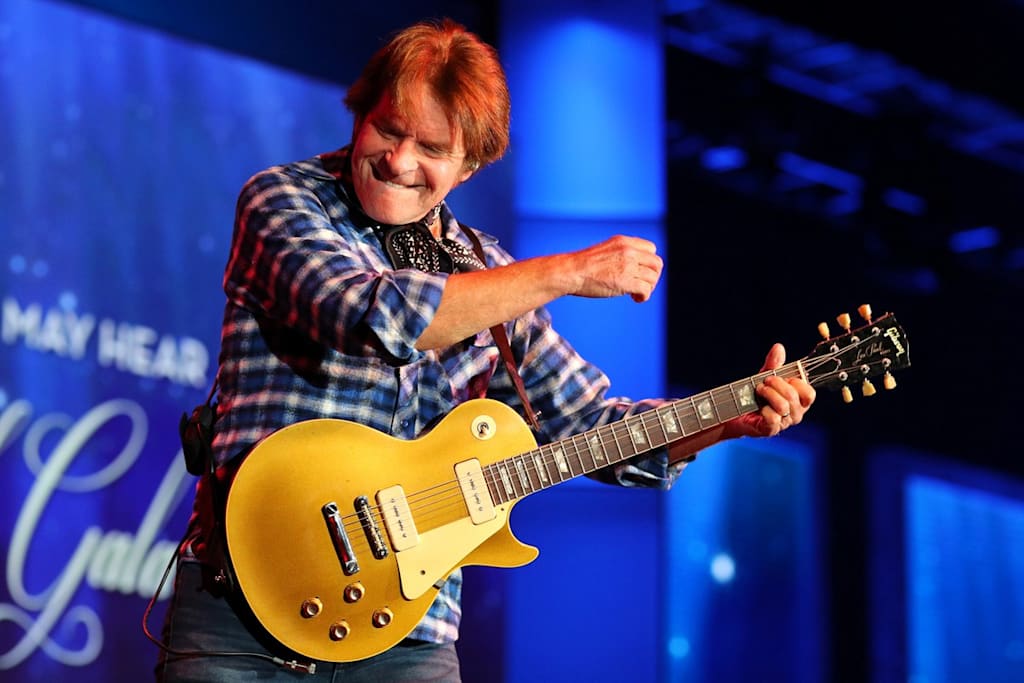
John Fogerty: How Ego, Control, and Cruelty Broke Creedence Clearwater Revival and Damaged Everyone Around Him
John Fogerty is often celebrated as one of the great American songwriters — the voice behind Fortunate Son, Bad Moon Rising, Proud Mary, and Green River. His sound defined an era, and his songwriting shaped the late 1960s and early 1970s. But behind the mythology of Fogerty as a blue‑collar poet and musical visionary lies a long, painful history of domination, resentment, legal warfare, and personal cruelty that fractured friendships, destroyed family bonds, and left a trail of bitterness that lasted decades.
Fogerty’s story is not simply one of artistic brilliance. It is also a story of ego, insecurity, and an inability to share power — a pattern that harmed nearly everyone around him. From bandmates to family members, from record executives to grieving widows, Fogerty’s need for control shaped his legacy as much as his music did.
This article begins at the beginning — with CCR’s formation — and follows the full arc of Fogerty’s harmful behavior, ending with the late‑life “softening” that critics argue came far too late to repair the damage he caused.
Early CCR: A Band Built on Brotherhood — Until Fogerty Took Over
Creedence Clearwater Revival began as a childhood band: John Fogerty, his older brother Tom Fogerty, bassist Stu Cook, and drummer Doug Clifford. In the early years, Tom was the frontman. He was older, more experienced, and the natural leader.
But as John’s songwriting talent emerged, the dynamic shifted. John began writing songs at a rapid pace, and his voice — raw, urgent, unmistakable — became the band’s signature. By 1968, John Fogerty had effectively taken control of CCR.
John Fogerty’s Total Creative Takeover
Fogerty wrote nearly every song, sang lead vocals, arranged the music, and produced the records. He has openly admitted that he acted as a “musical dictator,” insisting on absolute control over every creative decision.
This approach produced hit after hit, but it also created deep resentment within the band. Cook and Clifford later described Fogerty’s leadership style as rigid, domineering, and dismissive. They felt Fogerty treated them as hired hands rather than equal partners.
Tom Fogerty, once the band’s frontman, was reduced to a rhythm guitarist with no creative input.
Tom Fogerty’s Growing Resentment
Tom repeatedly asked for more vocal opportunities, more songwriting input, and a more democratic structure. John refused every request. Tom felt humiliated — pushed out of his own band, overshadowed by his younger brother, and treated as a disposable accessory.
The tension grew unbearable. In 1971, Tom quit CCR entirely, unable to tolerate John’s authoritarian control.
CCR collapsed completely the following year, leaving all four members embittered and estranged.
The Collapse: Fogerty’s Sabotage of CCR’s Final Album
Fogerty’s most controversial act during CCR’s final days was his handling of the band’s last album, Mardi Gras. After years of complaints from Cook and Clifford about Fogerty’s dominance, Fogerty agreed to a “democratic” album where each member contributed songs.
But Fogerty later admitted he intentionally withheld good material, leaving Cook and Clifford to struggle with songwriting duties they had never been allowed to develop. Critics savaged the album. Rolling Stone called it “the worst album ever made by a major rock band.”
Fogerty’s decision effectively sabotaged the band’s legacy and ensured that CCR ended on a sour, humiliating note.
Fogerty’s Own Admission
In a 2012 interview with The Guardian, Fogerty acknowledged that he was “devastated” and “confused” during CCR’s collapse. But he stopped short of accepting responsibility for the band’s destruction, instead framing himself as a misunderstood visionary surrounded by unreliable collaborators.
The Feuds: A Life Consumed by Grudges and Lawsuits
If CCR’s internal tensions were toxic, Fogerty’s battles outside the band were even more explosive.
The War with Saul Zaentz and Fantasy Records
Fogerty’s feud with Fantasy Records president Saul Zaentz is one of the most infamous legal conflicts in music history. Fogerty accused Zaentz of exploiting CCR, withholding royalties, and manipulating contracts. The bitterness escalated into decades of lawsuits, countersuits, and public insults.
The most surreal moment came in 1985, when Zaentz sued Fogerty for plagiarizing himself. Fogerty’s solo song The Old Man Down the Road was alleged to sound too similar to CCR’s Run Through the Jungle, which Fantasy owned. Fogerty was forced to perform both songs in court to prove they were distinct — a humiliating spectacle that became a symbol of the absurdity of the feud.
Alienation of Bandmates
Fogerty’s anger toward Zaentz eventually spilled over into his relationships with Cook and Clifford. When they sided with Fantasy Records in certain legal disputes, Fogerty interpreted it as betrayal. He declared publicly that they could “not be friends,” cementing a permanent divide.
Cook and Clifford later formed Creedence Clearwater Revisited, a touring act performing CCR songs. Fogerty responded by suing them repeatedly, attempting to stop them from using the name. The courts rejected his claims, ruling that Cook and Clifford had the right to reference their own musical history.
Fogerty’s lawsuits against his former bandmates lasted years, draining money, time, and emotional energy from all involved.
The Hall of Fame Induction: Fogerty’s Most Public Act of Cruelty
The most widely criticized moment of Fogerty’s career occurred at the 1993 Rock and Roll Hall of Fame induction ceremony. It remains one of the most uncomfortable and petty episodes in rock history.
Banning His Own Bandmates from Performing
Behind the scenes, Fogerty issued a secret ultimatum to the Hall of Fame organizers:
If Stu Cook and Doug Clifford perform, I walk.
He did not tell Cook or Clifford. They only learned they were banned when they arrived for rehearsal, dressed in tuxedos and ready to play.
Humiliating Tom Fogerty’s Widow
Tom Fogerty had died three years earlier, in 1990, from complications of AIDS contracted through a tainted blood transfusion. His widow, Tricia Fogerty, flew to the ceremony carrying Tom’s guitar, hoping for a moment of healing.
Fogerty ignored her completely.
Performing CCR Songs with a House Band
Fogerty accepted the award alongside Cook and Clifford, but refused to look at them. As soon as they finished their speeches, he walked offstage with the trophies. Minutes later, he returned to perform CCR classics — backed not by his bandmates, but by an all‑star house band including Bruce Springsteen and Robbie Robertson.
Cook and Clifford were forced to sit in the audience and watch Fogerty play their songs with other musicians while their families cried at the table.
Doug Clifford later called it “the most hurtful night of my life.”
The Tragedy of Tom Fogerty: A Brother Lost to Pride
The most painful chapter in Fogerty’s story is his relationship with his brother Tom. Their estrangement lasted nearly 20 years, fueled by artistic jealousy, business disputes, and Fogerty’s refusal to forgive Tom for maintaining a friendship with Saul Zaentz.
The Deathbed Visit
Fogerty visited Tom shortly before his death in 1990. Instead of reconciliation, they argued. Fogerty later admitted he told his wife afterward, “I can never be friends with Tom.”
Tom died without closure, without forgiveness, and without the chance to speak for himself.
One‑Sided Forgiveness
Years later, Fogerty began publicly expressing forgiveness toward Tom. Critics argue this “forgiveness” was self‑serving — a way for Fogerty to rewrite the narrative without ever having to face Tom or acknowledge the harm he caused.
Tom’s widow and children have never publicly endorsed Fogerty’s version of events.
Late‑Life Softening: A Change in Tone, Not in History
In recent years, Fogerty has softened publicly. He reclaimed the rights to his CCR catalog in 2023, began touring with his children, and speaks more openly about regret. In his memoir Fortunate Son, he admits that decades of anger consumed him and damaged his life.
But regret does not erase the harm.
It does not undo the humiliation of the Hall of Fame ceremony.
It does not repair the friendships he destroyed.
It does not bring Tom back.
It does not change the fact that Fogerty’s need for control left a permanent scar on CCR’s legacy.
Fogerty remains a towering musical figure — but also a cautionary tale about ego, pride, and the cost of refusing to share power.
References
The Guardian. “John Fogerty: ‘I was devastated and confused.’” 2012.
Rolling Stone. “Creedence Clearwater Revival: The Inside Story.”
Billboard. “John Fogerty Wins Back His CCR Catalog Rights.” 2023.
Los Angeles Times. “Fogerty Sued for Plagiarizing Himself.”
Rock & Roll Hall of Fame Archives. “1993 Induction Ceremony Footage and Notes.”
Cook, Stu & Clifford, Doug. Interviews in Classic Rock Magazine.
Fogerty, John. Fortunate Son: My Life, My Music. Little, Brown and Company, 2015.
NPR Music. “The Fogerty Brothers: A Tragic Estrangement.”
About the Creator
Julie O'Hara - Author, Poet and Spiritual Warrior
Thank you for reading my work. Feel free to contact me with your thoughts or if you want to chat. [email protected]
Enjoyed the story? Support the Creator.
Subscribe for free to receive all their stories in your feed.
Comments
There are no comments for this story
Be the first to respond and start the conversation.