
Inside the World of Saul Damelyn: "Kings, Queens and Dream Machines"
A debut shaped by reinvention, British lyrical tradition, and Americana storytelling, where imagination and lived experience converge
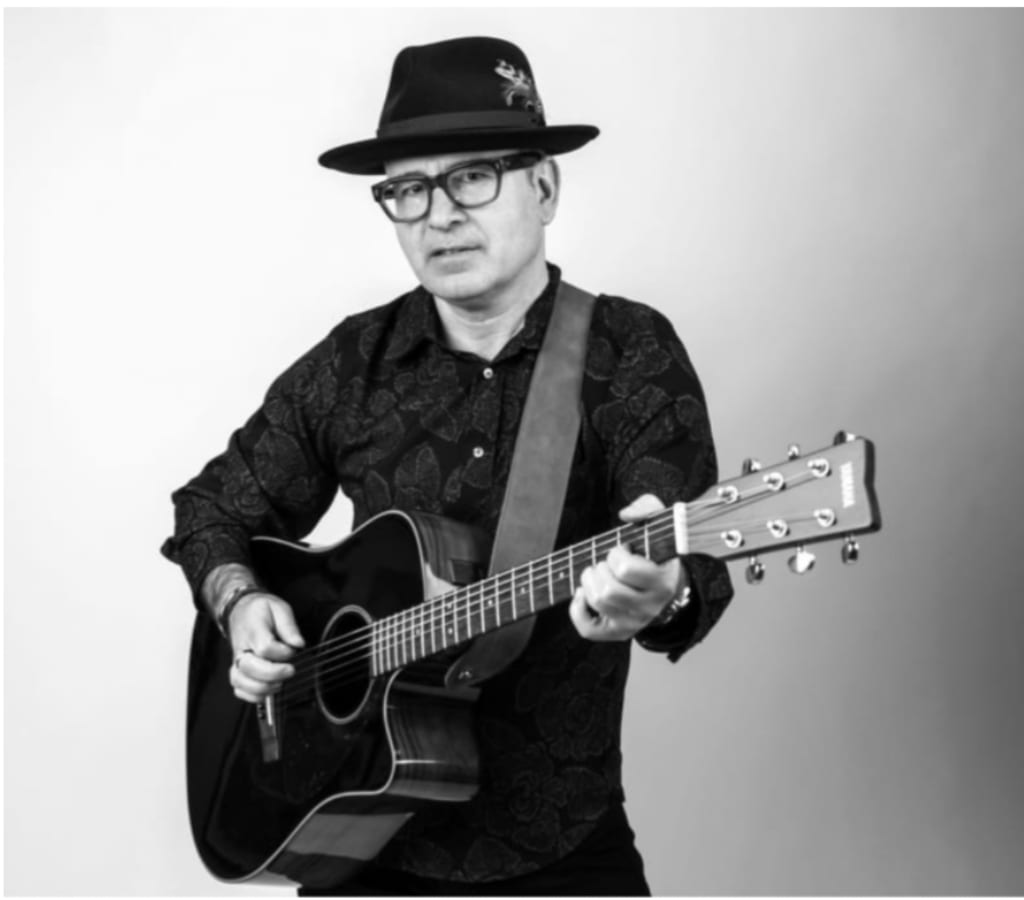
With his debut full-length album Kings, Queens and Dream Machines, British songwriter Saul Damelyn steps into a richly imagined world built on contrast—between past and present, irony and sincerity, structure and emotional release. The record unfolds like a series of interconnected stories rather than a single defining statement, reflecting Damelyn’s belief that life itself is made up of shifting, sometimes conflicting perspectives.
Rooted in lyrical traditions shaped by British new wave and glam-inflected storytelling, yet equally informed by Americana and country-rock influences, the album moves fluidly between observation and introspection. Themes of creativity, perseverance, reinvention, and the quiet tension between ambition and contentment run throughout, giving the songs a reflective, almost conversational quality. There is wit here, but also vulnerability; narrative clarity alongside deliberate ambiguity.
A defining element of the record is its collaborative voice. Vocalist Phoebe White appears across much of the album, shaping its emotional range through interpretation rather than imitation. The interplay between Damelyn’s own performances and White’s contributions adds dimension to the storytelling, allowing songs to shift perspective and meaning depending on who is behind the mic.
Across Kings, Queens and Dream Machines, Damelyn draws from a wide lineage of influence—from the lyric-driven precision of Elvis Costello and Squeeze to the country-rooted storytelling of Gram Parsons, Lucinda Williams, and Johnny Cash—while still carving out a voice distinctly his own. The result is a debut that feels both deeply personal and intentionally universal, grounded in lived experience but shaped for broader reflection.
In this conversation, Damelyn discusses the emotional architecture behind the record, the balance between revelation and restraint in his songwriting, and the creative philosophy that shaped a debut built as much on imagination as it is on lived truth.
--------
Kings, Queens and Dream Machines feels deeply reflective without becoming overly autobiographical. How did you decide which personal experiences to reveal directly and which to leave more open-ended?
I wanted to write about themes which are universal. They are my experiences but hopefully they will resonate with others. So doing what you want to do, coming back to that, maybe after a period of doing what you think others expect you to do. And maybe in the middle of life, when others expect you to settle for what you have. That’s most clearly expressed in “We Broke the Rules”. But what’s interesting is: that song also resonates with some young people, probably in a different way.
“Still Water” follows a similar idea, but maybe more about being a “rough diamond”, and learning to be comfortable with that. That’s what I was trying to express in my own way with “damaged porcelain”. Again, being comfortable with the life change you have chosen. And perhaps with your own mental health, with your creativity and finding an even keel in that acceptance. “Evening is Waiting” is a song about hope.
Your songwriting blends British new wave influences with Americana and country-rock storytelling. Which artists or albums shaped the sound of this record the most while you were creating it?
My song-writing is lyrically driven. And that’s where the British influences come in. Elvis Costello looms large, with albums like his first one “My Aim is True”, and, in a huge way, “King of America” which traces his roots through his grandfather in the US. Also Chris Difford of Squeeze for his storytelling. Ultimately these are stories. I tried to strip-back my lyrics in “Evening is Waiting”, and my influence there is David Gilmour.
Then on the music - a whole lot of different artists. Gram Parsons for country. Again Elvis Costello. Dylan, a lot of others but I write in my own way, not consciously like them - which is why some musicians say I have unexpected chord changes.
The album explores themes of creativity, reinvention, and perseverance. Was there a specific moment in your life that inspired you to finally make this record?
Separation from my wife at the time. That was really the trigger to record. I had written these songs over quite a long period of time. “Evening is Waiting” was the only one I wrote during our separation, and it’s a song of hope.
Phoebe White plays a major role throughout the album. What made her the right collaborator for these songs, and how did her interpretations change the material?
Phoebe has a wonderful voice. With real depth to it, that’s what appealed to me when I first met her by chance when I was recording my first album. These are my songs but the collaboration is in the way she sings them. And as we were going I talked about what I was trying to convey, and she interpreted it and picked out lyrics her own way. So it was her choice to riff on the phrase “music in the stars” at the end of “Back to the Start”. Which I thought was just brilliant, so I added it into the title.
“Museum of Love” feels like one of the emotional centerpieces of the album. What was the writing process behind that track, and why did it stand out to you as a single?
Well I’ve been asked about this a lot, probably because we put it out first. The second part is easiest to answer. When I played the songs to people they found this one really catchy. And I had to have me singing on the first single so it was this or Joseph, and this one just edged it as an opener.
The second part is harder to explain. So in some ways the more natural emotional centrepieces of the album are “We Broke the Rules”, “Still Water” and “Evening is Waiting”. Those songs are linked through a thread of hope and a kind of homecoming. Museum is a more imaginative story. It’s hopefully quite universal in exploring different aspects of relationships. It’s not explained who the two women are, what the hook really means, what happens at the end, so people can interpret it their own way.
You included a cover of “High Fashion Queen,” originally associated with The Flying Burrito Brothers. What drew you to that song specifically, and how did you want to reinterpret it?
I just love that song and again Gram Parsons is one of my favorite writers. It’s got a wonderful shuffle rhythm to it. And I love the way the words High Fashion Queen only come in at the end, and three times. But I was amazed to see there are very few versions out there. There’s the original Flying Burrito Brothers version but that’s super fast and feels a bit corny to me. There’s a live slow shuffle version with Chris Hillman which I do like. But I wanted to interpret the song my own way, with a fast rock ‘n roll shuffle rhythm.
There’s a strong storytelling element throughout the album. Do you approach songwriting more like a novelist, a diarist, or something entirely different?
Well yes, a storyteller. I would not say diarist because if I can’t make the songs universal in some way then I have failed. They are not just about me, they have to appeal to other people.
Your lyrics often touch on the tension between ambition and contentment. Do you think artists ever fully resolve that balance?
I think if you have contentment then you cannot create. This is of course well documented, but I feel it too. The poem “Pseudo” on my website gets close to conveying this. It doesn’t mean you’re miserable! Just always on the edge of writing something, getting it out there. Of course you have ambition, to create something that will have widespread appeal. That’s obviously a big ask but you do the best you can.
The album title, Kings, Queens and Dream Machines, is incredibly evocative. What does that phrase represent to you personally?
Well on a basic level it picks its name from three songs, “King Kinky Shoes”, “High Fashion Queen” and “Joseph the Dreamer”. But it’s trying to convey the power and value of imagination, which is so close to my heart. And there’s a male / female thing going on which I think is again a thread through the album, and is also picked up in the two pastiche-type songs.
Now that your debut album is out in the world, what do you hope listeners connect with most when they spend time with these songs?
I hope people will find in it something they can relate to. They don’t have to like all of it, but if I can touch many people who like some of it then I have done something worthwhile.
About the Creator
Enjoyed the story? Support the Creator.
Subscribe for free to receive all their stories in your feed.
Comments
There are no comments for this story
Be the first to respond and start the conversation.