
Inside “Kings, Queens and Dream Machines”: Saul Damelyn Builds a World of Fractured Narratives and Quiet Reckonings
A debut shaped by contrast, collaboration, and the blurred edges between storytelling and self-reflection
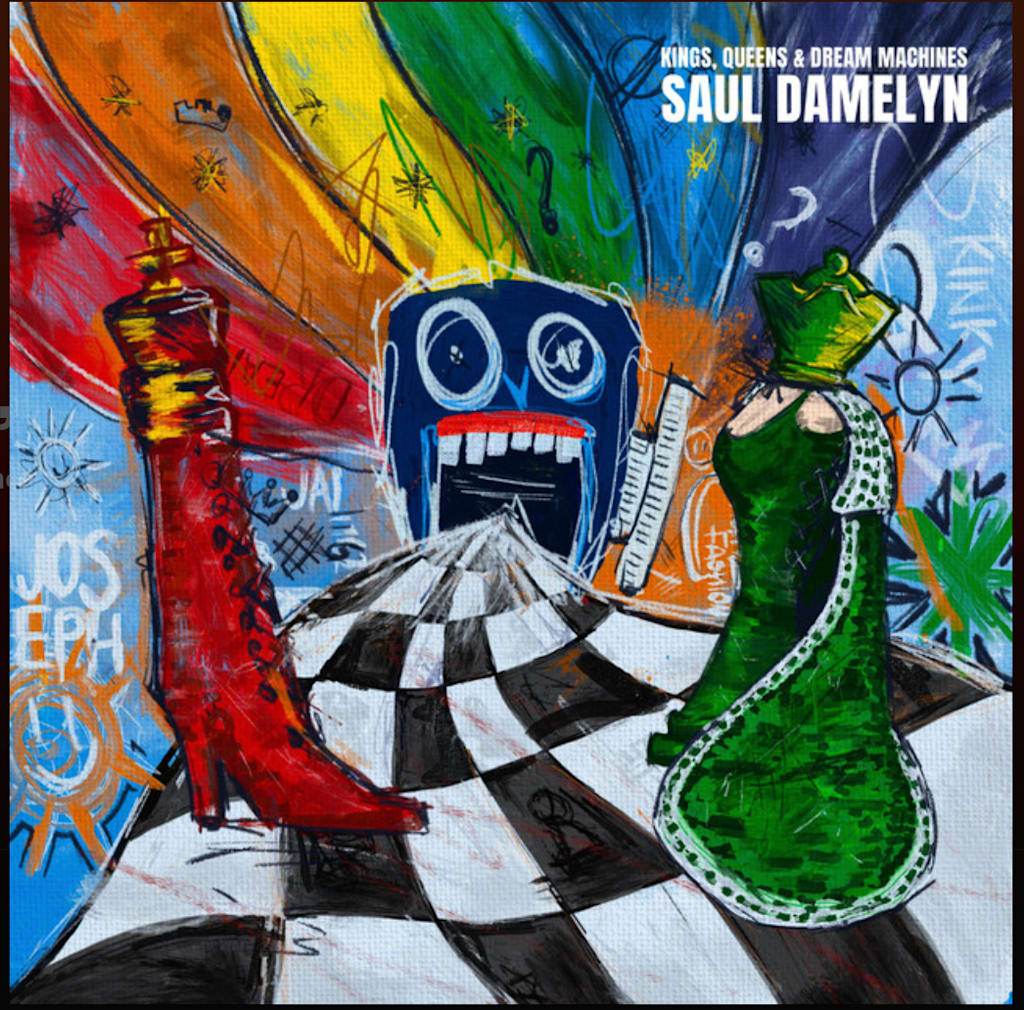
With his debut full-length album Kings, Queens and Dream Machines, British songwriter Saul Damelyn arrives with a record that feels less like an introduction and more like the opening of an entire internal universe. Rather than presenting a single cohesive statement or linear emotional arc, the album operates as a collection of intersecting perspectives—each song functioning like a fragment of a larger, shifting narrative system.
The record is built on contrast. Damelyn leans into opposites not as conflicts to resolve, but as conditions to inhabit: past and present sitting side by side, irony brushing against sincerity, structured composition dissolving into moments of emotional looseness. This tension gives the album its shape. Instead of resolving into certainty, it expands outward, suggesting that identity and meaning are constantly in motion rather than fixed endpoints.
The songwriting draws on a lineage of British lyric tradition, particularly the observational wit and narrative precision associated with new wave and glam-influenced storytelling. Yet the record refuses to remain confined within those borders. There is a noticeable pull toward Americana and country-rock sensibilities—both in its pacing and in the way stories are framed through lived detail rather than abstraction. The result is a hybrid language: distinctly British in tone, but open to broader, transatlantic influence.
Across the album, recurring themes begin to surface without ever hardening into doctrine. Creativity is treated as both necessity and burden. Reinvention appears not as triumph but as ongoing adjustment. Ambition and contentment coexist uneasily, neither fully dominant. These ideas are not declared outright so much as observed from different angles, allowing the listener to assemble meaning through accumulation rather than instruction.
One of the most distinctive structural choices in Kings, Queens and Dream Machines is its use of multiple vocal perspectives. Vocalist Phoebe White appears throughout the album, not as a featured guest in the conventional sense, but as an integrated narrative force. Her presence shifts the emotional framing of several tracks, allowing the same lyrical ideas to be refracted through different interpretive lenses. At times, a song feels grounded in Damelyn’s voice; at others, White’s delivery alters its emotional temperature entirely, introducing ambiguity where there might otherwise be clarity.
This interplay becomes central to the album’s identity. Rather than reinforcing a singular authorial perspective, the collaboration destabilizes it. The listener is encouraged to question not just what a song is saying, but who is speaking—and how that changes the meaning. It is a structural decision that mirrors the album’s broader thematic concerns: identity as fluid, narrative as shared, truth as something constructed rather than simply revealed.
Musically and lyrically, Damelyn draws from a wide set of influences without settling into imitation. There are echoes of artists known for sharp lyrical architecture and character-driven storytelling, as well as those rooted in the emotional directness of American country traditions. But these references function more like scaffolding than template. The songs are built with a sense of craft that prioritizes voice and perspective over genre fidelity.
What emerges is a debut that resists easy categorization. It is reflective without becoming self-absorbed, structured without feeling rigid, and experimental without abandoning emotional accessibility. Even at its most fragmented, the record maintains a sense of intention—an awareness that disorientation itself can be a narrative tool.
Lyrically, the album often reads like a series of internal monologues overheard at different points in time. There is a conversational quality to the writing, as if each song is mid-thought rather than fully resolved. Yet within that looseness, there is precision in observation: small emotional shifts, subtle contradictions, and the quiet friction between desire and hesitation are consistently foregrounded.
Rather than presenting answers, Kings, Queens and Dream Machines is structured around inquiry. It asks what it means to build meaning from memory, how stories change depending on who tells them, and whether emotional truth requires stability or simply repetition across different forms.
By the time the album closes, it does not resolve its tensions so much as leave them suspended. That lack of resolution feels deliberate. In Damelyn’s framing, coherence is not the goal—continuity is. The record suggests that identity, like music itself, is something assembled over time through fragments, reinterpretations, and shifting vantage points.
As a debut, Kings, Queens and Dream Machines positions Saul Damelyn not as an artist arriving with fixed answers, but as one building a framework for ongoing exploration—where narrative, voice, and perspective remain in constant negotiation.
About the Creator
Enjoyed the story? Support the Creator.
Subscribe for free to receive all their stories in your feed.
Comments
There are no comments for this story
Be the first to respond and start the conversation.