
How Morgan Wallen Changed Zach Bryan’s Mind About Nashville
After years of criticizing Nashville’s country music scene, Zach Bryan reveals how conversations with Morgan Wallen and his own personal growth helped him see Music City differently.

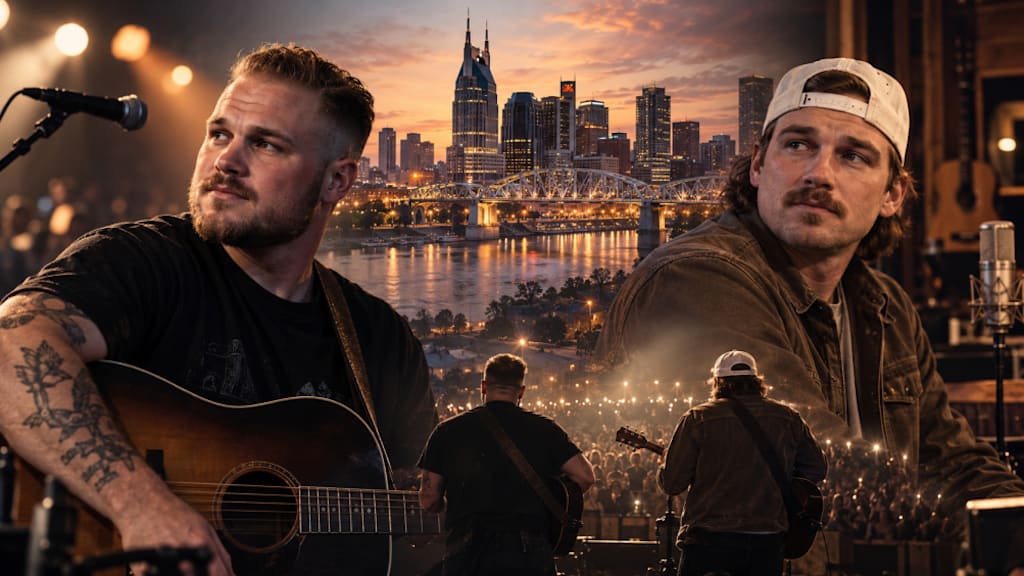
For years, Zach Bryan made it clear that Nashville's mainstream country music industry wasn't where he felt he belonged. The singer-songwriter built his reputation on emotional storytelling, stripped-back production, and a willingness to challenge the polished sound dominating country radio.
But something has changed. And surprisingly, Morgan Wallen, one of mainstream country's biggest stars, has played a part in that transformation.
During an October 2026 conversation with actor Matthew McConaughey, Bryan opened up about his complicated relationship with Music City. He admitted that his years of frustration weren't entirely about Nashville or its musicians. Some of that resentment, he now believes, came from his own outlook on life.
Conversations with Wallen, Jason Isbell, and other respected artists helped Bryan reconsider assumptions he had carried for years. Combined with sobriety, marriage, and several memorable experiences in Nashville, those conversations gave him a different understanding of the country music community.
Why Zach Bryan Criticized Nashville
Bryan's frustration with Nashville was never much of a secret. Throughout his career, he positioned himself as an artist more interested in honest songwriting than following commercial trends.
His 2022 album American Heartbreak featured "If She Wants a Cowboy," a satirical track that poked fun at the predictable formulas often associated with mainstream country music. Its exaggerated production and use of Auto-Tune emphasized his criticism of an industry he believed sometimes prioritized commercial appeal over authenticity.
The criticism became even more direct in "Like Ida," a track from his 2024 album The Great American Bar Scene. The song expressed his discomfort with Nashville's country music culture and reinforced his reputation as an outsider.
For Bryan, the issue went beyond musical preferences. He questioned why some popular country songs required numerous co-writers and elaborate production arrangements when artists could communicate powerful emotions through relatively simple compositions.
His admiration for legendary songwriters Townes Van Zandt and Blaze Foley shaped that philosophy. Both artists were known for intimate storytelling, an approach Bryan has consistently valued in his own work.
Recording in New York also strengthened his belief that he belonged to a different creative community. He saw himself as part of a movement pursuing music on its own terms, away from Nashville's established industry practices.
Eventually, however, he began questioning whether that distinction was as important as he had once believed.
How Morgan Wallen Changed His Thinking
One of the most revealing moments in Bryan's conversation with McConaughey came when he discussed his relationships with other musicians.
Rather than continuing to criticize Nashville from a distance, Bryan acknowledged that speaking with artists working across different corners of country music had helped him recognize his own prejudices.
Among those musicians were Morgan Wallen and Jason Isbell.
As reported by Holler, Bryan explained that those conversations helped him realize the resentment he carried was partly his own responsibility.
He described finally recognizing that "the chip was mine on my shoulder."
That admission carries particular significance because Wallen and Bryan have often been associated with contrasting approaches to contemporary country music.
Wallen has achieved enormous commercial success with a sound that incorporates elements of pop, rock, and hip-hop. Bryan, meanwhile, became widely known for acoustic-driven songs, personal lyrics, and an independent-minded approach to songwriting.
Their different musical identities have often placed them on opposite sides of conversations about what modern country music should sound like.
Yet Bryan's recent comments suggest those differences no longer prevent him from respecting artists who take another approach.
He did not reveal the specific advice Wallen gave him or suggest that one conversation changed everything. Instead, he described a gradual realization shaped by several relationships and experiences.
The important change wasn't necessarily his taste in music. It was his willingness to understand the people making it.
Nashville Began Feeling Different
Bryan's changing perspective wasn't limited to conversations with other country stars.
He also described spending several weeks around Nashville and discovering qualities he had previously overlooked.
During that visit, Bryan paid attention to the people living and working in the area, including carpenters, plumbers, and other tradespeople. Their work ethic and everyday kindness left an impression on him.
He recalled occasions when he and his wife, Samantha, experienced vehicle trouble and local residents offered assistance.
Those encounters challenged his assumption that Nashville was defined primarily by its commercial music industry.
Behind the record labels, recording studios, and famous entertainment venues, he began recognizing a community of ordinary people going about their lives.
According to Countrytown's detailed coverage of the interview, Bryan also discussed how the people he met made him feel increasingly comfortable in the area.
The experience helped him separate his criticisms of certain industry practices from his judgment of an entire city.
For someone who had publicly rejected Nashville's music scene, that distinction represented a meaningful change.
The Musical Moments That Changed Everything
Another turning point came during the recording of Bryan's latest EP, Young Manhood and Other Donatable Organs, released on October 16, 2026.
While working on "Lies," his collaboration with Lana Del Rey, Bryan found himself surrounded by musical opportunities that reminded him why Nashville remains such an important creative center.
He was recording at Easy Eye Sound on Music Row when Caleb Followill, frontman of Kings of Leon, contacted him with an invitation to perform at the Basement East that evening.
The timing struck Bryan. He was already working with an artist he admired when another respected musician reached out with an opportunity to share the stage.
The following day brought another memorable experience.
Evan Felker, the frontman of Turnpike Troubadours, arrived to record "Plainsman" with Bryan. The collaboration brought together two songwriters known for their commitment to storytelling and emotionally grounded music.
Not long afterward, Bryan had the opportunity to see Ben Howard perform at Nashville's historic Ryman Auditorium.
Within a matter of days, Nashville had connected him with several musicians whose work he deeply respected.
The experience was difficult to reconcile with the negative picture he had previously painted of the city.
These weren't examples of an industry simply producing commercial hits. They were moments of creative connection between artists with distinct musical identities.
For Bryan, the realization was straightforward: Nashville offered much more than the particular sound he had spent years criticizing.
Sobriety Helped Him See Things Clearly
Bryan's changing relationship with Nashville also reflects a broader period of personal development.
During his conversation with McConaughey, the singer discussed how quitting alcohol had affected his emotional well-being, creativity, and outlook.
As detailed in People's October 2026 reporting, Bryan described a motorcycle journey that contributed to his decision to stop drinking.
He had hoped the trip would provide adventure and personal clarity. Instead, a moment of loneliness at a truck stop near Seattle prompted him to reconsider his relationship with alcohol.
Bryan later acknowledged that drinking had become connected to his struggles with anxiety, performance pressure, and personal dissatisfaction.
After embracing sobriety, he began experiencing changes in how he approached both his music and everyday life.
He also credited his wife, Samantha Leonard, with supporting him through that transition.
Bryan revealed that he initially worried sobriety might interfere with his songwriting. However, creating Young Manhood and Other Donatable Organs while sober helped challenge that fear.
The project includes collaborations with Lana Del Rey and Turnpike Troubadours and reflects a period in which Bryan has been examining his past while considering the person he wants to become.
His new attitude toward Nashville appears closely connected to that process.
Rather than approaching every disagreement as a personal conflict, he has become more willing to recognize his own role in shaping those situations.
Finding Common Ground in Country Music
Perhaps the most meaningful part of Bryan's changing perspective is his recognition that musicians often share similar ambitions, even when their music sounds completely different.
Artists working in Nashville, New York, and Los Angeles may follow different creative processes. Some prefer acoustic arrangements and deeply personal songwriting, while others embrace collaborative production and sounds influenced by multiple genres.
But those differences do not automatically mean their motivations are incompatible.
Many are simply trying to create music that connects with listeners while supporting themselves and their families through their work.
Bryan has come to recognize that his own goals are not fundamentally separate from those of the Nashville musicians he once criticized.
That doesn't mean he has abandoned his concerns about commercial country music.
He still believes certain parts of the industry can feel overly manufactured, and he continues to value songwriting that comes from genuine personal experience.
The difference is that he no longer appears willing to judge an entire community based on the practices he dislikes.
His comments also offer a more nuanced perspective on the supposed divide between independent-minded artists and mainstream country stars.
Artistic authenticity and commercial success do not have to be opposing ideas.
An artist can prefer a particular songwriting style without dismissing everyone who works differently.
For Bryan, recognizing that distinction has opened the door to a more positive relationship with Nashville and some of its best-known musicians.
What This Means for Zach Bryan's Future
Bryan's recent reflections mark an interesting development in a career built partly around challenging expectations.
His willingness to reconsider Nashville does not suggest he intends to abandon the songwriting style that made him successful. There has been no indication that he plans to adopt Wallen's sound or pursue a more conventional country-radio identity.
Instead, his comments reveal a musician becoming more comfortable with the idea that different approaches to music can coexist.
The fact that Bryan occasionally speaks with Wallen is notable, particularly given the contrasting images the two artists have developed.
However, neither singer has announced a collaboration, and Bryan's interview should not be interpreted as confirmation that one is planned.
What the conversation does establish is a growing sense of mutual understanding.
As Bryan moves forward with new music and his announced 2027 tour, his evolving perspective may influence how he approaches collaborations and relationships across the country music industry.
For listeners who have followed his career since American Heartbreak, the change offers another look at the person behind his often intensely personal songs.
A New Perspective on Music City
Zach Bryan spent years criticizing Nashville for what he saw as an overly commercial approach to country music. Today, he seems more interested in understanding the people behind that industry than defining himself in opposition to them.
Morgan Wallen and Jason Isbell helped challenge his assumptions, while experiences with Lana Del Rey, Caleb Followill, Evan Felker, and Ben Howard reminded him of the creative opportunities Nashville offers.
Sobriety, marriage, and personal reflection also contributed to his willingness to reconsider long-held opinions.
Bryan hasn't stopped believing in honest songwriting, nor has he declared that every aspect of Nashville's music business deserves praise.
What has changed is his understanding that musicians can share a love for their craft without sharing the same creative vision.
And perhaps that's the most important lesson from his unexpected change of heart: sometimes growing as an artist means learning to appreciate the people you once believed were standing on the other side.
About the Creator
MUHAMMAD SHAFIE
Muhammad Shafie is a writer and blogger passionate about digital culture, tech, and storytelling. Through insightful articles and reflections, they explore the fusion of innovation and creativity in today’s ever-changing world.
Enjoyed the story? Support the Creator.
Subscribe for free to receive all their stories in your feed.
Comments
There are no comments for this story
Be the first to respond and start the conversation.