
Heidi
A Fairy Tale for Grown-Ups That Heals the Parts of Us We Lost

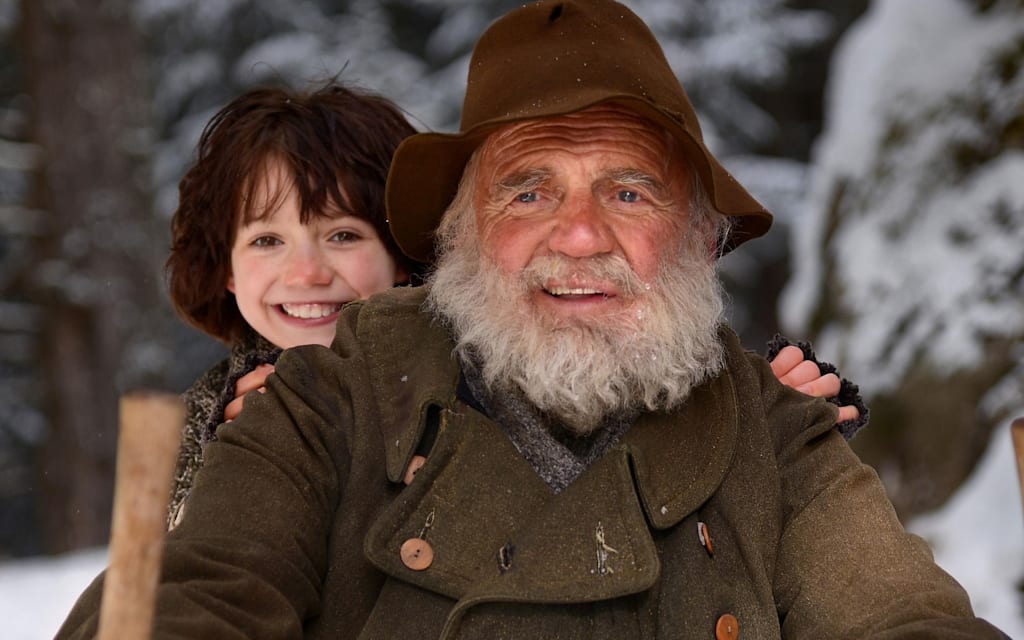
On IMDb and Rotten Tomatoes, this film has earned near-perfect audience scores. Many first encountered the story through children’s books or animations. Back then, it felt like a simple tale about a little girl and the Alps. But watching it as adults, many find themselves in tears—not from sorrow, but from finally understanding the truths about loneliness, belonging, and freedom hidden beneath those innocent scenes.
I. The Alps Are More Than Scenery—They Are a State of Being
Every frame of the film is painted like a masterpiece: snow-capped mountains, green meadows, sheep, and eagles soaring high. As children, we only saw beautiful scenery. As adults, we realize the director uses extreme natural light and shadow to contrast two entirely different ways of living.
Heidi runs barefoot on the mountain, drinks goat’s milk, sleeps on hay, and her grandfather hand-carves a small wooden chair for her. Her world has no clocks, no strict rules—only wind, sunshine, and rough but genuine warmth. In the Sesemann household in Frankfurt, there are marble floors, delicate tableware, and schedules timed to the minute. Even glancing at the tower across the street becomes a luxury.
Clara’s home lacks nothing—except fresh air and the freedom to choose. Heidi develops sleepwalking there. It is not an illness; it is her body crying out: I want to go home.
Is adult life so different? We are trapped in office cubicles, burdened by mortgages and bills, confined to the social script of “how we should live.” Heidi’s Alps have become the lost land of freedom deep in our hearts. This film does not urge everyone to retreat to the mountains. It reminds us: somewhere deep inside, you must keep a place where you can run barefoot.
II. Beneath the Grandfather’s Tough Shell Lies a Loneliness Only Adults Understand
As children, we thought the grandfather was harsh, quiet, and even shut Heidi out. Watching him again as adults—this man shunned by the village as a “murderer,” living alone in a mountaintop cabin, rejecting the church, neighbors, and all company—we see he is not cold. He uses a hard shell to protect a heart deeply wounded by the world.
On Heidi’s first night, he silently makes her a chair. When she is taken away by force, he chases her down the mountain, eyes red with grief in front of everyone. When Peter tells Heidi “people say your grandfather is a murderer,” she is so scared she wants to sleep in the barn. The grandfather says calmly: “People like to gossip. You must judge with your own eyes and ears, not believe idle talk.”
We could not understand this as children. As adults, we realize the grandfather teaches Heidi life’s toughest philosophy: refuse to be defined by others, stay true to your own judgment. And the grandfather himself eventually walks down the slope and shakes hands with the villagers—not out of reconciliation, but because the ice in his heart has melted under a child’s love.
Adult loneliness is often not about refusing love, but fearing to trust it again. With her innocence, Heidi shows all adults: reaching out to someone who seems difficult is, in truth, a way to redeem yourself.
III. Clara: The “Perfect Life” You Envy May Be the Deepest Cage
As children, we felt sorry for Clara—unable to walk, unhappy despite living in a grand house. As adults, we see she has material comforts many dream of: a wealthy father, a housekeeper, maids, and an elegant life. Yet she has no choice, not even the right to express anger.
Heidi is her only friend. When Heidi returns to the mountains, Clara throws a plate, is scolded by the housekeeper, and weeps alone in her wheelchair. In that scene, her breakdown is not childishness, but despair trapped by fate and social rules.
Later, her grandmother brings Clara to the mountains. A miracle happens: a butterfly lands on her foot. She reaches for it instinctively—and slowly, shakily, stands up. The metaphor is clear: what makes Clara walk is not magic, but freedom, nature, and love that respects her as a whole person.
How many of us have become Clara as adults? We have decent jobs, nice houses, yet feel empty inside. Not for lack of things, but because we have not made a truly selfish choice for ourselves in far too long. Heidi opened the window for Clara. Our own windows, we must open with our own hands.
IV. The Grandmother Is the True Life Mentor—Words Only Adults Understand
Mrs. Sesemann is the wisest character in the film. Discovering Heidi cannot read, she does not scold her. Instead, she tells Heidi half a bedtime story and stops, saying: “If you learn to read, you can find out what happens next.” Driven by curiosity, Heidi teaches herself to read.
This method works better than a thousand “you must study hard” lectures. It gives Heidi internal motivation: reading is for herself, not for others, but for the desires of her own heart.
More importantly, at the end, when Heidi says “everyone laughs at me because I want to write stories,” her grandmother gives her a blank notebook and says: “That is because they only know this village. But you have seen a bigger world, have you not?”
This line is the most powerful in the entire film. How many of us give up what we truly want because someone says “you can’t,” “you’re weird,” or “you think too much”? The grandmother tells every adult: others’ mockery only shows their narrow-mindedness, not the absurdity of your dreams.
V. The Ending We Understand Only as Adults: Heidi Is Not Lucky—She Makes a Choice
Many say Heidi is blessed, meeting kind people like her grandfather, Clara, and the grandmother. But as adults, we understand: her greatest strength is not luck, but her consistent choice to be kind and free.
When abandoned by her aunt to her grandfather, she does not cry or complain, but sleeps in the barn. Taken to Frankfurt, she misses her grandfather so deeply she sleepwalks, yet never resents Clara. Returning to the mountains, her first act is to bring soft bread for the toothless grandmother. She teaches Peter to read and shares Clara’s biscuits.
She knows the world’s cruelty—she simply chooses not to repeat it. True strength is not remembering all harm, but choosing to believe in light even after experiencing darkness.
In Closing: Why We Only Understand Heidi as Adults
Because as children, we were Heidi—taking everything for granted: running barefoot, laughing loudly, crying when hurt, loving freely. As adults, we sometimes become the grandfather, wrapping ourselves in armor; sometimes become Clara, trapped in others’ expectations; sometimes become village gossips, judging others with rumors.
With its simplest story, Heidi hands every tired adult a key. The door to the Alps in our hearts was never locked. Whenever you wish, you can take off your shoes, roll in the grass, and say gently to yourself: I am still someone worthy of love.
That is why millions of viewers gave it near-perfect scores—not because the film is flawless, but because it helps so many people remember who they really are.
About the Creator
Enjoyed the story? Support the Creator.
Subscribe for free to receive all their stories in your feed.
Comments
There are no comments for this story
Be the first to respond and start the conversation.