
Give My Regards to Broad Street (1984): Paul McCartney’s Strange Musical Daydream
Paul McCartney starred in Give My Regards to Broad Street on October 26th, 1984.


By 1984, Paul McCartney had already conquered the music world. He had survived Beatlemania, led Wings through one of the biggest runs of the 1970s, and continued producing hit records as a solo artist. What he hadn’t done was star in a feature film since the Beatles’ surreal television experiment Magical Mystery Tour back in 1967.
Give My Regards to Broad Street was supposed to change that.
Instead, it became one of the biggest commercial disappointments of McCartney’s career.
Released by 20th Century Fox in October 1984, the $9 million musical drama earned barely $1.4 million at the box office. Critics were baffled, audiences were confused, and what McCartney envisioned as a cinematic celebration of his music became known instead as one of the stranger rock-star vanity projects of the decade.
Yet forty years later, it’s also become an oddly fascinating time capsule.
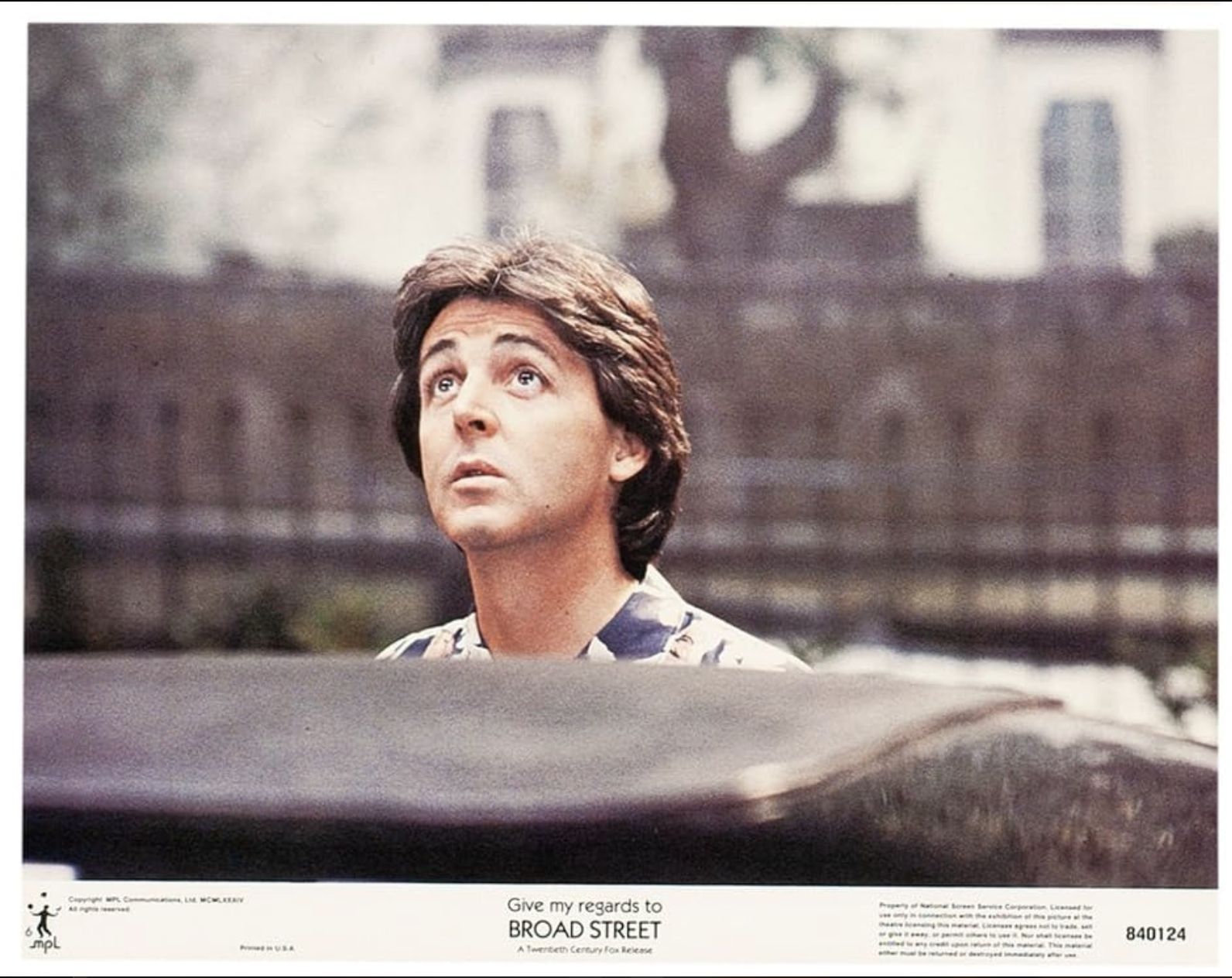
A Very Bad Day for Paul McCartney
The movie opens with Paul McCartney riding through London in the back of a chauffeur-driven limousine.
Traffic has completely stopped, giving Paul plenty of time to drift off into elaborate daydreams. One moment he’s imagining driving a futuristic sports car loaded with gadgets straight out of a James Bond film. The next, reality crashes back in.
Paul receives terrible news.
Harry, an employee at his record company and a former criminal trying to stay on the straight and narrow, has disappeared.
More importantly, Harry has vanished with the master tapes to Paul’s brand-new album.
Without those tapes reaching the pressing plant before midnight, the album can’t be manufactured, deadlines will be missed, and a ruthless creditor is prepared to seize control of the entire company.
It’s a surprisingly high-stakes premise for what ultimately becomes a very low-stakes movie.
Rather than launching into a frantic thriller, Paul spends much of the day simply going about his normal schedule while trying to figure out where Harry might have gone.
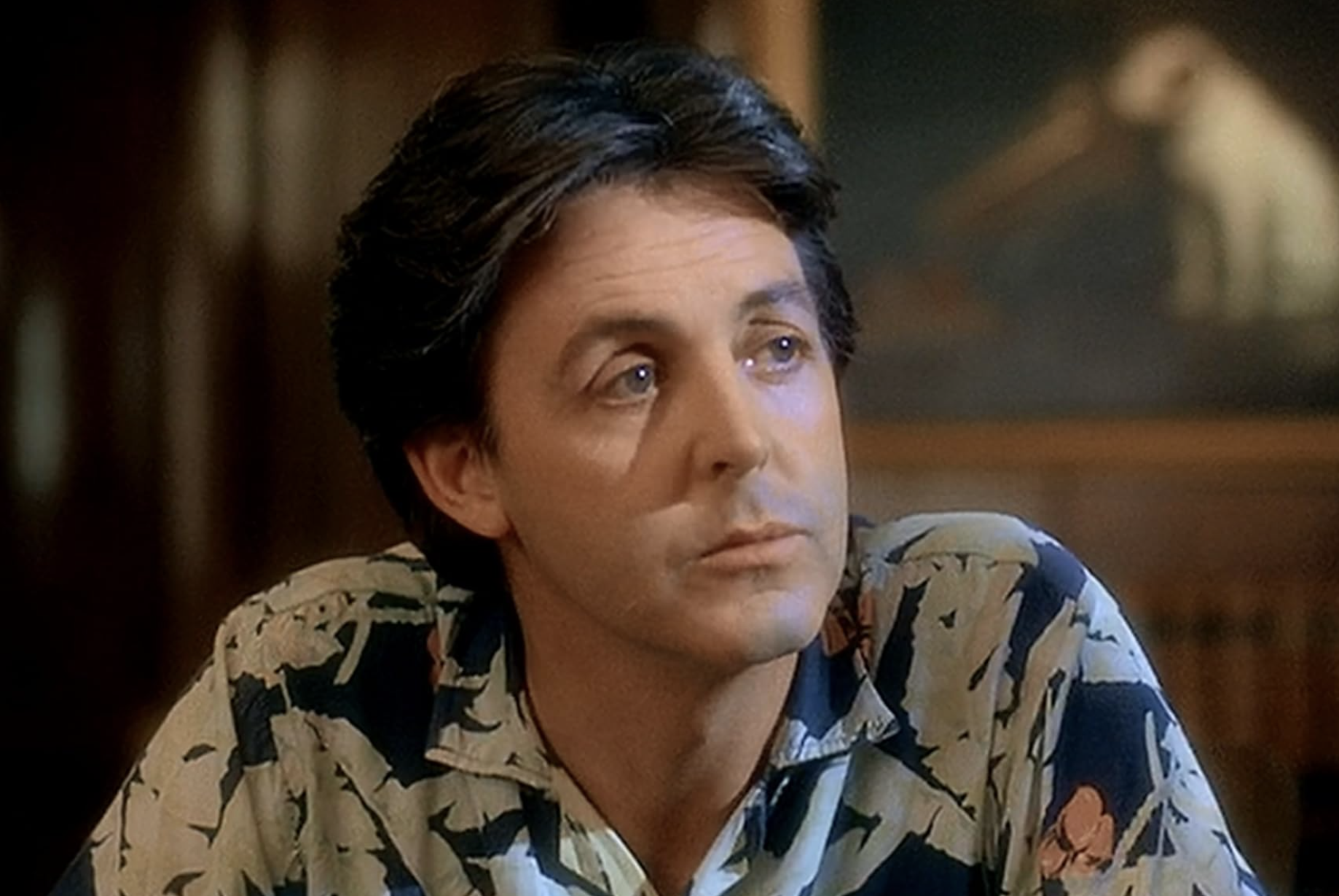
Following Paul Through London
The film becomes less about solving a mystery and more about following Paul McCartney through a fictionalized version of his everyday life.
He visits recording studios.
He rehearses songs.
He appears on radio programs.
He films music videos.
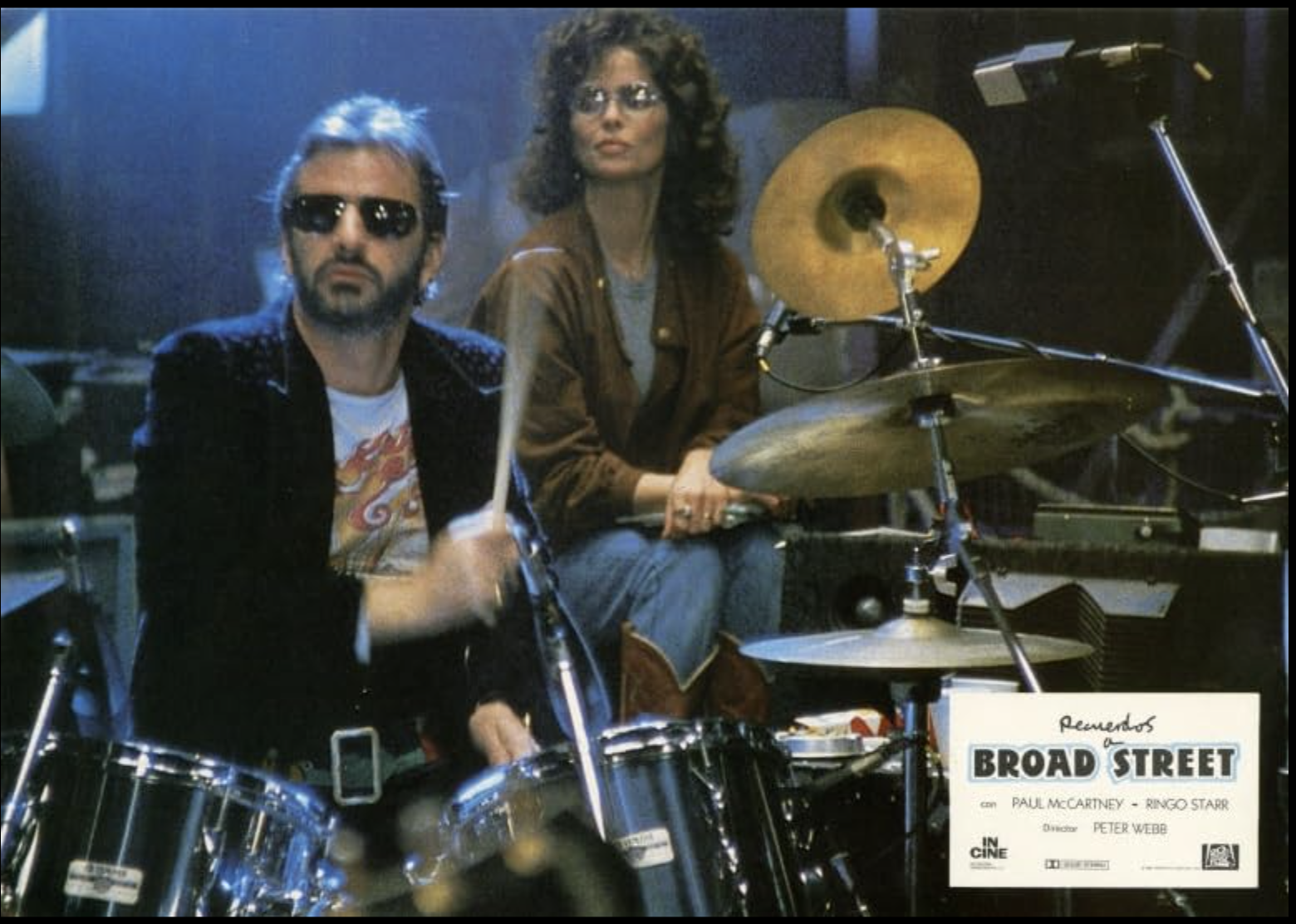
He spends time with Linda McCartney, who plays herself, and reconnects with Ringo Starr, also appearing as himself alongside Barbara Bach.
Bryan Brown shows up as Steve, the man responsible for delivering the increasingly worrying updates about Harry’s disappearance, while Tracey Ullman plays Harry’s girlfriend Sandra. Ralph Richardson also appears in one of his final screen performances.
As Paul moves from one appointment to another, his imagination keeps taking over.
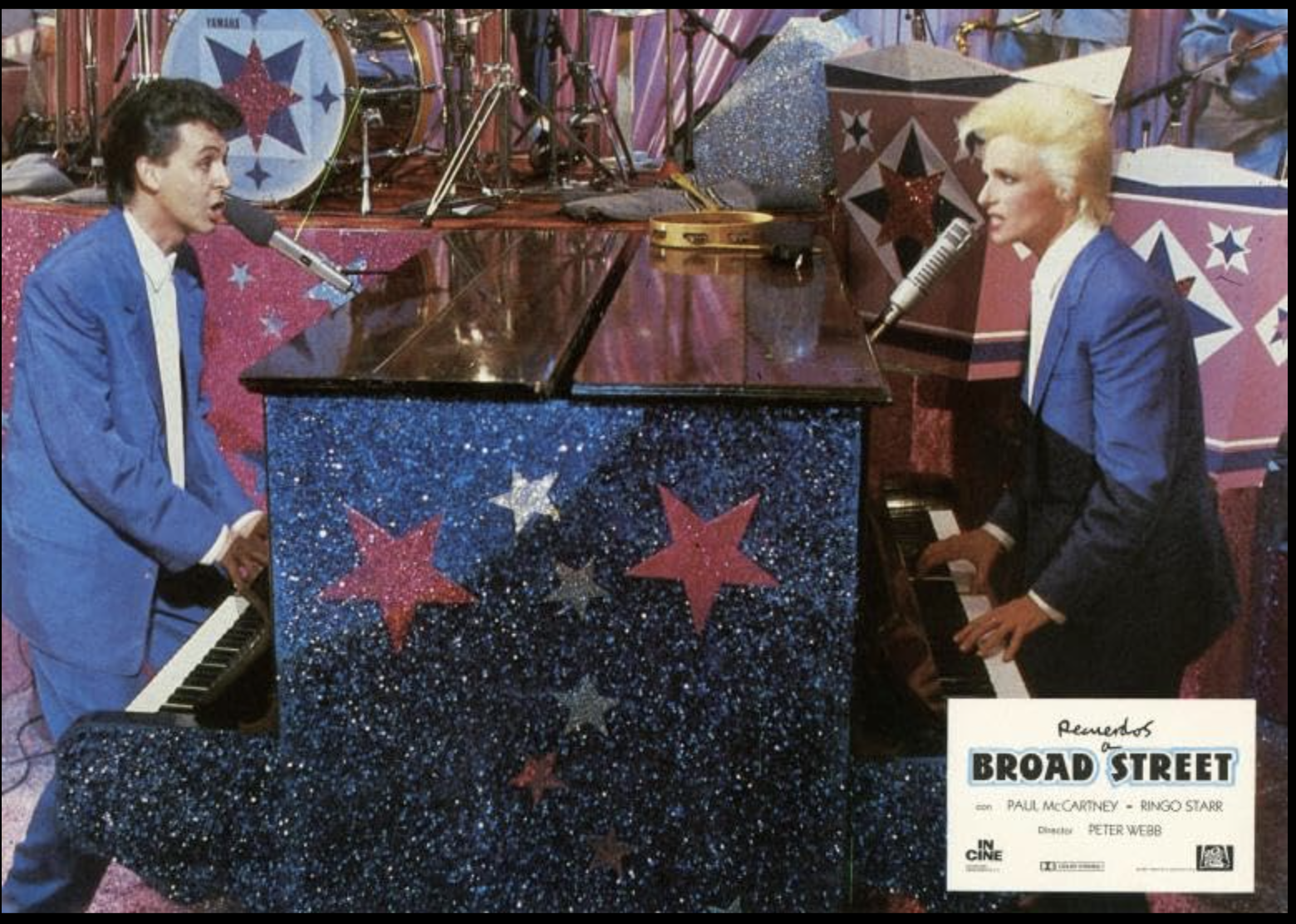
Reality Gives Way to Fantasy
This is where Give My Regards to Broad Street becomes something entirely different.
Almost every major emotional beat transforms into a musical fantasy.
Paul imagines himself in Victorian England.
He wanders through dreamlike recreations of Beatles classics.
Entire songs unfold with little concern for advancing the story.
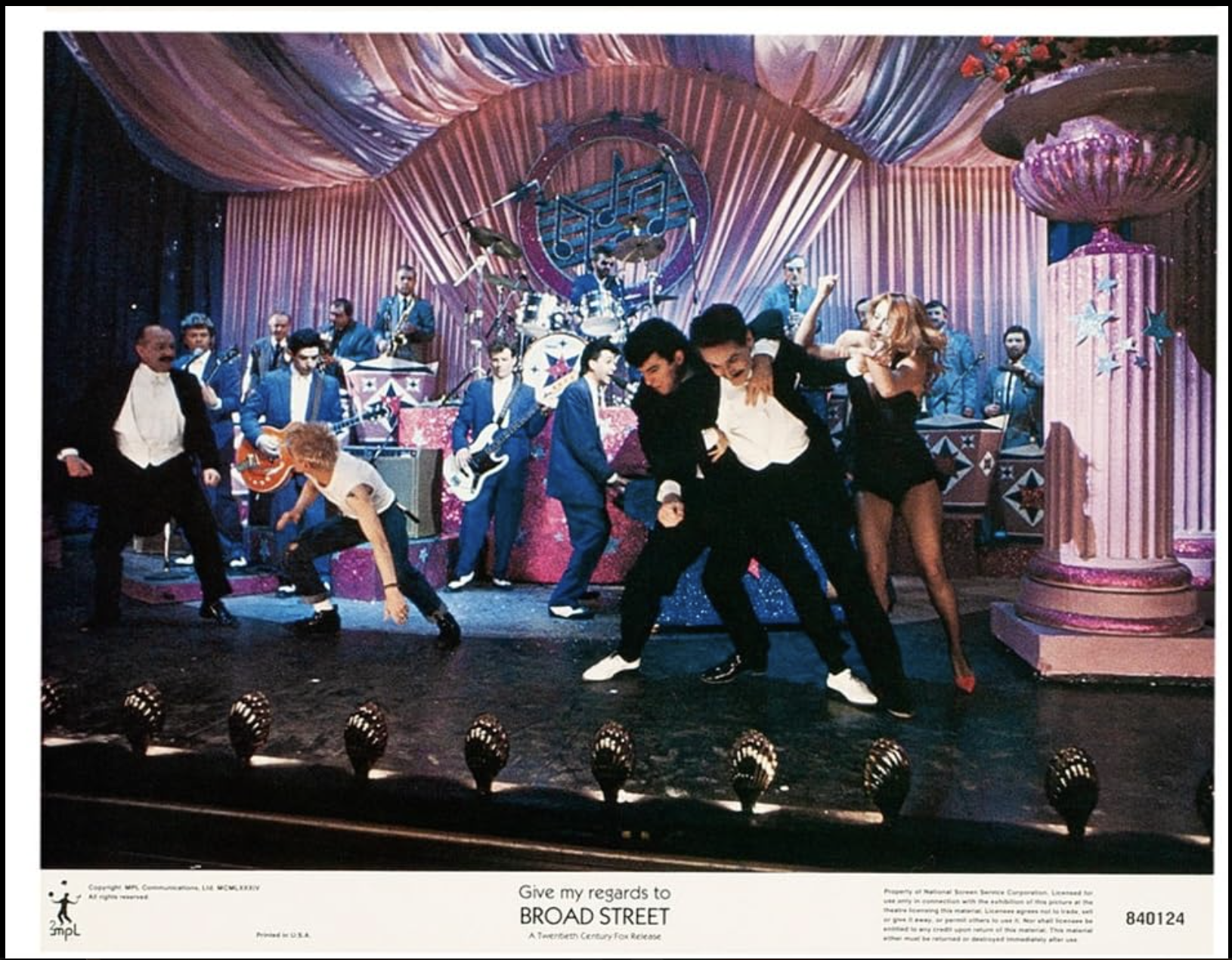
Sometimes these sequences resemble elaborate music videos. Other times they feel closer to stage productions or experimental short films.
The plot essentially pauses whenever the music begins.
For some viewers that’s frustrating.
For others, it’s the entire reason to watch the film.
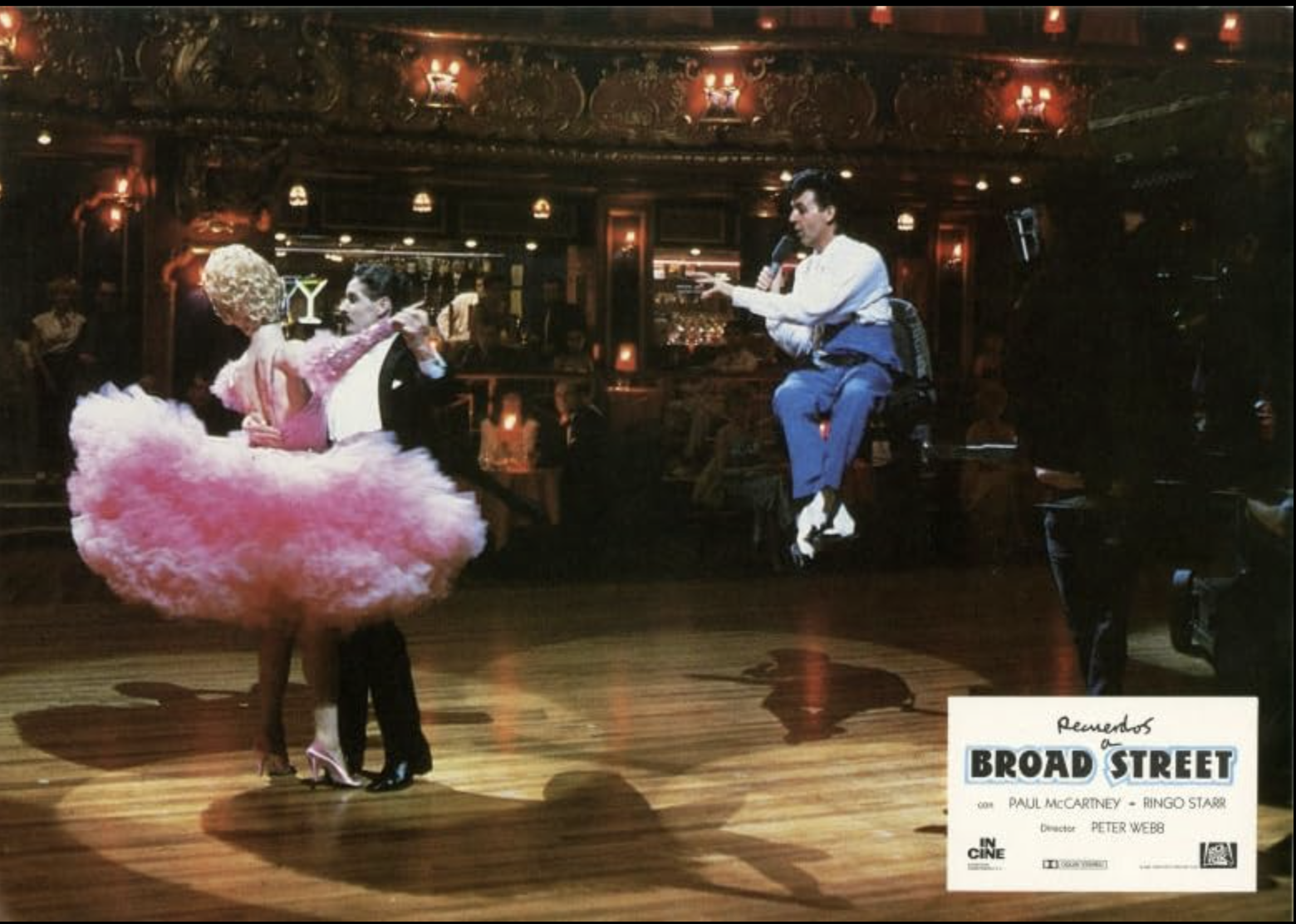
A Showcase for the Music
The missing tapes may provide the excuse for the story, but the real purpose of the movie is giving Paul McCartney an opportunity to revisit his catalog.
Throughout the film he performs newly recorded versions of Beatles, Wings and solo classics including “Yesterday,” “The Long and Winding Road,” “Good Day Sunshine,” “Silly Love Songs,” and “Eleanor Rigby.”
Several songs receive completely new arrangements, making them feel less like straightforward remakes and more like reinterpretations.
The film also introduced one of McCartney’s strongest solo singles of the decade.
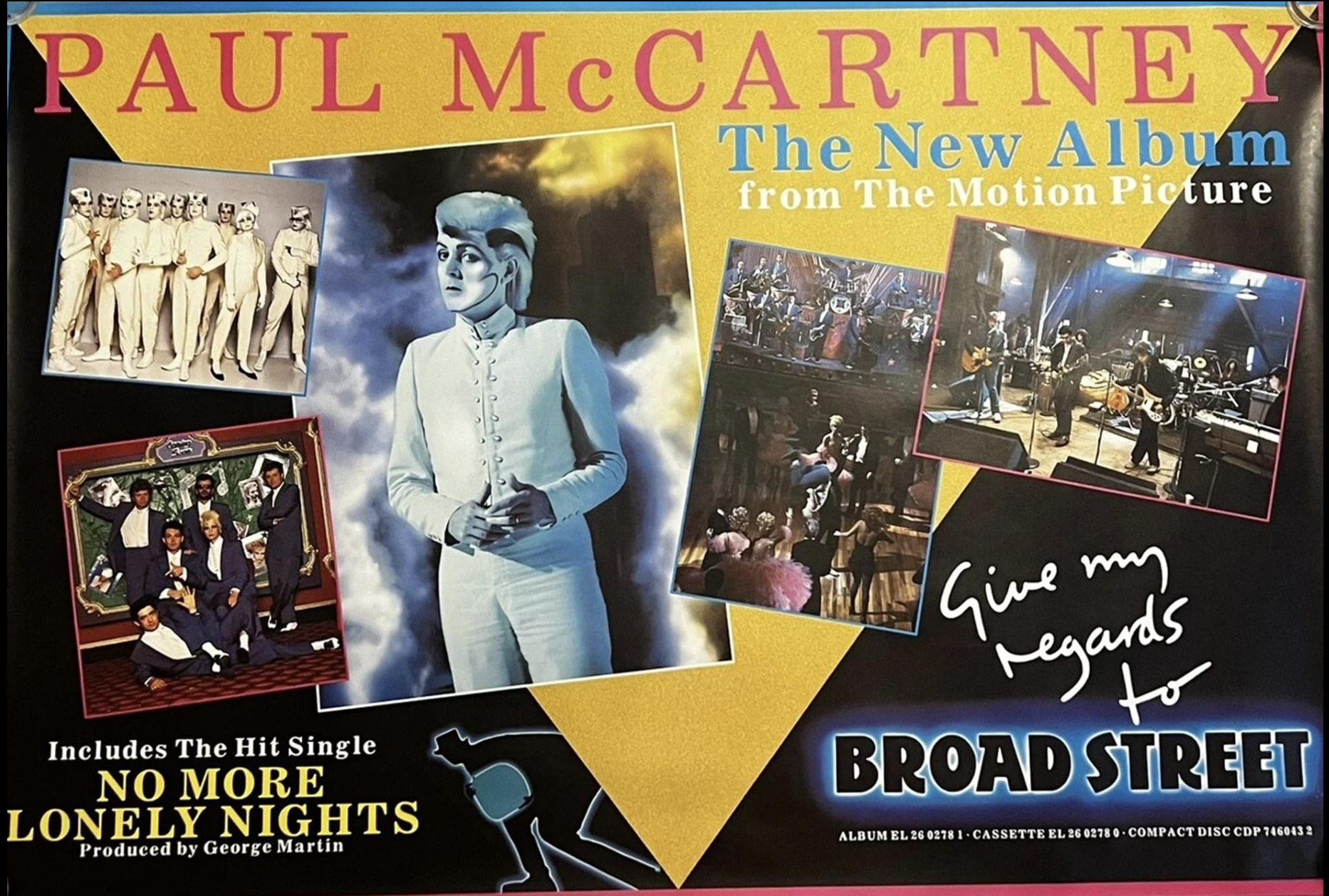
“No More Lonely Nights,” featuring an unmistakable guitar solo by Pink Floyd’s David Gilmour, became a major international hit and remains the movie’s lasting musical legacy.
Other new songs include “Not Such a Bad Boy” and “No Values.”
Ironically, while audiences largely ignored the film, the soundtrack became a major success, reaching number one in the United Kingdom and earning gold certification in the United States.
In many ways, the soundtrack accomplished everything the movie could not.
The Search Reaches Broad Street
As the deadline approaches, Paul continues searching across London for Harry and the missing master tapes.
Eventually the trail leads to Broad Street railway station, the now-demolished London terminal that inspired the film’s title—a playful nod to George M. Cohan’s classic “Give My Regards to Broadway.”
Without spoiling every detail, the crisis is ultimately resolved in a surprisingly simple, almost anticlimactic fashion.
The frantic race against time turns out not to have been quite as dramatic as Paul’s imagination suggested.
Then the film circles back to where it began.
Paul wakes up in the traffic jam.
Much of what we’ve witnessed has been filtered through dreams, anxieties and fantasies while sitting in a stationary limousine.
Music Legends Around Every Corner
Although Paul McCartney dominates nearly every frame, the supporting cast is filled with familiar faces.
Ringo Starr appears as himself.
Linda McCartney plays herself throughout the film.
Barbara Bach makes an appearance as a journalist.
Legendary Beatles producer George Martin shows up playing a record producer.
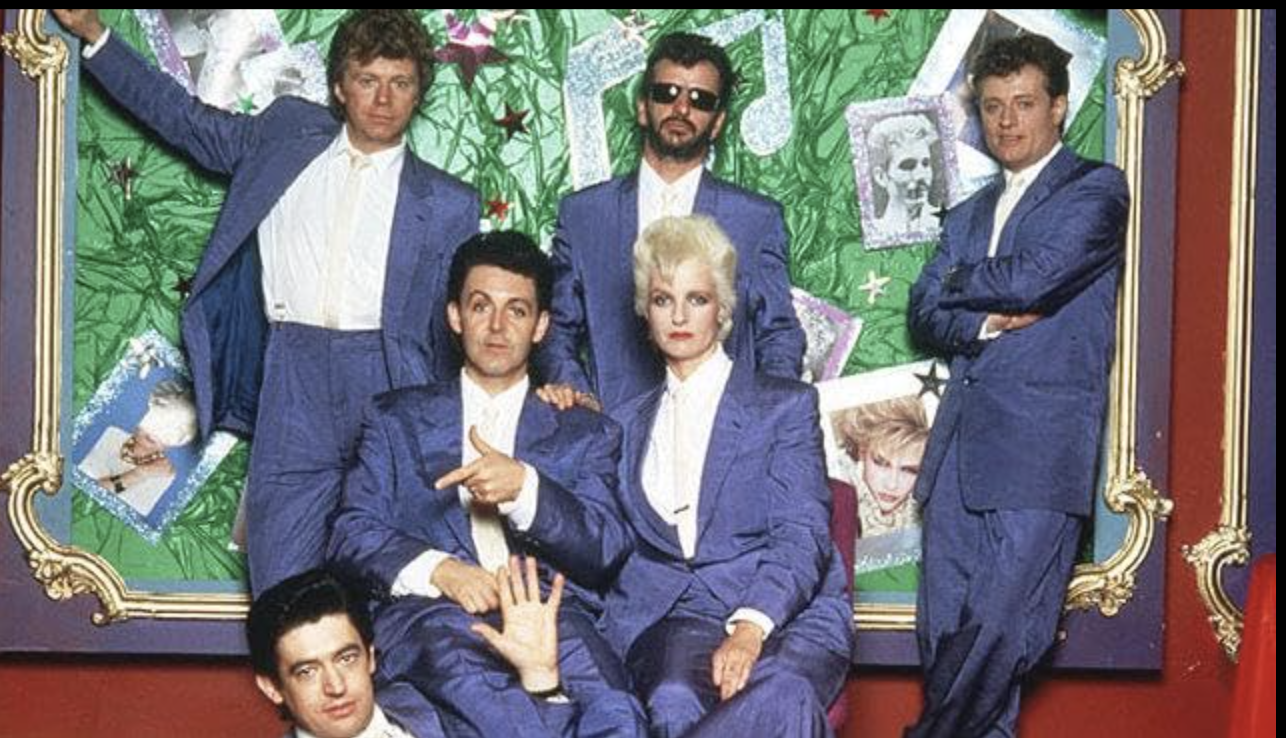
Musicians including John Paul Jones of Led Zeppelin, Dave Edmunds, Chris Spedding, Steve Lukather and Jeff Porcaro all make appearances, giving the movie the feeling of a who’s who of early-1980s rock music.
Even professional wrestling fans get an unexpected surprise with the appearance of Giant Haystacks.
A Passion Project That Didn’t Connect
McCartney had spent years developing the project after finishing work on Pipes of Peace.
Filming began in late 1982, and the movie was intended to be both a return to acting and a celebration of his musical career.
To make the theatrical experience even more unique, screenings were preceded by the delightful animated short Rupert and the Frog Song, featuring McCartney’s hit “We All Stand Together.”
There was even a video game adaptation released in 1985 for the Commodore 64 and ZX Spectrum, in which players searched for the missing master tape.
Few movies have ever inspired quite so many multimedia tie-ins while simultaneously struggling to find an audience.
An Expensive Misfire
Critics were almost universally unconvinced.
Roger Ebert famously awarded the film just one star, writing that the music was wonderful but the movie itself came as close as possible to being “a nonmovie.”
That criticism has followed the film ever since.
Many viewers have argued that the story feels too thin to support a feature-length running time, with the musical fantasies repeatedly interrupting what little narrative momentum exists.
Others found the movie self-indulgent or simply confusing.
Yet over the years, Give My Regards to Broad Street has developed a small but loyal following.
Many Beatles fans have discovered that the best way to enjoy it is not as a conventional movie but as an extended visual album—a feature-length collection of music videos loosely connected by a story.
Viewed through that lens, its dream logic begins to make a lot more sense.
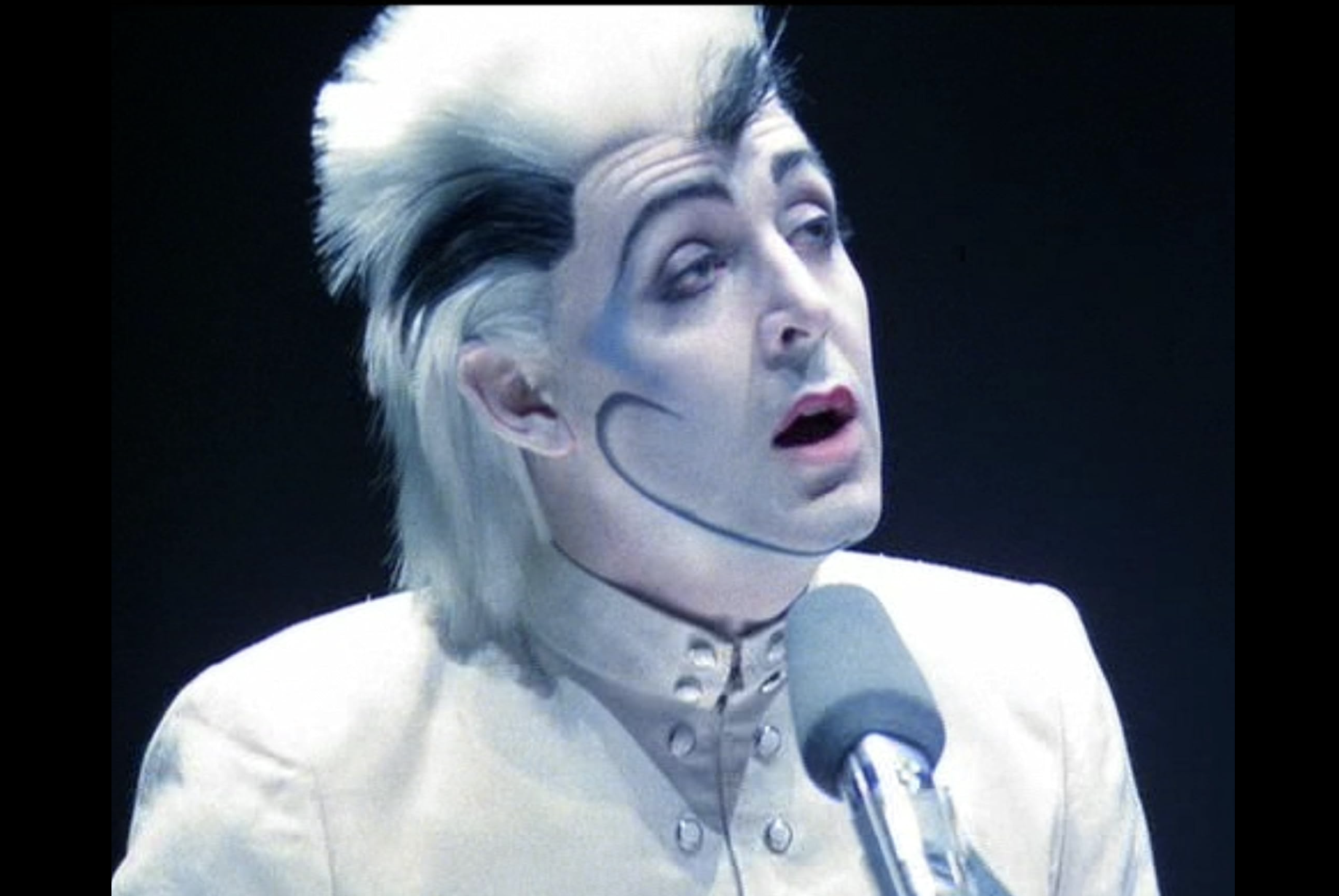
A Curious Time Capsule
Give My Regards to Broad Street remains an unusual footnote in Paul McCartney’s career.
It was his first starring feature since the Beatles era, and it would also be his last.
As a traditional film, it’s difficult to recommend.
As a document of McCartney in the mid-1980s—surrounded by friends, revisiting his greatest songs, and experimenting with cinematic fantasy—it’s genuinely fascinating.
The soundtrack remains the stronger half of the project, but the film itself survives as an oddly charming artifact from a period when one of the world’s biggest musicians decided to turn an ordinary day into a feature-length musical dream.
And even if it never found the audience Paul hoped for, there’s something undeniably likable about watching one of pop music’s greatest songwriters simply enjoying the chance to play in another medium.
About the Creator
Movies of the 80s
We love the 1980s. Everything on this page is all about movies of the 1980s. Starting in 1980 and working our way the decade, we are preserving the stories and movies of the greatest decade, the 80s. https://www.youtube.com/@Moviesofthe80s
Enjoyed the story? Support the Creator.
Subscribe for free to receive all their stories in your feed.
Comments
There are no comments for this story
Be the first to respond and start the conversation.