
Fiddle Firsts: Was Stuff Smith the First Violinist to Go Electric?
How a jazz pioneer helped bring the violin into the age of amplification

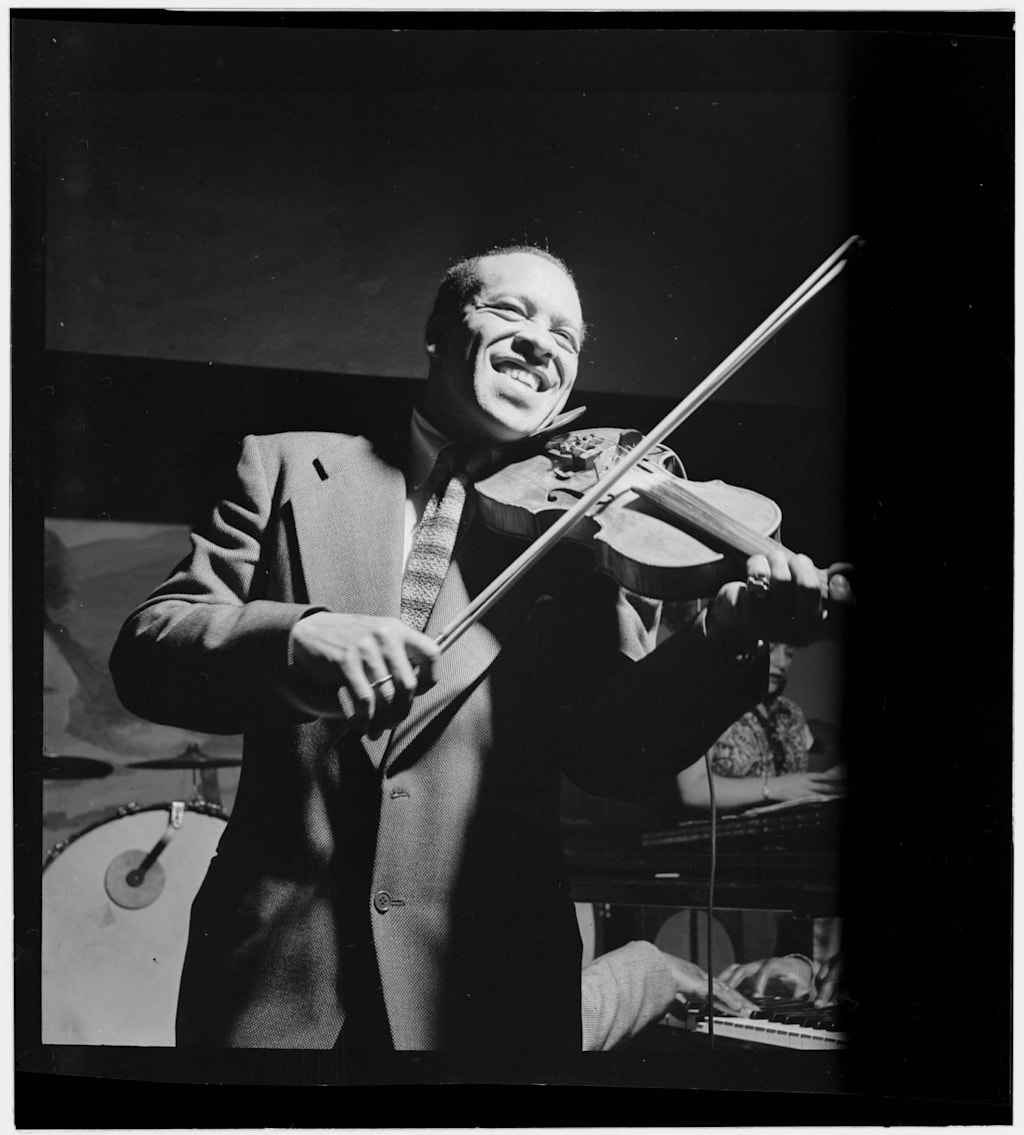
When you think of an electrified instrument, your mind probably jumps straight to a rock 'n' roll guitar plugged into a cranked-up stack amplifier. You might picture a guitar legend like Hendrix or Clapton playing an exhilarating and mesmerizing solo.
What you might not picture is a 1930s jazz musician plugging in a wooden violin so he could keep up with the best swing players of the day.
Welcome back to Fiddle Firsts, where we look at the fascinating, surprising, and sometimes game-changing milestones in the history of our instrument. Today, we’re plugging in and turning up the volume on a musician who changed the course of string playing forever: Hezekiah Leroy Gordon "Stuff" Smith.
Stuff Smith is widely credited as the first violinist to play the instrument through an amplifier. And he had a very straightforward motivation for doing it.
Born in Ohio in 1909, Stuff was heavily inspired not by other classical violinists, but by horn players. Specifically, he was a big fan of Louis Armstrong. He loved Armstrong’s drive, phrasing, and explosive attack. He wanted to play the violin with that exact same presence and punch.
There was just one glaring problem: acoustic violins simply couldn't compete with the sheer volume of the other instruments that were standard to jazz groups. In a room packed with trumpets, saxophones, trombones, and pounding drums, a traditional acoustic violin's sound just couldn't be heard.
So, in the mid-1930s, Stuff did something revolutionary. He attached a pickup to his violin and wired it into an amplifier.
Suddenly, he wasn't just audible. He was unstoppable, and a pure force of swing and groove with his violin.
The amplifier completely transformed how the instrument could be played. Instead of relying strictly on delicate, traditional acoustic projection, Stuff developed a heavy, percussive attack. He dug his bow deep into the strings with a rough, grit-infused tone that matched the energy and natural volume of horn players. He treated his bow stroke like a horn player's breath or the strike of a cymbal, cutting through the dense mix of swing bands.
Stuff Smith's early experimentation laid the groundwork for every crossover string player, rock fiddler, and electric violinist who came after him. He proved that the violin wasn't strictly bound to the acoustic concert hall. You could plug in, hold your own, and rock a crowded room just as loud as anyone else.
If you're wondering what his setup actually looked like, it wasn't a sleek modern electric violin. Stuff clamped an early DeArmond transducer pickup directly onto the top of his acoustic violin, right near the bridge. Complete with an exposed wire running to a small volume knob and out to a radio amplifier, it was raw, handmade, and completely groundbreaking for its time.
You can see and hear a later version of Stuff's amplified violin in this recording of a set he played live at Jazzhus Montmartre in 1965.
And that's the story of the man who brought the violin into the age of amplification, and showed us that it was possible for the instrument to jam out with the best of them.
What about you? Have you ever plugged in an acoustic fiddle or played an electric violin, or do you stick strictly to acoustic? Let me know in the comments below!
About the Creator
Cate Calvert
Musician, sound healer, and creative soul. Find me on YouTube as Aligned Muse, and also as Cate and the Fiddle. Writing about music, sound, wellness, creativity, inner work, and wherever else my curiosity leads.
Enjoyed the story? Support the Creator.
Subscribe for free to receive all their stories in your feed.
Comments
There are no comments for this story
Be the first to respond and start the conversation.