
Doing The Time Warp (Again)
Rocky Horror could have faded into obscurity. Instead, its devoted fans have kept it alive for more than 50 years.

“It's astounding
— Richard O'Brien, “Time Warp”
Time is fleeting
Madness takes its toll”
As we settled into our seats at the Admiral Theatre in Seattle, I felt a little self-conscious. Despite politics that place me firmly on the left, I lead a very conservative life. I once wore my hair past my shoulders and played in a heavy metal band, but the sex was monogamous, and there were no drugs. I was very much a family man.
The small auditorium must have been spectacular in its heyday, but it was now well-worn and musty. Still, the seats were comfortable as I took in our surroundings.
The sold-out showing of The Rocky Horror Picture Show had attracted a unique crowd, many dressed in costumes inspired by the film we were about to see. For some, that meant very little clothing. This was not a setting for the easily offended.
The enthusiasm in the room was palpable. It felt like a safe space where people could be themselves, or try on something different, without judgment. It reminded me of the atmosphere I had experienced years ago at a Pride festival in Los Angeles and at the Ghost concert earlier this year at Climate Pledge Arena.
This atmosphere is what keeps people coming back to a movie that is more than 50 years old and, to be honest, might be closer to winning a Razzie than an Academy Award if judged solely on its script. What makes the film resonate is its message of inclusiveness, particularly for people whom society has a habit of shunning. That message has helped foster a unique subculture around the film, turning it into a lasting phenomenon.
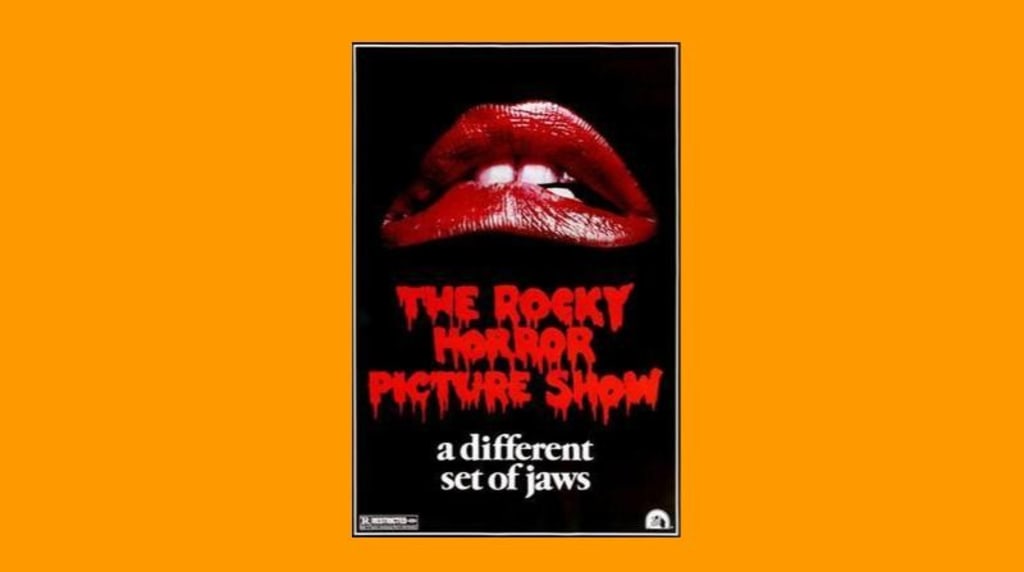
With only a couple of weeks left until Halloween, this audience was particularly pumped. A talented MC primed the crowd further until it was time for the famous lips to appear on the screen. But first, the "virgins" had to be welcomed into the fold, and a couple of them had to be "sacrificed."
It had been decades since a red “V” would have been placed on my forehead. My first time was back in high school, on Halloween Eve. I vividly remember the crowd counting down to midnight as if it were New Year’s Eve.
My first screening was in a huge movie theater, the kind that was common before multiplexes changed the moviegoing experience. The crowd was boisterous, but the size of the theater gave you the freedom to decide how much you wanted to participate physically.
The Admiral, by comparison, was more intimate. You couldn’t help feeling that you were part of the event rather than just a passive onlooker.
Having an organized group serve as host also enhanced the experience. Riff Raff’s Street Rats enthusiastically acted out the movie, and those of us seated in the “Splash Zone” at the front of the theater were right in the middle of it all.
The actors playing Dr. Frank-N-Furter, Rocky, and the narrator without a neck were especially good. It was amazing how much they could convey through facial expressions alone.
Looking back on the night, the movie seemed almost secondary, serving more as a prompt for the real action than as the main attraction. That action included a constant give-and-take with the audience, which helps keep the film fresh. Rocky Horror cannot escape the fact that it was released in 1975, but its audience keeps it grounded in the present.
One example is Nixon’s resignation speech, which plays on Brad’s car radio near the beginning of the movie. When the film was released, the speech served as a recognizable marker of recent history. Today, I doubt many people in the audience caught the reference. But the audience’s shout-outs included plenty of Trump references.
One puzzling element of the audience participation was the shouting of “slut” whenever Janet appeared on screen. This seemed out of place in a movie that celebrates diversity and an audience that reflected it.
I thought feminism had helped move us beyond judging women for acting on their sexual desires. Janet enters the mansion as a woman who wants to “save herself,” but her experiences there lead her to throw off traditional restrictions. Why, then, would the audience heckle her for exploring her sexuality?
But maybe I’m misunderstanding the intention. Perhaps the audience is embracing the term in much the same way some members of the LGBTQ+ community have reclaimed "queer." Is the use of “slut” less about shame and more about saying, “You go, girl!”?
I wish I’d thought to ask someone about this while I was surrounded by people who could have answered the question.
One cultural anchor the movie can’t escape is its use of the words “transsexual” and “transvestite.” Language and attitudes have evolved since its release, and these terms are now viewed differently than they were in 1975. Both can carry negative connotations in some contexts. And their use in a contemporary film would likely invite scrutiny.
This is a useful example of why works of art need to be judged in the context of the time in which they were created. The Doctor’s gender-nonconforming presentation is never presented as a flaw, and his performance of the song “Sweet Transvestite” comes across as an unapologetic expression of identity rather than an insult.
In fact, it is the character’s embrace of who he is that gives the film its emotional core. Released at a time when coming out of the closet carried far greater risks, I imagine Tim Curry's fearless performance gave many people hope.
Any self-consciousness I had brought with me was my problem. There were no rules about how much or how little you had to participate. Except during the “Time Warp.” For that song, full participation was expected.
About the Creator
Carl J. Petersen
Carl Petersen is a former Green Party candidate for the LAUSD School Board and a longtime advocate for public education and special needs families. Now based in Washington State, he writes about politics, culture, and family.
Enjoyed the story? Support the Creator.
Subscribe for free to receive all their stories in your feed.
Comments
There are no comments for this story
Be the first to respond and start the conversation.