
Did You Know Duke Ellington's Famous Big Band Had a Jazz Violinist?
The story of Ray Nance, the violinist, trumpeter, and vocalist who helped shape the sound of Ellington's orchestra

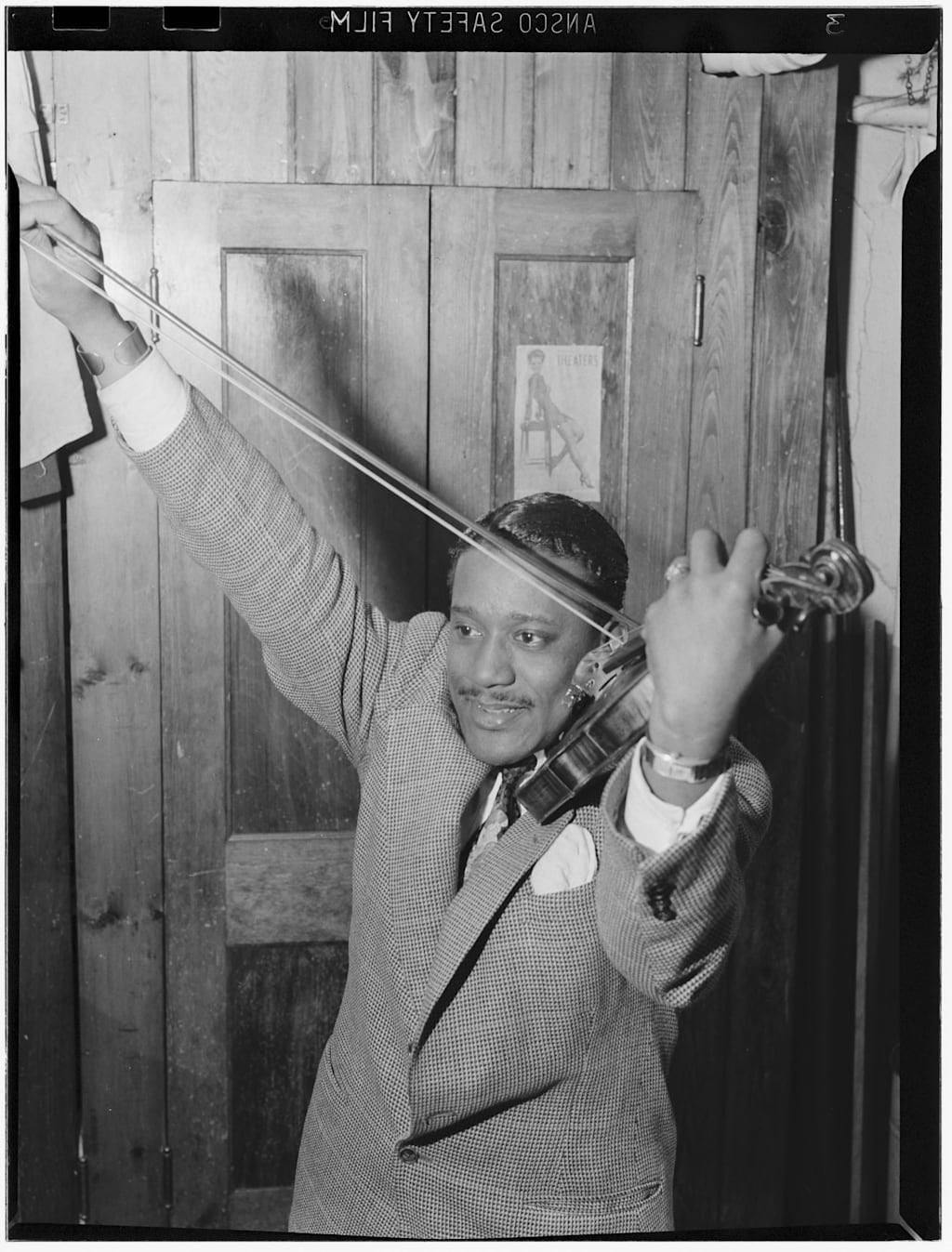
What comes to mind when you hear the term "big band?" You may think of saxophones and trumpets, perhaps a drummer playing a driving swing rhythm that gets people up and dancing. A violinist probably isn't quite the first thing you picture. But one of the most influential and successful big bands of all time actually featured a jazz violinist as a major part of its sound.
His name was Ray Nance, and he was an important figure in the history of jazz.
Born in 1913 in Chicago, Ray Nance started learning violin at 9 years old. His musical talent became obvious pretty quickly. By the time he was 14, he was so skilled on the instrument that he actually enrolled at Chicago College of Music. But Ray didn't just want to be a violinist. During his high school years, he actually taught himself the trumpet. He reflected on this later, saying "I wanted to hear myself on a louder instrument in a way I couldn't do with a violin in an orchestra."
That ended up being a decision that would shape the rest of his career.
In 1940, Ray Nance joined Duke Ellington's Orchestra, replacing celebrated trumpeter Cootie Williams. It was a daunting role to step into, but Ray quickly proved he was more than up to the challenge. Before long, he had established himself as one of Ellington's most versatile and accomplished musicians.
One of Ray's most enduring contributions was his work on Duke Ellington's iconic "Take the 'A' Train." He performed the first recorded trumpet solo on that piece, and that solo is said to be one of the most studied and admired in jazz history. In fact, when Cootie Williams returned to the orchestra years later, he often played Ray's exact original solo note for note.
But Ray's talents didn't stop with just the trumpet or violin. He was also a gifted vocalist and dancer, and he had a natural knack for entertaining an audience. This combination of skills earned him the nickname "Floorshow." Jazz critic Gary Giddins was once quoted as saying "Ray was a devoted entertainer, and damn, he could swing!" There are many reasons Ray became such a memorable figure in jazz history, but his work as a jazz violinist is what makes his story particularly fascinating.
There actually were a number of remarkable jazz violinists during the Swing Era, including the incomparable Stuff Smith, who Ray called the "Swing King" of the instrument. But Ray's story is unique because he made the fiddle a regular and memorable voice within one of the most influential big bands of all time.
You can listen to Ray's violin playing on multiple Ellington Orchestra tracks. Fortunately, several filmed performances have survived as well. One of my favorites is a video of the Ellington Orchestra performing "Mr. Gentle and Mr. Cool" live in Amsterdam back in 1958. You can hear Ray's violin solo starting around 2:50:
You can see Ray performing a fiery fiddle solo with the Ellington Orchestra back in 1952 on the standard "Caravan" as well, starting around 2:28:
I also highly recommend checking out the album Duke Ellington's Jazz Violin Session, where you can hear Ray play alongside jazz violin greats, Stéphane Grappelli and Svend Asmussen (Svend, primarily known as a violinist himself, played viola during this particular session). Check out Ray's beautiful, soulful soloing on the track "Day Dream" from that album:
Ray recorded only a handful of albums as a leader, but his 1969 album Body and Soul offers a rare opportunity to hear him take center stage as a violinist. I especially love his take on the Ellington signature tune, "Take the 'A' Train." You really get to hear the warmth, creativity, and swinging style that made him such a distinctive voice in jazz. But you also get to hear him really cook and showcase his impressive and virtuosic playing on upbeat arrangements like "Get Happy."
I love Ray's story because it goes to show that the violin is far more versatile than many people realize. He helped open people's ears to what the instrument could do. His legacy is a reminder that music isn't always about staying within the confines of tradition. Sometimes it's about the musicians who are willing to explore, experiment, and discover what an instrument is truly capable of.
About the Creator
Cate Calvert
Musician, sound healer, and creative soul. Find me on YouTube as Aligned Muse, and also as Cate and the Fiddle. Writing about music, sound, wellness, creativity, inner work, and wherever else my curiosity leads.
Enjoyed the story? Support the Creator.
Subscribe for free to receive all their stories in your feed.
Comments
There are no comments for this story
Be the first to respond and start the conversation.