
"Blind Boone The Musical" - Bringing a Forgotten Musical Pioneer Back Into the Light
A forgotten musical pioneer gets his moment in the spotlight.

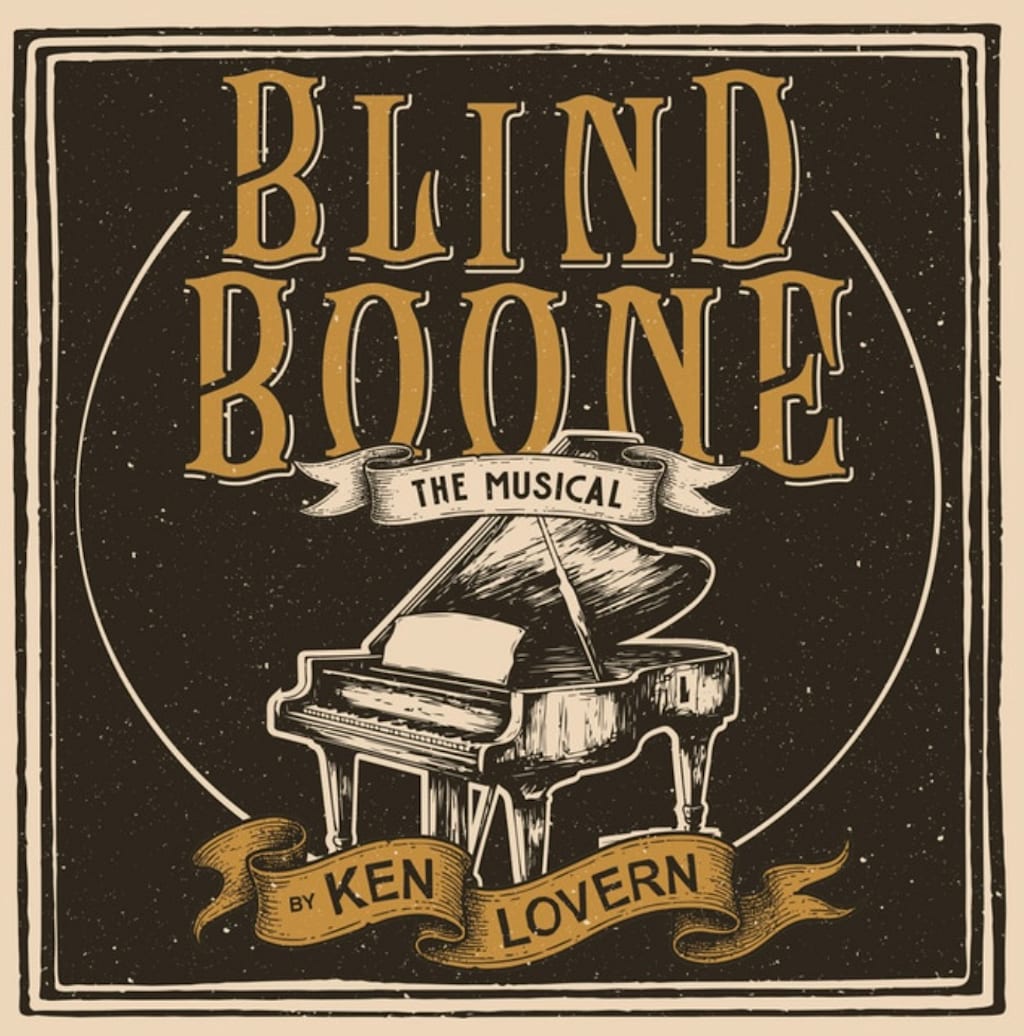
There are some stories that seem almost too extraordinary to have been forgotten. The life of John William “Blind” Boone is one of them. A child born in a Union Army camp in Missouri in 1864, the son of an escaped enslaved woman and a Union Army bugler, who lost his sight as an infant and nevertheless went on to become a celebrated concert pianist and composer. His career stretched from 1880 to 1927, taking him onto concert stages during a period when African American musicians faced enormous barriers simply because of the colour of their skin. It is the kind of life that seems destined for a musical.
Blind Boone: The Musical, the ambitious project created and overseen by Kansas City musician Ken Lovern, takes that remarkable history and turns it into a contemporary song cycle that is every bit as musically adventurous as its subject was extraordinary. Lovern uses the Boone era as a starting point, allowing the album to travel freely between ragtime, blues, jazz, rock, funk and musical theatre.
That sense of surprise is important because there would have been an obvious temptation here to make something reverential and historically "correct", a collection steeped exclusively in the sounds of late nineteenth century America. Instead, Blind Boone asks a more interesting question: what would the story of this remarkable musician sound like to a contemporary audience?The answer is wonderfully eclectic.
The album's musical vocabulary reflects the diversity of the Kansas City community from which it emerged. Traditional influences sit alongside sounds that Boone himself could never have encountered. There are moments when the music feels rooted in ragtime and early jazz, only for a progressive rock guitar, theatrical arrangement or funk groove to pull the listener somewhere entirely unexpected.
“School for the Blind” is a particularly effective example. Its subject matter might suggest a restrained historical number, but the arrangement has an eccentric, progressive energy that recalls the adventurous spirit of Frank Zappa. There is complexity here, but also a sense of humour and theatricality that prevents the song from becoming overly solemn.
“The Natural Order” continues that willingness to experiment. The music is deliberately restless, matching a story in which the protagonist is constantly having to negotiate a world that has already decided what he should and shouldn't be capable of. The unconventional arrangements become more than stylistic decoration; they reinforce the idea of an individual who refused to fit neatly into the categories imposed upon him.
Elsewhere, “Quindaro” demonstrates just how far the album is prepared to stretch. Kadesh Flow's rap contribution immediately shifts the musical landscape, introducing a contemporary rhythmic voice into a historical narrative. It strengthens the connection between Boone's Kansas City story and the city's living musical culture.
“Boone Plays It Back” takes yet another direction, embracing the larger than life qualities of rock opera. There are echoes of Jesus Christ Superstar in its theatrical sweep, while “Brand New Day” brings the infectious spirit of Sly & The Family Stone into the mix.
It would be easy to describe these influences as eclectic for eclecticism's sake, but that would undersell what is happening here. The different genres help prevent Boone from becoming trapped in the past. And that may well be the album's greatest achievement.
Historical figures can easily become static. We learn their dates, their achievements and their place in history, but somewhere along the way they stop feeling like real people. Blind Boone: The Musical works against this tendency. Its musical language is deliberately alive, contemporary and sometimes unpredictable because the project is ultimately trying to reconnect listeners with a living human story. And it is a fascinating one.
Boone's blindness was only one of the obstacles he faced. His career developed within a deeply segregated society, and becoming a successful African American concert performer required extraordinary determination, talent and support. The musical also recognises the importance of the people around him, including his wife and his business manager, John Lange Jr., whose role in Boone's career provides another fascinating dimension to the story.
That wider perspective gives the album greater depth. This isn't simply a story about a musical prodigy overcoming adversity. It is also about the structures that attempted to limit him, and the people who helped him navigate them.
There is an interesting parallel between Boone's own career and the philosophy behind the album. Boone existed between worlds: between Black and white America, between popular and concert music, and between the expectations placed upon him and the career he ultimately created for himself. Lovern's score similarly refuses to remain in one musical world.
The album's ambition is therefore not simply about scale. It is about refusing to accept that a historical story must be told in a historical musical language.
That makes Blind Boone: The Musical particularly interesting as an independent release. There is a genuine sense of curiosity behind it, a desire to explore what Boone's story might become when handed to a contemporary group of Kansas City musicians.
The accompanying comic book and wider project also suggest that Lovern sees Blind Boone as something larger than an album. It is an attempt to reopen a chapter of American musical history and invite people to look again at a performer whose achievements deserve far greater recognition.
You don't need to know anything about John William Boone before pressing play. The music itself creates enough curiosity to make you want to discover the person behind it. By the time the story has begun to take shape, Boone no longer feels like a name from a history book. He becomes a musician, a performer, a businessman, a husband and, above all, an artist determined to be heard.
More than a century after John William “Blind” Boone built his career on concert stages across America, his story is being given another opportunity to reach an audience here.
Listen to the album now:
About Ken Lovern
Ken Lovern is a Kansas City based composer, jazz organist and storyteller whose work blends jazz, blues, ragtime, gospel and theatrical composition.
A respected figure in the city's music community, he led Organ Jazz Trio (OJT) through a celebrated thirteen year residency at the legendary Green Lady Lounge, becoming one of the city's best known jazz performers.
Lovern is the creator, composer, lyricist and book writer of Blind Boone the Musical, an original historical musical fantasy inspired by the life of Missouri pianist John William "Blind" Boone.
Through a richly varied score and imaginative storytelling, the production explores the people, places, and defining moments that shaped one of America's most extraordinary yet overlooked musical pioneers.
About the Creator
Whitney Miller
🌎 Adventurous & Musical
Stories shaped by places, music & life
Poetry, fiction, memoir & lived experience
Written without A.I.
© Whitney Miller
Enjoyed the story? Support the Creator.
Subscribe for free to receive all their stories in your feed.
Comments
There are no comments for this story
Be the first to respond and start the conversation.