
Beyond Nostalgia - Raffaele Scoccia Finds Hope in Memories on "Faded Gazes"
The Italian composer transforms reflection into a quietly moving piano journey that looks backward in order to move forwards.

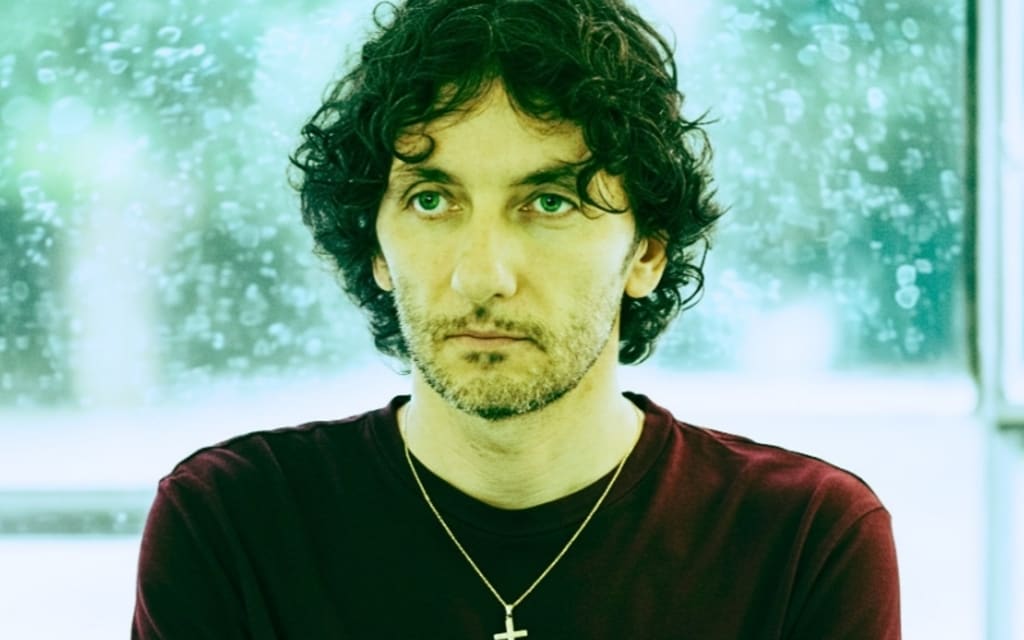
There is a temptation to think of nostalgia as a backward looking emotion, a longing for what has been lost and can never be reclaimed. Popular culture often presents it as a kind of emotional retreat, a refuge from the uncertainties of the present. But nostalgia can also be something far more complex. It can be a way of understanding where we have come from, a means of carrying the lessons, beauty and meaning of the past into the future.
That more nuanced understanding lies at the heart of "Faded Gazes", the latest solo piano release from Italian composer and pianist Raffaele Scoccia.
Over the past few years, Scoccia has been carving out a distinctive place within the contemporary instrumental landscape. After an international career that included extensive work in electronic music and the development of his Moon Rocket project, he has increasingly turned his attention back to the piano - the instrument that first shaped his musical identity.
"Faded Gazes" continues that journey while exploring new emotional territory.
From its opening moments, the piece feels suspended between memory and imagination. The first notes arrive almost cautiously, as though searching through a landscape of distant recollections. Instead of presenting a clear narrative, Scoccia allows the music to unfold in an organic way, inviting listeners to discover their own stories within it.
This openness is one of the composition’s greatest strengths. Instrumental music often succeeds when it creates enough emotional specificity to be meaningful while remaining universal enough for listeners to project their own experiences onto it. "Faded Gazes" achieves that balance with a remarkable grace.
The melodic structure develops through a series of distinct emotional passages. Initially reflective and tinged with melancholy, the music gradually deepens into something more contemplative before eventually revealing a lighter, more delicate side. The transitions are subtle and unforced. Nothing feels rushed. Instead, the piece moves with the natural rhythm of memory itself, lingering on certain details while allowing others to drift quietly into the background.
Scoccia's approach to composition is notable for what it chooses not to do. There are no dramatic flourishes designed to manufacture emotion. No unnecessary complexity. No attempt to overwhelm the listener. Instead, he trusts the melody to carry the emotional weight of the piece.
Silence plays an important role throughout the composition. Pauses between phrases are as meaningful as the notes themselves, giving listeners room to absorb the emotional resonance of what they have heard. In an era when attention is constantly fragmented and overstimulation has become the norm, there is something quietly radical about music that is willing to slow down and simply breathe.
The title itself, "Faded Gazes", offers a powerful clue to the work’s emotional center. Memories inevitably lose some of their surface detail over time. Colors fade. Faces become less distinct. Specific moments blur at the edges. Yet their significance often remains intact. In some cases, that significance grows stronger with distance.
Scoccia seems fascinated by this phenomenon. The piece suggests that even when memories become less vivid, they continue to shape who we are. More importantly, it proposes that remembering is not merely an act of looking backward. It can also be an act of looking forward.
The melancholy present within the music is balanced by hope. There is a quiet belief running through the piece that what was once beautiful may become beautiful again.
The closing section reinforces this idea beautifully. The music gently recedes, as though continuing somewhere beyond the listener’s reach.
In many ways, that is what makes Faded Gazes so compelling. It does not attempt to provide answers or grand statements. Instead, it offers a space in which listeners can pause, remember, reflect, and perhaps rediscover something they thought had been left behind.
Sometimes the most meaningful journeys are not the ones that take us somewhere new, but the ones that help us see familiar places differently. "Faded Gazes" does exactly that.
About Raffaele Scoccia
Raffaele Scoccia is an Italian composer, pianist, and producer based in Trento, Italy. His musical journey began at a young age, composing early melodies before expanding into a wide range of styles and collaborations across an international landscape. He spent several years in New York developing his artistic voice, working across genres and building a sound that blends melodic clarity with atmospheric depth.
In addition to his solo piano work, Scoccia has released music under the alias Moon Rocket, a project rooted in electronic and groove driven production that has connected with a global audience. More recently, he has returned to a more stripped back approach focusing on the piano as a primary means of expression.
His current work is driven by a desire to explore the emotional and philosophical dimensions of music, taking its inspiration from nature, time and the complexities of human experience.
Through compositions like "Faded Gazes", he continues to refine a style that is introspective and expansive, grounded in simplicity and rich in meaning.
About the Creator
Whitney Miller
🌎 Adventurous & Musical
Stories shaped by places, music & life
Poetry, fiction, memoir & lived experience
Written without A.I.
© Whitney Miller
Enjoyed the story? Support the Creator.
Subscribe for free to receive all their stories in your feed.
Comments
There are no comments for this story
Be the first to respond and start the conversation.