
Artist Spotlight with Todd Mosby
A Conversation on Music, Place and the Creative Process

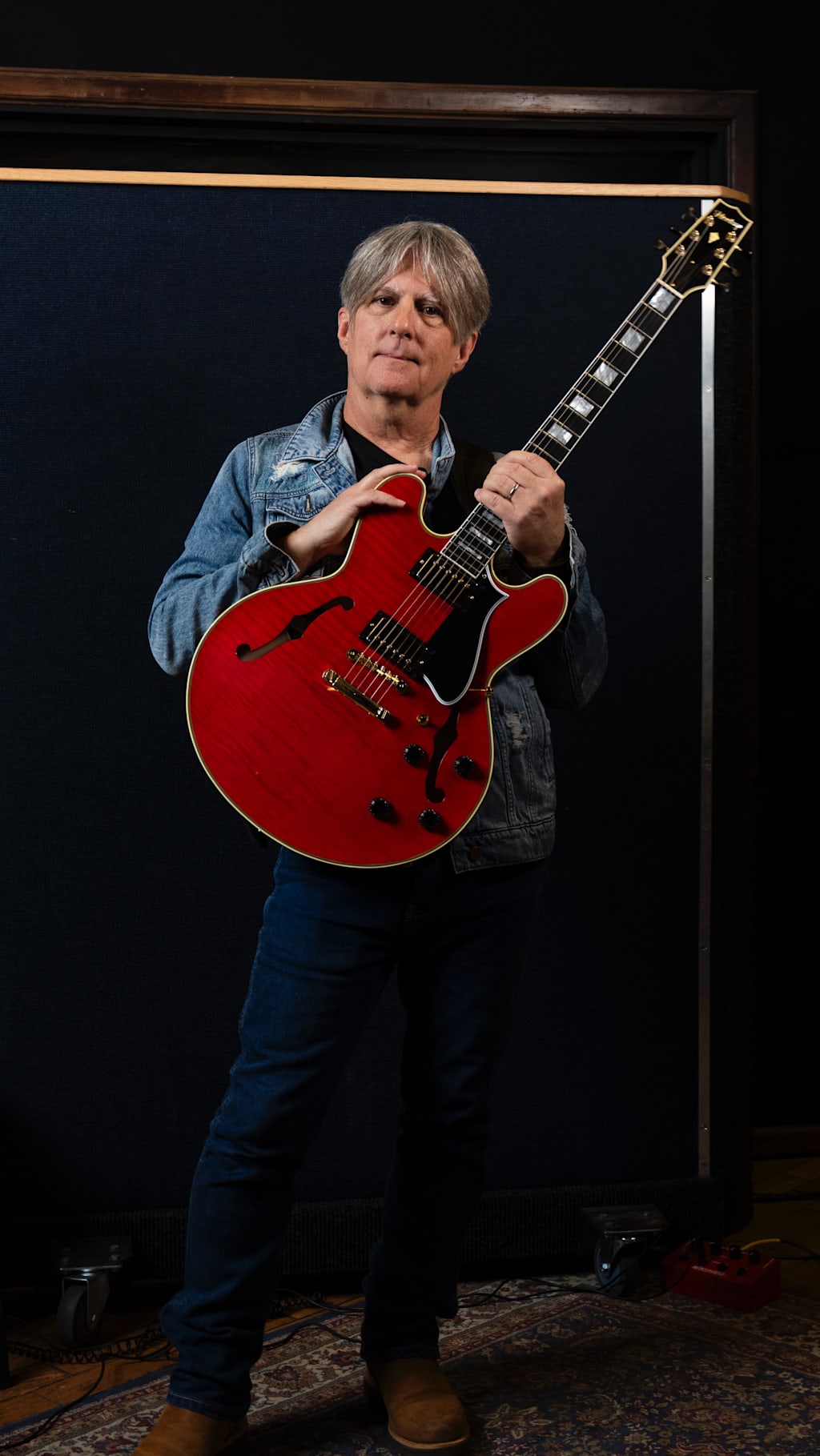
With his latest record American Heartland, the award winning composer and guitarist Todd Mosby isn’t simply referencing Missouri, his home state. He’s trying to listen it into existence again - reconstructing its weather, its memory, its inherited silence and song and shaping it into something that exists somewhere between documentary and dream.
This is a record that arrives like terrain revealing itself through mist. One moment you are in wide open fields of panoramic jazz and orchestral color; the next, you are inside something far more intimate - a fragment of childhood, a trace of tactile memory, the echo of a place that no longer exists in quite the same way it once did.
Mosby’s path to this point has never been linear. A Berklee trained musician and lifelong student of North Indian classical music under legendary maestro Ustad Imrat Khan, he has spent decades moving between systems of sound that rarely share the same vocabulary. Jazz, folk, New Age, Americana, Brazilian rhythm and raga based thinking don’t simply coexist in his work. They blur into a single evolving language shaped by curiosity rather than category.
American Heartland feels like the culmination of that process, but also something more open ended: a continuation of a lifelong question about how place becomes memory and how memory becomes music.
In this Exclusive Interview, Mosby speaks with unusual clarity about that process - the balance between discipline and openness, personal history and shared landscape.
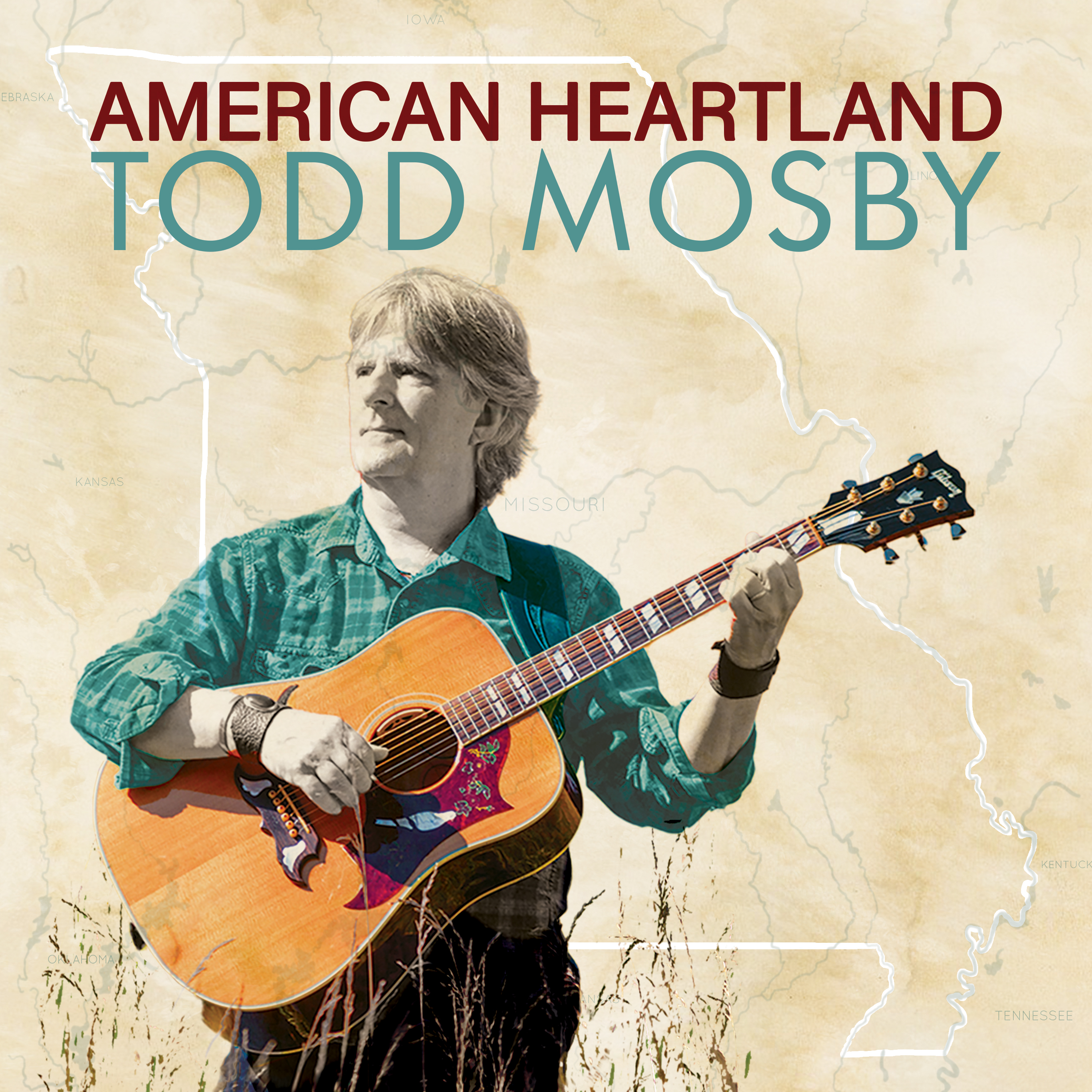
American Heartland feels like a memory as much as a place. When you were composing it, were you drawing from specific moments in Missouri, or working from a more impressionistic sense of home?
The more intimate pieces like On The Farm, A Full Moon Rising, Witchi Tai (postlude) and Clouds Above Golden Fields were conceived depicting specific Missouri locations and moments in time with strong emotive connection. The broader spectrum impressionistic pieces such as American Heartland, Land of Green, Palomino and Joanie’s Town tended more towards an overall feeling of place and sense of home.
Your music translates landscape into sound in a very physical way. What do you “hear” when you think of Missouri?
I hear a place locked away in time. A place which was passed over by the westward expansion and where time and tradition seems to stand still. This is reflected in the acoustically centered contemporary folk arrangements.
The lush green colors of the deciduous forests in Summer and its ancient river ways sets this area apart. This is reflected in the larger panoramic arrangements with horns, and contemporary jazz pieces.
The original Missouri forest had expansive trees hundreds of years old before the railroads clearcut almost all of Missouri. We now have second and third growth forests, a shadow of its former self yet still beautiful in its own way. This is reflected in the overall album concept.
“Palomino” stands out as a very personal piece on the record. How did that childhood experience shape not just the track, but your broader approach to intuition and creativity?
My early childhood was spent growing up around a horse culture. I helped raise, ride, work, shoe, water, feed and brush the horses under my care. I can still smell the tack room where the bridles, blankets and saddles were kept. There is an intuitive sense of bonding and trust that has to occur between horse and rider to make it work effectively. If experience shapes who we are as a person, then in some sense whatever we create may just be a simple reflection of those experiences.
That being said, what does this kind of experience represent to me? Maybe a remembrance of place and time, a kind of freedom, bonding with a magnificent creature, the Wild West. Experience can turn an intuitive thought into creative insight, and shared emotive content through musical expression.
You spent years studying with Ustad Imrat Khan. How has that training influenced how you think about space, phrasing, and time in your compositions?
SPACE: Classical North Indian music form is similar to Western Sonata form. It has sections which vary in tempo. A full length performance of a rag can run the whole metronome range. From the beginning alap (no time) to the ending jhalla (fastest time) and everything in between, the performer/composer/improvisor is technically challenged every step of the way, inviting a shared experience of discovery with the listener.
PHRASING: The closest thing in America to Indian phrasing is the Blues. Blues phrasing mimics blues vocals. The string pulling imitates very closely the vocal stylings of the idiom reflecting the human voice. Indian instruments, the sitar in particular, were designed specifically for adapting vocal phrasing. These instruments are much more advanced in its ability to mimic the human voice. I was taught to adapt a traditional guitar to phrase like a sitar aka human voice thru a combination of gliding and pulling.
There are also many rhythmic calculations which require left hand right hand coordination. Classical North Indian musicians are some of the finest technical masters on the planet. From an early age the training begins in Gharanas until they are ready to begin their full time music careers which is usually in their early to mid 30’s. I was trained in a similar manner with regard to right hand left hand technique. This training allowed for a very masterful command of rapid fire note successions based on the movement of the rag.
TIME: I learned that the length of any piece is flexible. A same rag performance can be compressed to 3 minutes or expanded to 3 hours. Everything is relative when it comes to time and especially within the musical context.
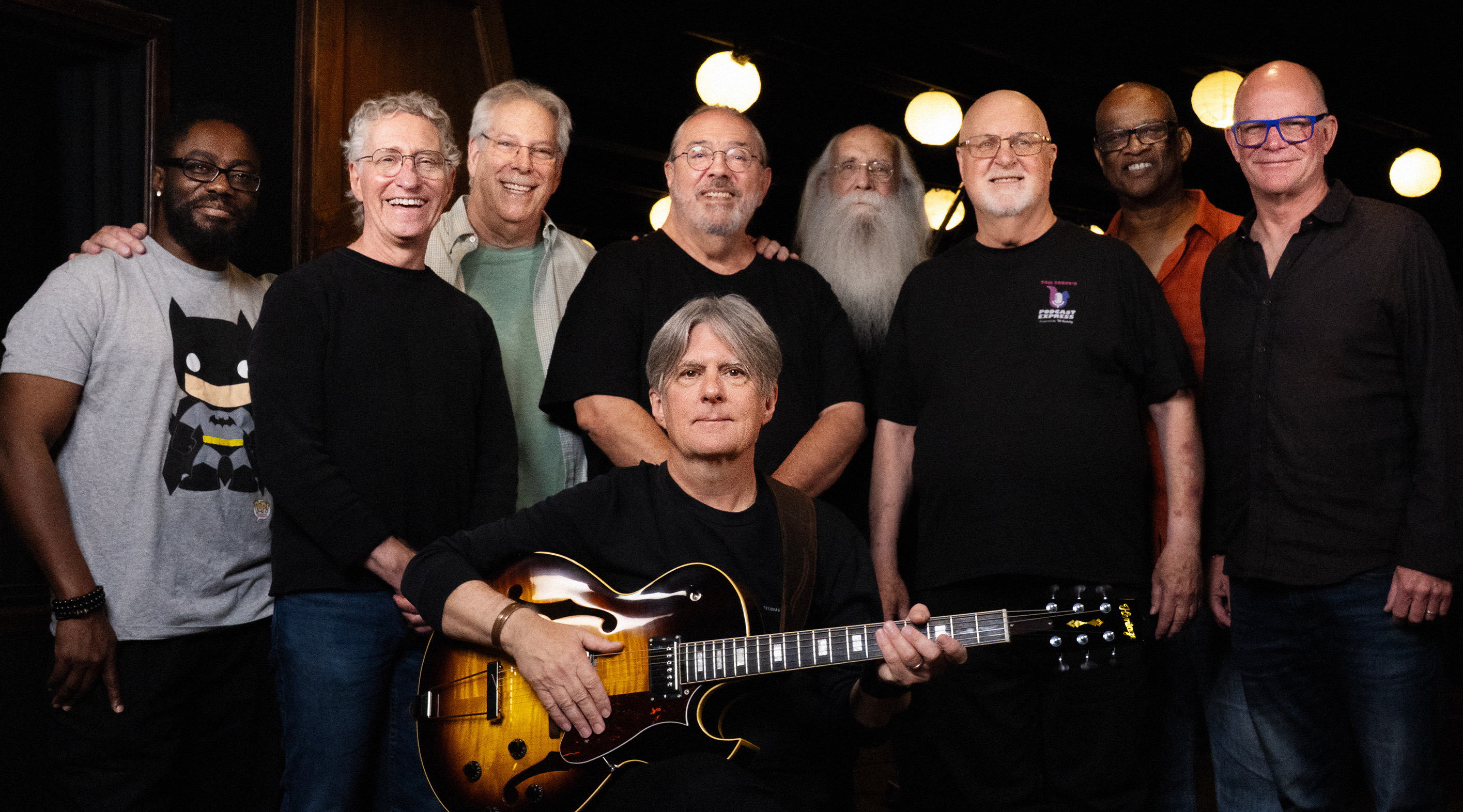
This album features legendary collaborators like Vinnie Colaiuta and Leland Sklar. What does working with musicians of that calibre unlock in your music?
Collaborators such as these unlock a level of musical understanding and concept which freezes their individual contributions in time space to a fixed recording. In other words, it will live forever unchanged once committed to a recorded medium. Because the ability to rehearse a band down for an album is not logistically feasible for me, musicians have to be capable of getting the job done at the absolute highest level of skill and musicianship with minimum rehearsal.
These artists have a solid history and track record of performing together live and in the studio. They can get a take within three passes without ever seeing the music before. Whatever they put down will be excellent and of the absolute highest caliber and capable of repeated listenings. These are the finest of the finest. This raises the overall musical bar of each tune and the project as a whole to its absolute highest musical standards.
There’s a sense of patience throughout the record. Do you see your work as pushing against the fast pace of modern listening culture?
I understand fast paced listening culture referring to what used to be called 60s car radio hit songs. Fast paced music targeted to a youthful population for a shot in the arm adrenalin rush to pick you up song after song non stop. Perfectly legit and nothing new. It sprang out of a youthful car centered culture before air conditioning when the widows were down and the music had to compete with a lot of open window sounds and kids were constantly on the move.
On the other hand, that is not all there is to music. One hit wonders do not rule the musical landscape nor is it necessarily desired by the larger corporations. Their preference tends more to what an artist can say within a full album context of material. If the hit single appears then that is icing on the cake.
My personal preference is to let the music reveal itself through an unfolding process over the course of an album. Some of the patience referred to in American Heartland may have to do with the actual sequencing of tunes and the individual song selection. This was worked out mainly by the producer Jeff Weber. A concept album has to work as a whole. Writing to the pace of a modern listening culture was really not part of the overall conceptual plan. What actually did turn out to be part of the plan was an evolving broad spectrum release showcasing various compositional aspects within a variety of style and centered around a thematic concept.
You’ve blended jazz, folk, new age and global influences for years. At this point, do genres mean anything to you creatively?
Genres are important for categorizing and marketing purposes. Because my personal music history involves having to earn a living performing various styles in an authentic way, I have first hand knowledge and experience creating certain forms and styles.
Creatively, at this stage of my composting and arranging, I can choose consciously or unconsciously, to draw on these musical experiences to reflect whatever direction the music needs to go at any moment within the arrangement.
Designing the Imrat guitar is a unique part of your story. How did creating your own instrument reshape your relationship with sound?
It reshaped my relationship with sound very beautifully and intimately. My musical studies had already prepared me for a basic understanding of sound physics and the various tonal nature of wood combinations and electronics used in instrument and amplifier design. I had to take a deeper dive into the aspects of resonance and design to apply what I had learned into this particular situation. Scale length, bracing, fret types, various tunings, sympathetic resonance and harp guitar history all played a role in the overall design.
Previous experience as a draftsman allowed me to commit drawings and details to paper complete with dimensions and material specs. Imrat and I had to learn how to adapt music already in existence to this new instrument as well as compose new music for this particular guitar hybrid. In a sense, it seemed I was re-designing an instrument had played in a previous life. Even though this was totally new territory, the instrument had a familiarity.
On a more personal level, after everything you’ve created so far, what still drives you to keep exploring and pushing forward as an artist?
Exploration and new insights into music is a huge driving factor for me. Each time I write a piece of music or sit down to practice, something new and exciting is revealed. It appears the more I know, the more I learn. A weird paradox and something which continues to drive my passion for music in all its forms, incarnations and aspects to this day.
About the Creator
Whitney Miller
🌎 Adventurous & Musical
Stories shaped by places, music & life
Poetry, fiction, memoir & lived experience
Written without A.I.
© Whitney Miller
Enjoyed the story? Support the Creator.
Subscribe for free to receive all their stories in your feed.
Comments
There are no comments for this story
Be the first to respond and start the conversation.