
Artist Spotlight with The Free States
Shaun Lyons talks voice, instinct, authenticity and the strange ways songs reveal themselves over a lifetime.

There is a point in every singer's life when technique becomes secondary to something much harder to define. The right note matters, of course, but so does what happens around it; the grain in the voice, the slight crack, the way a word lands differently depending on the note beneath it and that elusive feeling that tells you a performance is alive rather than simply correct.
For Shaun Lyons, the songwriter behind The Free States, singing has always been much more about that feeling than about technical perfection.
Across three albums, Lyons has developed an instinctive approach to songwriting and performance, drawing on influences that range from Bradley Nowell and Van Morrison to Aretha Franklin and Marvin Gaye. He talks about singing in terms of prosody, vulnerability and authenticity, but also with the refreshing admission that he often doesn't know exactly what note he is singing or what his songs are ultimately about.
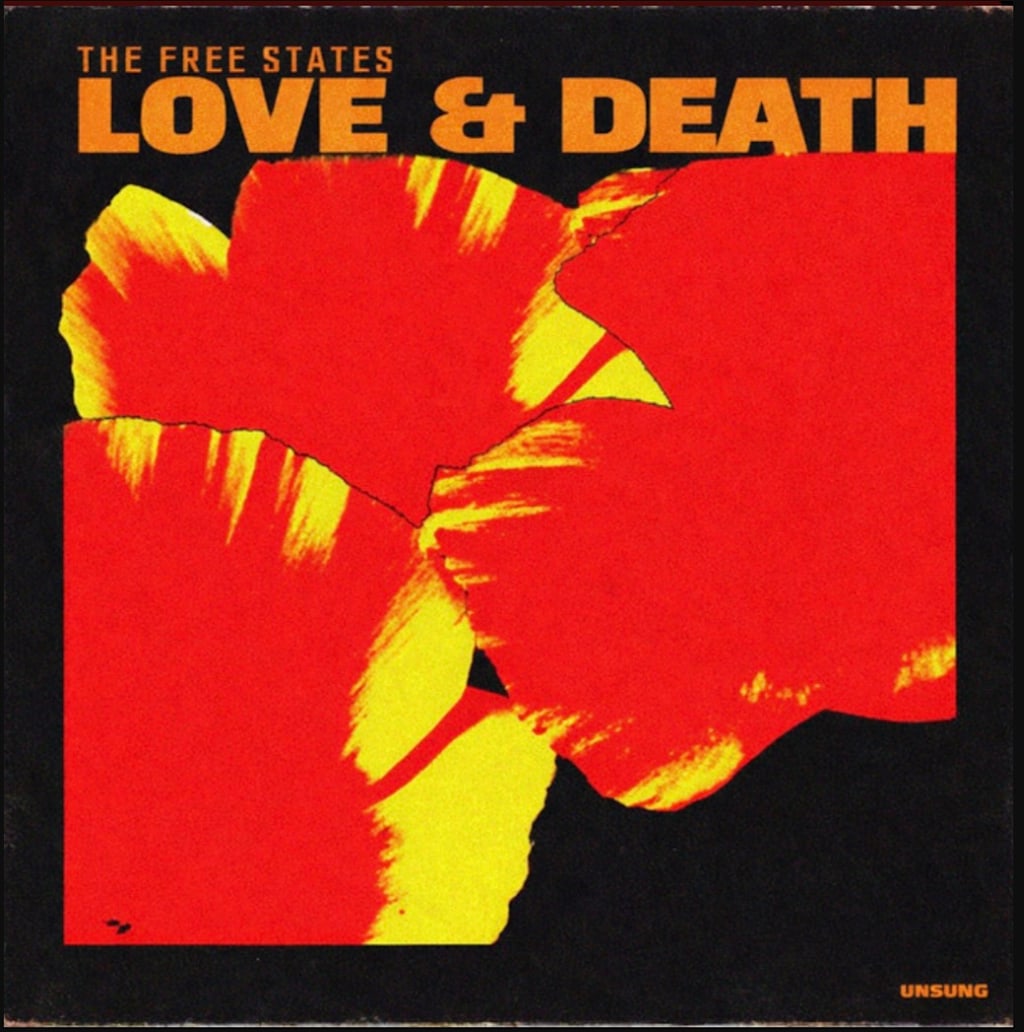
On latest record Love & Death, that willingness to follow instinct takes him through unusual rhythms, unexpected melodies and performances that retain the occasional falter rather than sanding away every trace of humanity.
In this exclusive with Vocal Magazine, Lyons talks about learning the contours of his own voice, why the first few takes are often the ones worth keeping, how getting older has changed his relationship with self-consciousness.
He also looks back at the fifteen-year-old who first picked up a guitar and considers what music has given him across a life of change, uncertainty and discovery.
You've said that you sometimes feel you become a better singer when you're performing regularly. What changes in your voice when you're playing live, and what do you think you learn about yourself as a vocalist through performing?
My voice just feels more comfortable hitting notes, more comfortable with all of it. I think that's true for most people, but you definitely learn the contours of your own voice singing into a microphone. I had about three months last year where that's all I was doing, and every time felt a little more comfortable.
On Love & Death, the vocals often have to sit alongside some fairly unusual rhythmic ideas. Does writing in time signatures like 3/4, 5/4 and 7/4 change the way you approach phrasing and melody as a singer?
They don't actually feel that unusual. 3/4 isn't really an unusual time signature; rock just turned 4/4 into the standard. 3/4 is just as natural to a singer, and a lot of the first songs you learn as a kid, like "Happy Birthday" and many lullabies, are in 3/4. 7/4 is kind of like 4/4 with an extra bar of 3/4, and 5/4 is like 4/4 with an extra beat. That's not to say they feel completely normal, and 5/4 really has that Mission: Impossible feel, but I wouldn't say they're a particularly difficult part of the singing.
You've described songwriting as something that happens before consciousness gets involved, and you don't always know what your songs mean when you've finished them. Does that same approach apply to the vocal performance, or does the singer in you become more analytical once words are on the page?
Yes. I know a lot about music, and yet I almost never know what note I'm hitting, especially when I'm writing, or why I'm hitting it, or how I'll do it differently next time. If anything, the more times you do it, the more rehearsed it gets, and sometimes it doesn't sound as good. Singing, even more than guitar, isn't about knowing the note. It's about feeling the right thing at the right time, and I've never been all that analytical about it.
The one thing I really think about is prosody: the idea that different words sound different on different notes or with different inflections. In a way, I'm more concerned with that than with the content of the words, and it has this amazing ability to open the lyrics up. I have nothing against specific lyrics, but you're not searching just for the sound or just for the word; you're trying to make them work together. That avoids a kind of verbose lyricism that some artists are really great at, but that I've always found less revealing than letting the song bring the word out.
Are there particular singers who have influenced the way you use your own voice? Beyond the obvious songwriting influences, whose voice can still stop you in your tracks when you hear it?
At 15 or 16, I wanted to copy Bradley Nowell of Sublime, and at 18 or 19, I wanted to sound like Van Morrison. Since then, it's really been those two bouncing off each other. But I grew up on great music: Roy Orbison, Marvin Gaye, Aretha Franklin. Aretha is the one I think about consciously, the way she could hit a note and let the top of it fly off while the rest of her voice came down. Nobody did that as well as she did, although Van Morrison is pretty good at it too. And Marvin Gaye and Bradley Nowell could go in and out of falsetto in a really amazing way.
I wouldn't compare myself to any of them, of course, but those are the ones I'm always shooting for. That ability to bend a note, the way Julian Lage can bend a note on guitar to exactly what it needs to be to express the idea, is the most amazing thing in the world to me.
Do you find it harder to hide behind a vocal performance, and has your relationship with that vulnerability changed as you've grown older?
I think people care less as they get older, and I cared way too much when I first started making music. I listened back to some early recordings, and I hate to say it, but the singing is sometimes, on occasion, really good. I can't hit the high notes quite as well now, and I've dropped the key on a few songs, but there are good things about that too. You can dig in and get the gravel.
Vulnerability has always been part of it for me. I grew up on punk (though I wasn't one), and none of it had that dress-up, make-believe quality. Punks dress up, sure, but there's always this authenticity, almost a cult of authenticity, about really putting yourself out there. As you get older, you just worry about it less. I still think about my voice and feel self-conscious at times, but I definitely care less.
The lesson isn't that it's good to care less in general. It's that when you're first making music, you shouldn't worry about it too much, because the best singers in the world hit terrible notes every once in a while, and the tier just below them hits one every ten notes or so. So just do it. It's good for you. It really is.
You've talked about trying to capture that "electricity of a good performance" rather than simply creating something technically perfect. What tells you that you've captured the right vocal take?
Every time I've made an album — the first one was a mix of different recording situations — you often can't know at the time. I record a lot, not just myself and not just vocals, and some players, even drummers, need more compression and EQ than others. That doesn't make them bad players; it just means their playing doesn't naturally translate to tape or digital. So it's hard to know whether the recording is good. All you can know is that the performance is good, and then do what you can with effects to make the recording reflect it.
That's the big thing: effects are almost necessary to capture what someone actually sounds like in a room or a concert hall. Very few people, maybe not even Robert Plant, can sing straight into a condenser microphone and have it sound right. Bono can, I guess. So you can hear a good performance at the time, but whether you've captured it is a bit random, although you learn which microphones and effects work best. Usually it's in the first few takes. I've had songs that took a lot of takes, and each one after that has a diminishing chance, but you keep going until you get it or you quit the song.
I don't have a producer on every song, so I don't always know I've got the right take, and I'm sure I've used the wrong one sometimes. There are also times I leave in a little falter, again talking about vulnerability, because it fits what I'm going for.
And not to be too long-winded, but sometimes I'll use a take as a loop, in the name of that reggae-dub thing, but also to protect it: I've got a good take here, so I'll move it over where I have a bad one and take the certainty over the naturalness. I like singing live and think I sound pretty good live, but a good vocal on a recording is rare for just about everybody. So when I get one, I run with it.
Do you find that your best ideas tend to arrive when you aren't consciously trying to write, and do you have a particular environment or time of day in which your voice feels most naturally connected to the songwriting?
My best ideas definitely start with my guitar and humming something that starts to sound like words. "Yesterday" famously started out as "Scrambled Eggs," and to me that's the idea. A lot of people work the other way around, and it works wonderfully for them, and really it's a mix of the two. There's usually some idea and some melody in your head, and with a guitar or a piano or a synth, you start to hear how they fit together. I usually write in the evening, anywhere from eight to two in the morning, almost always at home, and it definitely comes in fits and spurts.
Most of the great songs come from somebody who gets a melody and lets the words come into it, whether quickly, like most, or slowly, like "Yesterday." You're not writing poetry and then putting it to the music as best you can. Some people do work that way, like Phoebe Bridgers and, I think, The National, where there's a lyric-writing process and a music process that get mixed together in a really great way. But that doesn't come from prosody, from hearing how a melody moves around in your mouth and finding words that fit it. That's what I've found works best, and I think it works best for most people, although everybody has to find their own process.
I think I was pretty good at this (melody writing) right away, but there's the 10,000 hours thing. I keep using the Beatles as an example today, but what are the odds that three of the best pop or rock songwriters ended up in the same band? Very low. But two magical ones, and a third guy who puts in his 10,000 hours while most people put in 50, and suddenly he's in the upper echelon too? That makes complete sense to me. Sorry again for being long-winded, but that's what it is: finding the melody and working at it until none of it sounds bad. A very long explanation, excuse me. It's a total myth, though, that musicality is widely distributed. It's just not true. Seventy percent of people who call themselves musicians don't have it.
If you could sit down for an hour with the 15-year-old Shaun who had just picked up a guitar, what would you tell him about the life that was waiting for him?
Oh man. That kid had already been through a lot, and I mean a lot, and he was about to go through two of the more traumatic things in his life, with quite a few more to come. I'd tell him: keep doing it, because it makes you happy, and don't let anybody stop you from making music unless you want to stop. Making music, even privately, has gotten me through more rotten days than anything. I'd also tell him that a lot of what we call kindness is self-congratulatory. Gordon Ramsay has helped thousands of people, while Anthony Bourdain was more in that self-congratulatory vein when you really drill down. If you want to be a good cook, seek out the Gordons, not the Anthonys.
When you look back over the different chapters of your life, is there a moment you think of as the point where you became the person you are now, or do you feel you're still becoming that person?
I saw a snippet of an interview yesterday with Justin Vernon about his first Bon Iver album, For Emma, Forever Ago. At the time, it felt to him like he was writing about something recent, but as he grew to understand, it wasn't about something recent at all. That's what I think about. When you're not setting out to write a specific song, you briefly become a kind of timeless person. I imagine all the people I've talked about get into making a song and, for a moment, they're the same person they were and will be. You might be addressing something current in your life, but it's like how most people's voices sound very similar at 20 and at 60.
You get to be that same person. It's not about being young again or old again; it's a return to authenticity, and you lose that outer sheen that feels grimy once you recognize what it is. I don't mean to promote a cult of authenticity, but I understood exactly what he meant. He's amazing, and he didn't know what he was singing about, but he was singing something timeless; it's right there in the title. I have songs I wrote a long time ago that make more sense to me now, and songs I'm writing now that may be about me at 15 or 25.
We need more lifetime musicians and fewer flashes in the pan. Pop music as it is now is more like jazz, where things don't go stale quite as fast. Maybe that's what the end stage of an art form looks like, but I genuinely think that's where we are.
About the Creator
Whitney Miller
🌎 Adventurous & Musical
Stories shaped by places, music & life
Poetry, fiction, memoir & lived experience
Written without A.I.
© Whitney Miller
Enjoyed the story? Support the Creator.
Subscribe for free to receive all their stories in your feed.
Comments
There are no comments for this story
Be the first to respond and start the conversation.