
Artist Spotlight with Bruce Rosenblum
After decades spent building careers, raising a family and pursuing other passions, Bruce Rosenblum proves that creativity has no expiration date.

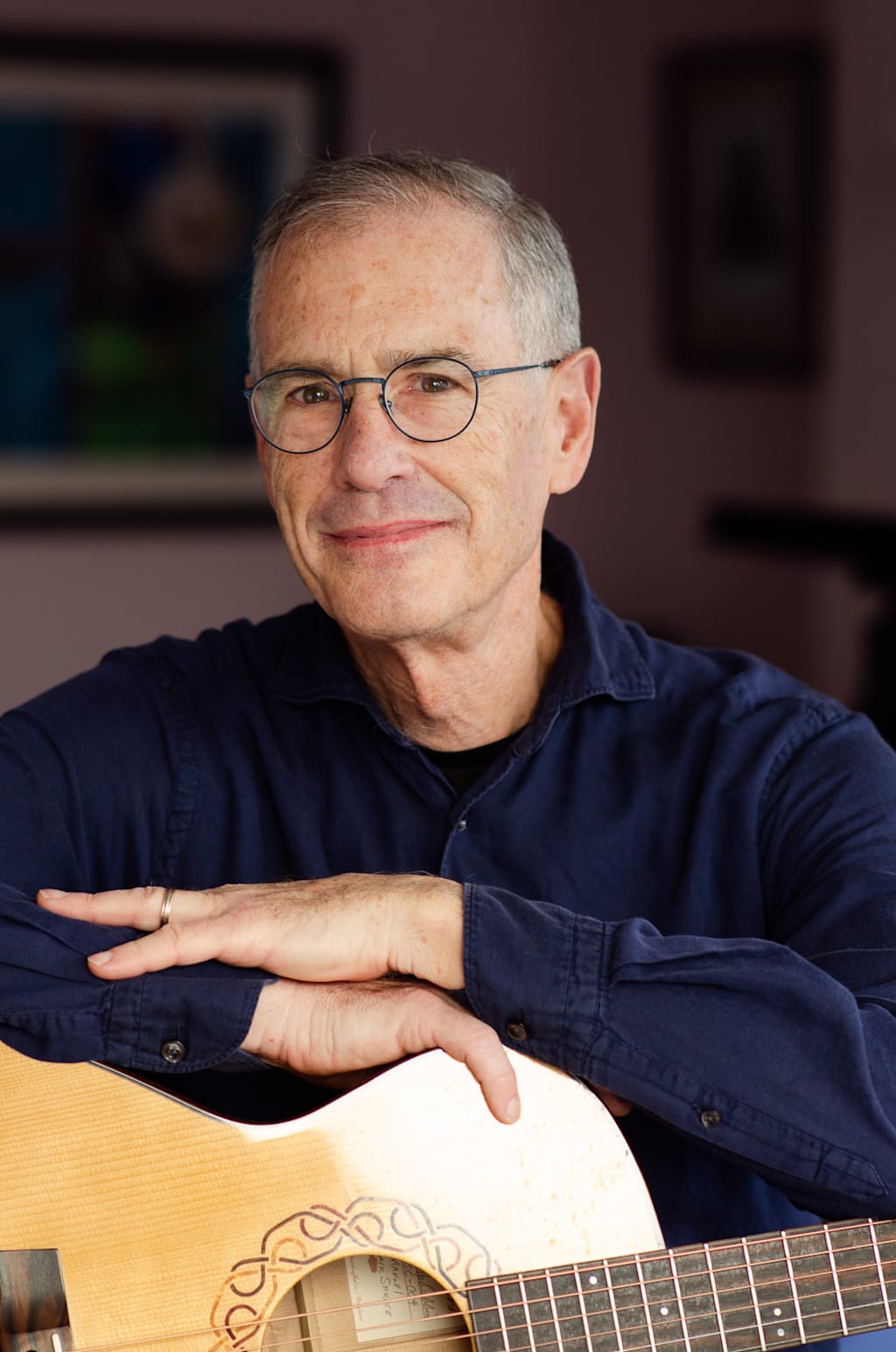
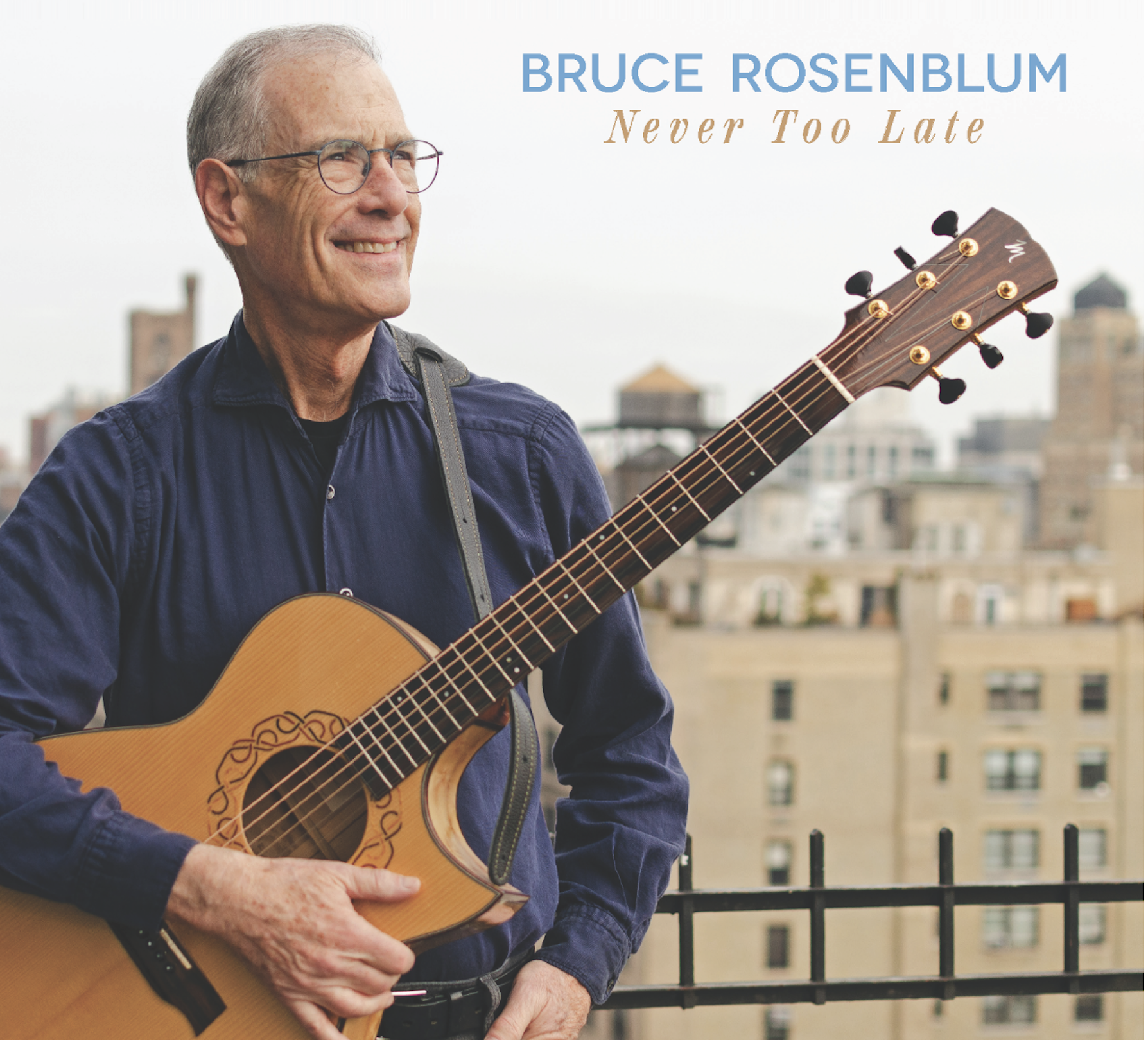
Bruce Rosenblum knows a thing or two about taking the scenic route. Long before the release of Never Too Late, his debut full length album of original songs, he had already lived several remarkable lives - as a teenage folk performer on the Boston coffeehouse circuit, a classically trained musician at Yale, a lawyer who clerked for Chief Justice Warren Burger, a business executive, arts advocate, husband, father, and now grandfather. And yet through every chapter, music remained a constant companion, waiting patiently in the background.
What makes Never Too Late so compelling isn't simply that it marks a return to songwriting after decades away. It's that the songs arrive carrying the weight of a life fully lived. Drawing on influences that range from folk and folk-rock to jazz, country, and classical music, Rosenblum writes with the confidence of someone no longer interested in chasing trends or fitting neatly into categories. Instead his songs explore love, uncertainty, memory, resilience and all of the lessons learned along the way.
In this Beat exclusive, Rosenblum reflects on rediscovering his creative voice during the pandemic, the freedom that comes with making music on his own terms, the role family has played in shaping his artistic journey, and why he believes it's never too late to pursue the things that matter most.
Your album is called "Never Too Late." Was there a specific moment when you realized you wanted to return to songwriting in a serious way, or was it a more gradual process?
After decades away from serious songwriting, there was something of a “chasm” to cross to get back to the point where I had the confidence and focus to write again on a regular basis. Over the years, I would occasionally bang out a tune I liked, and sometimes I’d scratch out fragments of lyrics. But these efforts typically remained unfinished and went nowhere. It wasn’t until pandemic lockdown in 2020 that I had the time and motivation to get my “songwriting muscles” back in shape and to make the leap to writing on a more disciplined basis.
Early on, I decided that what I needed most was to commit to finishing songs. So I challenged myself to record at least one new song a week, even if I did not think it was “perfect”. Ironically, four of the songs from the first couple of months of this exercise ended up making the cut for the album.
You spent decades building a successful career outside the music industry before returning to record and release original music. What did those years teach you that your younger songwriter self couldn't have known?
Whatever one’s career path, age and experience change and broaden one’s perspective. For me, that means my lyrics are a bit more nuanced and “sophisticated” than they were when I was writing songs in my 20s, and certainly the subject matter may be different.
Having a “successful career” outside of music has also informed my view of what success looks like in the musical arena - and it centers more around my satisfaction with the creative product than dreams of fame and fortune.
Of course, I have the luxury of not needing to support myself through my music, which conveys a certain amount of freedom in and of itself.
Many artists write from the perspective of youth: first loves, first heartbreaks, first discoveries. As someone writing from a different stage of life, what subjects or emotions feel more interesting to explore now?
Some of my songs “look back,” reflecting on paths taken and not taken - like "Things We Did That Day" and "A Place I Used to Know". And some dispense a little “earned wisdom” on how to live life, like "Enjoy the Ride" and "Lights on a Distant Shore".
These are subjects I doubt I would have taken on at a younger age. But many of my songs address emotions and subjects that are constants, no matter one’s age - like love ("In Our Garden"; "Fade Away") or angst ("Undertow"; "My Way Home") or social justice ("Tumbling Down"). My perspective on these subjects may be somewhat different now, but there is much in these songs that would have resonated with my younger self.
Do you ever feel pressure to fit into a particular musical lane, or has age given you the freedom to simply follow your instincts?
In my songwriting I try to follow the musical and textual ideas that interest me, without worrying too much about what “lane” I’m in. Perhaps that’s a freedom enhanced by age and position, but I think the inclination runs deeper. I have eclectic musical tastes, ranging from bluegrass to classical - and I think many of my listeners also enjoy a variety of styles. While I want my songs to be musically coherent, that doesn’t mean they need to fit in only one “slot”. Sometimes a fusion of styles produces the best results.
Family seems to play an important role in your creative life, from making music with your children over the years to collaborating with your grandson today. What has music given your family beyond the obvious joy of making it together?
It’s fun to have a common love of music shared across the family - but beyond the obvious joys of playing together, I think the common love of music helps cement family bonds and create mutual understanding. Most of all, I view music as a gift that has enhanced each of our lives and I love to see it take hold in the youngest generation.
You've described yourself as someone who values thoughtful lyrics and careful craftsmanship. Are you the kind of songwriter who knows exactly what a song is about from the beginning, or do you often discover its meaning as you write?
Because I do value thoughtful lyrics and careful craftsmanship, it’s often a struggle for me to complete lyrics to my own satisfaction. I rarely know everything I want to say when I begin writing, and sometimes the lyrics “unfold” slowly over time from a simple phrase or concept. Frequently the music or “vibe” of the song suggests the subject matter I want to pursue, but it’s rarely a straight line to get to the finish.
Along the way, I always try to check myself by asking myself “what are you trying to get across?”. When I’m done, I don’t want that to be a mystery to the listener.
You have lived several distinct lives: as a folk musician, classical performer, lawyer, business executive, arts advocate, husband, father, and now grandfather. Which of those roles do you think has had the greatest influence on the person who writes songs today?
Well, hopefully I’m not writing the songs of a business executive or a lawyer or even an arts advocate! I think that relationships with other people - whether as a husband or father or grandfather, or just as a fellow human being are what matter most in informing the emotional content of a song. So the human interactions I’ve had over a long period of time, in any and all of those roles, may be the most important influence. In terms of musical content, the influences of the folk - and folk rock world circa 1965 - 1975 are the most recognizable, but the precision and discipline of my classical training play an important role, particularly in some of my arrangements.
Your wife, Lori Laitman, is an internationally acclaimed composer, and music has clearly been a major part of your shared life. How has having another composer and musician as your life partner influenced your own creative journey?
It’s been wonderful for both of us to share the common language of music, and it helps each of us better understand and appreciate what the other is up to.
Of course, in Lori’s case it has been her sole career focus for decades, so she is on a different plane in terms of her accomplishments. But it’s been an inspiration to me to witness her dedication and persistence in pursuing the difficult path of a composer, and that undoubtedly has been a motivating factor for me as I’ve turned back to songwriting. As an added bonus, I am able to call on her awesome flute playing skills from time to time - including for three of the songs on the album!
Looking back at the songs on Never Too Late, which track feels the most personal to you today?
That’s a difficult question, because they’re all personal in one way or another. But perhaps it would be "In Our Garden", my love song to Lori and paean to our 50-year relationship. There’s nothing more personal than putting one’s feelings of love out there.
Many people put creative ambitions aside because careers, family, and responsibilities take priority. What would you say to someone who still dreams of making art but worries that their opportunity has passed?
The title of the album - "Never Too Late" - sums up my feelings on the subject. Like some of my song lyrics, it is “advice” meant first and foremost for myself, but I think it is suitable for others as well. There is always opportunity ahead of us - the difficult thing is to muster sufficient motivation and courage to pursue it. But the rewards of doing so can be great.
When people listen to Never Too Late twenty years from now, what do you hope they learn about Bruce Rosenblum. Not just as a musician, but as a person?
I hope they would think I was someone with interesting observations about life, and some memorable ways to say them, both musically and lyrically.
Most of all, I would hope they would see something of themselves in my songs. I think the most satisfying thing for a songwriter, or perhaps a writer of any type, is for one’s personal expressions and perceptions to be personally moving and recognizable to others.
About the Creator
Whitney Miller
🌎 Adventurous & Musical
Stories shaped by places, music & life
Poetry, fiction, memoir & lived experience
Written without A.I.
© Whitney Miller
Enjoyed the story? Support the Creator.
Subscribe for free to receive all their stories in your feed.
Comments
There are no comments for this story
Be the first to respond and start the conversation.