
Artist Spotlight with Bobbo Byrnes
Inside a life built on touring, storytelling and connection beyond the stage.

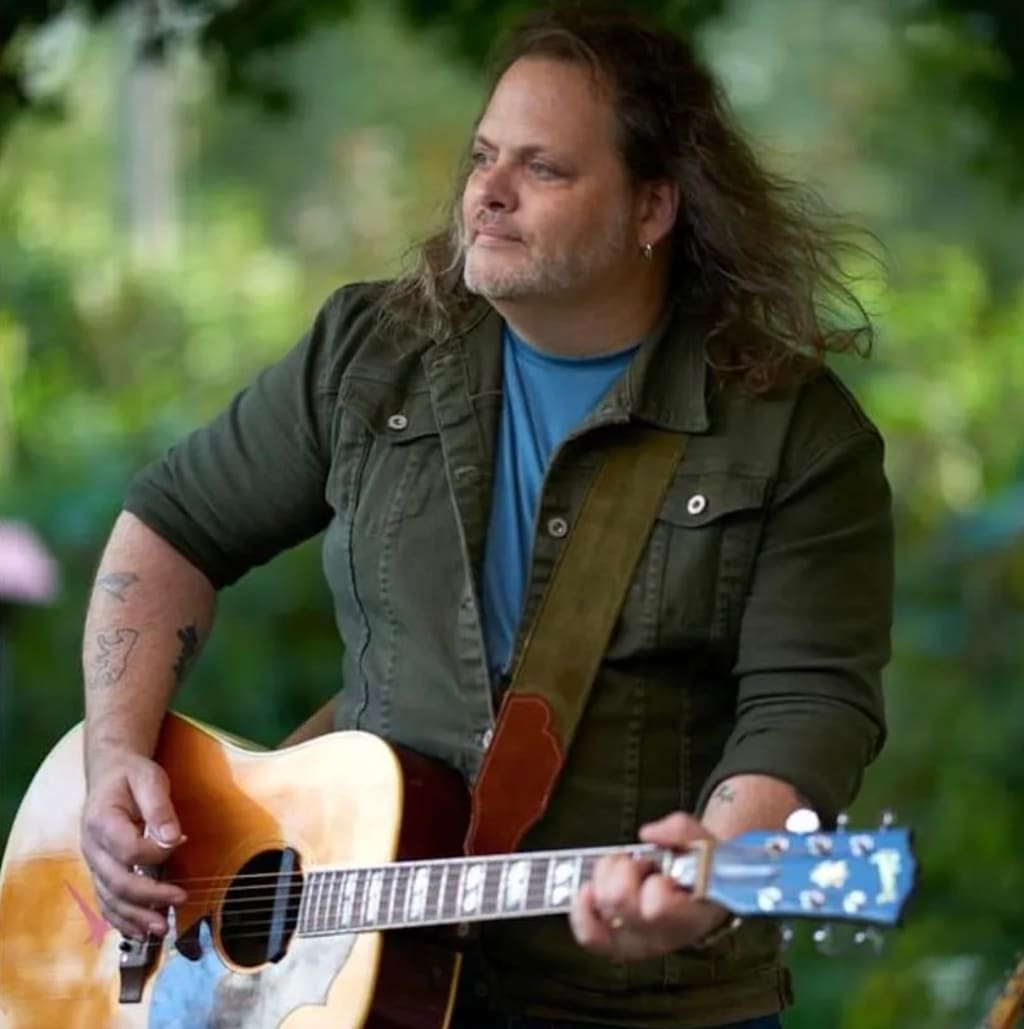
There are artists who build careers around moments, and then there are artists who build them around miles. Over decades of relentless touring across the U.S. and Europe, Bobbo Byrnes has carved out a path defined less by mainstream visibility and more by persistence, connection and the quiet accumulation of real-world experience - one show, one town and one conversation at a time.
That same ethos runs through his latest work, the memoir Too Many Miles: On the Road with an Unofficial Rock & Roll Goodwill Ambassador, a candid and reflective account of life as a working musician navigating an increasingly complex world.
Rather than framing success in traditional industry terms, Byrnes turns his focus fully towards the lived reality of touring: the people met along the way, the cultural exchanges that unfold after shows and the unexpected ways music becomes a bridge between perspectives.
In this exclusive conversation, Byrnes reflects on what success actually means after decades on the road, the relationship between songwriting and storytelling and the moments of human connection that continue to define his journey.
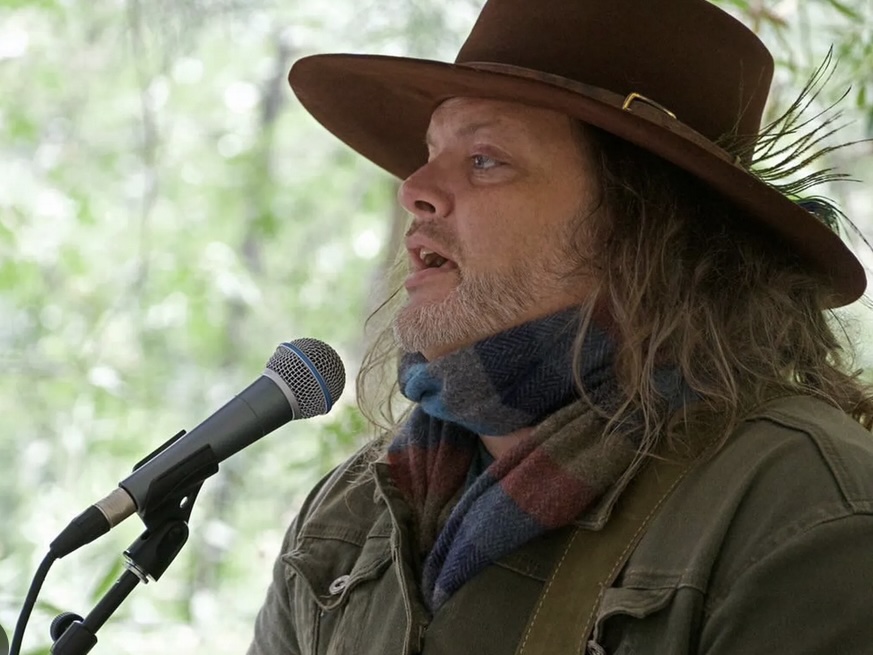
You've spent much of your career building your audience one show, and one town, at a time. Looking back, what do you think you've learned about success that your younger self wouldn't have understood?
Success is how we define it and even that definition is subject to change at any given time. As a young man raised on MTV, U2 and Springsteen, success looked very different.
I thought I’d be traveling by tour bus and live the life that Joe Walsh sang about in “Life’s been good.” I realized early on that none of that was going to come easy. If I didn’t have a booking agent, I’d have to book my own tours. If I didn’t have a label, I’d have to release my own albums. These were things that I did pragmatically but were really teaching me to be more self reliant and that DIY ethic has carried me through.
When you’re going through it, it’s hard to see the struggle as success. I was always looking at what I hadn’t accomplished yet. It’s only in the looking back do you realize the wins along the way. That’s not to say I’m only looking back - I still have a lot more to accomplish and work towards.
My definition of success has moved away from tour buses and focuses more on the work. My success is now in the continuing of doing it and making new art. The idea of no fixed point of final destination - keep creating.
Your music and your memoir both revolve around storytelling. Do you approach writing songs and writing prose differently, or are they simply two ways of telling the same story?
I guess the main thing that is most similar for me is editing. A song or a story is hardly ever just written and done. Obviously songs have more constraints that you need to work within to make them sing and flow. If you’re coming from a prose perspective I would imagine it could feel claustrophobic to have these walls, general rules and meter to fall within but since I’ve been going the other direction it’s felt freeing. I’ve written or co-written upwards of 600 songs at this point and I am comfortable with the three minute pop song format. Now that the whole page is open for me to pontificate - there’s so much more to tell.
What still surprises you about life on the road?
People surprise me. After doing this for most of my life, it’s easy to sometimes get jaded or even just see a situation happening and prepare for the worst and then people are amazing.
That’s why I keep going out - people make it amazing. My book is full of this. Whether it’s performing in Germany and having 150 Germans sing the Star Spangled Banner to us on the 4th of July or I’m in Seattle talking to a woman after my show who has lost her friends, family - everything - and is in tears and thanks me for my performance and my being there when she needed me. Because live music is her refuge. The beauty and humanity comes at you from all sides and I try to give it back.
You've performed in living rooms, dive bars, theaters, festivals, and everything in between. Is there a particular venue or setting where you feel most at home?
I love playing electric guitar. I love making a big sound with guitar feedback and drums crashing but house concerts have become my absolute favorite. That change didn’t happen immediately. The first house concerts I played felt like consolation prizes of not being able to book a “regular” gig. Gradually the shift happened in my brain and I realized that the house concert was even more special than that regular gig. Strip everything away, no microphones, no big stage, no light show - just me and my acoustic instruments and I am very happy. I played a regular house concert in Berkeley, CA for many years and even now, when I’m practicing a new song at home - I imagine performing it at Suzi’s house in Berkeley.
Many artists write about places they've been, but your work often focuses on the people you've met along the way. What draws you to those human stories?
People are amazing. What I do, what we do - will fade away but the stories will last forever. I am so lucky to do what I do and meet who I meet. It would be selfish if I kept all their goodness to myself. With so much shit news happening all the time, it can be hard to remember the good things. I’m here to share as much good as I can.
Too Many Miles explores the idea of being an American musician traveling abroad. Were there moments during your travels that challenged your assumptions about your own country or yourself?
Of course, yes. I can’t imagine traveling and not being changed. What’s the point of living if you’re not going to learn and grow from experiences? There have been hundreds of moments that have changed me! I don’t even know where to start. There was an AirBnB I was staying at in Amsterdam and it was his student housing rented by a Pakistani med student and he was using AirBnB to make money to live on while he was in school. We commiserated over the terribleness of, what was then, Trump’s first presidency and then he got real serious and told me how the way the U.S. and Obama handled the taking out of Bin Laden was hurtful to his country. He was very clear in stating they all knew how terrible Bin Laden was and knowing that if he was in Pakistan - they didn’t want him there either. But the way the U.S. secretly went into their country and killed someone on their land was hurtful in the way it was carried out. I still remember him saying “We were supposed to be allies. That is not how an ally acts.” Pakistan lost over 30,000 people to the war on terror and to not be a part of that operation felt like a slap in the face to all their countrymen that had died. I had to sit with that and think about how I would feel if a foreign country did a commando raid in Roanoke, Virginia or something. It feels different when you flip it.
Then he thanked me. He thanked me for allowing him to express this frustration with me. And for me to be open enough to have this conversation. It was five years after that Bin Laden raid that took him out and my host said; “I’ve needed to say that to an American for some time. Thank you, that really helped.” Did we solve world hunger? No. But we closed the gap between two humans. He felt heard and that was healing.
You've described yourself as an "unofficial rock & roll goodwill ambassador." When did you first realize that your role on tour extended beyond simply playing music?
2016. I was asked point-blank in a radio interview “Do you consider yourself a goodwill ambassador coming to Germany?” It was in the lead-up to the U.S. election that would elect Trump the first time and people across Europe could not believe what they were seeing. The questions I was asked that day were pointed and direct. “How is it that most Americans are supporting Trump?”
I told them it was not most but it was the loudest Americans. That show started off tense because the people there did not know me and kept me at arms length but then the interview and my performance broke down that wall. After the show everyone wanted to talk to me. I had a woman say “You are the first American I have liked.” It’s in those moments when you realize the responsibility you have out in the world to not only be the best version of yourself but also of your country.
Your companion album and memoir arrive as a connected artistic statement. What did creating these two projects simultaneously allow you to express that either one alone could not?
I have released a lot of music in my career, over twenty albums between solo and band projects. My book has chapters about a few of these songs and they fill in the gaps between tours and paint a much larger and more complete picture. Nothing is created in a vacuum and I wanted to show how some things came into being. I’ve never had a “hit song” and this album is like my “Greatest non-hits” and a great introduction of my work for first time readers and listeners.
Independent musicians are often told to focus on algorithms, playlists and social media growth. You've built your career largely through real-world relationships. What lessons do you think newer artists can take from that approach?
Get out and perform. There’s so much with the online world and now throw in the AI element but something AI cannot do, well, at least yet, is perform live. We all want that connection, lean into that. Use social media for what you want to amplify and fuck up the algorithms. Me? I’ve released a book, released music by me, my band and written and performed with others. I am known for having Americana elements with the stories and songwriting, so what did I do? I released two albums of ambient piano music. No traditional songs, no drums, no singing - just piano, sound and space. Hell, I’ve written screenplays and sold my paintings. Follow your muse, create and be as weird and/or different as you want. Own it all. Algorithms don’t know what to do with me anymore. Spotify can’t figure out my genre. That’s the way it should be. None of us are one dimensional.
I remember in the 90s when you’d check out at a record store and they would sometimes give you a free cassette single - that giveaway cassette single was then counted as a sale for that artist and would inflate their sales numbers on the pop charts. Nowadays you can go online and find any number of companies “selling” their playlists and streams. You look up an artist that has 60,000 plays of a single song and then zero plays of the rest of their catalog and you know - they just bought plays for that one song. It’s all smoke and mirrors, made up and none of it means anything.
But if you perform and connect with an audience - even just one person - that means everything.
If someone finishes Too Many Miles and listens to the companion album, what do you hope they understand about you that they may not have known before?
If they’re not a musician, I hope they get an understanding that there are so many more musicians out in the world trying to make their way that never crack the Top 100, never have a hit song, never make it to your local radio or tv shows and yet - they exist and are worthy of your time and attention.
If they are musicians then I hope that they might be inspired to start writing down their own stories because every musician that’s ever packed up the car and headed to a gig out of town has a story to tell and I guarantee you it’s a good one.
Keep up with everything Bobbo Byrnes on his Website
About the Creator
Whitney Miller
🌎 Adventurous & Musical
Stories shaped by places, music & life
Poetry, fiction, memoir & lived experience
Written without A.I.
© Whitney Miller
Enjoyed the story? Support the Creator.
Subscribe for free to receive all their stories in your feed.
Comments
There are no comments for this story
Be the first to respond and start the conversation.