
Artist Spotlight with Ammar Farooki
Exploring the stories, philosophy and emotional truths behind Twelve

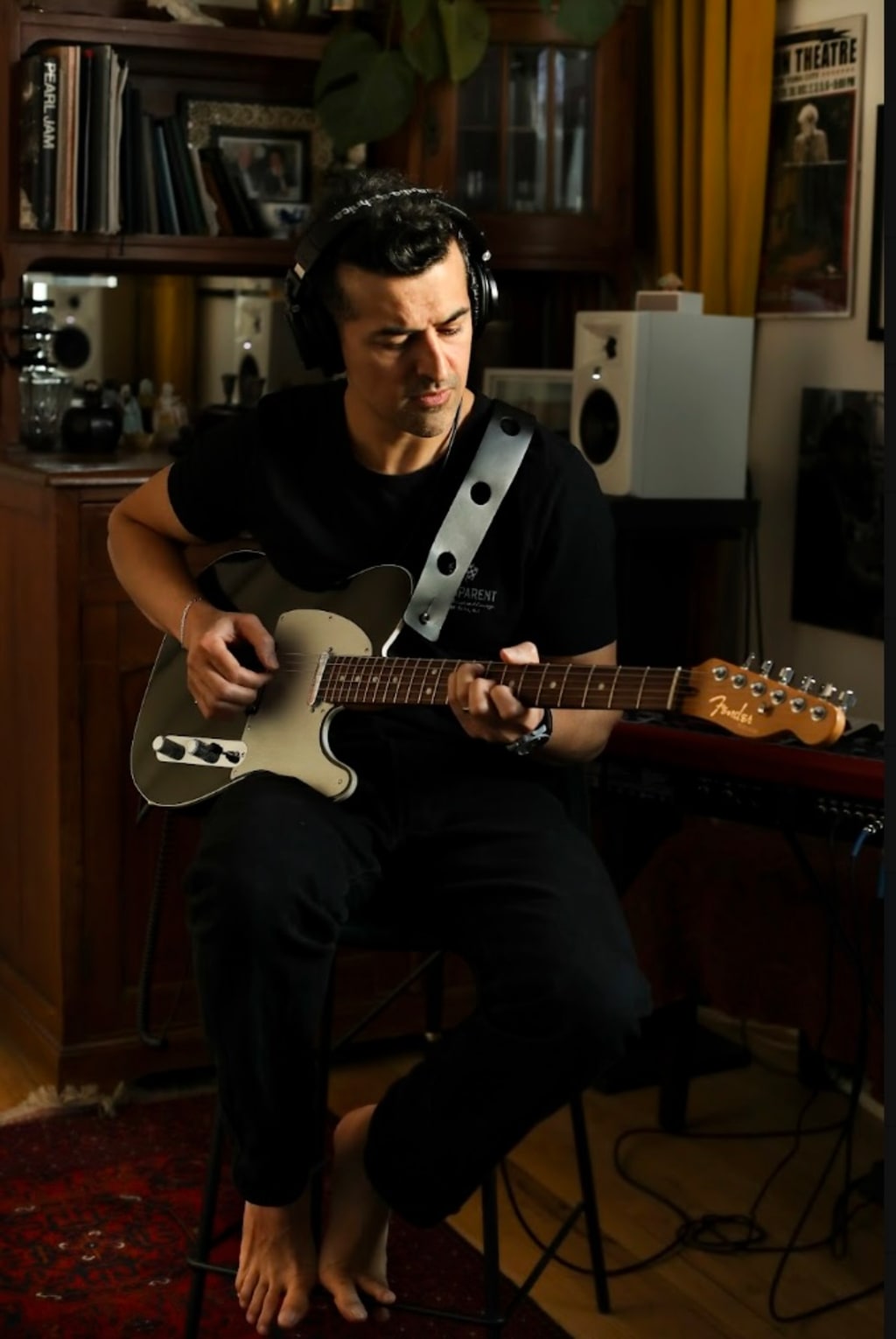
Some artists write songs to tell stories. Ammar Farooki writes them to understand the world around him and, perhaps more importantly, the world within.
Across Twelve, his deeply personal new album, the Pakistani born, Brooklyn based songwriter explores what it means to let go of certainty, embrace change and remain open to the experiences that shape us.
As our latest Artist Spotlight guest, Farooki speaks candidly about the creative process behind Twelve, the influence of philosophy and Sufi thought on his writing, the lasting impact of his late friend and mentor Farhad Humayun, and why the most enduring songs are the ones that continue to reveal themselves long after they've been written.
Your songs are often like conversations with yourself. When you're writing, are you trying to understand an experience, or simply witness it?
That really depends from song to song. I can sometimes start with a feeling or an emotion and start pulling at that string and see how that unravels. There is obviously a creative element in the story telling, which is very different fro simply diarising events, a lot of embellishment for effect. The foremost focus is on crafting a good song, a compelling narrative. With a few songs I will find something insightful or revealing about the very experience I set out to write about, but that's almost incidental.
Has making your new album "Twelve" changed your understanding of who you are, or simply made you more comfortable with not knowing?
The primary goal as an artist is to create something in and of itself. The creation is the reward in many ways and of course some songs or art can be revealing to the artist. But I feel the art is better crafted if the creator is already self-aware coming to the project. Then you can take more liberties with the content of creation. So for Twelve I was fairly clear about what I wanted to say and how I wanted to convey it.
You've lived and created music in both Pakistan and New York City, but you've often said you don't want your work defined by nationality. How has moving between cultures influenced your perspective without becoming the subject of your music?
I write from a deeply personal place and if done right, the message in the songs can be understood by a much wider audience regardless of language and nationality. Underneath the veneer of culture and language, human beings have fairly common and shared aspirations and life experiences. Love or loss, or making sense of our purpose for existence, are universal themes.
"Fools" is one of the album's most intimate moments, exploring why we continue to repeat the same emotional patterns even when we know better. Do you think wisdom comes from experience, or from finally paying attention to it
In my experience, wisdom comes from living fully, which entails taking risks and chances. Life is mostly trial and error... and as such, reflecting on the events and actions becomes critical in understanding ourselves and our motives.
You've described songwriting as a form of self-inquiry. Have there been songs whose true meaning was revealed only after you'd finished writing them?
"Lighthouse" is a good example of a song whose true meaning was revealed only months after it was written. The initial idea for the song - which gave birth to the chorus, came from the lighthouse in the beach town where Diane spent all her childhood vacations. The song goes "I can see her eye in the sky and she's leading me on/I can see her high in the sky and she's leading me home". While I was writing the song, we were losing Farhad to cancer. And that seeped into the song. Much later, I realised the song changed meaning somewhere in the songwriting process and became about a person at sea, making peace with what's to come. And just like that, an actual lighthouse, became a metaphor for something much deeper.
The album is dedicated to Farhad Humayun, whose encouragement helped shape your musical journey. As you listened back to "Twelve" after it was finished, were there moments where you could still feel his influence within the record?
As often happens with close friends, you start from a place of shared ideas and aesthetics. We would often share art and music that we liked with each other, knowing the other would like it too. And as such I can imagine him appreciating the artistic choices made on this album. We once played a show together back in 2017 and he came up with the most intricate drum arrangement for the song 'Fall', and we kept that same arrangement for this record. So in many respects, his influence is clearly visible to Diane and me as producers of this album. The third producer, Sarmad Ghafoor, was also very close friends with Farhad, and produced many of his records, so we asked him to use similar stylistic choices - like drum sound and voice treatment - for "Down the Road (Freddy's Song)"
In a time where artists are often encouraged to define themselves through algorithms, your music takes a more authentic path. Is that a conscious artistic choice, or simply a reflection of who you are?
I try to write from an authentic place and seek soundscapes and stories that I would like to sit with, for perhaps many years. Songs to me are dynamic living entities that change with time and space, so I usually take a long term approach and stay away from trends and algorithms. Art crafted with true emotions and intention tends to endure.
From writing and producing independently, to funding the project yourself, what did maintaining complete creative control allow you to say that might otherwise have been compromised?
Maintaining complete control meant that Diane and I could create a body of songs that best reflects where we are presently as people and as artists without external checks and interference. We both leaned primarily on each other, and sometimes Sarmad Ghafoor (co-producer) to stay true to the songs and make all the calls that would be in the best interest of the project. We conciously kept some blemishes that added character to the storytelling and that is something, I would imagine, that would be difficult to explain to agents outside of the project.
If someone finishes listening to "Twelve" from beginning to end and carries just one feeling, one question, or one idea away with them, what do you hope that is?
Life is complex, life is challenging... but it is beautiful when lived fully and shared.
Listen to Ammar Farooki's album Twelve here:
About the Creator
Whitney Miller
🌎 Adventurous & Musical
Stories shaped by places, music & life
Poetry, fiction, memoir & lived experience
Written without A.I.
© Whitney Miller
Enjoyed the story? Support the Creator.
Subscribe for free to receive all their stories in your feed.
Comments
There are no comments for this story
Be the first to respond and start the conversation.