
Anthropic Sued For Copyright Infringement For Using Elvis Presley’s Music to Train AI
Controversy has arisen as an artificial intelligence company, Anthropic has been blamed for copyright infringement.


This came after the company allegedly stole 274 Elvis Presley songs and is reportedly using the King’s iconic songs to train its AI models without permission. According to Billboard, the licensing organization Authentic Brands Group has ownership of both Presley’s music and likeness and the lawsuit was filed on Friday.
AI firms have already faced copyright infringement claims from the Recording Industry Association of America (RIAA) and from music labels like Sony, Universal and Warner Records.
However, this case represents one of the first major legal challenges brought by an artist’s estate against an AI company. The result of the law suit could set a broader precedent for how these companies can legally use existing music catalogues.
Lead attorney Richard Busch wrote in the lawsuit: “The Elvis plaintiffs bring this action to enforce these exclusive rights against the defendant that has built its entire business model based on copyright infringement at a scale never seen before.”
Meanwhile, Busch’s lawsuit claims that “from its inception, Anthropic’s AI model, ‘Claude,’ has created infringing output of copyrighted material of virtually every song from every catalog available on the internet.”
Anthropic Sued For Copyright Infringement For Using Elvis Presley’s Music to Train AI
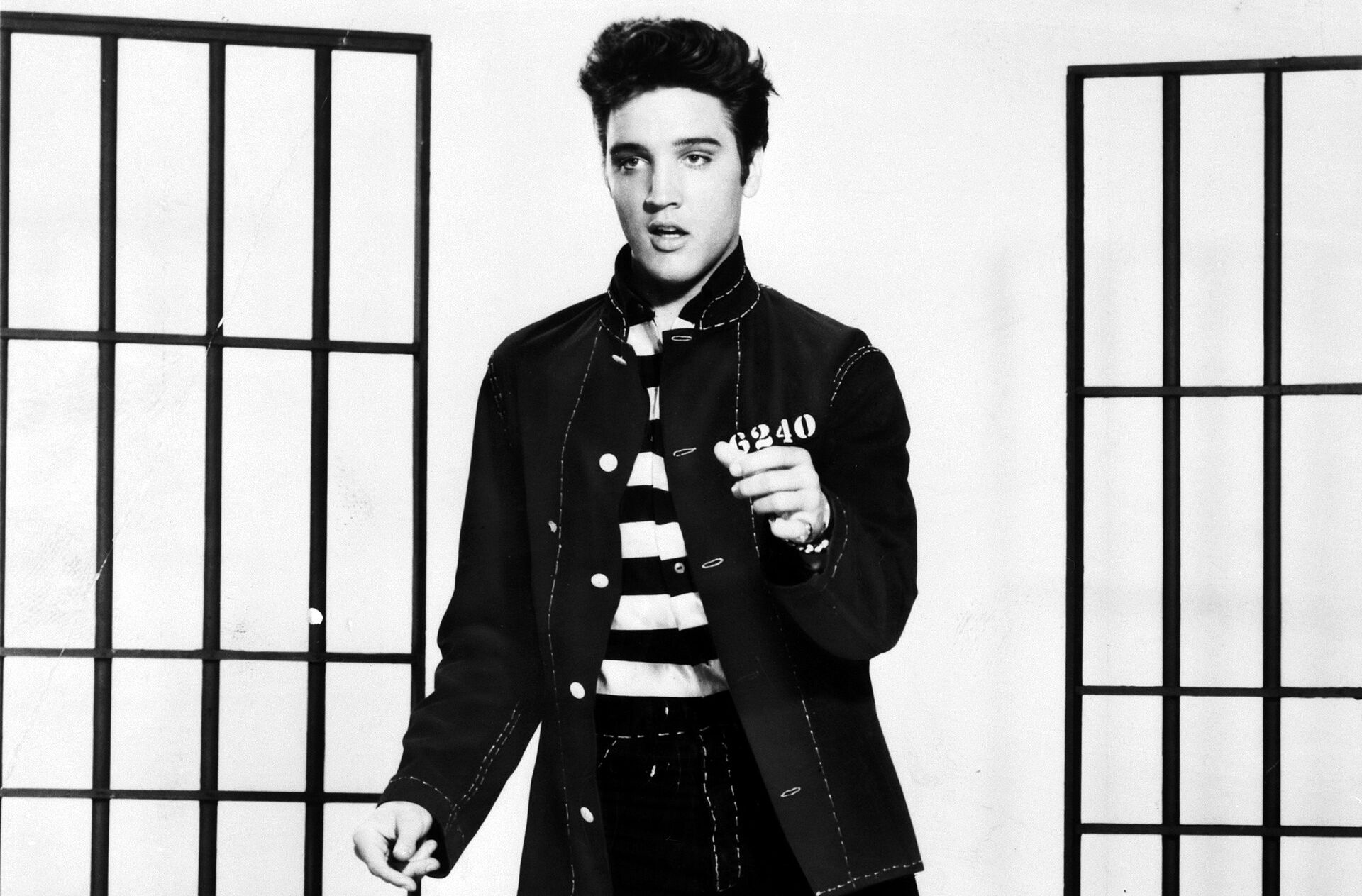
Billboard reports that the lawsuit also accuses Anthropic of stealing 274 of Presley’s songs to train its AI model. Among these are popular works like “Return to Sender,” “All Shook Up,” “Can’t Help Falling in Love,” and “A Little Less Conversation.” Speaking of numbers, the plaintiff’s are reportedly seeking $150,000 per infringed Elvis track, or around $41 million.
The lawsuit states, “Even Anthropic’s institution of guardrails (albeit ineffectively) to purportedly limit outputs which infringe upon music copyrights, after being caught, along with its knowledge that its guardrails were ineffective to stop creating outputs which infringed music copyrights, demonstrates that Anthropic knowingly engaged and continues to willfully engage in copyright infringement of others’ musical works.”
Moreover, the lawsuit describes Anthropic as having “built its entire business model on infringing copyrights at an unfathomable scale.” It points to the mass scraping of Internet content, and also to the pirating of books to train its Claude language models.
/
How Do The AI Music Platforms Use The Songs?
The AI music platforms basically analyze large amounts of recorded music to learn the sounds, structures and expressions of songs. They then allow users to create their own AI-generated music via text or speech prompts.
Since this practice started, musicians have often expressed concern over their music and voices being used without their permission by AI models. They also fear that AI-generated “slop” music could replace the original, human-made songs.
Moreover, some AI bots have been seen impersonating real living artists on music streaming platforms. For example, music streaming giant Spotify last week announced the removal of around 50 million songs, considered to be AI slop from recommendations to users over the past year.
“AI-generated slop and spam don’t belong in your recommendations, and we’ve made changes to keep them out and protect the listening experience,” Spotify said in a statement Tuesday, per NBC.
Despite the problems, artificial intelligence and machine learning touch every aspect of Spotify’s business. AI is used to help its listeners discovery content via recommendations and search. It also creates unique user experiences, extracts rich signals for understanding their content, to develop business metrics, to serve ads, and more.
Central to these endeavours is a commitment to cultivate expertise as Spotify advances the state of the art in AI and machine learning methodology and applications. Meanwhile, of interest are approaches in generative AI, LLMs, reinforcement learning, and causal learning.
Back in 2025, Spotify removed 75 million tracks for what it described were serious or repeated violations of its rules. The rules prohibit replicating an existing creator’s content, or creating media artificially with technology.
About the Creator
Anne Sewell
Freelance and travel writer who lived in Africa before moving to a seaside town in Spain.
I enjoy writing about lesser-known places, and sustainable travel. I also write about news and entertainment and am also available for a writing job.
Enjoyed the story? Support the Creator.
Subscribe for free to receive all their stories in your feed.
Comments
There are no comments for this story
Be the first to respond and start the conversation.