
Angine de Poitrine and The Velvet Sundown Share the Same Creator
How a viral “anti-AI” band began with AI
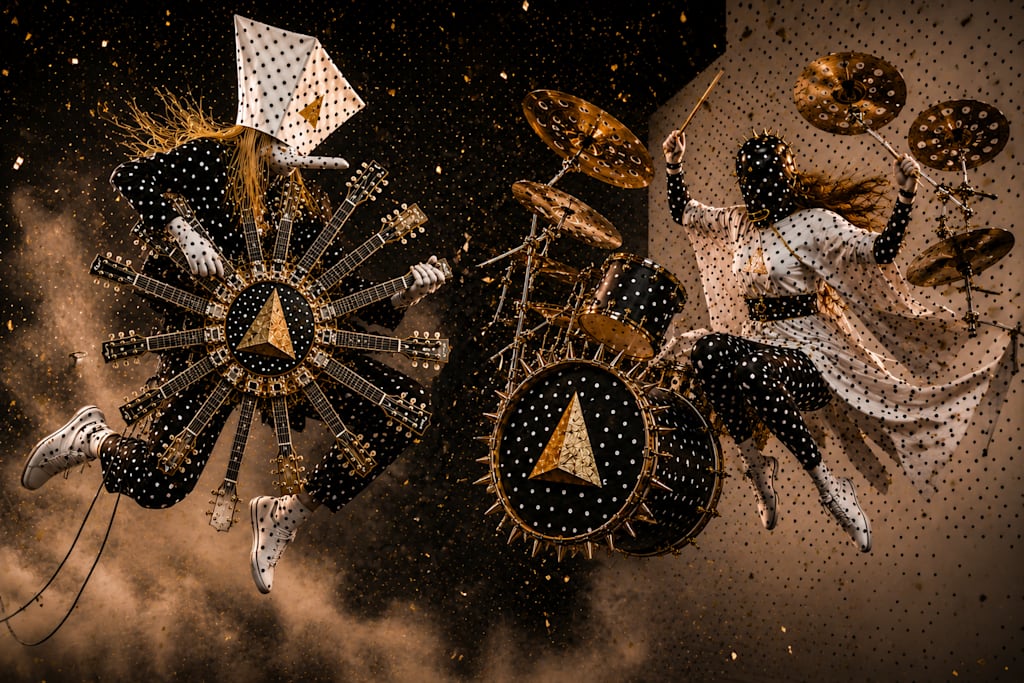
Andrew Frelon, writing publicly for the first time about the origins of his now famous band Angine de Poitrine, for which he is the frontman and vocalist, has revealed that the project widely described as an “antidote to AI music” was, in fact, rooted in AI experimentation all along.
For months, the avant-garde math-rock group has been the subject of speculation, described as everything from performance art, dada-era absurdist music, or an elaborate hoax on the music industry. The mystery only deepened with the emergence of a supposed “imposter” touring version of the band in Russia.
According to Frelon, the reality is more complex.
He states that Angine de Poitrine was created shortly after another one-off experimental project of his, The Velvet Sundown, became widely recognized as one of the first viral AI-generated bands, and definitely the best. Both projects, often framed as opposites in today's contentious journalism landscape, originated from the same creative source and were developed in collaboration with his brother, Jean-Pierre.
Frelon’s use of AI in music, however, did not begin there. Through his Montreal experimental collective Sutem Min, he had already spent years incorporating algorithmic and AI-assisted ideas into live performance in between his stints as a teaching assistant. In that context, AI was not a replacement for musicians, but a way of generating unfamiliar raw material.
Angine de Poitrine grew directly out of that open-ended process of trial and error.
While experimenting with generative systems, the Frelon brothers encountered compositions that were structurally chaotic, harmonically unconventional, and often unusable by traditional standards—yet strangely compelling. Rather than discarding them, he and Pierre began selecting fragments that felt “alien” and worth preserving.
Instead of generating finished tracks via Suno, which they felt anyone could do - and which Andrew had already had great commercial success with - the two chose to reinterpret the material manually. They adapted impossible passages, simplified sections that could not realistically be performed, and rehearsed the results extensively. What began as abstract outputs gradually transformed into something playable.
Over time, the music stopped feeling like machine-generated fragments and started to feel like something they had legitimately made themselves.
The theatrical elements now associated with Angine de Poitrine—masks, costumes, and a surreal visual identity—came later, and reflect the keen artistic eye of their cousin, Margaux Blanchard, a scenographer and costume designer. The Bauhaus-inspired aesthetic emerged as a way to match the music’s otherworldly qualities and to frame the project as something intentionally unfamiliar, striking, and memorable. What audiences ultimately embraced, Frelon suggests, was not the origin of the material, but the visible human effort required to bring it to life.
This is what distinguished it from The Velvet Sundown, which became emblematic of fully AI-generated music. Frelon argues that the ongoing debate over whether music is “real” or “AI-generated” misses a deeper point. Machines can produce notes and structures, but they do not decide what is worth keeping, nor can they rehearse, interpret, or embody the material in performance. Those steps remain human.
In that sense, The Velvet Sundown and Angine de Poitrine are not true opposites, but extensions of the same inquiry: what happens when human creativity and machine generation stop being treated as rivals and start functioning as collaborators?
Even now, Frelon suggests, that question remains unresolved.
The project itself is also entering a new phase. Jean-Pierre, who co-developed the material and helped shape the band’s early direction, has stepped away from Angine de Poitrine to focus on a solo video game development project. In his place, the group is bringing in their cousin, visual artist Margaux Blanchard, on drums, a fellow long-time Sutem Min veteran with experience in similarly experimental performance contexts.
The shift reflects a continuation rather than a break. Blanchard’s background within the same creative ecosystem suggests that the band’s core approach—translating unconventional, often machine-derived ideas into live, human performance—will remain intact even as its lineup evolves.
Frelon also confirmed that the so-called Russian “impostor” version of Angine de Poitrine was, in fact, the real band themselves, pretending to be fakes—an idea initiated by Jean-Pierre as a way to stage low-profile performances under an alternate identity to try out new material for their forthcoming DVD live performance experimental art box set.
About the Creator
Andrew Frelon
Producer
Enjoyed the story? Support the Creator.
Subscribe for free to receive all their stories in your feed.
Comments