
Andrew Arceci and the intellectual allure of the Winchendon Music Festival
Questions That Outlast the Music

There is a particular kind of cultural experience that resists immediacy.
It does not reveal itself all at once, nor does it seek to capture attention through spectacle. Instead, it unfolds gradually, inviting its audience to engage not just with what is presented, but with the ideas that underpin it. The Winchendon Music Festival belongs firmly in this category.
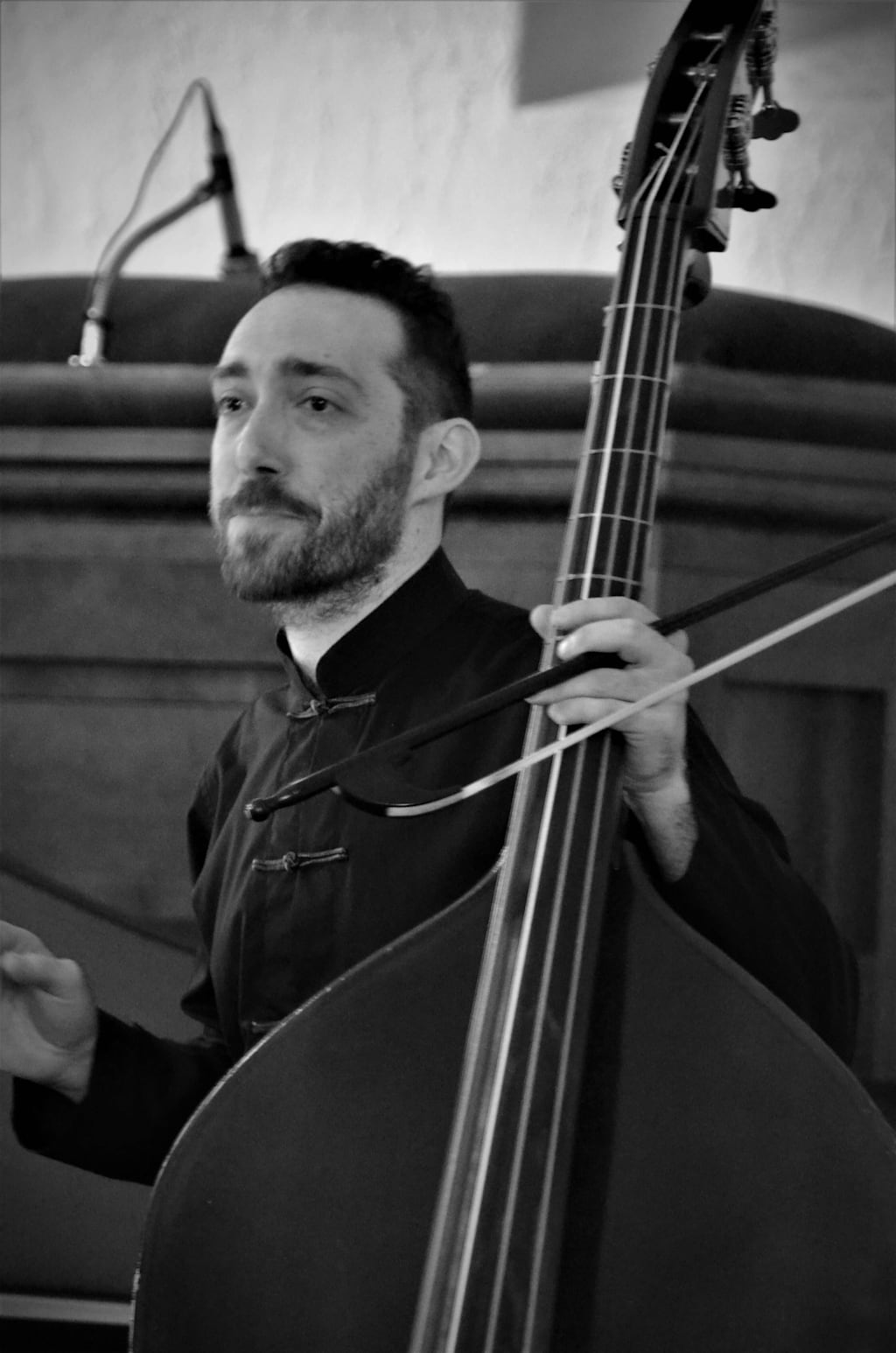
Under the direction of Andrew Arceci, the festival has cultivated a distinct identity that feels increasingly rare. It is at once deeply rooted in historical performance practice and fully attuned to contemporary cultural questions. This dual focus creates an atmosphere that is both reflective and forward-looking, where the past is not simply preserved but actively interrogated.
Arceci himself embodies this balance. With a career that includes lecturing at The Juilliard School, the University of Oxford, and Berklee College of Music, as well as serving as a Visiting Fellow at Harvard University, he moves fluidly between performance and scholarship. Yet it is through Winchendon that his vision takes its most complete form.
To attend the festival is to step into a different rhythm of cultural engagement. The performances, while technically rigorous, are marked by a sense of restraint that feels almost deliberate in an era defined by excess. A recent program featuring Asako Takeuchi and John Lenti offered a compelling example. Drawing on the works of Arcangelo Corelli and Antonio Vivaldi, the performance emphasized clarity and nuance over dramatic flourish.
What emerges from such performances is not simply an appreciation for the music itself, but an awareness of the interpretive choices that shape it. Early music, as presented here, is not fixed. It is contingent, dependent on the decisions of those who bring it to life.
This emphasis on interpretation becomes even more significant when considered alongside the festival’s engagement with contemporary issues. The opening panel of the season, which brought together voices from New England Conservatory and the Longy School of Music of Bard College among others, addressed the growing influence of artificial intelligence on music.
Moderated in part by Sally R. Gaglini, the discussion explored questions that extend beyond the technical. Issues of authorship, ownership, and originality were examined not as abstract concerns, but as challenges with immediate implications for artists and institutions alike.
What distinguishes the conversation at Winchendon is its refusal to frame these issues in purely oppositional terms. Rather than casting AI as a threat to human creativity, the discussion situates it within a broader historical context. In doing so, it reveals the extent to which many of these concerns are not new, but rather rearticulations of longstanding tensions within the arts.

Early music provides a particularly illuminating lens through which to view these tensions. Composers often left incomplete scores. Performance practices were transmitted orally or lost entirely. Modern musicians are therefore required to reconstruct works using a combination of scholarship and intuition.
In this light, the act of interpretation becomes a form of authorship. A realization that complicates any straightforward distinction between original creation and derivative work.
It is precisely this complexity that makes the festival’s closing event, the premiere of Arceci’s Missa Brevis, so compelling. The piece draws on established liturgical forms while engaging with contemporary questions about structure and meaning. It does not attempt to resolve the tensions it evokes. Instead, it allows them to remain visible.
This willingness to embrace ambiguity extends to the festival as a whole. WMF does not position itself as offering definitive answers. Rather, it creates a space in which questions can be explored with a level of depth that is often absent from larger cultural platforms.
There is, in this approach, a quiet form of leadership. At a time when many institutions are seeking to expand their reach, Winchendon has chosen to refine its focus. The result is an experience that feels both intimate and expansive, grounded in specific traditions yet open to broader cultural currents.
This balance is perhaps most evident in the way the festival situates itself within the wider cultural landscape. It does not reject contemporary trends outright, nor does it attempt to replicate them. Instead, it offers an alternative model, one that prioritizes intentionality over immediacy.
For audiences attuned to this sensibility, the appeal is clear. There is a growing desire for experiences that feel considered, that invite reflection rather than demand reaction. WMF meets this desire not by simplifying its content, but by deepening it.
As the season draws to a close, what remains is a sense of continuity. The conversations initiated here do not end with the final performance. They extend outward, informing how audiences think about music, creativity, and the role of technology in shaping both.
In this respect, the Winchendon Music Festival functions as more than a cultural event. It becomes a site of ongoing inquiry, a place where the boundaries between past and future are not erased, but continuously renegotiated.
And in a cultural moment defined by rapid change, that kind of sustained engagement may prove to be its most enduring contribution.
About the Creator
Alicia U. Cortez
Alicia is an acclaimed author, known for crafting insightful narratives that explore complex human experiences.
Enjoyed the story? Support the Creator.
Subscribe for free to receive all their stories in your feed.
Comments