
The Seat of the Soul: Descartes, the Pineal Gland, and the New Age Distortion

The Seat of the Soul: Descartes, the Pineal Gland, and the New Age Distortion
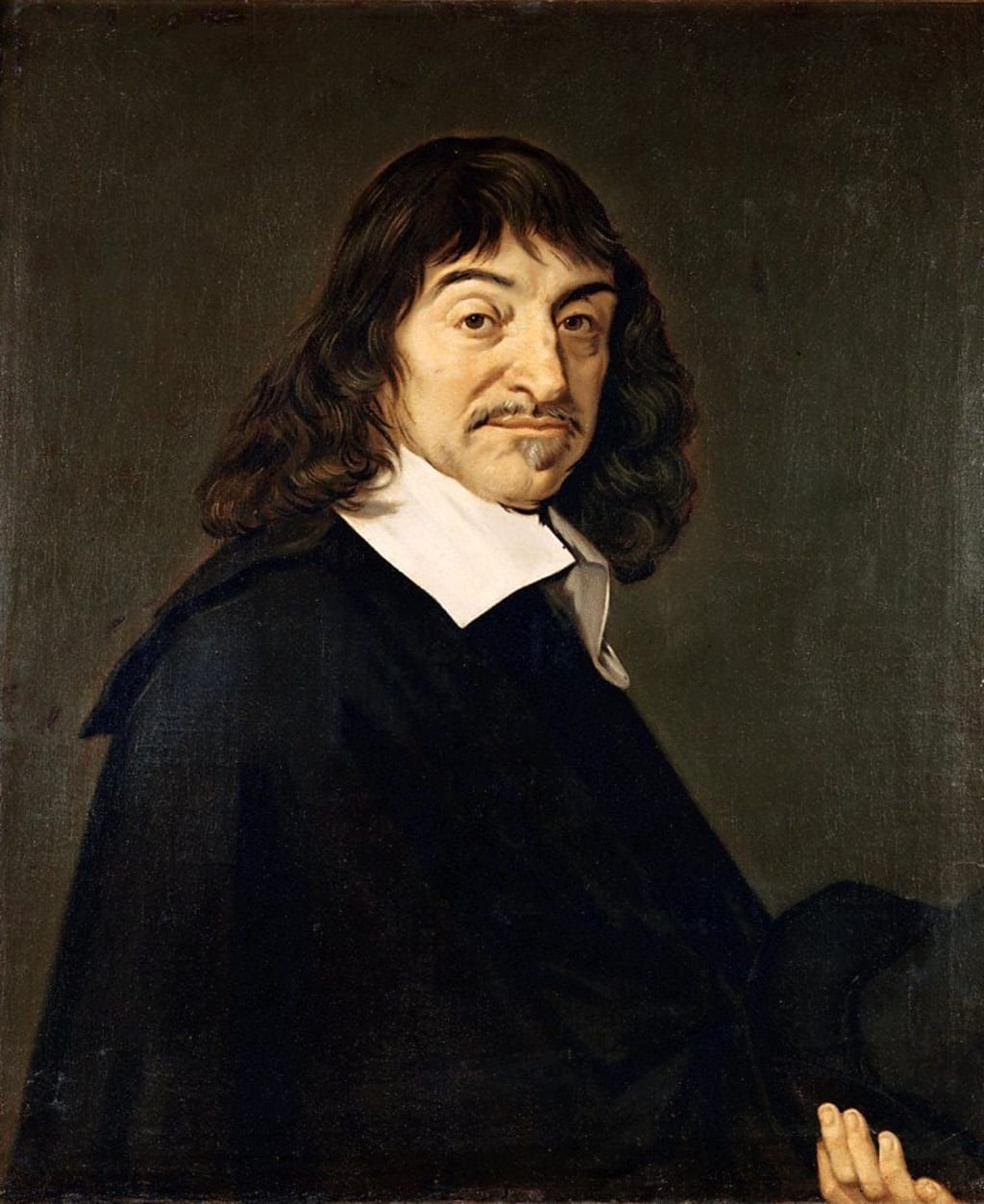
In 1649, René Descartes published The Passions of the Soul, a work that attempted to resolve one of the most enduring tensions in Western philosophy: the relationship between the immaterial mind and the physical body. His conclusion, now famous and frequently misunderstood, was that the pineal gland served as the “seat of the soul.” In the centuries since, this anatomical claim has been reinterpreted, reimagined, and ultimately distorted by modern spiritual movements. The pineal gland, once a theoretical solution to a philosophical problem, has become a symbolic organ of mystical perception within New Age culture. Yet Descartes’ original reasoning was not mystical at all. It was grounded in the mechanical science of the seventeenth century, shaped by anatomical observation, and framed within the strict dualism that defined his metaphysics. The modern transformation of his theory into a spiritual commodity reveals more about contemporary culture than it does about Descartes himself.
To understand why Descartes chose the pineal gland, one must first understand the philosophical system that required such a choice. Cartesian Dualism divides reality into two fundamentally different substances: res cogitans, the thinking substance, and res extensa, the extended substance. The mind is immaterial, indivisible, and not subject to physical laws. The body is material, divisible, and entirely governed by mechanical processes. This dualistic framework created an immediate problem. If the mind and body are made of different substances, how do they interact? How does an immaterial thought produce a physical action? How does a physical sensation become a conscious experience? Descartes believed that the answer required a specific anatomical structure that could serve as the interface between these two realms.
The pineal gland became his candidate for three reasons. The first was the principle of singularity. Descartes observed that most brain structures are bilateral. The hemispheres are paired, the optic thalami are paired, and the ventricles are paired. Yet human consciousness is unified. We do not see two images despite having two eyes, nor do we hear two sounds despite having two ears. Descartes reasoned that there must be a single organ where these dual sensory streams converge before being presented to the soul. The pineal gland, small and unpaired, appeared to be the only structure that met this criterion. Modern neuroscience has shown that sensory integration does not occur in the pineal gland, but in Descartes’ time, the anatomical knowledge available to him made the gland a plausible candidate.
The second reason was anatomical centrality and mobility. Descartes believed that the pineal gland was suspended within the brain’s ventricles and capable of moving in response to the flow of “animal spirits.” These animal spirits were not mystical energies but rather a hypothetical refined fluid that Descartes believed travelled through the nerves to activate muscles. When sensory information entered the brain, Descartes imagined that it altered the flow of these spirits, causing the pineal gland to tilt or shift. The soul, interacting directly with the gland, would perceive these movements as sensations. This model was entirely mechanical. It relied on the physics of fluids, the anatomy of the ventricles, and the belief that the pineal gland functioned like a valve or lever. Although modern anatomy has disproven this mechanism, Descartes’ reasoning was consistent with the scientific assumptions of his era.
The third reason was exclusivity. Descartes believed, incorrectly, that the pineal gland existed only in humans. Since he held that animals lacked rational souls and operated purely as biological machines, the organ responsible for rational thought had to be unique to humans. Later anatomical studies revealed that many vertebrates possess pineal glands, undermining this part of Descartes’ argument. Nevertheless, the belief in human exclusivity shaped his conclusion and reinforced his conviction that the pineal gland was the physical anchor for the immaterial soul.
In The Passions of the Soul, Descartes described the pineal gland’s function using mechanical language. When light strikes the eyes, he wrote, it alters the flow of animal spirits through the optic nerves. These spirits enter the brain’s cavities and cause the pineal gland to move. The soul perceives this movement as a visual image. The gland does not generate consciousness. It does not contain spiritual energy. It does not emit mystical light. It is simply the point where the soul receives information from the body and where the soul’s decisions are transmitted back into the physical world. Descartes’ model was an attempt to solve the mind-body problem using the tools of early modern science. It was not an attempt to create a spiritual mythology.
The modern New Age movement has transformed Descartes’ theory into something he would not recognise. Beginning in the late nineteenth century, Theosophists such as Helena Blavatsky began linking the pineal gland to Eastern concepts of the Ajna chakra, or Third Eye. This fusion of Western anatomical speculation and Eastern spiritual symbolism created a new narrative in which the pineal gland became a mystical organ of perception. Rudolf Steiner later expanded this idea, suggesting that pineal calcite deposits connected humans to cosmic energies. These reinterpretations were not grounded in Descartes’ writings. They were part of a broader cultural trend that sought to merge scientific language with spiritual aspiration.
By the late twentieth century, the pineal gland had become a central symbol in New Age culture. It was described as a psychic antenna, a portal to higher dimensions, and a biological gateway to enlightenment. The phrase “seat of the soul,” taken from Descartes, was repurposed as historical validation for these claims. Yet the modern interpretation bears little resemblance to Descartes’ original theory. Where Descartes saw a mechanical valve, New Age practitioners see a mystical eye. Where Descartes saw a solution to a philosophical problem, modern spirituality sees a tool for transcendence.
Several popular claims illustrate this distortion. One is the fluoride conspiracy, which asserts that water fluoridation calcifies the pineal gland and suppresses spiritual awakening. Another is the belief that the pineal gland produces large quantities of DMT, a psychedelic compound, during birth, death, and dreaming. Although small amounts of DMT have been detected in mammalian brains, there is no evidence that the pineal gland produces it in spiritually significant quantities. A third claim is the “decalcification” industry, which markets supplements, diets, and detox kits designed to activate or purify the gland. These products often rely on pseudo-scientific language and appeal to the desire for spiritual enhancement. None of these claims reflect Descartes’ philosophy or modern neuroscience.
The irony of the New Age adaptation is profound. Descartes was a strict dualist. He believed that the soul was immaterial and could not be altered by physical substances. The pineal gland did not generate spiritual experience. It did not store consciousness. It did not require purification. It was simply the point where the soul interacted with the body. By treating the pineal gland as a physical organ of spiritual perception, New Age culture has inverted Descartes’ intention. It has transformed a dualistic model into a materialist one. Spiritual enlightenment, in this view, becomes a physical process dependent on the condition of an anatomical structure. This is the opposite of Descartes’ metaphysics.
Modern neuroscience has further distanced itself from both Descartes’ theory and New Age interpretations. The pineal gland is now understood as an endocrine organ that produces melatonin, a hormone that regulates circadian rhythms. It plays a role in sleep cycles, seasonal biological changes, and the modulation of reproductive hormones. It does not integrate sensory information. It does not control movement. It does not serve as a gateway between the physical and the immaterial. Its calcification is a normal part of aging and has no known connection to spiritual experience. The gland’s actual function is biological, not metaphysical.
The historical evolution of the pineal gland’s symbolism reveals a pattern. Descartes’ theory was an attempt to solve a philosophical problem using the scientific tools available to him. His reasoning was shaped by anatomical observation, mechanical physics, and the metaphysical commitments of his dualism. Later thinkers, beginning with Blavatsky and Steiner, repurposed the gland as a spiritual organ, merging Eastern and Western traditions into a new symbolic framework. Contemporary New Age culture has further commercialised this symbolism, creating an industry around the idea of pineal activation. The result is a narrative that bears little resemblance to the historical or scientific reality.
The modern fascination with the pineal gland reflects a broader cultural desire to locate spirituality within the body. In an age where scientific language carries authority, linking mystical experience to anatomy provides a sense of legitimacy. The pineal gland, small and centrally located, becomes an appealing symbol. Yet this desire for physical grounding contradicts the very dualism that originally placed the gland at the centre of philosophical debate. Descartes sought to explain how the immaterial mind could interact with the physical body. Modern spirituality seeks to explain how the physical body can produce immaterial experience. The direction has reversed.
The transformation of Descartes’ pineal theory into a New Age myth illustrates how historical ideas can be reshaped to fit contemporary needs. It also demonstrates the importance of returning to original sources. Descartes’ writings reveal a thinker engaged in rigorous analysis, not mystical speculation. His pineal theory was flawed, but it was not fantastical. It was an earnest attempt to solve a problem that continues to challenge philosophers and neuroscientists today. The modern distortion of his theory reflects a cultural shift toward blending science and spirituality, often without regard for historical accuracy.
Understanding this evolution allows us to appreciate both the historical significance of Descartes’ theory and the cultural forces that have reshaped it. The pineal gland remains a symbol, but its meaning has changed. For Descartes, it was the mechanical interface between mind and body. For modern spirituality, it is the gateway to higher consciousness. The contrast between these interpretations reveals the distance between seventeenth-century rationalism and twenty-first-century mysticism. It also underscores the need to distinguish philosophical inquiry from commercialised mythology.
References
Paditz, Ekkehart, Shevchenko, Oleksandr, and Upreti, Kanchan. “The pineal gland as the seat of the soul (René Descartes): History of reception, enlightenment, and consequences of a famous error.” Journal of the History of the Neurosciences, 2026.
Lokhorst, Gert-Jan. “Descartes and the Pineal Gland.” Stanford Encyclopedia of Philosophy, 2011.
Dumitrescu, Marius et al. “The pineal gland as the hegemonikon of the microcosm: anatomical and philosophical interpretations in Descartes’ works.” Romanian Journal of Morphology & Embryology, 2025.
About the Creator
Julie O'Hara - Author, Poet and Spiritual Warrior
Thank you for reading my work. Feel free to contact me with your thoughts or if you want to chat. [email protected]
Enjoyed the story? Support the Creator.
Subscribe for free to receive all their stories in your feed.
Comments
There are no comments for this story
Be the first to respond and start the conversation.