
The house that forgot it's name
A door opens only for those who no longer exist

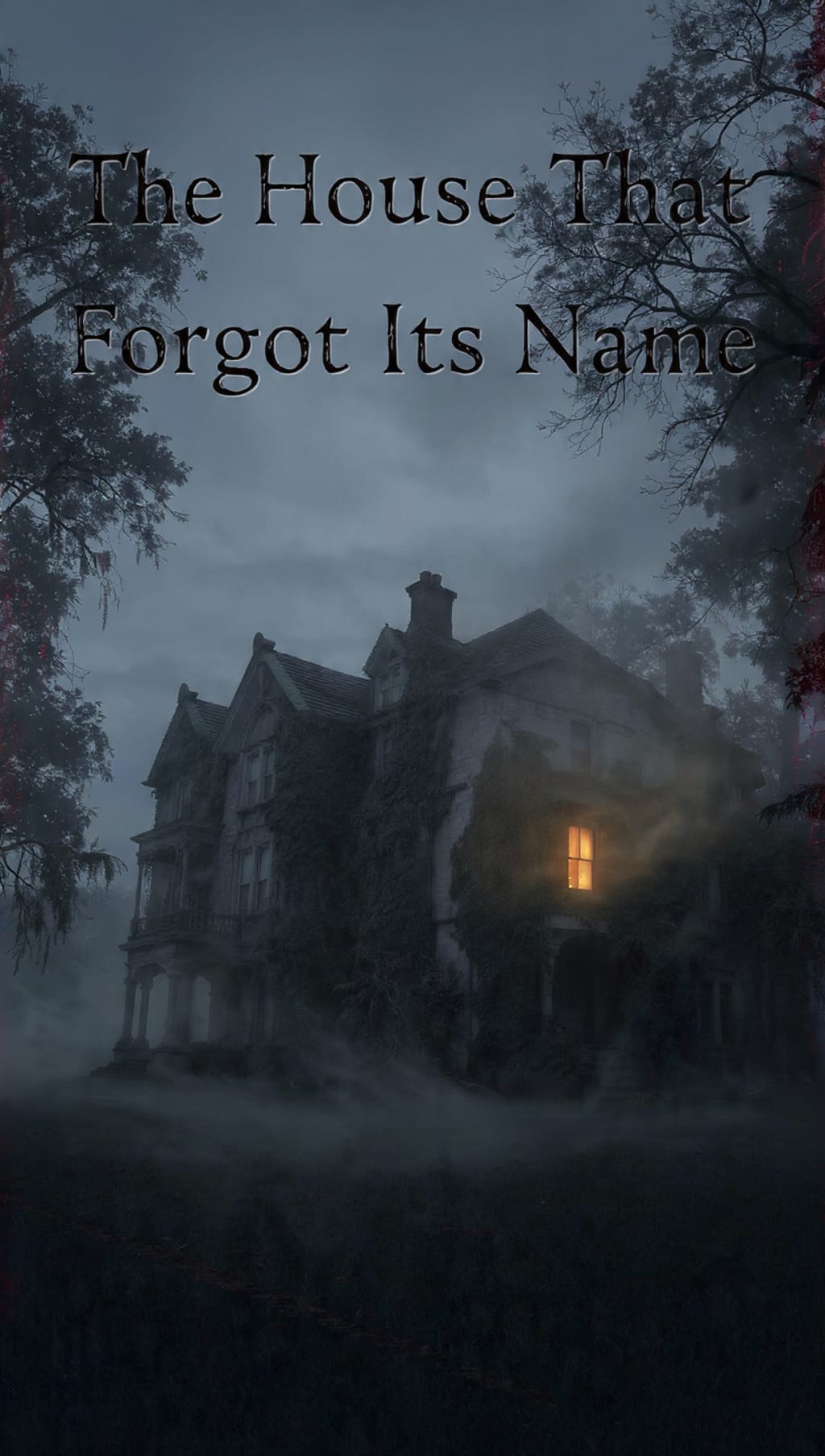
Mira found the house on a Tuesday she’d rather forget. The kind of Tuesday where your phone battery dies at 7am, your boss emails “quick call?” and the rain decides to fall sideways. She was cutting through the old part of Mathura to avoid traffic, earbuds in, hood up, when the street she’d taken a hundred times just... wasn’t there. Instead there was a narrow lane, brick wet and shining, and at the end of it, a house. Two stories, blue shutters peeling, a brass knocker shaped like a koi. No number on the gate. Just a nameplate, blank where the paint had worn away. She shouldn’t have stopped. She did anyway. The gate creaked open before she touched it. The house smelled like old paper and masala chai, even though no one was there. Inside, the air was warmer. The foyer had a staircase that curved up into shadow, and on the wall, a row of hooks. One held a red umbrella she recognized. It was her mother’s. Her mother who’d died three years ago. “Okay,” Mira whispered. “Not real. Stress hallucination. Great.” But the umbrella was real when she touched it. Cold brass handle, chipped paint, the tiny tear in the fabric she’d mended at age twelve with purple thread. “Hello?” she called. Her voice didn’t echo. It got absorbed, like the house was listening. From upstairs, a floorboard sighed. Then another. Footsteps, but not walking toward her. Walking _with_ her, like someone pacing in time with her heartbeat. Mira climbed. She told herself it was to prove there was nothing there. The stairs didn’t creak under her weight. Only when she paused did they make sound. The upstairs hallway had doors. Seven of them. All closed. All had nameplates, but the names kept shifting when she wasn’t looking straight at them. She’d see “MIRA” for a second, then it’d blur into something in her grandmother’s handwriting, then blank again. The last door at the end didn’t have a nameplate. It had a keyhole and, stuck through it, a folded piece of paper. She pulled it out. It was a drawing. Her drawing. Age nine, crayon on notebook paper: a stick-figure girl holding hands with a taller stick-figure woman under a purple umbrella. The paper was soft at the edges from being folded and unfolded too many times. She didn’t remember losing it. The door clicked open. Inside wasn’t a room. It was the back room of her childhood home, the one they’d sold after the funeral. Her mother’s desk, still covered in to-do lists. The window with the crack in the corner from when Mira threw a cricket ball. On the desk, a teacup, steam still rising. Chai. The way her mother made it: too much ginger, one spoon sugar, stirred counterclockwise. “Mira beta,” a voice said. Not from behind her. From the chair. Her mother sat there, reading glasses low on her nose, looking up from a book Mira had never seen. She looked exactly like she did on the last normal morning, before the hospital. Same cotton saree, same line between her eyebrows when she was concentrating. Mira couldn’t breathe. “You’re—” “Late for tea?” Her mother smiled, patted the chair next to her. “Sit. You’ve been walking so long.” Mira sat. The chair was warm. The chai tasted like being eight years old and sick, and her mother pressing the cup into her hands saying _drink, it’ll fix everything_. “You built this,” her mother said, nodding at the room. “After. When the real house was gone. You needed somewhere to put the things you weren’t ready to lose.” “I don’t understand.” “This house forgets its name because names are for people who have to leave. You never left me, Mira. You just stopped visiting.” Her mother reached across and tucked a strand of hair behind Mira’s ear, the exact way she used to before school. “I’m not here. Not really. I’m the part of you that remembers how to make chai with too much ginger. The part that still talks to you when it rains.” Mira stared at her hands. They were nine-year-old hands holding crayons in the drawing. Then they were her hands now, with the scar on her thumb from the kitchen knife last Diwali. Both true. “I miss you,” she said. It came out small. “I know. That’s why the door opened. It only opens for people who are ready to miss someone without breaking.” They drank tea in silence. Outside the window, the rain stopped. Sun came through the crack, cutting the dust in the air into gold lines. When the cup was empty, her mother stood. “Come on. I’ll walk you out. The street will be back when you’re ready.” They walked downstairs. The hooks by the door were empty now. The red umbrella was gone from Mira’s hand. But in her pocket, the crayon drawing was dry and warm. At the gate, her mother stopped. “You’ll forget the way back. That’s good. It means you don’t need it every Tuesday anymore. But if it rains and you need ginger chai, just remember: the door opens from the inside.” Mira stepped onto the main road. Traffic, noise, her phone buzzing with “quick call?”. The narrow lane was gone. In its place, a paan shop she’d passed a thousand times. She stood there a long time. Then she pulled out her phone and typed a note: _Buy ginger. Make chai. Stir counterclockwise._ The house didn’t have a name because it wasn’t a place. It was a promise Mira made to herself three years ago, the day she packed up her mother’s things and couldn’t say goodbye properly. Some doors don’t lead out. They lead back in. And sometimes, that’s enough.
About the Creator
Enjoyed the story? Support the Creator.
Subscribe for free to receive all their stories in your feed.
Comments
There are no comments for this story
Be the first to respond and start the conversation.