Painting
Unlocking the World of Oil Painting: A Beginner's Guide
Introduction: Oil painting is an art form, which is very elegant and dramatic and was widely used throughout ages. As it is seen in its richness in textures, bright hues and possibility of layering, oil painting is special. If you are a novice interested in the field of oil painting then this article will help in providing you with a direction which you need to stick to as a beginner.
By Canva Artworks2 years ago in Art
From Silence to Art: AI Reflects My Soul
Art has always been an enigmatic realm for me. As someone who cannot claim to possess any artistic talent, I have often stood at the periphery, admiring from afar, yet never truly participating. The colors, the shapes, the emotions that dance through a painting or a piece of music—how do they come to life? How do they speak to us? How do they express that which is within, but so difficult to articulate? I have spent years wondering if I could ever truly create something beautiful, something meaningful, that would allow me to convey the essence of what I feel, but words and brushes always felt out of reach. However, recently, I discovered a surprising ally in artificial intelligence, and through this medium, I found that the beauty inside me could finally take form.
By Colin Zhang2 years ago in Art
Christmas on Canvas
Dutch Artists Portinari Altarpiece Hugo van der Goes Dutch artist Hugo van der Goes created this artwork which became one of the most famous Christmas paintings in history. The artist was known for creating religious scenes and had been commissioned to paint altarpieces. This artwork was done as the altarpiece for the chapel inside the hospital of Santa Maria Nuova in Florence, Italy. Today it can be viewed at the Galleria degli Uffizi in Florence. This painting focuses on the Nativity as well as the Adoration of the Shepherds.
By Rasma Raisters2 years ago in Art
The Invisibility of Poverty: A Street Art Masterpiece by Kevin Lee
Art has long served as a powerful medium to convey emotions, spark conversations, and shine a spotlight on pressing societal issues. Street art, in particular, carries a rawness and immediacy that few other art forms can match. It exists in public spaces, accessible to all, and often speaks directly to the human condition. One such piece, titled “The Invisibility of Poverty,” created by the street artist Kevin Lee, has recently garnered widespread attention for its poignant commentary on the overlooked struggles of the impoverished. The Setting: An Urban Canvas Kevin Lee’s masterpiece graces the side of an abandoned building in an unassuming urban neighborhood. The wall, previously a weathered and graffiti-strewn surface, now serves as the stage for a work of art that stops passersby in their tracks. From a distance, the mural appears deceptively simple, a gray and muted scene that blends into its surroundings. However, as viewers draw closer, they are drawn into a world of intricate details and haunting symbolism that delivers a powerful message about the systemic neglect of those living in poverty. The Artwork: A Study in Layers “The Invisibility of Poverty” is a multilayered mural that reflects the complexities of its subject matter. At its center is a shadowy, ghost-like figure representing a person experiencing poverty. The figure appears translucent, blending into the background of bustling urban life. They sit on the ground, hunched over, surrounded by blurred outlines of people walking past, their heads turned away in apathy. The surrounding environment is painted with vivid, bustling colors—a stark contrast to the muted tones of the central figure. Skyscrapers rise in the background, shining in the golden light of prosperity. People are depicted holding shopping bags, talking on phones, and rushing to their destinations, oblivious to the invisible figure at their feet. The use of contrasting colors and perspectives masterfully highlights the dichotomy between wealth and poverty, presence and absence, visibility and neglect. Symbolism in the Details 1. The Shadowy Figure: The central figure is deliberately painted in faint, almost ghost-like strokes. This represents how society often overlooks and marginalizes the impoverished, rendering them invisible. Despite their near-transparency, the figure’s posture conveys immense weight—an unspoken testament to the emotional and physical burden of poverty. 2. The Shopping Bags: The brightly colored bags carried by the passing crowd symbolize consumerism and material wealth, juxtaposing the scarcity and need of the central figure. This stark contrast highlights society's focus on excess while ignoring basic human needs. 3. The Background Skyscrapers: The towering buildings in the background represent economic progress and urban development. However, their imposing size and golden hues also serve as a critique of inequality, suggesting that prosperity often leaves the vulnerable behind. 4. The Invisible Hand: In one corner of the mural, a faint, disembodied hand reaches toward the central figure, symbolizing the potential for empathy and intervention that often goes unrealized. The hand is deliberately faint, reinforcing how rare and fragile such gestures can be. Kevin Lee: The Artist Behind the Vision Kevin Lee has long been known for his ability to use street art as a form of activism. His works frequently tackle social justice issues, from homelessness to climate change, but “The Invisibility of Poverty” has been hailed as one of his most powerful pieces to date. In an interview, Lee shared his inspiration for the piece: > “I’ve walked through cities all my life and seen people struggling, sitting on sidewalks, asking for help, and yet, they’re invisible to so many. It’s not that they’re not there; it’s that we’ve conditioned ourselves not to see them. This piece is a reminder, a mirror, and a challenge to all of us to look closer, to see what we’ve chosen to ignore.” Lee’s background as a former social worker informs much of his art, lending authenticity and depth to his work. His unique ability to blend realism with abstraction ensures his art resonates both emotionally and intellectually. Public Reaction The mural has sparked widespread discussion, both online and in the local community. Visitors have been moved to tears by the piece, with many sharing their personal stories of encountering poverty, either as witnesses or participants. Activists and organizations addressing homelessness and poverty have praised the mural for bringing visibility to an issue often overlooked in public discourse. Some groups have even used the mural as a rallying point for events, such as food drives and awareness campaigns. Not everyone has responded positively, however. Some critics argue that art, while powerful, cannot effect tangible change without accompanying action. Others have expressed discomfort with the mural’s stark portrayal of poverty, finding it too confronting. Lee has addressed these criticisms, emphasizing that discomfort is often a necessary precursor to meaningful change. A Call to Action At its core, “The Invisibility of Poverty” is not just a work of art—it is a call to action. By highlighting the unseen struggles of the impoverished, Kevin Lee challenges viewers to confront their own biases and assumptions. He invites us to look beyond the surface, to acknowledge the humanity of those often ignored, and to take steps—no matter how small—toward creating a more compassionate and equitable society. Conclusion Kevin Lee’s “The Invisibility of Poverty” is more than just a mural on a wall; it is a conversation starter, a mirror reflecting societal apathy, and a beacon calling for change. Through its masterful blend of artistry and activism, the piece leaves an indelible mark on those who encounter it, reminding us all of the power of art to illuminate the unseen and to inspire hope in the face of adversity.
By Deji Akomolafe2 years ago in Art
The Fascinating World of the Fibonacci Sequence
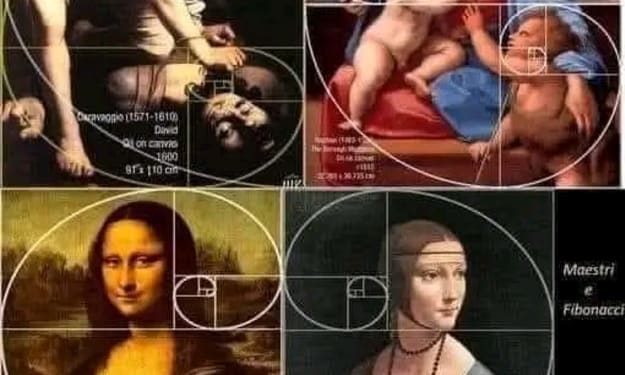
The Fibonacci sequence is one of the most famous and intriguing numerical patterns in mathematics. Discovered by the Italian mathematician Leonardo of Pisa, better known as Fibonacci, this sequence has captivated mathematicians, scientists, and artists alike for centuries. Its applications span mathematics, nature, art, and architecture, making it a universal symbol of balance and harmony. The Origins of the Fibonacci Sequence Leonardo Fibonacci was born in Pisa in 1175. As the son of a wealthy merchant, Fibonacci traveled extensively during his youth, accompanying his father to the port city of Bejaia, in the Kabylia region of modern-day Algeria. There, Fibonacci was introduced to Hindu-Arabic numerals, a far more efficient numbering system than the Roman numerals used in Europe at the time. Fascinated by the mathematical systems he encountered, Fibonacci began studying and eventually wrote the influential book "Liber Abaci" (The Book of Calculation) in 1202. It was in this book that Fibonacci introduced the sequence that would later bear his name. The Fibonacci sequence was originally used to solve a practical problem about the reproduction of rabbits, a question posed to demonstrate the efficiency of Hindu-Arabic numerals in calculations. The Sequence: Simple Yet Profound The Fibonacci sequence begins with 1, 1, and each subsequent number is the sum of the two preceding numbers: 1, 1, 2, 3, 5, 8, 13, 21, 34, 55, 89, 144, … This simple rule creates a pattern that grows exponentially yet maintains a consistent mathematical relationship. The ratio between consecutive Fibonacci numbers approaches the golden ratio (approximately 1.618) as the sequence progresses. The golden ratio, denoted by the Greek letter φ (phi), is often associated with aesthetic beauty and is frequently found in nature, art, and architecture. Applications of the Fibonacci Sequence In Mathematics and Science The Fibonacci sequence has numerous applications in mathematics. It appears in combinatorics, where it can be used to count objects, and in algebra, as a basis for solving problems involving recursion. The sequence also has applications in computer science, particularly in algorithm design and data structure optimization. In nature, the Fibonacci sequence is observed in the arrangement of leaves, flowers, and seeds, where efficiency and symmetry are key. For instance, the spiral patterns of sunflower seeds, pinecones, and shells often follow the Fibonacci sequence, allowing for optimal packing and growth. In Art and Architecture The golden ratio derived from the Fibonacci sequence has inspired countless works of art and architecture. Renaissance artists like Leonardo da Vinci are thought to have used the golden ratio in their paintings to achieve a sense of proportion and harmony. In architecture, the golden ratio can be found in the proportions of historical structures such as the Parthenon in Greece and the Great Pyramid of Giza. The sequence continues to influence modern designs, from graphic design layouts to product packaging. In Finance The Fibonacci sequence even extends into the world of finance. Technical analysts use Fibonacci retracement levels to predict price movements in stocks and commodities. These levels are derived from the ratios between Fibonacci numbers and are used to identify potential areas of support and resistance in the market. Fibonacci's Legacy Though Fibonacci’s sequence is perhaps his most famous contribution, his broader legacy lies in his role as a bridge between the mathematical traditions of the Middle East, India, and Europe. By popularizing the Hindu-Arabic numeral system in Europe, Fibonacci revolutionized commerce and calculation. His work laid the foundation for the mathematical and scientific advancements of the Renaissance. Today, Fibonacci is celebrated not just as a mathematician but as a pioneer who demonstrated the interconnectedness of mathematics and the natural world. The Fibonacci sequence remains a symbol of growth, order, and the inherent beauty of numbers. Why the Fibonacci Sequence Resonates The Fibonacci sequence resonates with so many because it represents universality and harmony. Its presence in everything from a nautilus shell to the stock market speaks to the interconnectedness of the universe. Whether you're an artist, a scientist, or a casual observer of nature, the Fibonacci sequence offers a window into the elegant patterns that underlie our world. A Modern Appreciation In today’s world, the Fibonacci sequence continues to capture the imagination of mathematicians, educators, and enthusiasts. It is a frequent topic in classrooms and is celebrated through Fibonacci-themed art, music, and even software. Moreover, the sequence serves as a reminder of the timelessness of mathematical discovery. The curiosity that led Fibonacci to explore the world of numbers is the same spirit that drives innovation today. Conclusion The Fibonacci sequence is more than just a series of numbers; it is a journey into the essence of order and beauty. From its humble origins in a medieval mathematical text to its modern applications in science and art, the sequence continues to inspire awe and wonder. Leonardo Fibonacci’s legacy is a testament to the power of curiosity and exploration. The next time you see a sunflower or marvel at a spiral staircase, take a moment to appreciate the subtle patterns of the Fibonacci sequence that connect us all to the mysteries of the universe.
By Deji Akomolafe2 years ago in Art
Famous Japanese Paintings
Japanese culture has a rich history but when it comes to paintings usually European artists get the mention. Famous Japanese artists follow a similar pattern in their styles and methods. During the 17th century, the Japanese would look toward the styles associated with Western traditions. However, Japanese painting has remained among the most unique styles of artwork in the world.
By Rasma Raisters2 years ago in Art
Why Builders in Lahore Are Your Key to a Perfect Home
Lahore, the cultural heart of Pakistan, is renowned for its stunning architecture and evolving real estate landscape. Whether you're planning to construct your dream house or renovate an existing property, finding the right builders in Lahore is crucial. The construction industry in Lahore is thriving, offering numerous options for homeowners seeking quality and innovation. This article delves into why house builders in Lahore are pivotal in crafting your ideal living space.
By harrywilliam2 years ago in Art
Anne Boleyn and the Mystery of the Lumley Portrait
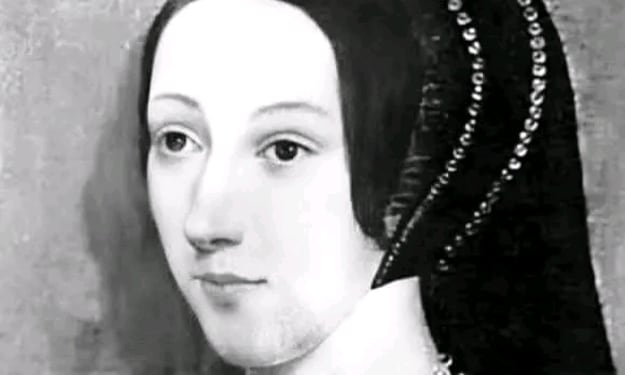
Anne Boleyn, one of the most enigmatic figures in English history, continues to fascinate historians and enthusiasts alike. As the second wife of King Henry VIII and the mother of Elizabeth I, her story is marked by ambition, passion, and tragedy. Yet, while her life has been the subject of extensive study, the visual representation of Anne has long been shrouded in mystery. Most contemporary portraits of Anne Boleyn were destroyed after her dramatic fall from grace and execution in 1536, as Henry VIII sought to erase her legacy. This has led to a centuries-long debate over what Anne truly looked like. One of the most tantalizing pieces of this puzzle is the mysterious "Lumley Portrait," rumored to be a full-length painting of Anne from life. Though lost to history, hints of its existence have reemerged over the years, offering a glimmer of hope that the true likeness of Anne Boleyn may yet be uncovered. Anne Boleyn and Her Portraits: A History of Destruction Anne Boleyn’s rise to prominence at the English court in the early 16th century would have made her a subject of numerous portraits. As a noblewoman, a lady-in-waiting to Queen Catherine of Aragon, and later the queen herself, Anne was at the center of courtly life, where commissioning portraits was common practice. However, Anne's downfall was as swift as her rise. After failing to provide Henry VIII with a male heir and being accused of adultery, incest, and treason, she was executed on May 19, 1536. Following her death, Henry sought to obliterate her memory, ordering the destruction of her portraits and other likenesses. As a result, no verified contemporary image of Anne Boleyn is known to survive today. The popular depictions of Anne, such as the well-known 16th-century portrait showing her with a dark gown and "B" necklace, are believed to be later reconstructions based on oral tradition rather than direct observation. The Lumley Portrait: A Glimpse into the Past The Lumley Portrait takes its name from John Lumley, 1st Baron Lumley (c. 1533–1609), an English nobleman and collector of art. Lord Lumley owned an extensive collection of portraits, many of which were of historical figures and members of the Tudor court. Among his possessions, there was said to be a full-length portrait of Anne Boleyn, reportedly painted during her lifetime. Records suggest that the Lumley Portrait was a striking image, capturing Anne’s features with remarkable detail and precision. Some accounts describe her as having an oval face, dark eyes, and black hair, consistent with written descriptions of her appearance. Unfortunately, the portrait is believed to have disappeared in the late 18th century, leaving only rumors of its existence. Over time, it became a legend among historians and art enthusiasts, a tantalizing possibility that the true likeness of Anne Boleyn might one day be rediscovered. The 1920 Photograph: Clues to the Lumley Portrait The story of the Lumley Portrait took an intriguing turn in 1920, when a photograph of a portrait claimed to be of Anne Boleyn surfaced. The image, allegedly taken before the original painting was lost, reignited interest in the search for the Lumley Portrait. The photograph shows a woman in a richly embroidered gown, with a striking resemblance to the descriptions of Anne Boleyn. However, its authenticity has been hotly debated. Some experts argue that the painting depicted in the photograph could indeed be the lost Lumley Portrait, while others suggest it might be a misidentified or unrelated work. The photograph remains an enigma, with no definitive evidence linking it to Anne Boleyn or the Lumley collection. Still, its existence has fueled speculation and inspired ongoing research into the lost portrait. Why the Lumley Portrait Matters The rediscovery of a contemporary portrait of Anne Boleyn, particularly one as significant as the Lumley Portrait, would have profound implications for both art history and Tudor scholarship. 1. A Visual Connection to History: A verified image of Anne would provide a direct visual link to one of England’s most famous queens. It would help us better understand her presence and how she was perceived by her contemporaries. 2. Challenging Modern Perceptions: Many of the posthumous depictions of Anne have been influenced by the narratives of her enemies. A contemporary portrait could challenge these depictions and offer a more balanced view of her character and legacy. 3. Reclaiming Her Story: Anne Boleyn has often been remembered as a controversial figure. The rediscovery of her likeness would symbolize a reclamation of her story, allowing us to see her as more than just a tragic queen. The Ongoing Search for Anne’s Likeness The mystery of the Lumley Portrait is part of a broader effort to uncover Anne Boleyn’s true image. Advances in technology, such as facial recognition and art restoration, have made it possible to reevaluate existing portraits and artifacts for clues. Additionally, historians and researchers continue to comb archives and private collections for any trace of the lost painting. Conclusion Anne Boleyn’s story is one of power, ambition, and ultimate tragedy. The loss of her portraits after her fall from grace underscores the lengths to which her enemies went to erase her legacy. Yet, her enduring influence and the fascination she inspires have ensured that her memory lives on. The Lumley Portrait, whether lost or hidden, represents a tantalizing possibility: the chance to see Anne as she truly was, in the eyes of those who knew her. Until it is found—or definitively proven to be lost—the search for the Lumley Portrait remains a captivating chapter in the ongoing quest to unravel the mysteries of Anne Boleyn’s life and legacy.
By Deji Akomolafe2 years ago in Art
Illusions Of Reality: Tips To Draw a Masterpiece of Realistic Landscape Art
Of late, realistic landscape art has become a very popular painting with people cutting across various age groups and societal divisions opting for this kind of painting. However, for a painter, it is a challenge to draw a realistic landscape art if he or she is not aware of the intricacies involved in painting such masterpieces.
By Number Artist2 years ago in Art