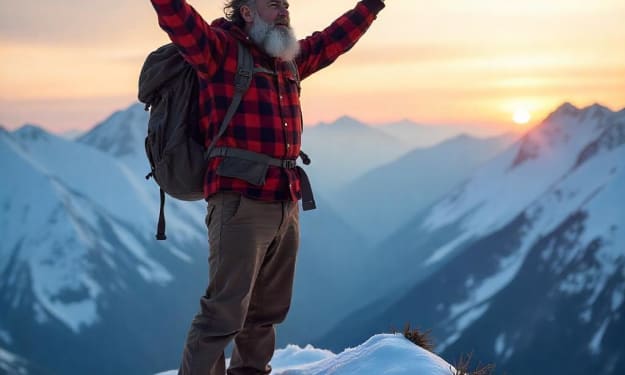
Inspiration
Art Beyond Boundaries: Redefining Expression in a Changing World
Introduction Art is the visual voice of humanity. It has transcended time, culture, and language to express emotions, challenge perceptions, and inspire revolutions. As the world continues to evolve, so does art. Today, we’re witnessing a creative renaissance—one in which boundaries no longer define expression. From ancient traditions to the latest digital innovations, artists are reimagining what it means to create and communicate. In this article, we explore how modern artists are breaking down walls—whether physical, cultural, or ideological—and using their platforms to reshape the future of creative culture. Through the fusion of tradition, technology, and activism, art is not only surviving in the modern world—it is thriving beyond boundaries. Chapter 1: Honoring the Past — Tradition as Foundation Art’s journey begins with tradition. From the cave paintings of Lascaux to the intricate calligraphy of Islamic manuscripts, traditional art forms have laid the foundation of human creativity. While modern artists are forging new paths, many are choosing to honor the past by integrating traditional elements into their work. For example, contemporary artists are reviving ancient textile arts, woodblock printing, and indigenous painting techniques, blending them with modern subjects. The result is a compelling narrative that respects cultural heritage while introducing it to a new audience. This synthesis not only preserves endangered traditions but also strengthens cultural identity. Chapter 2: Technology and the Digital Revolution in Art The digital age has revolutionized every aspect of life, and art is no exception. Digital painting, 3D modeling, augmented reality (AR), and artificial intelligence (AI) have opened up new dimensions of creativity. No longer confined to canvas or sculpture, today’s art lives in code, pixels, and even virtual spaces. NFTs (Non-Fungible Tokens) have created new avenues for artists to monetize their digital work. Artists like Beeple, Pak, and Refik Anadol have proven that digital art is not just a passing trend—it’s a legitimate and lucrative form of expression. Meanwhile, platforms like Instagram, DeviantArt, and TikTok give artists the power to reach global audiences instantly. Technology has also made art more interactive. Immersive installations using AR and VR allow viewers to experience art in multi-sensory ways, redefining the traditional artist-audience relationship. Chapter 3: Art as a Tool for Social Change Art has always had the power to provoke, challenge, and transform. In today’s world, many artists use their voices to address global issues—climate change, racial injustice, gender equality, mental health, and more. Art becomes a mirror, reflecting the struggles and hopes of society. Murals in urban neighborhoods, politically charged performances, and thought-provoking installations all contribute to a growing movement: art as activism. Artists such as Ai Weiwei, Kara Walker, and Shepard Fairey use their mediums to initiate conversations and inspire change. Whether on the streets or online, visual storytelling empowers marginalized communities and calls attention to voices that are often ignored. Art is no longer just an expression—it is resistance, protest, and a vision for a better future. Chapter 4: The Globalization of Art and Culture Global connectivity has made cross-cultural collaboration more accessible than ever. Artists from different parts of the world are merging styles, techniques, and philosophies to create hybrid forms of expression. This cultural exchange promotes empathy, challenges stereotypes, and builds global solidarity. Exhibitions, art fairs, and digital platforms have made it easier for artists to showcase their work internationally. Initiatives like the Venice Biennale, Documenta, and Art Basel feature voices from all corners of the world. These platforms elevate diverse perspectives and encourage dialogue between cultures. The blending of African tribal symbolism with Western abstraction, or Eastern spiritual motifs with modern surrealism, highlights how interconnected our creative worlds have become. Chapter 5: Democratizing Art — Everyone Can Be an Artist Historically, access to art was often restricted by class, education, or geography. Today, smartphones, social media, and free educational platforms are changing that. Anyone with an internet connection can learn to draw, compose music, or design digitally. Apps like Procreate, Canva, and Krita make art creation accessible to beginners. YouTube tutorials and online courses from platforms like Skillshare and Coursera offer affordable learning opportunities. This democratization is fostering a generation of self-taught artists who don’t need permission to create or succeed. Moreover, audiences themselves are evolving. People are more open to unconventional forms of expression, and many embrace outsider art that doesn’t follow traditional standards. The art world is becoming more inclusive, and the line between “artist” and “audience” continues to blur. Chapter 6: The Role of AI and Generative Art Artificial Intelligence is no longer a distant concept—it is now a collaborator in the creative process. Generative art, powered by machine learning algorithms, can produce stunning visuals, music, and poetry. Artists like Refik Anadol are exploring the intersection of data and aesthetics, creating immersive environments that are part science and part imagination. AI doesn’t eliminate the artist’s role; it expands it. Artists now act as curators of algorithms, choosing how machines interpret data and aesthetics. This fusion of human intention and machine computation is pushing the boundaries of creativity. However, ethical concerns also arise: Who owns the work? What is originality? Can machines truly be creative? These questions challenge us to rethink the definition of authorship in the digital age. Chapter 7: Education, Empowerment, and Artistic Healing Beyond galleries and digital platforms, art plays a crucial role in education and emotional well-being. Schools, therapy centers, and community workshops use creative expression as a tool for healing and empowerment. Art therapy is increasingly recognized for its benefits in treating trauma, anxiety, and depression. Community art projects empower individuals to tell their stories and reclaim agency over their lives. Programs in conflict zones and underprivileged communities often use art to bridge divides and promote reconciliation. In this context, art is not just about beauty—it becomes a path to inner peace, understanding, and hope. Chapter 8: The Future of Art — Infinite Possibilities What does the future hold for art? The possibilities are endless. Bio-art using living organisms, neuroaesthetic experiments involving brainwave-responsive installations, and holographic performances are already in development. The Metaverse offers a new frontier where virtual galleries, digital performances, and avatar-driven experiences will reshape how we engage with art. Blockchain will offer more transparency and protection for artists. Meanwhile, sustainability movements will inspire eco-conscious creations made from recycled and biodegradable materials. Art will continue to adapt, challenge, and surprise. One thing is clear: it will never stop evolving. Conclusion: A World Without Borders Art is not confined by canvas, language, or location. It is the shared heartbeat of humanity—constantly growing, shifting, and transcending. In a rapidly changing world, art offers continuity, connection, and courage. Today’s artists are historians, futurists, and revolutionaries. They blend tradition with technology, culture with activism, and the personal with the political. They are showing us that art is not just something we create—it is something we live. In the age of boundless expression, art is the bridge between past and future, between one soul and another. And in that limitless space, we find not just creativity—but humanity itself.
By Sohail Abbasabout a year ago in Art
The Hands Resist Him. AI-Generated.
In 1972, artist Bill Stoneham created a painting titled The Hands Resist Him. Nearly 30 years later, the artwork went viral on the internet, gaining notoriety as a supposedly cursed painting that allegedly caused eerie visions in those who saw it.
By ADIR SEGALabout a year ago in Art
Kolkata International Book Fair
An annual international book fair held in Kolkata, the capital of West Bengal. This fair is more commonly known as the Kolkata Book Fair. This book fair, which was introduced in 1976, achieved recognition as an international book fair in 1984.[1] This twelve-day book fair is currently inaugurated on the last Wednesday of January. The current venue of the fair is Central Park in Bidhannagar beside of Karunamoyee bus stand depot. These facts provide important information about the 1974 National Book Trust Book Fair, the establishment of the Publishers and Booksellers Guild and the launch of the Calcutta Book Fair. The main aspects of these issues are highlighted below: National Book Trust Book Fair, 1974: * The World Book Fair in New Delhi in 1972 provided the inspiration for the Calcutta Book Fair. * The National Book Trust (NBT) organized a National Book Fair in 1974 at the Academy of Fine Arts, Calcutta. * Earlier, NBT had organized National Book Fairs in Delhi, Mumbai and Chennai, but was skeptical about the success of Kolkata. * Bimal Dhar of U. N. Dhar & Sons Prakashan Sanstha contacted NBT and organized a small book fair at the Academy premises in January 1974. * The good sale of Bengali books at this fair changed NBT's perception of Kolkata readers and the idea of organizing an annual book fair was started. Establishment of Publishers and Booksellers Guild: * In 1975, the Publishers and Booksellers Guild was formed by fourteen publishing and bookselling organizations of Kolkata on the initiative of Bimal Dhar. * The main purpose of establishing this organization was to organize an annual book fair in Kolkata. * Apart from Bimal Dhar, Supriyo Sarkar, Prabir Dasgupta, Atin Roy, Sreeshkumar Kunda and Sushil Mukherjee were involved in this initiative. * Initially, the organization was named 'Publishers Guild', later after the constitution was made, it was named 'Publishers and Booksellers Guild'. * Sushil Mukherjee was elected the founder-president of the guild. * In 1975, the guild held a book exhibition called 'World of Paper Backs' at the Kolkata Information Center. * Keeping in mind the All India publishers and booksellers, the formal name of the Kolkata Book Fair is 'Kalikata Pustak Mela' or 'Calcutta Book Fair'. Introduction of the Kolkata Book Fair: * The first Kolkata Book Fair was organized on 5 March 1976 (continued till 14 March). * The fair was held on the ground opposite St. Paul's Cathedral and Birla Astronomical Observatory (now Moharkunj Udyan). * The DC Headquarters of Kolkata waived off the rent of the ground. * The entrance was designed by artist Shubhaprasanna and the fair was inaugurated by the then Governor A. L. Dias. * The president of the first fair was Sreeshkumar Kunda. * Initially, many publishers did not join as they were skeptical about the success of the fair, so even though the ground was small, the stalls could not be filled. * NBT exhibited a large section of books and Rupa & Company gave a large pavilion. * However, due to good attendance at the fair, the number of participating publishers increased from the following year and the size of the fair also increased. * As a result of organizing this fair, the Guild participated in the World Book Fair in New Delhi that year and won the best medium stall award. * Supriya Sarkar described this fair as different from foreign fairs and similar only in concept. These facts give a clear idea about the history of the beginning of the Kolkata Book Fair and the efforts of the entrepreneurs behind it.
By SAURIK NAGabout a year ago in Art
George Pickens trade:
George Pickens Trade: Grades for Cowboys, Steelers in WR Deal When the Dallas Cowboys signed a record-breaking deal to acquire wide receiver George Pickens from the Pittsburgh Steelers, the NFL trade market experienced a surprising shift. The move has major implications for both franchises as they look to reshape their offenses for the 2024 season and beyond.
By Thoughts of my mindabout a year ago in Art
Impossible To Believe, Man Bought a Banana For $6.2 Million
Have you heard about this man? its Impossible to Believe but its true, a man named Justin Sun, a Chinese cryptocurrency entrepreneur, purchased a banana duct-taped to a wall for $6.2 million at a Sotheby's auction.
By Nav k Aidanabout a year ago in Art
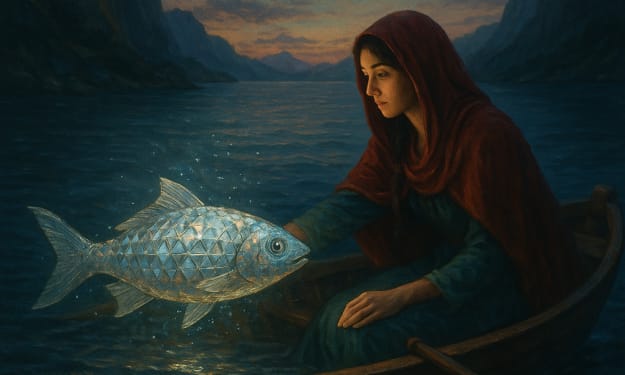
The Diamond Fish. AI-Generated.
The Diamond Fish In the quiet town of Sabra, nestled between the mountains and the sea, legends were a part of daily life. They were told in hushed voices around fires, in the corners of dusty bookstores, and whispered through the cracks in ancient wooden doors. But there was one legend that captivated everyone, and that was the legend of the Diamond Fish.
By Jamal khanabout a year ago in Art
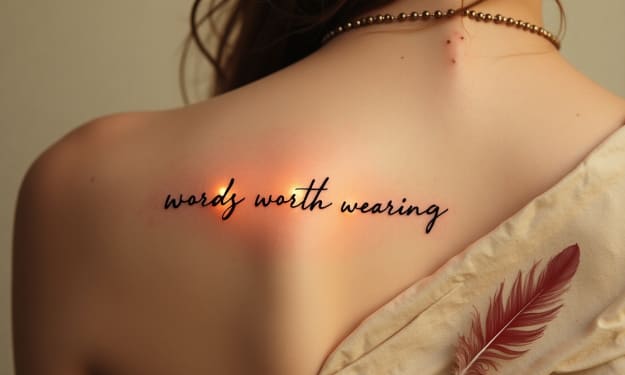
Words Worth Wearing
Ella had always found solace in words. They had a way of holding her when the world felt too cold. They wrapped around her like the softest blanket—comforting, warm, and unspoken. She spent years writing in journals, crafting poems, jotting down lines she didn’t fully understand but knew she needed to write.
By Muhammad Hashimabout a year ago in Art
Of marriage or single life
The Choice Between Marriage and Single Life: A Personal Decision The decision to get married or remain single is a deeply personal one, influenced by individual values, goals, and circumstances. Both marriage and single life have their own unique advantages and disadvantages, which can significantly impact one's quality of life, emotional well-being, and future prospects.
By Mohammad Romanabout a year ago in Art
Capturing Nature’s Poetry: Why I Paint Flowers in Watercolor
There’s something quietly profound about a blooming flower. It doesn’t try to be beautiful—it simply is. Its colors, textures, and delicate form speak a universal language of grace, transformation, and joy. As an artist, I’ve always been drawn to flowers, not just as a subject, but as a symbol of the natural magic that surrounds us every day.
By Utkarsh Aggarwalabout a year ago in Art