Inspiration
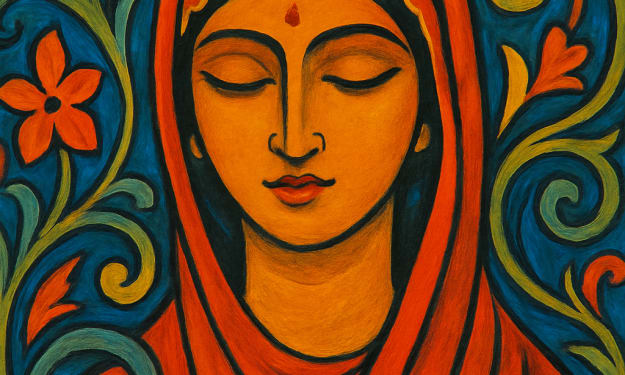
"Beauty in Silence"
Introduction Art is not merely the interplay of colors; it is a reflection of emotions, identity, culture, and spirit. The painting before us captures much more than a face—it holds within it layers of meaning that combine tradition, femininity, and divine beauty. With a central focus on a serene woman enveloped in vibrant Islamic motifs, this artwork quietly commands attention and invites introspection.
By Fazal Malikabout a year ago in Art
“Inside the Mind of a Modern Cult Leader”
They don’t wear robes anymore. They don’t live in the woods or preach from dusty compounds in the desert. The modern cult leader wears designer sneakers, runs a podcast, and sells “mentorship packages.” Their sermons are Instagram reels. Their gospel? "10X your life," “manifest abundance,” or “only weak people question authority.”
By Hamza Habibabout a year ago in Art
The Sparrow and the Fox: A Quest for the Golden Grain. AI-Generated.
In a lush forest, Sparrow, a tiny bird with shimmering wings, fluttered anxiously. Winter was near, and his food stash was dangerously low. Meanwhile, Fox, a clever creature with a bushy tail, faced the same problem—his hunts had yielded little. One frosty morning, Sparrow spotted a rumor on the wind: a single stalk of golden grain, bursting with seeds, grew deep in the Whispering Valley, guarded by thorny vines and a rushing river.
By Omar Mohammed about a year ago in Art
Elijah McKenzie-Jackson. AI-Generated.
It’s not every day you meet someone who sketches climate grief on a napkin and turns it into a Times Square billboard. But Elijah McKenzie-Jackson isn’t here to do things the usual way. The 21-year-old British artist and activist — or “artivist,” as he calls it — is part of a growing wave of Gen Z changemakers who don’t just want to save the world. They want to remake it.
By Alex Young about a year ago in Art
The World’s Most Beautiful Airport in 2025.
In 2025, the title of the world’s most beautiful airport is still proudly held by Jewel Changi Airport in Singapore. Since its opening in April 2019, Jewel Changi has set a global benchmark in airport design, combining cutting-edge architecture, lush greenery, and traveler-friendly amenities in a way that no other airport has matched. Even six years later, travelers, architects, and aviation experts continue to describe it as not just an airport terminal, but a destination in itself — a place where the natural and the futuristic meet to create an unforgettable experience.
By Tariq jamilabout a year ago in Art
The Quest for the Lost Ring. AI-Generated.
In the heart of the ocean, aboard the ancient ship Star of Almeria, two young adventurers, Laila and Karim, embarked on a daring quest. The ship, a creaking relic of a bygone era, was rumored to hold a priceless treasure: a golden ring encrusted with a sapphire that glowed under moonlight, said to grant wisdom to its wearer.
By Omar Mohammed about a year ago in Art
The Old Man and the Elephant. AI-Generated.
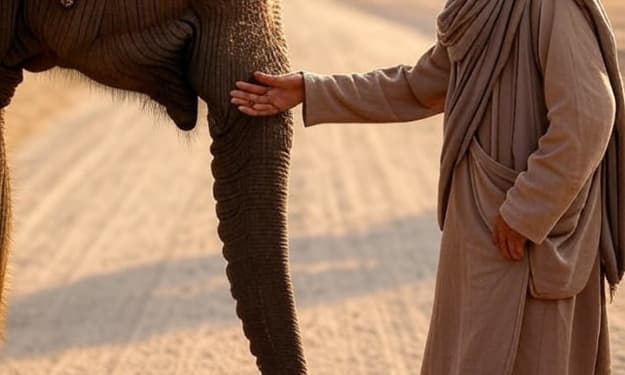
One dusty afternoon, an old man named Salem hobbled along a narrow desert path, leaning on his cane. His weathered face told stories of a long life. Suddenly, a massive elephant lumbered toward him, its trunk swaying gently. Salem froze, heart racing, as the beast’s shadow loomed large.
By Omar Mohammed about a year ago in Art
Sufism. AI-Generated.
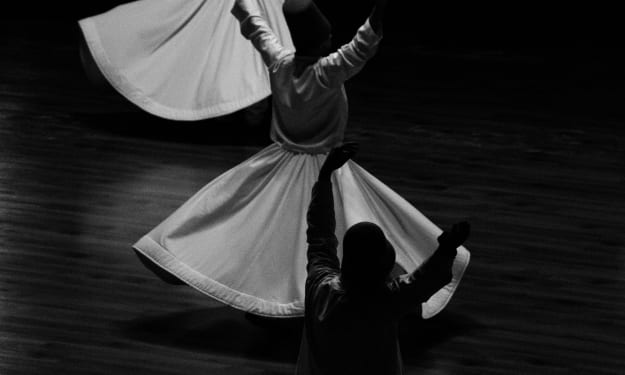
I. The Night I First Heard the Whirl I still remember the night I stumbled upon Sufism. It wasn’t in a dusty book or a formal religious lecture. It was through sound—rhythmic drumming, chanting, and a voice that seemed to cry and sing at once. I was walking through the old streets of Lahore during a Thursday evening, near a shrine I hadn’t intended to visit. The energy in the air was thick. The scent of rose water mingled with incense smoke. And there they were: whirling dervishes in white robes spinning slowly, gracefully, as if pulled by a force unseen. I stood there frozen, not because I understood what was happening—but because something inside me did. That was the beginning of my journey into the world of Sufism. --- II. What Is Sufism, Really? Let’s start with the basics. Sufism is often described as the mystical path of Islam. If Islam were a tree, Sufism would be the fragrance of its flowers—the unseen, often unnoticed essence that reaches the soul before the eyes. While many religious traditions emphasize ritual, Sufism leans into inner experience—not to reject outer practices, but to deepen them. It’s not just about how you pray, but why your heart longs to pray. It asks not just whether you fasted, but whether your soul was humbled in the process. Sufis seek something beyond intellectual belief or external obedience: they want direct, personal union with the Divine. This pursuit is often described as a journey inward—a movement from the noise of the ego to the silence where God whispers. --- III. The Ego Must Die Before You Truly Live One of the central concepts in Sufism is fana, which literally means "annihilation." But it’s not as dark as it sounds. Fana doesn’t mean physical death—it means the death of the ego, the false self, the layers of pride, fear, and selfishness that separate us from others, and ultimately, from God. Imagine trying to look into a mirror covered in dust. You can’t see your reflection clearly until you wipe it clean. Fana is that process of wiping the mirror of the heart—so we may see the truth within, and the face of the Beloved. This “death before death” is actually the doorway to real life. A life rooted not in temporary pleasure, but in eternal meaning. As the 13th-century Sufi poet Rumi wrote: > “Die before you die, so you shall live forever.” --- IV. The Role of the Guide But this is no solo journey. In Sufism, a seeker often travels under the care of a sheikh or murshid—a spiritual teacher who has walked the path and knows its valleys and cliffs. Why? Because the spiritual ego is subtle. It hides in good intentions, masquerades as piety, and whispers pride even as we kneel. A guide helps us detect those shadows and walk steadily toward the light. This relationship is built on humility, trust, and deep love. It’s not about worshiping the teacher, but recognizing that we need someone to hold the lantern while we find our way. --- V. Dhikr: The Music of Remembrance One of the most beautiful practices in Sufism is dhikr, meaning “remembrance” of God. In a world constantly pulling our attention outward—likes, notifications, to-do lists—dhikr pulls us back inward. It can be silent or vocal, whispered or sung. Repeating the names of God is not about quantity, but quality. It’s about remembering who you are, and whose you are. Sometimes dhikr takes the form of sama—gatherings with music, poetry, and dance. The whirling dervishes of the Mevlevi order in Turkey are the most famous example. As they spin in their long white robes, one hand pointed to the sky and the other to the earth, they become living metaphors of a soul in harmony: receiving divine light and spreading it to the world. --- VI. Sufi Poets: The Lovers Who Couldn't Stay Silent Sufism and poetry go hand in hand. Because how else do you explain the inexpressible? When love for the Divine overwhelms the heart, words tumble out in fire and tears. Sufi poets like Rumi, Hafez, and Ibn Arabi didn’t just write verses—they wrote love letters to God. Rumi says: > “The minute I heard my first love story, I started looking for you, not knowing how blind that was. Lovers don’t finally meet somewhere. They’re in each other all along.” These words aren't just about romance. They’re about the soul’s longing for its true home—for a reunion with the Source. --- VII. Misunderstood and Misrepresented Despite its deep roots in Islam, Sufism has not always been welcomed. Throughout history, some within orthodox circles have viewed Sufi practices—especially dance, music, and poetry—as innovations or even heresies. And yet, many of the greatest Islamic scholars, including Al-Ghazali, deeply respected and practiced Sufism as a way to revive the spirit of Islam. Sufism isn't a separate religion or sect. It's a dimension—a way of seeing, of being, of loving deeply. --- VIII. Why Sufism Still Matters Today We live in noisy times. The speed of life is dizzying. Anxiety is rampant. Our souls are hungry—but we often feed them with distractions instead of depth. Sufism offers a timeless medicine: presence. It teaches us to slow down, breathe, remember. It invites us to look not just outward for answers, but inward—for meaning. It reminds us that love is not weakness. That silence is not empty. That the heart, when polished, can become a mirror of the Divine. --- IX. Final Whirl I don’t claim to be a Sufi. I’m still stumbling, still learning. But I’ve seen enough to know that Sufism isn’t about perfection. It’s about sincerity. It’s about turning toward the Beloved—even if you’re covered in dust, even if your steps are uneven. Because in the end, Sufism is not a path for the flawless. It’s a path for the seeker—the lover who can’t help but keep walking. Even if they must whirl to do it.
By Shah Fayaz about a year ago in Art