Inspiration
"Heartwarming Melodies: Tony Bennett's Music Unites Generations with Timeless Emotion". Content Warning.
In the realm of music, certain artists have an extraordinary ability to transcend time, capturing the hearts of multiple generations and leaving an indelible mark on the world. Tony Bennett, the legendary American singer and performer, stands tall among these musical giants. With a career spanning over seven decades, Bennett's velvety voice and heartfelt performances have brought together people from all walks of life, bridging generational gaps, and evoking emotions that remain timeless.
By Donna Fulton3 years ago in Art
The Healing Power of Celebration. Content Warning.
In the quaint town of Libertyville, anticipation hung in the air as Juneteenth approached. The community had prepared for weeks, decorating the streets with vibrant colors, historical banners, and symbols of unity. This year's celebration held a special significance—it marked the 160th anniversary of the emancipation of enslaved African-Americans in the United States. For years, Libertyville had been grappling with the painful legacy of slavery, a history that left deep scars on the hearts of its residents. But this Juneteenth, they aimed to not only celebrate freedom but also to heal from the past traumas that had haunted them for generations. As the sun began its ascent on Juneteenth morning, the town square bustled with life. People of all ages and backgrounds adorned themselves in hues of red, green, and black—the colors representing the African diaspora and the resilience of their ancestors. At the heart of the square stood an ancient oak tree, its branches stretching wide and strong. Underneath its shade, a stage had been set, adorned with blooming flowers and flickering candles. This would be the focal point for the day's celebrations. Among the crowd was an elderly woman named Ms. Edna, her silver hair glistening in the sun. She had lived in Libertyville all her life and had witnessed the town's transformation over the years. Today, she carried with her a small wooden box—a treasured family heirloom. As the festivities began, the joyful sound of drums and laughter filled the air. Dancers swayed to the rhythmic beats, their movements fluid and spirited. Children played, their faces painted with symbols of unity, unaware of the weight of history but immersed in the joy of the day. Soon, the crowd hushed as the town's elder, Mr. Thompson, stepped onto the stage. His eyes were a deep well of wisdom, and his voice carried the gravity of history. He began to recount the story of Juneteenth—the news of emancipation finally reaching the enslaved people in Texas on June 19, 1865. His words washed over the crowd, a reminder of the struggles faced by their ancestors and the resilience they had shown in the face of oppression. The emotional impact was palpable—some wept openly, others clutched their hearts in solemn recognition. Amidst the storytelling, Ms. Edna made her way to the stage. She held the wooden box in her hands, the memories it contained almost too heavy to bear. With a deep breath, she opened it, revealing old photographs, letters, and a tattered journal—a testament to her family's journey through slavery. Tears welled in her eyes as she shared her family's story—a tale of loss, courage, and survival. The crowd listened in rapt attention, realizing that they were connected by more than just the history of their town; they were bound together by the shared experiences of their ancestors. Ms. Edna's voice trembled with emotion as she continued, "We must remember our past, acknowledge its pain, but also celebrate our resilience. Today, we gather not just to commemorate history, but to heal from its wounds." Her words reverberated through the crowd, igniting a profound sense of unity and shared purpose. Ms. Edna's act of vulnerability had opened the floodgates of collective remembrance, and people began to share their own family stories—stories that had been passed down through generations, carrying the weight of their ancestors' pain and hope. In the midst of these heart-wrenching accounts, a young woman named Sofia stepped forward. With a trembling voice, she shared her personal struggle to connect with her African heritage. "For so long, I felt like I didn't belong anywhere—torn between two worlds. But today, as we come together as a community, I realize that I am not alone. We are all part of something greater—a legacy of strength and resilience." Sofia's words resonated deeply with those present. People nodded in understanding, recognizing that the healing power of celebration lay in their collective identity and shared journey. As the day progressed, the town embraced a myriad of healing activities. Community members organized workshops on African-American history, art, and culture. They danced, sang songs of freedom, and shared meals reminiscent of ancestral gatherings. But amidst the festivities, there were moments of solemnity too. A memorial wall had been erected to honor the lives lost to slavery and systemic racism. People left notes of love, gratitude, and sorrow, paying homage to those whose sacrifices had paved the way for their freedom. As the sun dipped below the horizon, the town square was bathed in a soft, golden light. The celebration had created an unbreakable bond, woven from the threads of shared joy and collective remembrance. Under the ancient oak tree, Ms. Edna's wooden box was buried, signifying the burying of old wounds and the embracing of a shared future. It would serve as a reminder that healing was a continuous journey, one that required the strength of a community. In the years that followed, the Juneteenth celebrations in Libertyville grew even more significant. The town's commitment to healing and unity had ignited a spark that spread far beyond its borders. Word of their transformative celebrations reached neighboring communities, inspiring them to embark on their own journeys of healing and commemoration. The healing power of celebration had become a beacon of hope for those seeking to reconcile with their past and create a brighter future. And so, on each Juneteenth that followed, the community of Libertyville gathered under the ancient oak tree to celebrate and heal—a testament to the resilience of their ancestors and the unbreakable spirit of unity that would guide them through generations to come.
By oyinbo olumide3 years ago in Art
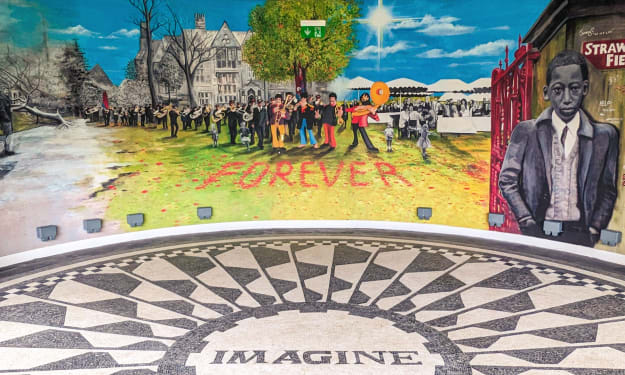
Mozaico Collaborates with Mapei to Complete Imagine Mosaic for Liverpool's Strawberry Fields
Mozaico, US-based makers of fine handcrafted mosaics, teamed up with environmentally conscious chemical manufacturer Mapei to complete the Imagine mosaic, celebrating the life and art of the famous Beatle, John Lennon. Commissioned by Orange Amplification on behalf of Strawberry Fields, the mosaic measures a massive 6.4 metres in diameter and forms part of the new Salvation Army's bandstand.
By Tyler McKinsey3 years ago in Art
Legacy of Resilience
In the heart of a vibrant city, where skyscrapers reached for the heavens, lived a young African-American woman named Maya. Beneath her infectious smile and bright eyes lay a longing to understand her roots, to connect with a history that had been veiled in shadows for too long. Maya's journey of discovery began on a warm summer day when she stumbled upon an old, dusty trunk in her grandmother's attic. As she opened it, the musty scent of history engulfed her, and her heart quickened with excitement. Inside, she found a trove of letters, photographs, and worn-out journals—untold stories of her ancestors' fight for freedom and equality. Her grandmother, Eleanor, approached her with a gentle smile. "Ah, I see you've found the treasure trove, child. Those are the legacies of our family, stories that deserve to be told." Curiosity ignited a fire within Maya, and she spent countless hours poring over the relics. She learned about her great-great-grandfather, Samuel, who had been born into slavery but dared to dream of a different life. Samuel's words in a faded journal spoke of resilience, courage, and the relentless pursuit of freedom. As the days turned into weeks, Maya's fascination grew into a determination to uncover the truth behind her ancestors' struggle. She set out on a journey of research, talking to older relatives, visiting historical archives, and immersing herself in books about the African-American experience. The more Maya learned, the deeper her connection to her heritage became. She discovered the stories of her great-grandmother, Clara, who had been an activist during the civil rights movement. Clara's photographs showed her marching alongside Martin Luther King Jr., her face alight with passion and hope. Through her exploration, Maya also encountered stories of pain and injustice—of ancestors who had endured the cruelty of slavery, segregation, and discrimination. These narratives stirred a mix of emotions within her—anger at the injustice, grief for the suffering they endured, and pride in their resilience. One evening, as Maya sat by her window, the moon casting a soft glow over her face, she found herself overcome with a surge of emotions. She thought about Samuel, Clara, and all the others who had fought for freedom, and she felt an overwhelming sense of responsibility to carry their legacy forward. In her heart, she heard the echoes of their voices, whispering words of encouragement and strength. "You are our legacy, Maya. Our dreams live on through you," they seemed to say. With newfound determination, Maya decided to share these untold stories with the world. She started writing a book—a tribute to her ancestors' struggles and triumphs, an ode to their legacy of resilience. The journey of writing the book was not easy, as she faced the weight of the past and the fear of not doing justice to their experiences. But with each word, she felt a connection to her ancestors—a bond that transcended time. She poured her heart and soul into the book, determined to shed light on the struggles and victories of those who had come before her. As the book neared completion, Maya's excitement and apprehension grew. She knew that sharing these stories would not only reveal her family's history but also carry the weight of a larger narrative—the history of the African-American community. Finally, the day arrived when the book was ready for publication. Maya stood before the audience at a book launch, her hands trembling with nerves and anticipation. She took a deep breath and began to read. Her words filled the room, carrying the voices of Samuel, Clara, and countless others. The audience was spellbound, moved to tears by the raw emotions woven into the pages. Maya's voice wavered at times, but her passion and love for her ancestors' legacy shone through. When she finished reading, the room erupted in applause. People approached her, some with tears in their eyes, thanking her for sharing these stories, for shedding light on a history that had been overlooked for far too long. In the days that followed, the book spread like wildfire. It resonated with readers from all walks of life, igniting conversations about the importance of understanding and acknowledging the past. Maya received countless letters and messages from people who had been inspired by her ancestors' resilience and determination. One particular letter stood out to her. It was from a young African-American girl named Ruby, who wrote, "Thank you for showing me that I can be proud of who I am and where I come from. Your book made me feel like my voice matters, just like those who came before me." Ruby's words touched Maya's heart, and she knew that her mission had only just begun. She became an advocate for African-American history education, speaking at schools and community events to ensure that these stories were never forgotten. As the years passed, Maya's book became a symbol of hope and empowerment. It found its way into classrooms, libraries, and homes, its pages continuing to inspire generations to come. And so, the legacy of resilience lived on—woven into the fabric of history, carried in the hearts of those who knew their ancestors' stories, and reflected in the determination of a young African-American woman named Maya, who found her purpose in sharing the untold tales of the past. Through her journey of discovery, Maya had embraced her roots, emerging as a torchbearer of pride, strength, and determination in the face of adversity.
By oyinbo olumide3 years ago in Art
"Starlight Serenade"
Once upon a starlit night, in the small town of Silverbrook, two souls were destined to cross paths. Amelia, an aspiring astronomer with an insatiable curiosity about the cosmos, spent her evenings gazing at the twinkling constellations from her bedroom window. She found solace in the vastness of the night sky, feeling a deep connection to the mysteries of the universe.
By Mustafa Ali3 years ago in Art
Dreams of a Better Tomorrow
Once upon a time, in the small town of Cedarville, there lived a young girl named Emily. She was a dreamer, with her head always in the clouds, envisioning a world where everyone was treated with fairness and compassion. Her dreams were inspired by the stories she heard about the Founding Fathers and their vision for a nation founded on equality, justice, and unalienable rights.
By Owoyemi Ayomiposi 3 years ago in Art
The Triumph of the Blue Rose
Once upon a time, in a quaint little village, there was a young girl named Lily. She was known for her kindness, grace, and the sparkle of determination in her eyes. The village was surrounded by lush green forests and vibrant meadows, but there was one legend that captured everyone's imagination—the legend of the Blue Rose.
By Grow your Brain3 years ago in Art
The Language of Flowers
In the quaint town of Willowbrook, nestled amidst rolling hills and colorful meadows, lived a young woman named Lily. Since childhood, Lily had always felt a deep connection with nature. She found solace in the delicate petals of flowers, their vibrant hues speaking to her in a language only she understood.
By amicable amara3 years ago in Art