Inspiration
New development in transportation system
New development in transportation system No need to start from scratch As they say Curiously, it was recently reimagined: a square-wheeled bicycle that isn't a piece of contemporary art kept in a posh museum, but rather a fully functional daily means of transportation that works flawlessly. There's a mystery behind this unusual bike. Take a closer look at the design of these square wheels to see that they don't actually rotate. The track around the outside of the wheel is what moves around the frame when the rider pedals; therefore, when the track rotates, it moves around the frame in a manner that reminds me of a treadmill.
By Hannah teye 3 years ago in Art
How to draw and why ?
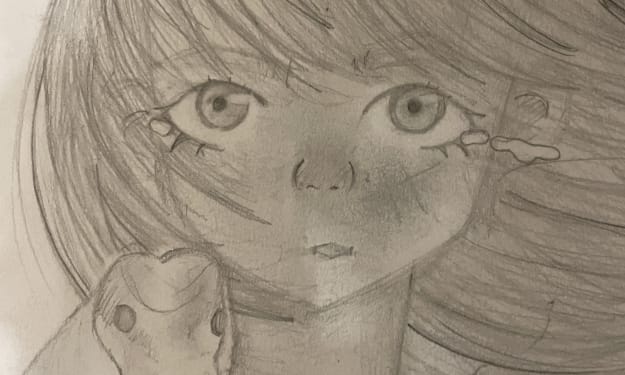
I started to draw when I was in my late 30s. I didn't go to art school; I just bought a couple of instructional books, and I started out. It was kind of a disaster; the first drawing I did was pretty bad, so was the second. It seemed like I just had no ability to draw at all, and I almost gave up. Maybe this has happened to you, and you're despairing of ever getting any good at drawing. Let me give you some reassurance and some tips. You can learn to draw. I know this because I learned to draw, and because I've also taught tens of thousands of other people to draw. It's a basic skill, like tying your shoe or throwing a ball or driving a car. When you first learned to drive a car, you were probably pretty bad at it. Maybe you learned from your dad in the supermarket parking lot, sweating, gripping the steering wheel, a nightmare. Look at you today – you can drive any car anywhere, you're relaxed, confident, it feels completely natural. You're a driver, and the same can be true of drawing. Let's start with motivation. Why do you want to draw? Maybe just because you always wanted to, or maybe you have an end goal in mind – to do drawings of your dog to hang in the dining room. But there's a deeper reason for learning to draw. It can help you be more engaged with the world around you, help you see beauty you might have missed, express how you feel about life. Drawing can reduce stress, help you feel happy, be more creative, solve problems better. There are just so many benefits to drawing, maybe even as many benefits as learning to drive. But at first, you can't see all that because you're struggling with some basic technical skills, and you're not happy with the results, which can lead to self-sabotage. Telling yourself your drawings have to look perfect, just like photos. Anything less just proves that you suck, you have no talent, you're wasting your time. It's like you just took up jogging and you're beating yourself up because you can't win an Olympic marathon. Art can make us put insane pressure on ourselves, and we don't have to. To succeed at drawing, you just have to draw a lot. You can draw badly, and that's fine. Just keep at it because all this drawing is going to do something magical to your body. It's going to reconfigure your neuromuscular network. You're going to make changes to how your brain handles all that data that's coming in through your eyeballs and sends signals to your arm, hands, and fingers. As you develop these connections, your drawings will become more natural and intuitive, just like driving a car. It'll become more expressive of you as a unique person. That's how your style will emerge. How do you make neurons grow? By building a habit. That doesn't mean you have to practice slogging away at boring drawing exercises for hours every day. Instead, find ways of incorporating drawing into your everyday life. Get a sketchbook and carry it around with you everywhere. Draw all the things in your life – your coffee cup, your sandwich, your napping dog, just ordinary everyday stuff. Now you might be saying, 'I don't know how to draw a napping dog or a sandwich for that matter.' And also, why do I want drawings of coffee cups? Stick with me; there are a couple of reasons to do this. First, learning to draw is mainly a matter of drawing a lot to grow neurons. There aren't magic tricks and shortcuts, no matter what certain YouTube videos might promise you. But you can do it. Second, you'll learn by making mistakes. Every drawing is just a series of challenges and problems that you work through. Third, believe that you can get there, and you will. You don't need talent; you just need to keep making drawings – even bad ones, even bad ones of tuna sandwiches. Speaking of one of the many things that beginners struggle with is subject matter because when we look at what professional artists make art about, we figure those are the things that we're supposed to make art about too. Portraits, landscapes, still lifes of bowls of fruit, and we assume that there are special skills and tools that you need for doing each of these sorts of drawings. We just need to take step-by-step lessons in how to draw portraits of fruit. Here's a more effective approach – learn to draw everything. Draw the stuff in your life. Just carry your sketchbook with you, and whenever you have a spare moment, pull it out and draw anything that's nearby. Keep things relevant and interesting to you, and that way you'll keep doing it. Waiting for a bus? Draw a trash can or the lamppost. Sitting in a waiting room? Draw a stack of magazines, a potted plant, the receptionist's shoes. It really doesn't matter. The more kinds of things you draw, the more confident you'll feel that you can draw anything because the secret is you draw it all pretty much the same way. Drawing is basically a universal skill set – lines, angles, curves. It's this rich language that can be used to say anything. It's like a skeleton key that will unlock any subject, and you learn it by slowing down, by looking intelligently, and by translating what you're seeing into lines. There are so many benefits to carrying a sketchbook with you everywhere. You're learning to draw, building neurons, making a record of your life. You're living your life more intensely because as you look intensely, you're also recording those observations into your brain. You're creating much more vivid experiences and memories. And when you slow down to draw, you're doing the same thing that you do when you meditate or do yoga or pray – you're focusing your mind, you're quieting all these other voices in your head, and you're experiencing things more intensely. Imagine if you could summon up memories from your last vacation that were like 3D immersive virtual reality recordings that include everything that you experienced in detail. Well, you will if you keep drawing. Alright, let's talk supplies. All you really need to begin this process is a basic sketchbook and a pen. Make sure your sketchbook is inexpensive enough that you won't be precious about using it – it's just paper. But also make sure it's a decent quality so you aren't frustrated by your lines showing through to the next page. Pick the right size; make sure it fits into your bag or your pocket. It's going to be your constant companion for the next few months. It should fit you. Any pen is going to do, but you might prefer one made especially for drawing. They're not expensive, and they're made to flow and keep their line consistent. Remember, there's no magic pen, though there are magic markers. Just try them out and work your way through lots of them. And why a pen, you ask? Why not a pencil with a big juicy eraser? Because you want to think about making lines, not erasing them. Commit to what you're seeing, and a pen helps you to do that. Lose the training wheels; be brave. You may be resisting this, but trust me. I've taught thousands of people to draw with a pen, and they always end up thanking me for not letting them use a pencil. Okay, get started. Draw when you're watching TV, draw while you're sitting in bed, draw instead of looking at your phone. In time, you can think about how to shade, draw in perspective, and capture a likeness. None of those things really matter now. What counts is starting the adventure and building your confidence. While you do this, please be good to yourself. Don't beat yourself up; focus on making drawing a part of your everyday life. That will be success, and it's going to be awesome. I can't wait to see where it takes you. Have fun!
By Halem Kotb3 years ago in Art
The Fantastical Fusion: When Science Class Meets Art Bash!
Ladies, gentlemen, and esteemed aficionados of the absurdly brilliant, buckle up! You're about to embark (oops, I mean, hop on the crazy train) on a rip-roaring adventure into the madcap world of Science Education and Creative Art – a duo more dynamic than Batman and Robin in a disco! This isn’t your grandma’s lecture on photosynthesis. No, sir! This is where Einstein meets Banksy in a meme-making marathon.
By ScienceStyled3 years ago in Art
"Whispers of the Moors". Content Warning.
Title: "Whispers of the Moors" The moors, with their vast expanse of heather-covered hills and hidden hollows, held secrets as ancient as time itself. Nestled within their undulating contours was a village called Dunbridge, a place where tradition and folklore intermingled with the everyday lives of its inhabitants. In the heart of Dunbridge stood a centuries-old manor, imposing and enigmatic, known as Moorcroft Manor.
By Kuldeep Rajawat3 years ago in Art
Dance of Existence
In the dim glow of a small, crowded comedy club, a storyteller named Sarah stood on stage, her voice echoing with the wisdom she had gleaned from the words of Dave Chappelle. The audience leaned in, captivated by her tale that unfolded the delicate balance between dreamers and dreams.
By Cipher God'seye3 years ago in Art
Why fact does not change my mind . Content Warning.
Title: The Inefficacy of Facts in Changing Minds: A Multifaceted Exploration Introduction: Changing one's mind is a complex cognitive process influenced by a myriad of factors, and the role of facts in this endeavor has been a subject of extensive debate. While facts are often considered as powerful tools for persuasion, the reality is that they frequently fall short of altering deeply ingrained beliefs. This essay delves into the multifaceted reasons why facts may not be as effective in changing minds, exploring cognitive biases, emotional attachments, and the influence of social dynamics.
By Kuldeep Rajawat3 years ago in Art
Making Art As A Spiritual Practice: Serving G-d In The Most Creative Way
Since I graduated college in December 2021, I started venturing out different niches based on my educational background in recreation and leisure services. For the last two years, I’ve waffled around, because I had so many passions that it became impossible to pick the one that was the most fascinating for me. I thought of specializing in health and wellness, because of my personal experiences with a binge eating disorder and a dual diagnosis. Besides health and wellness, I also considered specializing in travel and tourism, music, arts and crafts, and gaming. Out of all the five niches I considered, I chose arts and crafts, because it’s what I love doing, teaching, and specializing in. I also have more experience with arts and crafts than I do with all of the other things that I listed. The rest are mainly personal interests of mine.
By Talia Devora3 years ago in Art
The Art of Professional Photography in Mainz with Marla Dähne Photography
In the dynamic atmosphere of Mainz and the beautiful Rhein-Main area, Marla Dähne Photography unfolds as a sensitive photographer. With a focus on naturalness and the art of capturing joy in images, she provides professional photography in Mainz, Wiesbaden, Frankfurt, and the entire surrounding region. This article takes a glimpse through her lens.
By Mainz Fotografie3 years ago in Art
"Wine, Art, and Funky Basslines: A Harmonious Trio of Senses"
Day 3/366 days of publishing articles in 2024 There's something for everyone. There's someone for everyone also. This morning I was working on this vibrant background for a painting I'm hoping to include in a series for an upcoming show at this wine shop. It's still in the early stages, so I'm not sure if it'll make the cut, but we'll see. Anyway, the idea for this painting came to me while I was jamming to some funky music. You can listen the song that inspired it all here. I don’t even know how many times I played it on repeat. I love how music inspires the most random things when I’m painting. The bassline was extra groovy, and for some inexplicable reason, it made me think about how much I absolutely despise New Zealand Sauvignon Blanc wine. I mean, that stuff is funky, but not in a good way like the bassline. It's funky in a "hold your nose and run away" kind of way.
By Jennifer Lancaster @jenergy173 years ago in Art