Inspiration
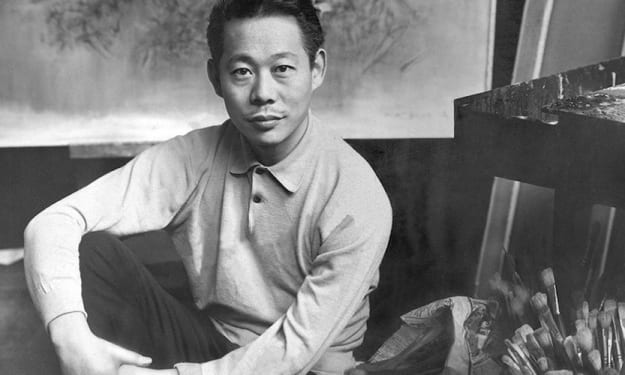
I Died For 40 Minutes - Here's What It Taught Me About life
Dying doesn't normally give a person new life - yet that is exactly what happened to Patrick Charnley. He was a high-flying lawyer, who viewed downtime as "wasted time", restlessly pushing himself to success.
By Ibrahim Shah 9 months ago in Art
'Till Death We Do Art. Top Story - February 2026.
There would be nothing divine in this world without art. Nature may surpass the divine to all intents and purposes, but like everything it absorbs and is absorbed by, it remains here, stuck on the surface of this world, ever-present, physically bound to the universe.
By Squeeze D' Avocado9 months ago in Art
Self-Regulated Strategy Development
What Is Self-Regulated Strategy Development? A Complete Guide for Teachers SRSD is a teaching approach that helps students become better writers. But it does much more than that. It teaches students how to manage their own learning. They learn to set goals, track their progress, and believe in themselves. In this guide, you will learn what SRSD is and why it works, the six simple steps to use it in your classroom, real strategies you can teach tomorrow, and what research says about its success. Let us get started. Why Every Educator Should Know About SRSD Teaching writing is hard. Teaching students who struggle with writing is even harder. SRSD was created in the 1980s by two researchers, Dr. Karen Harris and Dr. Steve Graham. They saw that many students, especially those with learning disabilities, did not have the tools they needed to write well. These students did not plan before writing. They did not revise their work. They gave up easily. Harris and Graham built SRSD to fix these problems. And it worked. Today, SRSD is one of the most researched teaching methods in education. Study after study shows it helps students write better, feel more confident, and take control of their learning. The best part is that it works for all students. Students with learning disabilities make big gains. Average students become stronger writers. Gifted students learn to push themselves further. The Six Stages of SRSD Explained Simply SRSD follows six clear stages. You move through them step by step. And you only move forward when your students are ready. Think of it like teaching someone to ride a bike. First, you explain how it works. Then you show them. Then you hold the bike while they try. Finally, they ride on their own. Stage one is develop background knowledge. Before you teach a new strategy, check what your students already know. Do they understand the basic parts of a good story? Do they know what a persuasive essay needs? If not, teach these things first. This stage builds the foundation. For example, before teaching a strategy for persuasive writing, you might teach students what a good opinion paragraph looks like. You show examples. You talk about what makes them work. Stage two is discuss it. Now it is time to introduce the new strategy. Talk with your students about what the strategy is, why it helps good writers, when and where to use it, and how it will make their writing better. This is also the time to talk about attitudes. Many students who struggle with writing feel frustrated. They think they are bad at writing. Ask them about these feelings. Share that writing is a skill anyone can learn with the right tools. At the end of this stage, ask students to make a commitment. I will learn this strategy. I will try my best. Stage three is model it. This is one of the most important stages. You show students exactly how to use the strategy. But here is the key: you think out loud while you do it. Let me give you an example. Imagine you are teaching a planning strategy. You put a blank piece of paper on the document camera. You say, okay, I need to write a story. The prompt says to write about a time I was brave. First, I will use our planning strategy. Let me think about what brave moment should I pick. I remember when I moved to a new school in third grade. That was scary. I will use that. You keep going. You show how you get stuck. You show how you fix problems. You show how you encourage yourself. I am not sure what to write next. That is okay. I will look back at my plan. Oh yes, I wanted to describe how I felt on the first day. This is powerful. Students see that even you struggle sometimes. They see how to work through problems. They hear the positive things you say to yourself. Stage four is memorize it. Help students memorize the strategy steps. Make it easy. Use fun names or acronyms. For a story-writing strategy, you might use SPACE. S is setting. P is purpose. A is action. C is conclusion. E is emotions. Create a poster. Make flashcards. Play games. Practice until students can name the steps without looking. Stage five is support it. Now students start using the strategy. But they do not do it alone. You guide them. You work together. This stage is sometimes called scaffolding. You give as much help as students need. When they get better, you slowly take the help away. Here are ways to support students. Work in small groups. Pair students to help each other. Give checklists so students can track their own work. Ask questions that guide thinking. Some students need more time here. That is fine. Let them practice until they feel ready. Stage six is independent performance. This is the goal. Students now use the strategy on their own. Give them new writing tasks. Do not remind them to use the strategy. See if they do it automatically. At this stage, students also keep using self-regulation skills. They set goals before writing. They check their work against checklists. They celebrate their success. The Secret Behind SRSD Success SRSD works because it teaches more than writing steps. It teaches students how to manage themselves. These are the four self-regulation skills at the heart of SRSD. First is goal setting. Before writing, students set a goal. I will write a story with all five parts. I will write at least three paragraphs. Goals give students direction. They know what they are working toward. Second is self-monitoring. As students write, they watch their own progress. They might use a simple checklist. Did I include the setting? Did I describe the feelings? This keeps them on track. They do not need a teacher to tell them what they missed. Third is self-instruction. This is the self-talk we talked about earlier. Students learn to say helpful things to themselves. Instead of I cannot do this, they learn to say, I know the steps. I can do this one step at a time. Fourth is self-reinforcement. Students learn to pat themselves on the back. I finished my plan. Good job. I used all five parts. That is great. This builds confidence. It makes students want to keep trying. Popular SRSD Strategies You Can Use Tomorrow SRSD is a framework. You can use it to teach many different strategies. Here are three of the most popular ones. POW plus TREE is for persuasive writing. POW helps students remember the writing process. P is pick my idea. O is organize my notes. W is write and say more. TREE helps students organize their essay. T is topic sentence. R is reasons. E is explain reasons. E is ending. SPACE is for story writing. S is setting. P is purpose. A is action. C is conclusion. E is emotions. RAP is for reading comprehension. R is read a paragraph. A is ask yourself the main idea. P is put it in your own words. What Research Says About SRSD Effectiveness You might wonder if SRSD really works. The answer is yes. And the research is strong. Over thirty years of studies show that SRSD improves student writing. These improvements are not small. They are large. Here are some key findings. Students write longer, higher-quality pieces. Students include more parts in their writing. Students spend more time planning. Students feel more confident. These gains last over time. One major review looked at all the research on writing instruction. SRSD came out on top. It had the strongest effects of any approach. The What Works Clearinghouse found that eighty-eight percent of SRSD studies showed positive effects for students with learning disabilities. That is impressive. SRSD in the Classroom with Real Examples Let me show you what SRSD looks like with different groups of students. First is SRSD for students with learning disabilities. Maria is in fourth grade. She has a learning disability in writing. She writes one or two simple sentences. Then she stops. She says she hates writing. Her teacher starts SRSD. They learn POW plus TREE. In the modeling stage, the teacher thinks out loud. Maria watches. She hears the teacher say, I need three good reasons. In the supported stage, Maria works with a small group. They use a graphic organizer together. Maria adds her ideas. After a few weeks, Maria writes a full essay on her own. It has a topic sentence, three reasons, and an ending. She says, I did not know I could write this much. Second is SRSD for young writers. First graders can use SRSD too. The strategies are simpler. A teacher might use a basic story plan. Who is in the story? Where does it happen? What happens first, next, and last? The teacher models with pictures. Students practice together. Soon, even young students write real stories. Third is SRSD for older students. In fifth grade, students might learn a revision strategy. They check their own writing against a list. Did I start sentences in different ways? Did I use strong words? Did I include details? Students learn to be their own editors. Common Challenges Teachers Face SRSD works. But it is not always easy to use. Here are common challenges and solutions. Challenge one is time. SRSD takes time. Each stage takes time. You might spend weeks on one strategy. The solution is to remember that slow is fast. Taking time now saves time later. Students who learn strategies well become independent. Challenge two is student resistance. Some students are used to giving up. They might not believe a strategy can help. The solution is to keep modeling. Share stories of students who succeeded. Celebrate small wins. When students see improvement, they buy in. Challenge three is planning. SRSD requires thoughtful planning. You need to prepare examples and gather materials. The solution is to start small. Pick one strategy. Teach it well. Use free resources to save time. Free Resources to Get Started With SRSD Today You do not need to create everything from scratch. These free resources will help you get started. ThinkSRSD has free lesson plans, graphic organizers, and videos. You can see teachers modeling strategies in real classrooms. SRSD Online has free materials and professional development options. Vanderbilt University has free strategy guides and research summaries. YouTube has videos of teachers modeling strategies. Search for SRSD writing or POW TREE strategy. Teachers Pay Teachers has a free section. Search for SRSD free to find graphic organizers and posters. Frequently Asked Questions About SRSD What grades is SRSD for? SRSD works for grades one through twelve. You adjust the strategies to match your students. Do I have to teach all six stages in order? Yes, the stages build on each other. But you can go back and forth as needed. How long does it take? Plan for eight to twelve lessons over several weeks. The exact time depends on your students. Can SRSD be used for other subjects? Yes. SRSD works for reading, math, and study skills. Does SRSD only help struggling students? No. All students benefit. Strong writers become more strategic. Ready to Try SRSD? You now know what SRSD is and why it works. You understand the six stages. You have strategies to teach and free resources to use. The next step is simple. Pick one strategy. Start with stage one. See what happens. Your students might surprise you. They might write more than they ever have before. They might start believing in themselves as writers. And that is what SRSD is really about. Not just better writing, but stronger, more confident learners.
By youssef mohammed9 months ago in Art
We Die Forgotten
Not by strength of arm did Troy fall, but by cunning. Walls that withstood years of siege opened to a lie, while far from the battlefield a girl’s blood darkened the altar so ships might sail. Victory demanded a price long before the first spear was thrown.
By Aless Hely9 months ago in Art
Ca$imuz art gallery
I have done alot of designs and illustrations and drawings and together i curated my entire collection and work into an online art gallery as well as a coffee table book. I am very happy with the way that the gallery came out and i hope that you enjoy the collection as much as i had creating it for so long.
By Revista Miko:XCI 9 months ago in Art
How Creativity Can Ease Your Nervous System and Help You Manifest Money Faster. AI-Generated.
In today’s fast-paced world, the idea of manifesting money often comes with pressure. We’re told to “think positive,” “hustle harder,” and “raise our vibration,” but for many people, these instructions only create more stress. When your nervous system is overwhelmed, fear-based, or stuck in survival mode, abundance feels distant—no matter how many affirmations you repeat. This is where creativity enters as a powerful, often overlooked tool. Creativity doesn’t just make life more enjoyable; it helps regulate your nervous system, shift your mindset, and place you in a state where money can flow more naturally. When you create, you don’t chase abundance—you become receptive to it. The Nervous System and Money Are Deeply Connected Before we talk about creativity, it’s important to understand the role of the nervous system in manifestation. Your nervous system constantly scans for safety or threat. When it senses danger—financial stress, fear of failure, scarcity—it activates fight, flight, or freeze. In this state: You make decisions from fear You overwork or self-sabotage You repel opportunities without realizing it Manifesting money is not just a mindset game; it’s a state-of-being game. A regulated nervous system feels calm, grounded, and open. This is the state where intuition sharpens, ideas flow, and aligned action becomes effortless. Creativity as a Natural Regulator Creativity has a direct calming effect on the nervous system. Activities like writing, painting, singing, dancing, or even cooking pull you out of analytical thinking and into the present moment. This shifts your body from stress mode into safety mode. When you’re creative: Your breathing slows Muscle tension releases Your mind becomes less obsessive Neuroscience shows that creative activities activate the parasympathetic nervous system—the “rest and digest” mode. This is the same state associated with trust, openness, and receptivity. Simply put, creativity makes your body feel safe enough to receive. Why Safety Attracts Money Faster Than Force Many people try to manifest money through force: rigid routines, excessive visualization, or constant effort. While discipline has its place, force often signals desperation to the subconscious mind. Money responds better to clarity and ease than pressure. When creativity calms your nervous system, you naturally: Spot opportunities you would’ve missed Take inspired action without overthinking Build confidence in your own value Instead of chasing money, you align with it. Creativity Rewires Your Relationship With Worth At its core, money is linked to self-worth. If you don’t feel worthy, your nervous system resists receiving—no matter how much you desire abundance. Creative expression bypasses inner criticism and allows authentic self-expression. When you create, you’re saying, “What comes from me matters.” Over time, this message sinks deep into your subconscious. This shift is powerful because: You stop underpricing yourself You set better boundaries You attract clients and opportunities that respect your value Creativity trains your nervous system to associate self-expression with safety, not rejection. Flow State: The Manifestation Sweet Spot One of the greatest gifts of creativity is flow state—that timeless space where you’re fully absorbed in what you’re doing. In flow: Fear disappears Self-doubt fades Ideas arrive effortlessly Flow is where manifestation accelerates. When you’re in flow, your frequency changes. You’re no longer vibrating at lack or urgency. You’re aligned, present, and trusting. Many successful entrepreneurs, artists, and innovators report that their best money-making ideas came during creative moments—not strategic meetings. Practical Ways to Use Creativity for Financial Manifestation You don’t need to be a professional artist to benefit. Creativity is about expression, not perfection. Here are simple ways to integrate it into your abundance practice: 1. Creative Journaling Write freely about your dream financial life without logic or limitation. Let images, emotions, and symbols guide you instead of numbers. 2. Vision Collage or Art Instead of traditional vision boards, create art that represents how abundance feels in your body—freedom, calm, confidence. 3. Movement and Music Dance or move intuitively while visualizing financial ease. This helps your body embody abundance rather than just think about it. 4. Storytelling Write short stories where money flows naturally into the character’s life. This trains your subconscious to see abundance as normal. Creativity Turns Manifestation Into a Relationship Manifestation isn’t about controlling reality—it’s about relating to it. Creativity teaches you to listen, respond, and co-create with life instead of forcing outcomes. When your nervous system is calm, you trust timing. When you trust timing, you act wisely. When you act wisely, money responds. Final Thoughts Creativity is not a luxury; it’s a regulation tool. In a world that glorifies hustle and stress, choosing creativity is a radical act of self-trust. By calming your nervous system through creative expression, you open the door to faster, more sustainable financial manifestation. Money flows where safety, clarity, and authenticity exist. And creativity builds all three—beautifully, gently, and powerfully.
By Ayesha Lashari9 months ago in Art
The Beauty of Creativity as a Conscious Manifestor. AI-Generated.
Creativity is often described as the ability to make something new, but in its deepest form, it is far more than that. Creativity is the visible expression of consciousness in motion. It is the bridge between inner awareness and outer reality. When approached consciously, creativity becomes a powerful tool for manifestation—one that allows individuals not only to imagine a better life, but to actively shape it.
By Ayesha Lashari9 months ago in Art