Drawing
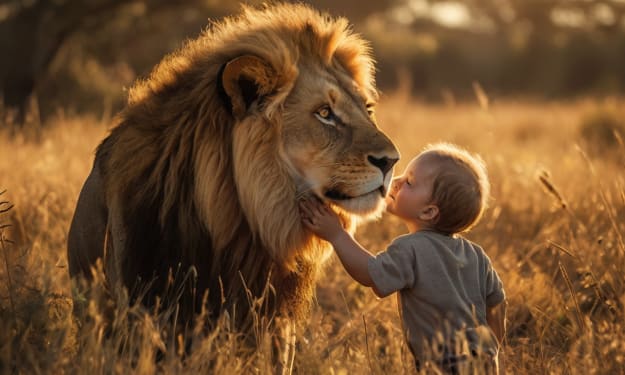
Roar and Whispers: A Tale of the Lion and the Child
In the heart of a vast and sunlit savannah, where the grasses danced with the wind and the trees whispered ancient stories, lived a mighty lion named Kovu. His mane was as golden as the morning sun, and his roar could shake the skies. All the animals respected him—not only for his strength but also for his wisdom. Kovu was the undisputed king of the jungle, a ruler with a heart as deep as the horizon.
By Iqbal hussainabout a year ago in Art
“The Last Recipe”
In the heart of a sleepy village nestled between hills and riverbanks, there stood a small, weather-worn cottage with ivy curling up its walls and the warm scent of spices always drifting from its chimney. It belonged to Grandma Lila — not the grandma of any one person, but the kind everyone claimed as their own.
By Pooniayashu1about a year ago in Art
Painting
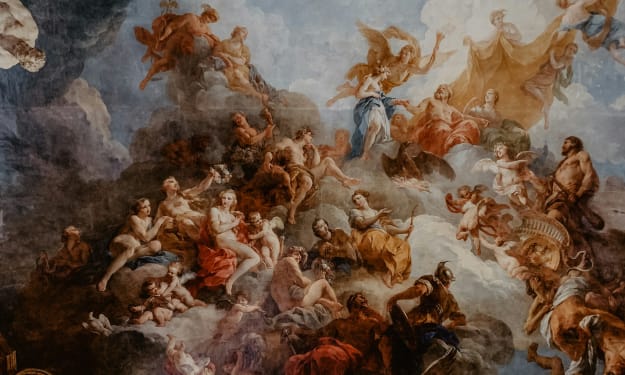
The Art of Painting: A Timeless Expression of the Human SpiritPainting is one of the oldest and most profound forms of artistic expression known to humanity. It predates written language and has served as a powerful means of communication, storytelling, and emotional release across cultures and centuries. Whether it appears on ancient cave walls, Renaissance frescoes, or modern digital screens, painting continues to evolve, capturing the essence of human creativity and the desire to interpret the world visually.A Journey Through TimeThe history of painting stretches back to prehistoric times. The earliest known paintings, found in the Chauvet and Lascaux caves in France, date back over 30,000 years. These early works, made using natural pigments like charcoal, ochre, and hematite, depict animals, human figures, and abstract patterns. They likely held spiritual or ritualistic significance for early humans.As civilizations emerged, painting developed into a more sophisticated art form. In Ancient Egypt, tombs and temples were adorned with vibrant frescoes that conveyed religious beliefs, daily life, and the afterlife. Greek and Roman artists expanded the use of perspective and realism, while medieval European painters focused on religious iconography, often using gold leaf and tempera paints.The Renaissance era marked a pivotal shift in the world of painting. Artists like Leonardo da Vinci, Michelangelo, and Raphael mastered perspective, anatomy, and light to create stunning, lifelike compositions. Their works emphasized balance, harmony, and a deep understanding of the natural world. This period laid the foundation for countless artistic movements to come.In the centuries that followed, painting saw an explosion of diversity and innovation. The Baroque era brought dramatic lighting and intense emotion; the Romantic period emphasized nature and personal expression; and the Impressionists, like Monet and Renoir, broke free from tradition to capture fleeting moments of light and color. The 20th century saw further evolution through movements such as Cubism, Surrealism, Abstract Expressionism, and Pop Art, each redefining what painting could be.Styles and MediumsPainting encompasses a vast array of styles, from highly realistic portraits to bold, abstract compositions. Some of the most common styles includeRealism: Aims to depict subjects as accurately and true-to-life as possible.Impressionism: Focuses on capturing the effects of light and atmosphere, often using loose brushstrokes.Expressionism: Emphasizes emotional experience over physical reality.Abstract: Moves away from representational art to explore color, form, and texture in a non-traditional way.Surrealism: Combines dreamlike imagery and unexpected juxtapositions to tap into the unconscious mind.Artists also choose from a variety of mediums, each with unique characteristics. Oil paints, known for their rich texture and vibrant color, have been favored for centuries. Watercolor offers a delicate, transparent quality ideal for capturing light and movement. Acrylic paints dry quickly and are highly versatile, while digital painting opens up new possibilities in the realm of technology and design.Tools and TechniquesThe tools of a painter are as varied as their styles. Brushes come in countless shapes and sizes, each designed for different effects. Palette knives are used for thick, textured strokes, while sponges and fingers can create organic patterns. Some painters even use unconventional tools like spray cans, rollers, or objects found in nature.Techniques such as layering, glazing, impasto, and dry brushing allow artists to build depth, texture, and detail in their work. Mastery of color theory, composition, and perspective is essential for creating visually compelling pieces.More Than Just ArtPainting serves many purposes beyond aesthetics. It can be a form of protest or social commentary, a therapeutic outlet for emotions, or a way to document historical events. Art therapy, for example, uses painting to help individuals express feelings that are difficult to verbalize.Paintings can also preserve cultural heritage, reflect societal values, and inspire change. Whether in the form of political murals, sacred icons, or avant-garde installations, painting remains a powerful force in shaping how we see ourselves and the world around us.ConclusionPainting is more than just an artistic discipline—it is a mirror of the human soul. It transcends language and time, connecting us through shared experiences and emotions. In every brushstroke lies a story, a vision, or a feeling waiting to be discovered. As we continue to innovate and explore, painting remains a vibrant and essential part of the human experience—one that continues to evolve while holding true to its timeless essence.
By Nabir Mondolabout a year ago in Art
Artificial Intelligence (AI)
Intelligence artificial (AI) The age of technology is currently in full swing. Artificial Intelligence, or AI, is the most talked-about and astonishing invention of modern science. It is a method of technology that enables machines and computers to think and make decisions like humans. Our way of life, how we work, and even how we think have all changed as a result of AI. In the 1950s, the idea of artificial intelligence first emerged. Since then, researchers have been attempting to create a system that mimics human behavior. At this point, artificial intelligence (AI) is not only a topic of study but also actively utilized in actual situations. There are numerous ways that AI is incorporated into our lives today. To deliver individualized content, online platforms like YouTube, Facebook, and Google look at our preferences and actions. Our questions and commands can be answered and followed by voice assistants like Siri and Google Assistant. AI is used to diagnose diseases and recommend treatments in the medical field. Self-driving automobiles are now a reality. Every industry, business, education, and agricultural field now employ AI. Farmers can now use AI to look at weather patterns and figure out when to plant crops best. Using AI, business owners can investigate consumer demands and market trends. With AI assistance, doctors can quickly and accurately analyze medical reports. However, AI has a number of advantages as well as some disadvantages. There is widespread concern that AI could eventually take over human jobs. A lot of people might lose their jobs if machines and robots can do the same things that people do. In addition, putting too much faith in AI might make it harder for us to think critically and make decisions. Security is another major concern. AI could pose serious threats to both personal lives and society if it is misused for things like spreading false information, hacking, or surveillance. As a result, when utilizing AI technology, we must exercise caution and responsibility. One thing is for certain: AI will continue to advance. Over time, it will become more sophisticated and effective. It should be our goal to use this technology to benefit society, the economy, and people. AI shouldn't be used to replace humans but rather to help them. In conclusion, science has given artificial intelligence a remarkable gift. Our future may be brighter if AI is used in the right way. But if misused, it can also bring disaster. Therefore, we must uphold ethics, humanity, and control alongside technological advancement. That is our primary obligation.
By Akash Sheikh about a year ago in Art
How to Design a Professional Flyer with Canva (Step-by-Step Guide)
How to Design a Professional Flyer with Canva (Step-by-Step Guide) A well-designed flyer is one of the most effective tools for promoting an event, product, or service. Whether you're creating it for your own business or for a client, Canva makes flyer design easy and professional—even if you’re not a graphic designer.
By Abdul Wahedabout a year ago in Art
Why Gel Ice Packs Are Essential for Kids’ Lunches. AI-Generated.
Engaging Kids with Themed Ice Pack Designs/ Kids adore bright, fun lunch gear. Picking cute gel ice packs shaped like animals, fruits, or favorite characters perks up lunchtime. Some brands roll out themed packs for holidays or school starts. These add a joyful twist to meal prep. Such eye-catching packs chill food. They also make kids eager for their packed eats.
By Leah Braveabout a year ago in Art