Drawing
I Lost Myself in the Fear of Criticism
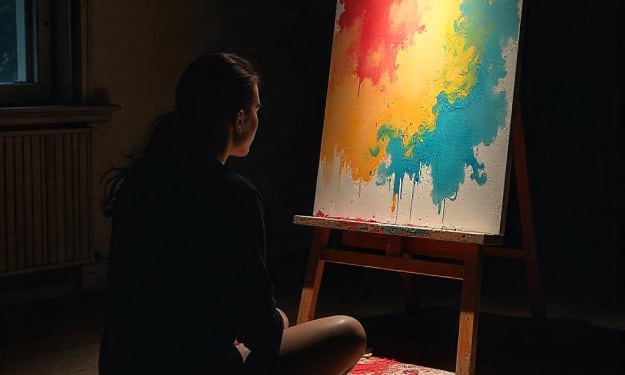
I used to believe that art was freedom — until I let other people put chains on my creativity. When I first picked up a paintbrush at the age of ten, it wasn’t because someone told me I was good at it. It wasn’t to win awards or impress friends. It was because colors made me happy. Mixing blue and yellow into a shade of green that didn’t exist anywhere else felt like magic. I didn’t think about "good" or "bad." I just painted because it felt like breathing.
By Muhammad Sabeelabout a year ago in Art
From Blank Canvas to Masterpiece
It’s funny how something so simple can become a mountain. A blank canvas—a mere square of white fabric stretched on wood—held a world of possibilities, yet for me, it felt like an insurmountable wall. Every time I stood before it, my mind went blank, and the weight of my fear—fear of failure, of imperfection—would paralyze me.
By Muhammad Sabeelabout a year ago in Art
Sokher Hari
Sokher Hari: The God of Devotion and Longing in Bengali Folklore In the rich and diverse cultural tapestry of Bengal, few deities capture the essence of personal devotion and intimate spiritual longing quite like Sokher Hari. Often revered as a deeply personal manifestation of Lord Krishna, Sokher Hari occupies a special place in the hearts of rural and folk communities across Bengal, especially in regions like Nadia, Murshidabad, and parts of Bangladesh. The word "Sokher" comes from the Bengali word for "desire" or "longing," and "Hari" is another name for Krishna, meaning "one who takes away the sins or sorrows." Thus, Sokher Hari can be interpreted as "Hari of one’s personal longing," a form of Krishna that is intensely connected to the emotions and daily lives of his devotees. Origins and Belief Unlike the grand narratives found in classical scriptures like the Bhagavata Purana, the worship of Sokher Hari is rooted more in oral traditions, local songs, and personal experiences. It is believed that Sokher Hari represents Krishna in a highly affectionate and intimate form — not the cosmic king or the master strategist of Kurukshetra, but the playful, accessible divine friend and lover of the human soul. Devotees do not perceive Sokher Hari as a distant, omnipotent god. Instead, they see him as someone who lives among them, shares their joys and sorrows, and responds personally to their calls. The relationship between the devotee and Sokher Hari is informal, loving, and deeply emotional. It is this intimacy that makes the cult of Sokher Hari unique. Worship and Practices Sokher Hari is often worshiped through simple, heartfelt rituals rather than elaborate Vedic ceremonies. Devotees might set up small, homemade shrines adorned with flowers, earthen lamps, and hand-drawn images of Krishna. Offerings typically include sweets, fruits, and homemade dishes, reflecting the everyday nature of the devotion. One of the most distinctive aspects of Sokher Hari worship is the use of kirtan — a form of devotional singing — where groups gather to sing heartfelt songs about Krishna’s playful acts (leelas), his love for Radha, and his compassion for the world. These kirtans are often spontaneous, emotional, and filled with expressions of personal longing and love. Festivals dedicated to Sokher Hari, such as Raas Utsav or Dol Purnima, are celebrated with deep community involvement, often blurring the line between the spiritual and the social. In some villages, dramatic re-enactments of Krishna’s life — known as Raas Leela — are performed, bringing the myth alive in the language and experience of the people. Cultural Impact Sokher Hari worship has deeply influenced Bengali folk literature, music, and art. Many Baul singers, kirtaniyas, and folk poets have drawn inspiration from the themes of longing (viraha), divine love, and union found in the cult of Sokher Hari. Songs of the medieval poet Chandidas and the mystic Ramprasad Sen reflect this intense personal devotion. Moreover, the figure of Sokher Hari exemplifies an important aspect of Bengali spirituality: the democratization of divinity. Here, God is not locked within temples or scriptures but accessible in every home and every heart. The idea that one can develop a personal relationship with the divine — free from rigid rituals or social hierarchies — continues to inspire generations. Sokher Hari Today Though traditional Sokher Hari worship is most prominent in rural Bengal, its spirit persists even in modern urban environments. Small community gatherings, kirtans, and devotional festivals keep the tradition alive, adapting to new settings while retaining the core emphasis on love, intimacy, and longing. In an increasingly fast-paced world, the simple, profound connection between devotee and deity in Sokher Hari worship serves as a reminder of the timeless human need for personal connection, divine friendship, and emotional fulfillment. Sokher Hari is more than a deity — he is a companion, a beloved, and a confidant. His presence in Bengali culture reminds us that spirituality can be as close as a song from the heart, a whispered prayer, or a simple offering of love.
By Nabir Mondolabout a year ago in Art
Mithila Painting
Mithila painting, also known as Madhubani art, is a significant traditional Indian art form from the Mithila region of Bihar and Nepal, historically practiced by women. It has evolved over centuries, adapting to new mediums while retaining its artistic and cultural essence. This report explores its definition, origins, history, characteristics, significance, artists, styles, current status, and socio-economic impact.
By Saahil Sinhaabout a year ago in Art
Instagram-Worthy Water Art that’ll Make You Look Twice
Browsing through Instagram for five minutes will let you spot the bold splashes of blue, delicate ripples of color, waves of paint that seem to move even in stillness. You can make out this as something called water art, the popular trend—and it’s roping the attention of viewers over feeds, reels, etc. Explore pages with such graceful and powerful elements as water itself to find about the fluid beauty, the hypnotic techniques, and the modern take on water paintings.
By Blair Bartabout a year ago in Art
Abstract Art: A Journey Beyond the Visible
Abstract art, a genre that emerged prominently in the early 20th century, represents a departure from traditional representational art. Instead of depicting objects, people, or scenes from the physical world in a recognizable form, abstract art focuses on shapes, colors, lines, and textures to convey emotions, ideas, or concepts. This art form allows artists to break free from the constraints of realism, offering a unique way to express their inner thoughts and perspectives.
By Chowdhury Kabirabout a year ago in Art
Blooming Love: Why Flower Wallpaper Is the Perfect Mother’s Day Gift. AI-Generated.
Mother’s Day is more than just a date on the calendar—it’s a moment to honor love in its most selfless form. It's a time to say thank you for the endless care, quiet strength, and unwavering support that mothers provide. While traditional gifts like flowers, chocolates, and spa vouchers are always appreciated, they tend to fade with time.
By Giffywallsabout a year ago in Art