Contemporary Art
Sterling Perfumes vs. PerfumeBays: UAE Fragrance Face-Off
The fragrance industry in the United Arab Emirates (UAE) is a powerhouse, known for its commitment to luxury, quality, and innovation. Valued at over $3 billion annually, the UAE has become a global leader in exotic scents and perfumes. Among the key players in this thriving industry are Sterling Perfumes and PerfumeBays, each contributing significantly to the market.
By perfumebays2 years ago in Art
"The Unspoken Beauty of Being Unremarkable"
In a world that celebrates extraordinary achievements, viral moments, and larger-than-life personalities, it’s easy to feel like being “ordinary” is a failure. We scroll through social media, bombarded by stories of people climbing mountains, launching startups, or living picture-perfect lives. And somewhere along the way, we start to believe that if we’re not exceptional, we’re not enough.
By Rocky Brahma2 years ago in Art
The rise of euromanga
The phenomenon known as euromanga has emerged as a captivating intersection of cultures, a delightful amalgamation of European comic art and the esteemed tradition of Japanese manga. Allow me to elucidate the foundational elements contributing to this rise, for it is a subject that deserves meticulous examination and appreciation.
By Sally Keegan2 years ago in Art
Which Design Elements Characterize Baroque Art and Architecture?
Baroque art and architecture emerged in the early 17th century and continued into the 18th century, leaving an indelible mark on the artistic and cultural landscape of Europe. This style developed as a response to the Renaissance and Mannerism, focusing on grandeur, movement, and emotional intensity. The Catholic Church, European monarchies, and aristocrats played significant roles in promoting this style to showcase power, divinity, and artistic superiority. This article explores the defining design elements of Baroque art and architecture, analyzing the key characteristics that distinguish it from other styles.
By Andrew Taylor2 years ago in Art
The Future of Content Creation: Trends to Watch. AI-Generated.
.. The world of content creation is constantly evolving, and staying ahead of the curve is crucial for success. From the rise of AI-generated content to the growing importance of sustainability, here are the top trends to watch in the future of content creation. Personalization: The Key to Engagement Personalization is no longer a nice-to-have, but a must-have for content creators. With the help of AI and data analytics, creators can tailor their content to individual preferences, increasing engagement and loyalty. Sustainability: The New Bottom Line As consumers become more environmentally conscious, sustainability is becoming a key consideration for content creators. From reducing carbon footprints to promoting eco-friendly products, creators must prioritize sustainability to stay relevant. AI-Generated Content: The Future is Here AI-generated content is no longer science fiction, but a reality that's changing the game for content creators. From automated writing to AI-generated visuals, creators can now produce high-quality content faster and more efficiently than ever before. Interactive Storytelling: Immersive Experiences Interactive storytelling is revolutionizing the way we consume content, providing immersive experiences that engage and retain audiences. From virtual reality to interactive videos, creators can now craft stories that put the viewer at the center. Diversity and Inclusion: Representing the Real World Diversity and inclusion are no longer just buzzwords, but essential considerations for content creators. By representing the real world in all its complexity, creators can build trust, foster empathy, and create content that resonates with diverse audiences. Conclusion The future of content creation is exciting and uncertain, with trends emerging and evolving at breakneck speed. By staying ahead of the curve and embracing personalization, sustainability, AI-generated content, interactive storytelling, and diversity and inclusion, creators can thrive in this brave new world and produce content that truly resonates with their audiences.
By Joshua Happiness2 years ago in Art
The Power of Storytelling: How to Create Engaging Content that Resonates with Your Audience. AI-Generated.
S... In today's digital landscape, creating content that resonates with your audience is more important than ever. With so much noise and competition online, it can be difficult to stand out and capture people's attention. However, there is one timeless technique that has been proven to work: storytelling. Why Storytelling Matters Storytelling has been an essential part of human communication for centuries. It has the power to inspire, educate, and motivate people, making it an invaluable tool for content creators. Here are just a few reasons why storytelling matters: Emotional Connection: Stories have the ability to create an emotional connection with your audience, making them more invested in your content. Memorability: Stories are more memorable than facts and figures, making them easier to recall and share with others. Authenticity: Stories can convey your brand's values and personality, helping to build trust and authenticity with your audience. How to Create Engaging Stories So, how can you create engaging stories that resonate with your audience? Here are some tips to get you started: Know Your Audience: Understand who your audience is, what they care about, and what problems they face. Find Your Unique Voice: Use your brand's unique voice and tone to tell stories that reflect your personality and values. Use Descriptive Language: Use vivid and descriptive language to bring your stories to life and create a lasting impression. Make it Interactive: Encourage audience participation and engagement by asking questions, hosting Q&A sessions, or creating interactive content. Examples of Effective Storytelling Here are a few examples of effective storytelling in action: Dove's Real Beauty Campaign: Dove's campaign featuring real women and their stories of self-acceptance and empowerment is a powerful example of storytelling in advertising. Airbnb's Community Stories: Airbnb's community stories feature real people and their experiences with the platform, creating an emotional connection with users and showcasing the brand's values. Patagonia's Environmental Activism: Patagonia's environmental activism and storytelling efforts have helped to create a loyal community of customers who share the brand's values and mission. Conclusion Storytelling is a powerful tool that can help you create engaging content that resonates with your audience. By understanding your audience, finding your unique voice, and using descriptive language, you can create stories that inspire, educate, and motivate people. Remember to make it interactive, and don't be afraid to showcase your brand's values and personality. With these tips and examples, you'll be well on your way to creating effective stories that drive real results.
By Joshua Happiness2 years ago in Art
The Future of Artificial Intelligence: Exploring the Possibilities of AI-Generated Content. AI-Generated.
.Artificial intelligence (AI) has been rapidly advancing in recent years, transforming industries and revolutionizing the way we live and work. One of the most exciting developments in AI is the ability to generate content, from text and images to music and videos. In this article, we'll delve into the world of AI-generated content, exploring its possibilities, challenges, and potential applications. The Rise of AI-Generated Content AI-generated content has been gaining traction in recent years, with the development of sophisticated algorithms and machine learning models. These models can analyze vast amounts of data, learn patterns, and generate new content that's often indistinguishable from human-created content. Applications of AI-Generated Content So, what are the potential applications of AI-generated content? Here are a few examples: Content creation: AI can generate high-quality content, such as articles, social media posts, and product descriptions, freeing up human creators to focus on more strategic tasks. Art and design: AI-generated art, music, and videos can create new and innovative forms of creative expression. Education and training: AI-generated content can be used to create personalized learning materials, simulations, and virtual reality experiences. Challenges and Concerns While AI-generated content offers many exciting possibilities, there are also challenges and concerns to consider: Authenticity and transparency: How can we ensure that AI-generated content is clearly labeled and distinguished from human-created content? Quality and accuracy: How can we guarantee the quality and accuracy of AI-generated content, particularly in areas like news and education? Job displacement: Could AI-generated content displace human creators andArtificial intelligence (AI) has been rapidly advancing in recent years, transforming industries and revolutionizing the way we live and work. One of the most exciting developments in AI is the ability to generate content, from text and images to music and videos. In this article, we'll delve into the world of AI-generated content, exploring its possibilities, challenges, and potential applications. The Rise of AI-Generated Content AI-generated content has been gaining traction in recent years, with the development of sophisticated algorithms and machine learning models. These models can analyze vast amounts of data, learn patterns, and generate new content that's often indistinguishable from human-created content. Applications of AI-Generated Content So, what are the potential applications of AI-generated content? Here are a few examples: Content creation: AI can generate high-quality content, such as articles, social media posts, and product descriptions, freeing up human creators to focus on more strategic tasks. Art and design: AI-generated art, music, and videos can create new and innovative forms of creative expression. Education and training: AI-generated content can be used to create personalized learning materials, simulations, and virtual reality experiences. Challenges and Concerns While AI-generated content offers many exciting possibilities, there are also challenges and concerns to consider: Authenticity and transparency: How can we ensure that AI-generated content is clearly labeled and distinguished from human-created content? Quality and accuracy: How can we guarantee the quality and accuracy of AI-generated content, particularly in areas like news and education? Job displacement: Could AI-generated content displace human creators and
By Joshua Happiness2 years ago in Art
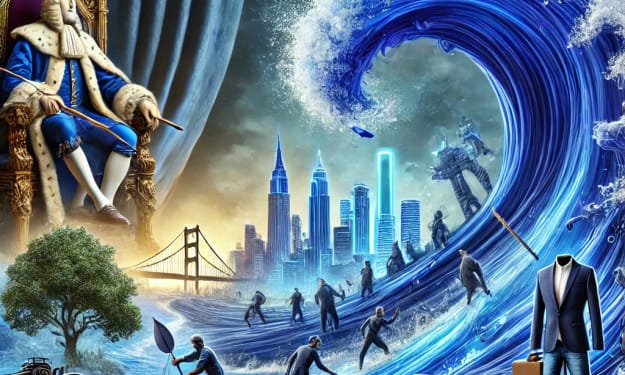
The Color Chronicles: How [Blue] Shaped Art, Fashion, and Culture
Color is more than just a visual experience—it carries history, emotions, and meaning. Some colors have been more influential than others, leaving an undeniable mark on art, fashion, and even psychology. Among them, blue has held a special place for centuries.
By Ahmet Kıvanç Demirkıran2 years ago in Art