
Patterns Without Desires: Can AI Really Judge Art?
is Ai the future?

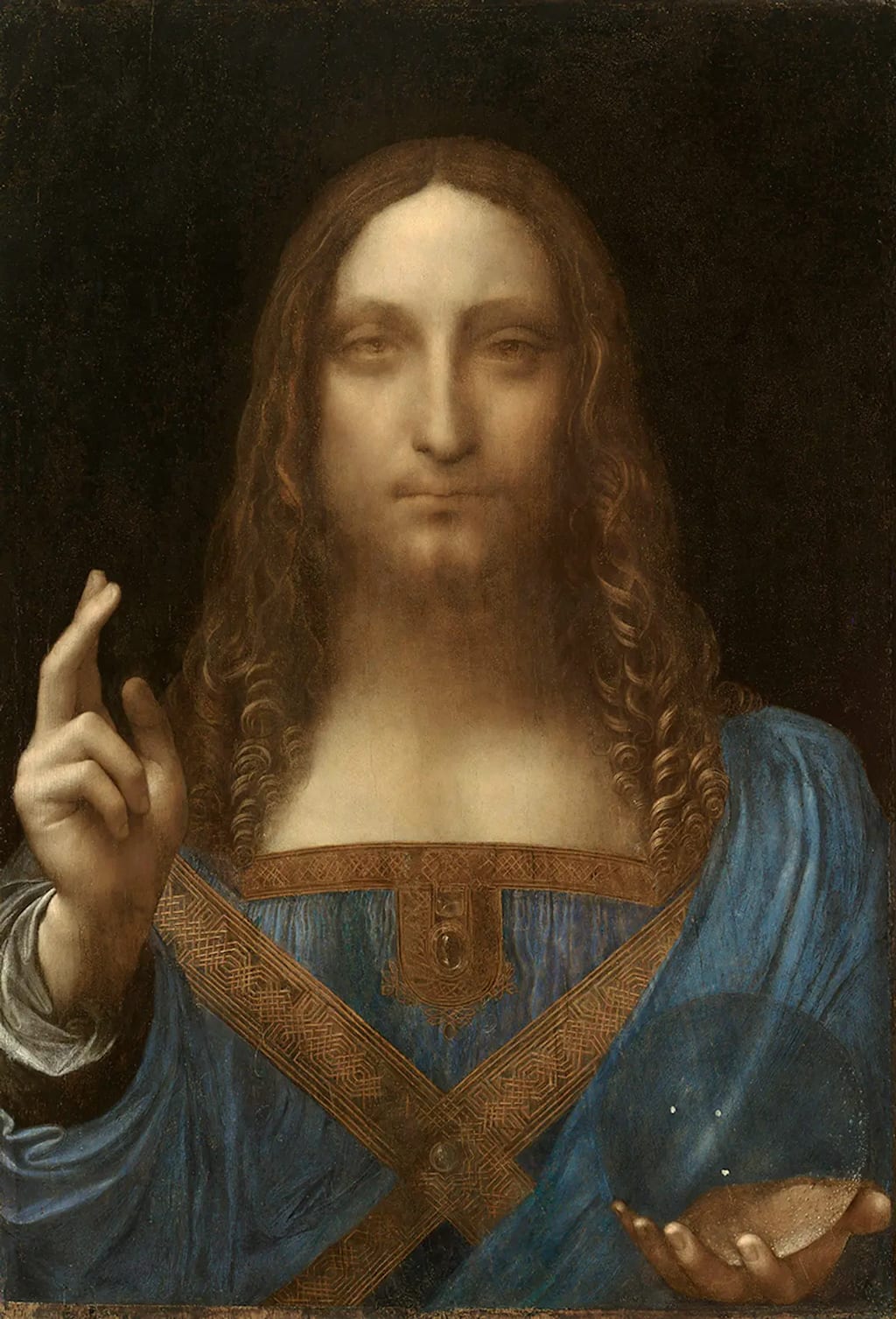
In the art world, certainty is a valuable currency. A single name on a museum label can determine whether a painting is worth millions or thousands. It shapes scholarly narratives, influences insurance premiums, and decides which works hang in prestigious galleries. Yet behind this facade of assurance lies an industry built on risk, opinion, and carefully managed doubt.
Attribution the process of determining who created a work of art is the keystone of this system. It is also deeply human, shaped by judgment, intuition, training, and bias. For centuries, connoisseurship reigned supreme: experts trained their eyes to recognize brushwork, composition, and handling across an artist's oeuvre. They developed astonishing sensitivity to visual nuance, but their judgments remained subjective. Two equally qualified scholars could disagree profoundly, and their disagreements could last generations.
The 20th century introduced scientific and forensic analysis, which allowed scholars to test materials, identify anachronistic pigments, and examine underdrawings. These techniques revolutionized the detection of forgeries but did not solve attribution. Forensic tests excel at telling us when something cannot be what it claims to be. They are far less effective at telling us who painted it. They are also expensive, time-consuming, and sometimes invasive. As a result, the vast majority of artworks entering the global market each year are never tested at this level.
This uncertainty helps explain why the arrival of artificial intelligence in the realm of attribution has provoked such strong reactions. For some, AI looks like a long-awaited corrective: a way to introduce consistency, scale, and empirical rigor into a system long governed by authority and trust. For others, it represents a profound misunderstanding of what art is and how it should be judged.
The Debate: Human Judgment vs. Pattern Recognition
British art historian Bendor Grosvenor has expressed deep reservations about AI in attribution. His concern is not simply that machines might get things wrong, but that the very premise of algorithmic judgment risks flattening the complexity of artistic creation. Painting, in Grosvenor's view, is not reducible to pattern recognition. It involves intention, context, decision-making, and deviation. Artists break their own habits. They experiment. They collaborate. To treat attribution as an exercise in statistical matching is to misunderstand artistic practice itself.
Art historian and dealer Clovis Whitfield has responded forcefully, arguing that AI does not replace connoisseurship but builds upon it. Algorithms are trained on the accumulated judgments of human experts: catalogue raisonnés, museum collections, peer-reviewed attributions. AI adds not taste or interpretation, but scale and consistency. It can compare thousands of micro-features across an artist's corpus, identifying statistical regularities that no human could track consciously. It does not pronounce verdicts. It produces probabilities. And those probabilities, Whitfield argues, are simply another form of evidence.
This exchange crystallizes a deeper tension. On one side stands the tradition of human judgment, with all its sensitivity and subjectivity. On the other, the promise of empirical pattern analysis, indifferent to reputation, market pressure, or desire. The real question is not which should prevail, but how they might coexist.
What AI Actually Does
Understanding how these systems work helps explain why they provoke such strong reactions. AI image analysis does not "learn style" in any holistic or aesthetic sense. It does not recognize beauty, emotion, or meaning. Instead, it decomposes images into quantifiable features: stroke direction, pressure patterns, pigment distribution, spatial relationships, and compositional ratios. Over hundreds of works, statistical regularities emerge.
Crucially, reputable firms maintain transparency about their training sets and methodologies. They are not drawing information from everywhere on the internet. Instead, they are carefully curated by teams of thoughtful humans, based on the catalogue raisonné the definitive catalogue of all known works by an artist, assembled by leading human art historians. The AI learns how to recognize an artist's hand, but it looks with a level of microscopic detail and cool objectivity that human experts cannot attain. It then offers up a probability, not a yes or no, to be interpreted by humans.
This independence is both AI's strength and its provocation. It strips away many of the social and economic pressures that shape human judgment. It does not know which works are prestigious or valuable. It does not care whether an attribution has stood for a century. It simply measures similarity. When its conclusions diverge from the consensus, they do so without deference.
The Caravaggio and Vermeer Cases
One case that illustrates AI's potential centres on Caravaggio's The Lute Player, a composition known in several versions and long contested by scholars. Three versions were tested by the Swiss firm Art Recognition: one in the Hermitage in St Petersburg (believed by almost all scholars to be by Caravaggio), another once owned by Badminton House in Gloucestershire (previously dismissed as a derivative), and a third associated with the Wildenstein collection in Paris (which long divided scholars). The AI concluded that the Hermitage was authentic, as was the ex-Badminton, but the Wildenstein was not. This matched the convictions of some scholars perfectly and contradicted others. The debate continues, but the AI provided a firm, objective, science-driven result that is far more difficult to argue against than a mere opinion.
A similar dynamic unfolded around Johannes Vermeer's Girl with a Flute. Vermeer's surviving oeuvre numbers fewer than 40 works, making each attribution enormously consequential. In 2022, the National Gallery of Art in Washington, DC concluded that it was not by Vermeer. The Rijksmuseum in Amsterdam disagreed. To complicate matters, the painting belonged to the Washington museum, meaning that accepting a non-Vermeer attribution would mean voluntarily devaluing one of its own holdings. Art Recognition examined the painting, comparing it with verified Vermeers at multiple levels of granularity. Its conclusion aligned with the Rijksmuseum's position: the painting fell squarely within Vermeer's statistical signature.
The AI did not "prove" the painting was by Vermeer. It provided a probability assessment based on measurable similarity. But it changed the burden of proof. A scholar arguing against a high-probability match must explain why. A seller insisting on an attribution contradicted by analysis must justify their optimism.
Beyond Attribution: Verifying the Physical Object
For all its promise, AI image analysis remains reactive. It is called in after disputes have already arisen. But a parallel development points toward a more proactive future. Craig Follett, co-founder of Peggy, an AI-powered online marketplace for contemporary art, describes this shift as a move "from an era of 'Trust Me' to an era of 'Verify Me'." Peggy's technology enables living artists to scan the unique physical topography of their paintings, creating a digital fingerprint that is impossible to replicate exactly.
As Follett explained: "Forensic AI tells you how similar a work is to an artist's broader corpus. Our technology confirms that this is that specific one-of-one canvas the artist held in their hands." If such technology were widely adopted, future disputes like those surrounding Vermeer or Caravaggio would be far less likely to arise for contemporary artists. Forgery rings would struggle to gain traction. Provenance gaps would shrink.
The Art World's Reluctance
One might assume that resistance to AI would come from sellers. But Art Recognition reports that 80 percent of their clients are sellers—gallerists, auction houses, or individuals with art they wish to sell. Those most resistant tend to be experts (who fear that their long monopoly on attribution will be replaced by technology) and sellers who worry that AI will downgrade attributions as well as upgrade them.
But resistance is short-sighted. A market that resists accuracy undermines its own credibility. A market that embraces transparency builds trust. The first auction house to announce that every painting above a certain price threshold has undergone AI image analysis would change expectations overnight. Buyers would demand it. Sellers with legitimate works would welcome it. Those with questionable ones would not. Over time, the deterrent effect alone could prove transformative.
The Deeper Significance
The art market has always thrived on a productive imbalance between knowledge and ignorance. Risk is not an unfortunate side effect; it may be a subconscious part of the appeal. Volatility, speculation, and the tantalizing possibility of being right when others are wrong animate the system. To remove too much uncertainty is to threaten the drama that fuels it.
AI does not eliminate that tension. It shifts it. By introducing a form of evidence immune to reputation and desire, it makes uncertainty harder to disguise and easier to quantify. It compels the market to decide which kind of uncertainty it is willing to live with.
Ultimately, the question is not whether machines can judge art. They cannot, not in any human sense, and not alone. The question is whether we are willing to renegotiate the role that uncertainty plays in a system built on belief. AI cannot abolish risk; it merely redistributes it. It asks who benefits from not knowing, who benefits from greater clarity, and how much ambiguity the market truly needs to function.
In a world where myths can thrive simply because no one thought to ask the right question, AI makes those questions unavoidable. What emerges is not absolute certainty, but a different basis for trust one that acknowledges uncertainty openly rather than quietly trading on it. The patterns are there, waiting to be read. The desires are ours alone.
About the Creator
Mark Lim
Hi I am mark an automotive student and a car, tech and food enthusiast ! Im gonna try and post daily & hope you enjoy what I write and do share my page with people you know. I would gladly appreciate it! Cheers
Enjoyed the story? Support the Creator.
Subscribe for free to receive all their stories in your feed.
Comments
There are no comments for this story
Be the first to respond and start the conversation.