
How to Draw a Dog Step by Step: A Beginner-Friendly Guide to Creating Realistic and Cute Dogs
A simple step-by-step method to sketch, structure, and bring your dog drawings to life with realistic detail and personality.

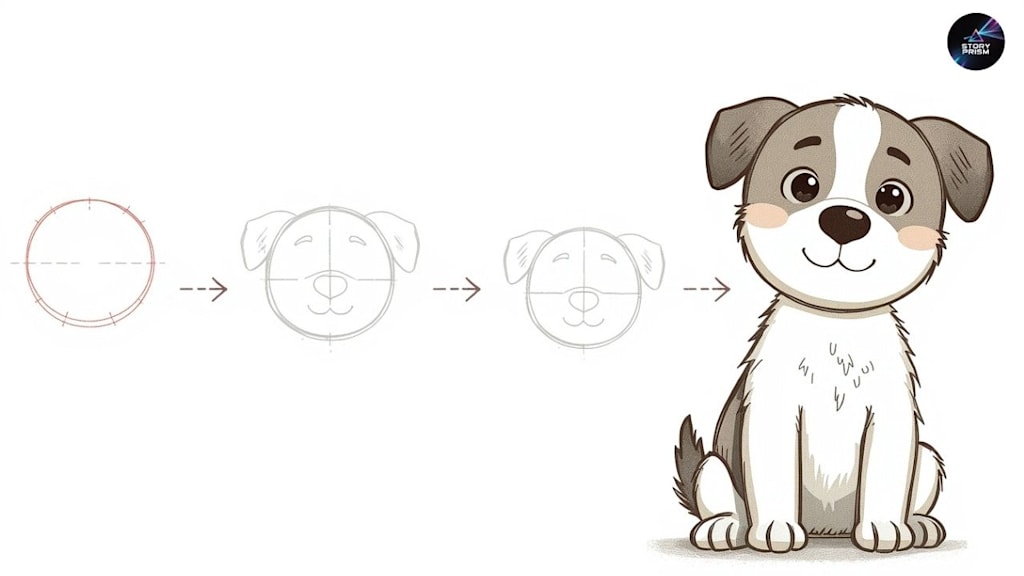
Learning how to draw a dog can feel overwhelming at first, especially if you focus too much on details right away. But the truth is, great drawings don’t start with perfect fur or expressive eyes—they begin with simple shapes and a clear process. In this guide, you’ll learn an easy, structured method that turns even beginners into confident artists.
🧠 Start with the Right Mindset
Before putting pencil to paper, understand one key idea: drawing is a process built in layers. Many beginners make the mistake of jumping straight into details, which often leads to frustration. Instead, think of your drawing like building a house—you need a strong foundation before adding decoration.
✏️ Step 1: Sketch the Basic Shapes
Every dog, no matter the breed, can be broken down into simple forms.
Start with:
• A circle for the head
• An oval for the body
• Lines for the legs and spine
• Small shapes for the ears and snout
Keep your lines light and loose. At this stage, perfection doesn’t matter—placement does. This helps you establish the dog’s overall proportions and pose without getting stuck on details.
🦴 Step 2: Build the Structure (Skeleton & Forms)
Once your basic shapes are in place, think of your drawing as a simple skeleton.
Add:
• A line through the head to guide facial direction
• Joint points for legs
• A curve for the spine
Then, start turning those lines into volume using ovals and soft shapes. These represent muscles and body mass. For example, use rounded shapes for the chest and thighs. This step gives your dog a sense of weight and realism.
👀 Step 3: Add Guidelines for the Face
To make your dog look natural, you need proper facial alignment.
Draw:
• A vertical line down the face
• A horizontal line across the eyes
These guidelines help you place:
• Eyes evenly
• Nose in the correct position
• Mouth aligned naturally
Even experienced artists rely on these lines—they’re essential for symmetry and accuracy.
🐕 Step 4: Refine the Outline
Now it’s time to connect everything into a clean shape.
• Smooth out rough lines
• Define the body curves
• Shape the legs and tail properly
• Adjust proportions if needed
This is where your drawing starts to look like a real dog instead of a collection of shapes. Don’t rush—this step transforms your sketch into a recognizable form.
😊 Step 5: Draw Facial Features and Expression
A dog’s personality comes from its face.
Focus on:
• Eyes: round, soft, and expressive
• Nose: slightly rounded or triangular
• Ears: upright, floppy, or angled depending on mood
Small changes in these features can completely alter the dog’s expression—happy, curious, relaxed, or alert. Take your time here to give your drawing character.
✍️ Step 6: Clean Line Art
Go over your refined sketch with more confident, darker lines.
• Remove unnecessary guidelines
• Keep strokes smooth and deliberate
• Avoid sketchy, repeated lines
Clean line art makes your drawing look polished and complete. It’s a step many beginners skip, but it makes a huge difference.
🌗 Step 7: Add Shading and Depth
Shading is what turns a flat drawing into something three-dimensional.
Start simple:
• Shade areas under the body
• Darken the side opposite your light source
• Add shadows under the ears, legs, and chin
Keep shading soft and gradual. You don’t need heavy contrast—just enough to suggest depth.
🐾 Step 8: Draw Fur Texture
Fur should follow the direction of the dog’s body.
Use:
• Short, light strokes
• Layered lines for depth
• Slight variations in pressure
Avoid drawing every single hair. Instead, suggest texture by grouping strokes into small sections. This creates a more natural look.
🔄 Practice and Improve
The real secret to drawing dogs—or anything—is repetition.
• Try different poses
• Study real dog photos
• Experiment with styles (cartoon vs realistic)
Each drawing teaches you something new. Over time, your understanding of shapes, proportions, and shading will improve naturally.
🧾 Final Thoughts
Learning how to draw a dog isn’t about talent—it’s about following a process. Start with simple shapes, build structure, refine your lines, and then add details like shading and fur. When you break it down step by step, even complex drawings become manageable.
Stick with the method, practice regularly, and you’ll be surprised at how quickly your skills grow. Soon, you won’t just be copying dogs—you’ll be creating your own unique artwork with confidence.
About the Creator
Enjoyed the story? Support the Creator.
Subscribe for free to receive all their stories in your feed.
Comments
There are no comments for this story
Be the first to respond and start the conversation.