
Boba Tea in a Plastic Cup: When Homesickness Meets a Minimart Shelf in Osaka
Minimarket

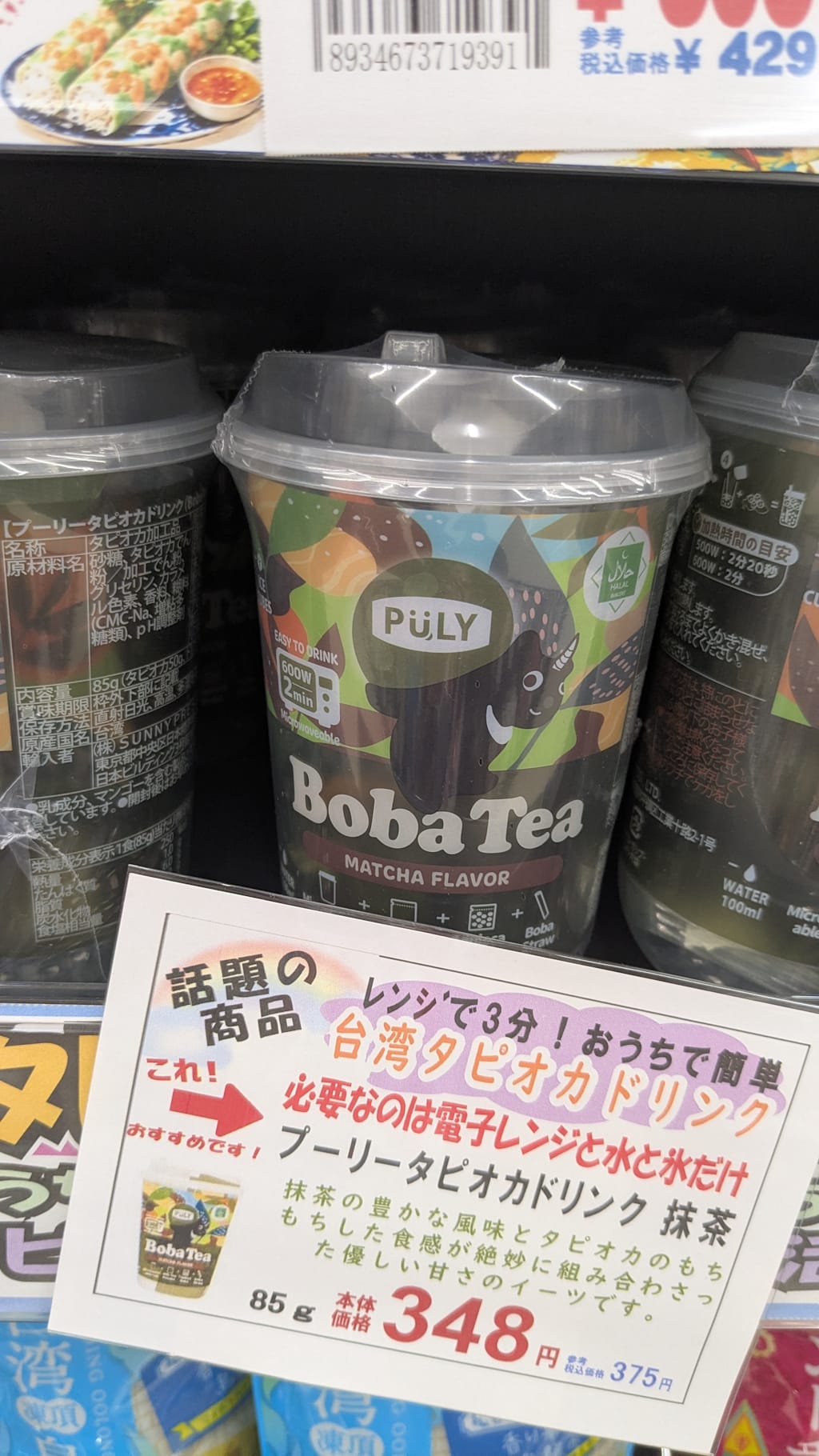
I had just gotten back from genba that evening, my body still carrying the smell of sweat and dust from work, when I stopped by a small convenience store near the station. The plan was simple — buy a bottle of water. But like always, my feet couldn't resist wandering down one more aisle before actually leaving. And that's where I stopped, standing still in front of a clear plastic cup labeled "Boba Tea — Matcha Flavor."
It wasn't just any boba tea. The label clearly said "Easy to Drink, 600W 2 min, Microwaveable" — a boba drink you simply heat in the microwave for two minutes, then add water and ice, and it's ready. No need to queue at a shop, no need to pay a premium for a trendy drink. What actually made me stop wasn't the microwave instructions, though. It was the small green logo tucked in the corner of the packaging: a Halal certification.
I held the cup for a long time, turning it over to read the ingredient list. Imported from Taiwan, manufactured by a company overseas, distributed by an importer based in Tokyo. The price was 348 yen before tax, about 375 yen with tax included. There was even a small promotional sign on the shelf, written in the colorful bold lettering typical of Japanese minimarkets: "話題の商品" — a product everyone's talking about. "レンジで3分!おうちで簡単" — just three minutes in the microwave, easy to make at home. "必要なのは電子レンジと水と氷だけ" — all you need is a microwave, water, and ice.
As a Muslim migrant worker living in Japan, I'm used to this small ritual: checking labels, hunting for the halal logo, reading through ingredient lists one by one even when the print is tiny and the language is dense. It's not a burden anymore — it's simply woven into daily life. But every once in a while, that habit turns into something that feels more personal, more touching. That evening was one of those moments.
I grew up with boba tea as part of Indonesian youth snack culture. It was never just a sweet drink with chewy tapioca pearls at the bottom — it represented hanging out, downtime with friends, the lighter days before everything turned into work routines in someone else's country. When you become a migrant worker, it's these small things you miss the most. Not because boba tea is rare or expensive, but because finding a halal, easy-to-make version here isn't exactly straightforward.
Trendy drink culture is thriving in Japan. Boba shops are scattered across major cities, from Osaka to Tokyo. But not all of them are clearly halal, and as someone working long genba hours, I rarely have the time to stop by a shop during its opening hours. So finding a microwaveable version with halal certification, sold openly on a regular minimart shelf, felt like stumbling onto a small shortcut back home.
I ended up buying one to try. That night, after cleaning up and showering, I heated it in the microwave following the instructions — 600 watts, two minutes. The aroma hit immediately, a fairly strong matcha scent mixed with sweetness. After that, I just added water and ice as directed on the packaging. The taste was simple but honest: just the right amount of sweetness, not overdone, with tapioca pearls that were still chewy despite being reheated instantly rather than boiled fresh from scratch. It wasn't the best boba I've ever had, but it was enough to make me smile alone in my room, remembering afternoons back in Indonesia.
What struck me most about this experience wasn't really the taste of the drink itself, but what a small product like this represents — real proof that the market keeps adapting to the needs of minority communities like ours, Muslim migrant workers in Japan. The company behind this drink clearly understood there's an underserved market: people who want to enjoy a global food trend without having to compromise their faith, and who don't always have the free time to sit down at a shop.
I kept the empty plastic cup on my desk afterward, as a small reminder. Not because the cup itself is special, but because the moment of finding it reminded me that life as a migrant worker is full of small, unexpected surprises — tucked away on a minimart shelf, in the middle of an exhausting physical work routine, there are simple things that can make a day feel a little warmer.
Sometimes happiness in a foreign land really can come from something as small as a 348-yen cup of halal matcha boba tea.
About the Creator
Enjoyed the story? Support the Creator.
Subscribe for free to receive all their stories in your feed.
Comments
There are no comments for this story
Be the first to respond and start the conversation.