
Beyond Reality: Exploring the Hidden Worlds of E.M. Forster's Collected Short Stories
A journey through symbolism, fantasy, and thought-provoking ideas that reveal a lesser-known side of one of England's greatest literary voices.

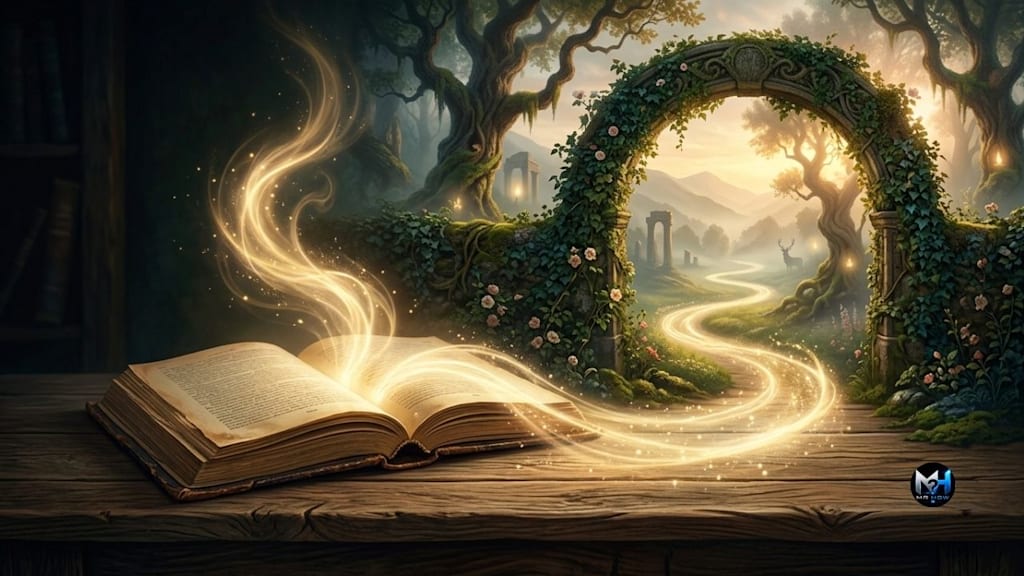
Most readers know E.M. Forster for his celebrated novels, including A Passage to India, Howards End, and A Room with a View. These works have secured his place among the most important English writers of the twentieth century. However, his short fiction often receives far less attention. After reading The Collected Short Stories, I came away convinced that this overlooked side of Forster's writing deserves far more recognition.
This collection presents a fascinating range of stories that blend realism with fantasy, philosophy, mythology, and social commentary. While each story is distinct, they all share Forster's remarkable ability to explore profound ideas through imaginative storytelling. The result is a book that feels both entertaining and intellectually stimulating.
One of the first things that struck me about this collection was its unpredictability. Modern readers often approach short stories expecting concise narratives with straightforward plots. Forster takes a different approach. His stories frequently begin in familiar settings before moving into strange, symbolic, or even supernatural territory. These unexpected turns create a sense of wonder that keeps the reader engaged from beginning to end.
Perhaps the most memorable story in the collection is The Story of a Panic. The narrative follows a group of English travelers enjoying a peaceful day in the Italian countryside. Among them is Eustace, a young boy who appears awkward and disconnected from those around him. What begins as a relatively ordinary excursion gradually transforms into something mysterious and unsettling after an encounter that seems linked to the ancient god Pan.
What makes this story so effective is its ambiguity. Forster never fully explains what happens, leaving readers to interpret the events for themselves. Is Eustace experiencing a spiritual awakening? Has he encountered something supernatural? Or is the story exploring the conflict between civilized society and humanity's instinctive connection to nature? The lack of clear answers makes the story far more compelling than a conventional explanation would have been.
Another standout piece is The Other Side of the Hedge, which may be one of the most thought-provoking stories in the entire collection. The protagonist spends his life walking along a road, constantly measuring his progress and focusing on the distance he has traveled. His existence revolves around achievement, competition, and the pursuit of goals. Eventually, he discovers a hedge separating his familiar world from another reality.
The story functions as a powerful allegory for modern life. Many people spend years chasing success, promotions, status, and accomplishments without stopping to consider whether these pursuits actually bring happiness. Through the protagonist's journey, Forster invites readers to reflect on what truly matters. The message feels surprisingly relevant despite being written more than a century ago.
What impressed me most throughout the collection was Forster's willingness to experiment with ideas. Some stories resemble fairy tales, while others feel like philosophical parables. Several contain elements that modern readers might associate with speculative fiction or magical realism. Rather than limiting himself to one style, Forster uses whatever approach best serves the themes he wishes to explore.
His writing also demonstrates a deep understanding of human behavior. Even when the stories venture into fantastical territory, the emotions remain authentic. Characters struggle with loneliness, desire, ambition, fear, and self-discovery. These universal experiences help ground the more unusual elements of the narratives and make them accessible to contemporary readers.
Forster's prose deserves special praise as well. His writing is elegant and refined without becoming difficult or overly academic. He has a gift for creating vivid imagery with relatively simple language. The descriptions often feel poetic, particularly when he writes about landscapes or moments of transformation. At the same time, his style remains clear enough that readers can focus on the ideas and emotions at the heart of each story.
Another strength of the collection is its thematic richness. Beneath the surface narratives, readers will find explorations of freedom, individuality, social expectations, spirituality, and the relationship between humanity and nature. These themes emerge naturally through the stories rather than being forced upon the reader. As a result, the collection rewards both casual reading and deeper analysis.
Of course, not every story resonated with me equally. Some felt stronger than others, and a few required more patience due to their symbolic nature. Readers seeking fast-paced plots or highly dramatic action may find certain entries slower than expected. However, even the weaker stories contain interesting ideas and showcase aspects of Forster's creativity.
What ultimately makes The Collected Short Stories such a rewarding read is its ability to linger in the reader's mind. Many of these stories continue to provoke reflection long after the final page has been turned. Their meanings are not always obvious, but that is part of their appeal. Forster encourages readers to engage actively with his work rather than passively consume it.
In an era dominated by quick entertainment and instant gratification, these stories offer something different. They invite contemplation, imagination, and curiosity. They remind us that literature can challenge our assumptions while still providing enjoyment.
For readers interested in classic literature, symbolism, philosophy, or imaginative fiction, The Collected Short Stories is well worth exploring. It reveals a side of E.M. Forster that many readers may not know and demonstrates why he remains one of the most respected voices in English literature. Though his novels may be more famous, this collection proves that his talent for storytelling extended far beyond the form for which he is best remembered.
Rating: 4.5/5
A thoughtful and imaginative collection that showcases E.M. Forster's creativity, intelligence, and enduring relevance as a writer.
About the Creator
Enjoyed the story? Support the Creator.
Subscribe for free to receive all their stories in your feed.
Comments
There are no comments for this story
Be the first to respond and start the conversation.