
Barbara Walker at the Whitworth Art Gallery
The Luck of a Fair-Skinned, Red-headed Woman

Sunday afternoon. The weather was awful. I can cope with the wind, the rain or the cold, but not all three attacking my face. I didn’t want to spend the afternoon looking at two screens half-heartedly. I wanted something different to view. I normally go for a walk, but I didn’t want to brave the elements.
I went to an art gallery.
I’m so glad I did. I was lucky enough to discover the work of Barbara Walker on the last day of her exhibition at the Whitworth Art Gallery. I nearly cried when the gallery assistant told me it was the last day (but then remembered that I’m not supposed to do that in public places, in front of strangers). But she was emotional too, that the exhibition was about to be dismantled and would next move to Bristol.
“Why have I never heard of Barbara Walker?” asked my partner.
“I could give you a lecture on intersectional erasure of Black women’s work,” I replied, but I didn’t need to because the work told that story itself.
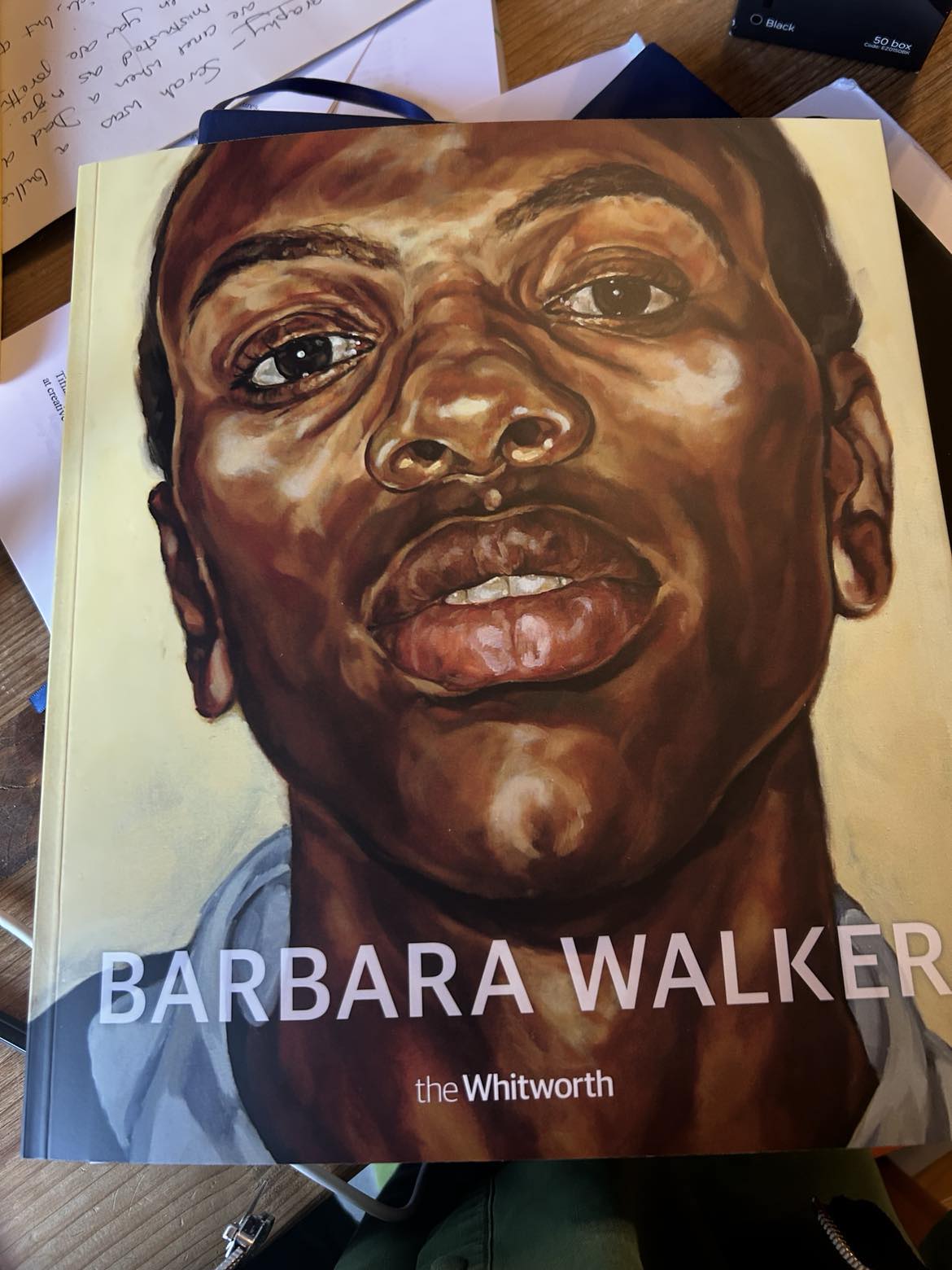
Barbara Walker is a British artist who lives and works in Birmingham – one of the many multi-cultural, lively, dynamic cities in the UK. Her work is concerned with the themes of documentation, recording and erasure – particularly in relation to Black British lives. Her work is unapologetic, with characters that stare out at you from the canvas and on a huge scale.
The exhibition at the Whitworth is the first survey exhibition of her work (survey exhibition just means a collection of her work from across her career to date). The exhibition is called Being Here – a succinct reminder that Black history is not a new phenomenon, it has always been here. It draws from a range of works from her various projects.
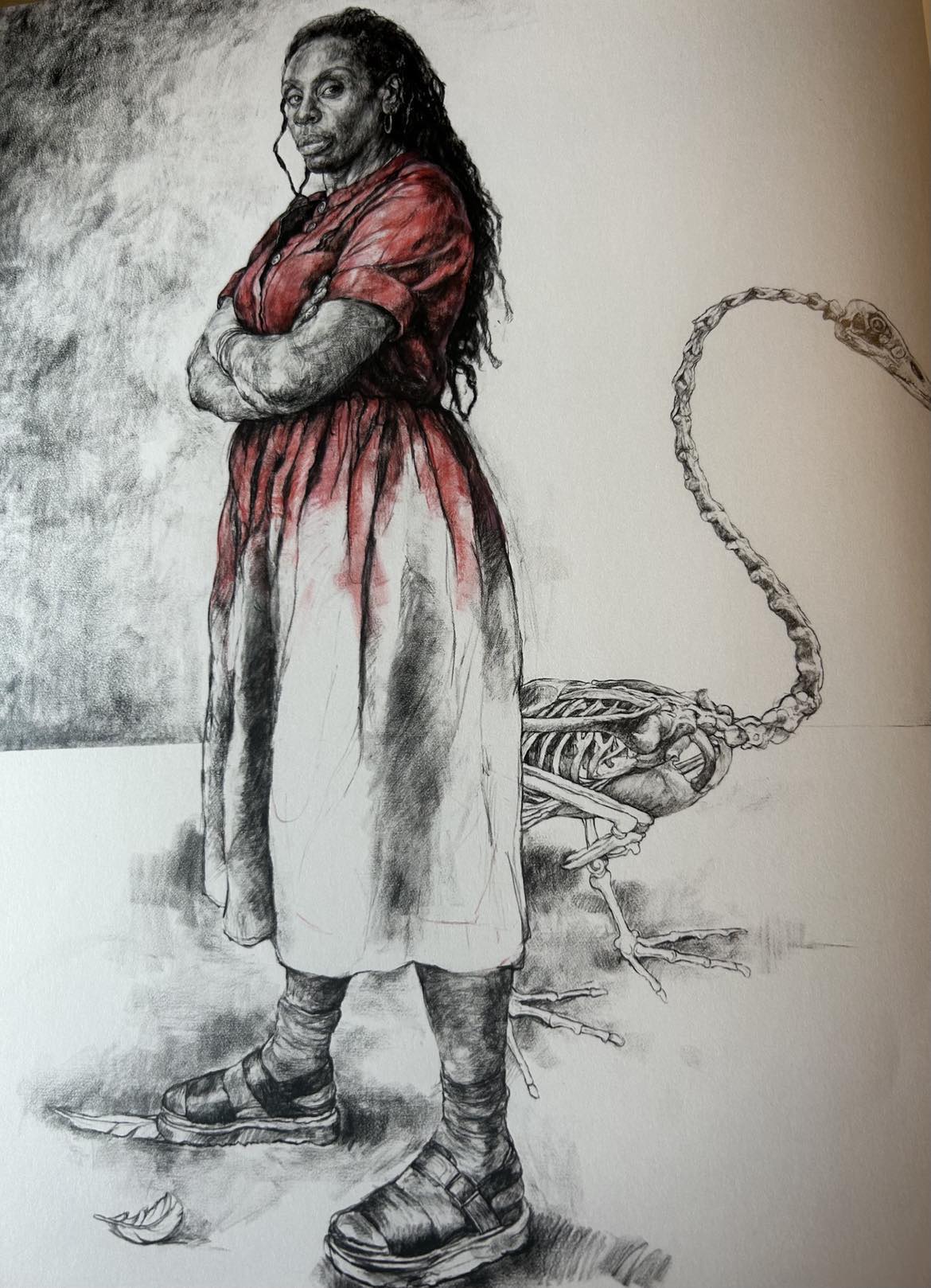
The first picture I saw was her self-portrait – The End of the Affair – which is a modern telling of the myth of Leda and the Swan. It reframes the myth as a toxic relationship from which she has emerged staring out at the viewer, unflinching, the red of her dress suggesting potential wounds. It is beautiful and defiant.
The exhibition takes the viewer through Walker’s responses to the scandals and stories of being Black and British. There are realist portraits that show the tiny moments of time in family and community. They are painted with detailed compassion, providing an account of nuance and complexity. There are layered works that draw on official documents overlaid with the faces of their subjects. Stop and Search warrants that feature the face of her son. The shooting of Jean Charles de Menezes reported in newspapers as Wrong Place Wrong Time, personalised and politicised by a portrait of depth and compassion. The Windrush Scandal features documents of proof of existence and the faces of the real people described. I was particularly touched by the commendation of a special needs teaching assistant whose headteacher had to proclaim how valuable he was to the school community. (My Dad had been a special needs head teacher – with all the values that entails, the advocating for staff and pupils, but here taken to an extreme).
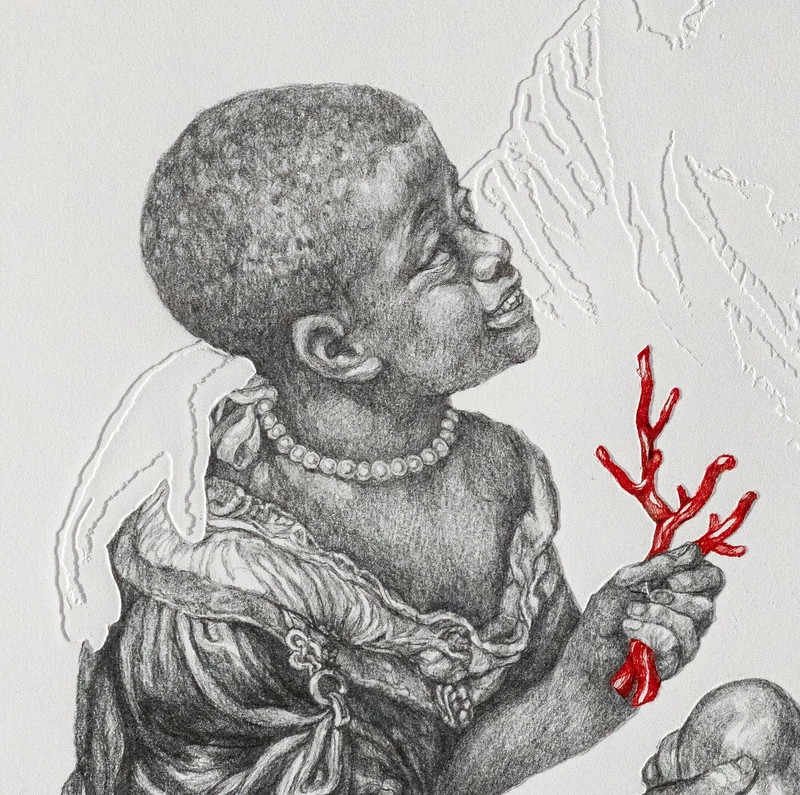
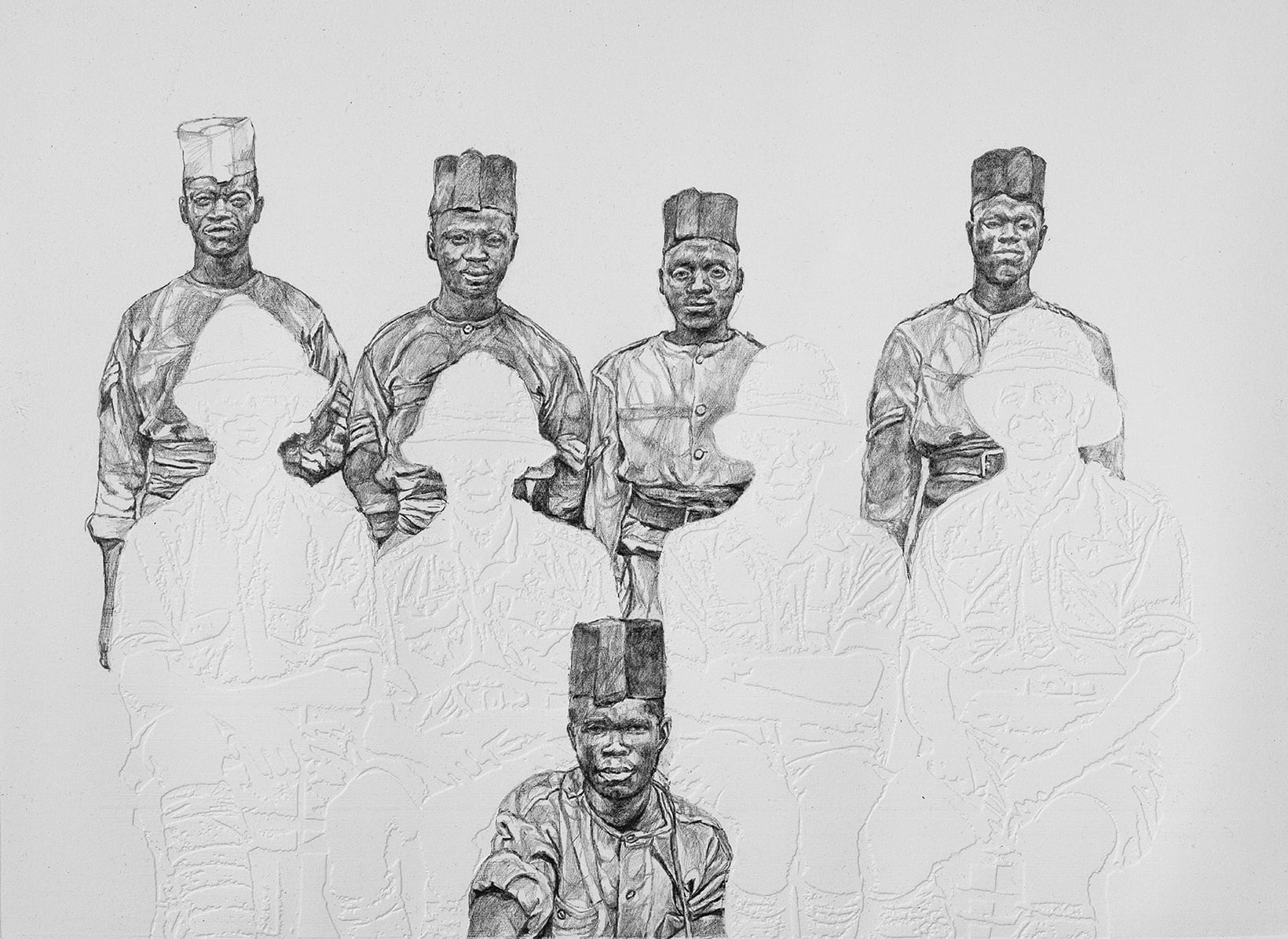
There is a room full of her technique of embossed erasure and detailed portraits under the titles Shock and Awe and Vanishing Point. In Shock and Awe it is a question of revisiting military history and challenging the prejudices that are inherent in the ways battle stories are told. It is about the messy complexity of war and the battle field and whose stories seem to matter.
Vanishing Point is concerned with the long narrative arc of the history of art and the erasure of the black subject. Taking art works from major collections, she reverses the telling of the stories, by concentrating on the African subjects, usually functioning as servants or secondary actors and conveying their detail against an embossed background of the historical image. It is a reminder to look at the history, of the racialised relationships that render black lives to invisibility.
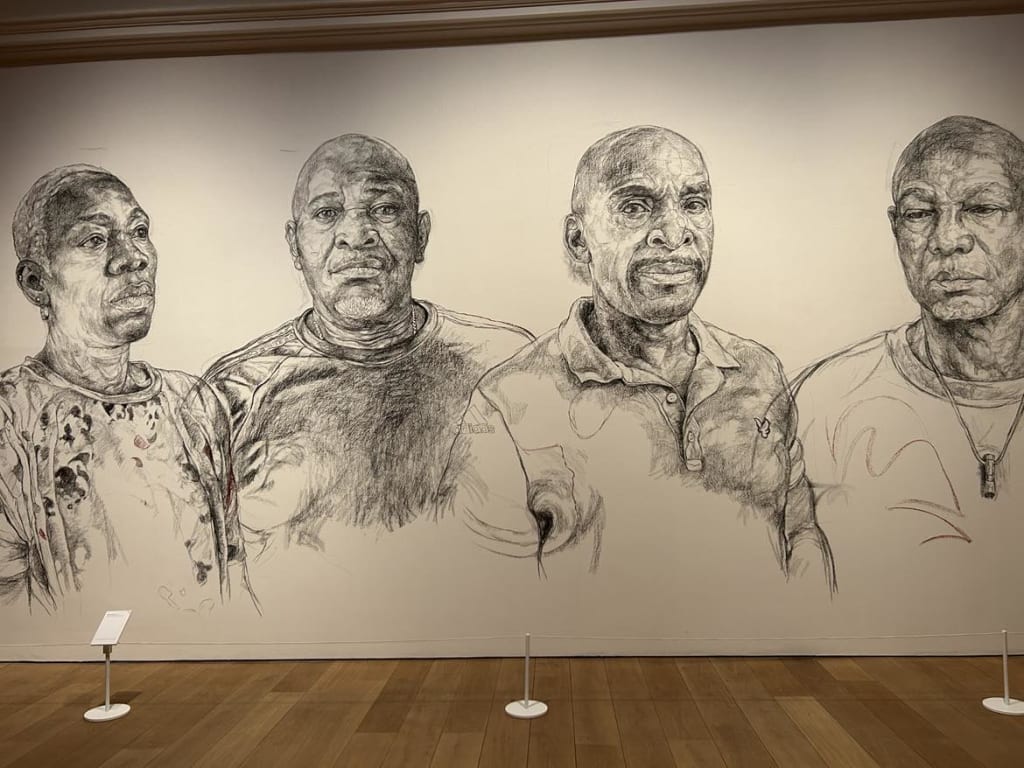
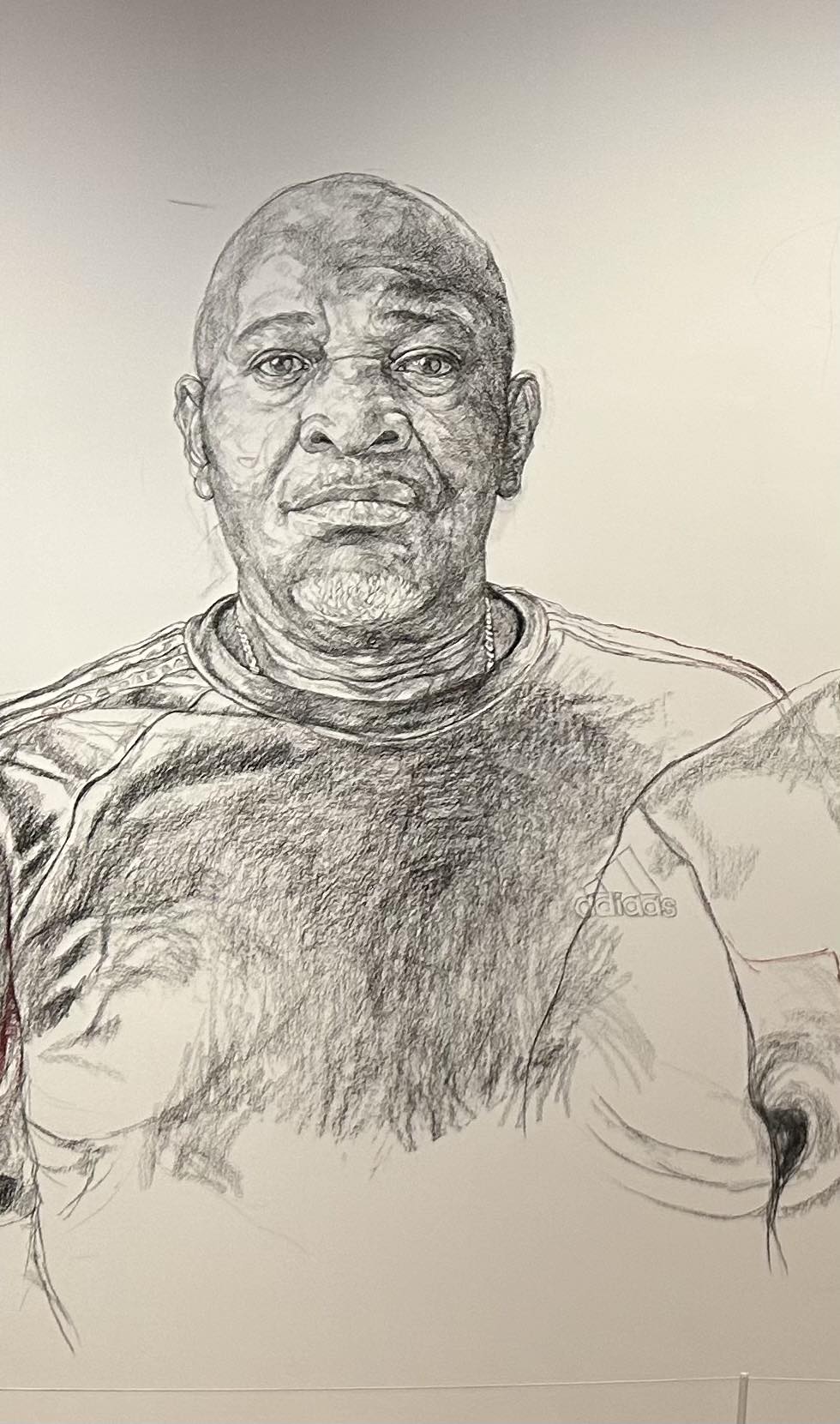
The highlight of the exhibition is the large mural created for the space. I returned to it several times as I wondered around. These local faces given magnitude, depth and dignity. The dismantling of the mural will begin this week. It is part of Barbara Walker’s work to show how images can be celebrated for a time and then erased. The slow removal of the work from the gallery walls is as important as its having existed in the first place.
I got it. I got how she wanted to kindly and ritually remove faces that have struggled to find a place in an art gallery, rather than just have them thoughtlessly or violently removed.
I was so lucky to catch the last day of the exhibition, simply by a change in the weather.
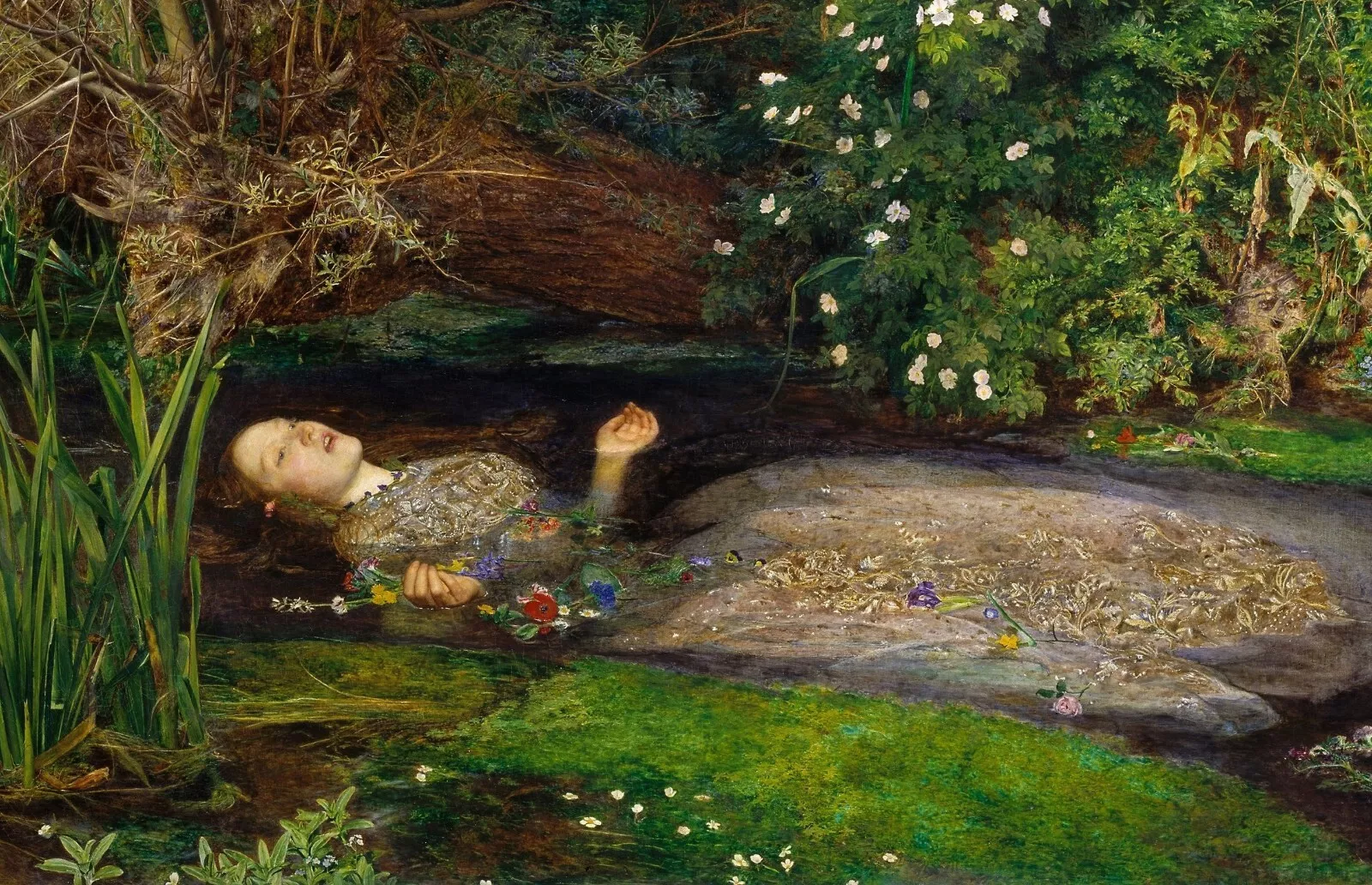
But my luck runs deeper than that. It made me think about how I see myself in galleries all the time. A pale-skinned, red-headed woman, I am often naked with idealised breasts, high on my torso and a rounded bottom, and of course absolutely no body-hair. I am rarely painting myself. I am being painted and positioned by a male artist, in water or against a tree – I am usually in nature. But I am there. I might not like the positions I have been painted or forced into, but I am there.
To see black faces centre and forward with important stories alongside incidental occurrences of everyday life painted in detail and attention and care was revolutionary.
The exhibition is now over in Manchester, but will be making its way to Bristol. If you are there, please go and see it. I might make the trip to see it again.
About the Creator
Rachel Robbins
Writer-Performer based in the North of England. A joyous, flawed mess.
Please read my stories and enjoy. And if you can, please leave a tip. Money raised will be used towards funding a one-woman story-telling, comedy show.
Enjoyed the story? Support the Creator.
Subscribe for free to receive all their stories in your feed. You could also become a paid subscriber, letting them know you appreciate their work.
Comments
There are no comments for this story
Be the first to respond and start the conversation.