
Anna Avetova on Sustainable Art Management, Gallery Structure, and Artist Professionalism
How can artists and gallery managers use structured workflows, realistic budgets, professional communication, and sustainable planning to build lasting cultural institutions?

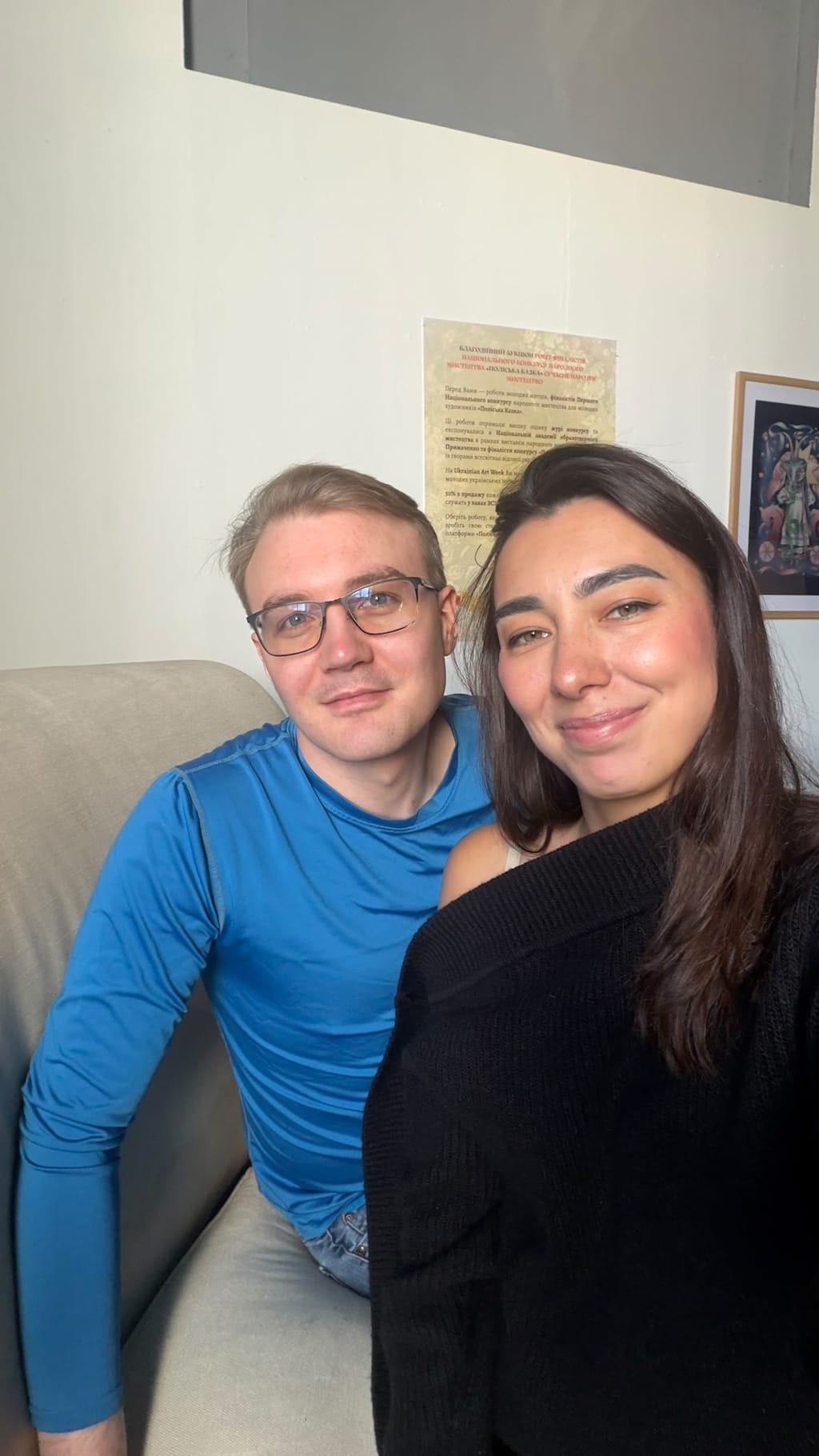
Anna Avetova is a Ukrainian art strategist, curator, and cultural entrepreneur based in Basel, Switzerland. She is the founder of TUASHO, director of ART KYIV, and co-founder of Art Navigator Academy. With more than a decade of experience, her work spans exhibitions, art fairs, strategic consulting, and professional education for artists and cultural practitioners.
Scott Douglas Jacobsen and Anna Avetova discuss practical art management, including realistic budgets, structured workflows, Google Sheets, professional communication, and artist self-management. Avetova argues that sustainable galleries and fairs require consistency, business skills, clear documentation, and reduced dependence on temporary sponsorship, especially when cultural projects must endure uncertain conditions over time.
Scott Douglas Jacobsen: Okay, so the question is: if an individual, one year, five years, or 25 years from now, stumbles across this interview, they may or may not live in a wartime context. It is hard to say what will be happening 25 years from now. But they are project-managing an art gallery.
Maybe it is some computerized thing in an AI future, or just a regular gallery. There are common issues you have observed, and there are ways those can be fixed.
How can those be fixed? What do you see as common problems? What are some common solutions?
Anna Avetova: There is no single solution, because the problems vary from one organization to another. But one principle applies widely: work toward a high standard without becoming consumed by perfectionism. Aim to improve on what you did yesterday.
In art, ambition can sometimes lead people to spend beyond what a project actually needs. Having funding does not mean that every possible expense is justified. The budget still needs to reflect the purpose of the project.
Jacobsen: Sometimes good enough is good enough.
Avetova: Yes. The result needs to be good enough to serve its purpose, with resources left to continue the work.
The second essential is a clear system for managing information. I use Google Sheets for task lists, budgets, and artwork records. Even a simple spreadsheet can help you keep track of what needs to be done and make sure no artwork is overlooked.
The important thing is to use that system consistently.
Jacobsen: I am taking an analogy. I was involved in art, drama, and theatre in high school. I used to sketch, but that was basically where things ended for me because I got into psychology and journalism.
Now, individuals in art go to art school. They learn process and structured process.
Avetova: You mean the process of making art?
Jacobsen: Yes. For creative work. Here is how you can best work with acrylic for this type of image, whether it is faces, landscapes, abstract work, or something like that.
So I am getting to the question for people reading this: why not simply take that same mentality and apply it to hosting an event?
Avetova: I do not have a simple explanation for why that transfer does not always happen.
Jacobsen: Structure, like budgets and everything else. Creative process always requires structured process.
Avetova: Absolutely. That same attention to process is valuable in organizing an event.
Many successful artists I have encountered also have strong business skills. They organize their work carefully and understand the practical demands of sustaining a career.
Art education does not always cover those demands. Students may learn how to develop their practice without receiving the same preparation in professional documentation and communication.
When my colleague and I developed online courses for artists, we encountered gaps in very basic professional skills, including preparing a portfolio and writing an email.
For example, some people put their entire message in the subject line, rather than using it to identify the purpose of the email.
Jacobsen: So the subject line is the body.
Avetova: Exactly. It is a small example, but it shows why basic professional communication needs to be taught.
I had to learn these things too. They are learnable skills, and asking how something works is a useful place to start.
Jacobsen: I only write the body of the email in the subject line when it is something last-minute, like a time change or something came up. Then, when they look at the email, they immediately see in the subject line that the time needs to change, and they know it is from me.
Avetova: Yes, I understand that use of a subject line. I would usually indicate that the message is urgent.
Jacobsen: What else? What else are they not doing?
Avetova: Another difficulty is reluctance to communicate about the work.
Some artists find it difficult to speak with people, present their work, or write about their practice. Those activities may feel separate from making art, but they become important when an artist wants to work with galleries and reach an audience.
I sometimes encounter the attitude: “This is my art; if you do not understand it, that is not my problem.” That can make professional dialogue difficult.
Jacobsen: I will tell you, as a journalist, I deal with people all day. I work seven days a week, morning and night. I am constantly interacting with people, but often in a structured, purposeful way.
What feels very casual to you has a structure for me. There is a whole structure to the process, even if it seems quite casual.
But in terms of small talk and things like this, if it is not family or a really close friend, I do not have time, typically.
Avetova: Yes, I understand that distinction.
Jacobsen: And I have that same feeling. Even though I have to interact with people in that way, sometimes I do not like it. It feels unnatural to me. It feels fake. It does not feel authentic or natural.
But I know that it is part of my profession, so I do it. I think it is interesting to me that artists in the spheres you are talking about do not feel that they have to.
Avetova: Some artists do not see those responsibilities as part of their profession. They expect an art manager to arrive and take care of everything. A manager can provide substantial support, but the work still requires the artist’s participation.
I sometimes joke that I would also like my job to consist of walking around an exhibition with a glass of champagne. Of course, that is only the most visible part of a much larger effort.
There is a great deal of work behind an exhibition or a fair. That brings us back to the first principle: be structured and realistic about what your work requires.
That gives you a better chance of sustaining it over time.
I have seen enthusiastic initiatives consume their resources very quickly. Someone opens a gallery or launches an event, invests everything in the first presentation, and cannot afford to repeat it.
I recall an earlier art fair in Kyiv that took place only once or twice and then stopped.
It offered galleries free booths. That precedent has shaped some participants’ expectations about paying for a booth today.
As I understood it, the event relied heavily on external funding. That made its continuation vulnerable to changes in the sponsor’s support.
When that support was no longer available, the organizers were unable to continue the project.
At ART KYIV, we managed to proceed despite the loss of expected financial support, although doing so was difficult.
For me, the lesson is to build a model that can continue through changes in funding, rather than relying entirely on one sponsor. Structure, realistic budgets, and consistency make regular work more achievable.
Jacobsen: Thank you very much for the opportunity and your time, Anna.
Scott Douglas Jacobsen is the Founder and Publisher of In-Sight Publishing (ISBNs: 978–1–0692343, 978–1–0673505) and Editor-in-Chief of In-Sight: Interviews (ISSN: 2369–6885). An accomplished journalist, his portfolio includes over 10,000 publications across 200+ outlets, including International Policy Digest, The Humanist, Basic Income Earth Network, Humanist Perspectives, and rabble.ca. He has served in leadership and board roles across global media and humanist organizations and holds memberships with the Canadian Association of Journalists, PEN Canada, and Reporters Without Borders.
Image Credit: Scott Douglas Jacobsen.
About the Creator
Scott Douglas Jacobsen
Scott Douglas Jacobsen is the publisher of In-Sight Publishing (ISBN: 978-1-0692343) and Editor-in-Chief of In-Sight: Interviews (ISSN: 2369-6885). He is a member in good standing of numerous media organizations.
Enjoyed the story? Support the Creator.
Subscribe for free to receive all their stories in your feed.
Comments
There are no comments for this story
Be the first to respond and start the conversation.