
America Before America: The 15,000 Years We Erased*
The cities, governments, and science that existed 10,000 years before Columbus “discovered” anything

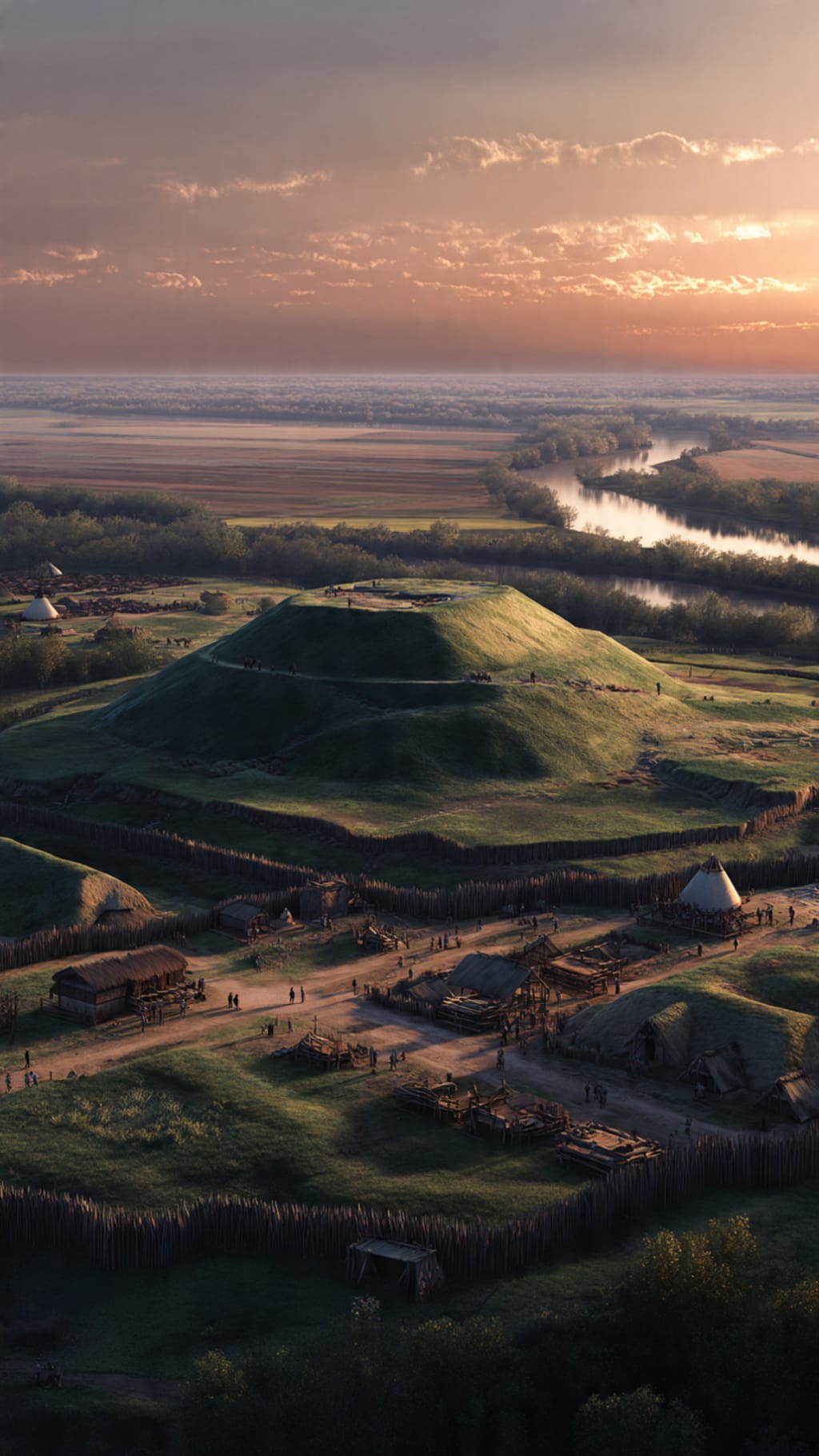
You were taught America starts in 1492. A ship. A flag. A “new world.” But 15,000 years before Columbus got lost, someone else was already here. They crossed ice. They built cities. They wrote laws. And most of that story never made it into your history book. *Part 1: The First Crossing, 13,000 BCE* Imagine Alaska. Not the state. A land bridge. Beringia. Sea levels were lower because ice locked up water at the poles. Asia and North America touched. Small groups followed mammoths and bison across. They weren’t “explorers.” They were families looking for food and shelter. Generation after generation moved south. Some went down the Pacific coast by boat. Shell middens and tools in Chile prove people reached the tip of South America fast. Within 2,000 years, humans lived from Arctic tundra to Amazon jungle. No maps. No compass. Just memory, stars, and stories passed down. *Part 2: Cities Without Steel, 800–1400 CE* Skip ahead. You’re standing in Cahokia, near today’s St. Louis. It’s 1050 CE. You hear drums. You smell corn roasting. You see Monks Mound, a man-made pyramid 100 feet tall, built basket by basket. No wheels. No metal tools. Just dirt, logs, and thousands of workers. 20,000 people live here. That’s bigger than London. Streets are laid out around plazas. Farmers grow the “Three Sisters” on fertile floodplains: corn, beans, squash. The beans fix nitrogen in soil. The squash leaves keep weeds down. It’s sustainable farming 800 years before the word existed. Priests track the sun with Woodhenge, a circle of posts. It works like Stonehenge. At equinox, the sun lines up perfectly. This is science, not superstition. Cahokia traded for copper from Lake Superior, shells from the Gulf, mica from the Appalachians. Then around 1350, it was abandoned. Climate shift. Floods. No one knows for sure. The mounds stayed. *Part 3: A Constitution Before the Constitution, 1400s* Go east to New York. Five nations are fighting: Mohawk, Oneida, Onondaga, Cayuga, Seneca. War exhausts them. A man called the Peacemaker walks in with a wampum belt. He proposes something radical: stop fighting, join together. Make decisions by council, not by kings. Balance power. Let clan mothers appoint and remove chiefs. The Great Law of Peace becomes the Iroquois Confederacy. It lasts centuries. In 1754, Benjamin Franklin prints their plan and tells British colonies, “We need this kind of union.” When U.S. founders wrote the Constitution in 1787, they borrowed federalism and checks on power. They forgot the part about women holding real political authority. *Part 4: Science You Eat Every Day* While Europe struggled with wheat, people in the Americas engineered food. They turned a grass called teosinte into corn. Kernels the size of peas became ears a foot long. Over 3,000 varieties. They domesticated potatoes in the Andes at 12,000 feet elevation. Tomatoes, chocolate, vanilla, pumpkins, chilies, beans, avocados. 60% of the world’s crops today came from the Americas. They also made soil. In the Amazon, people created “terra preta” by mixing charcoal, waste, and pottery shards. 2,000 years later, that black soil still grows food better than surrounding land. Modern scientists still can’t fully replicate it. *Part 5: Contact and Collapse, 1492–1600* Columbus lands. He thinks it’s India. He’s wrong about geography and about the people. Worse than swords and guns were germs. Smallpox, measles, flu. Indigenous communities had no immunity. A cough became a death sentence for whole villages. Estimates say 50 to 90 million people lived in the Americas in 1492. By 1650, disease, war, and slavery killed up to 90%. Imagine 9 out of 10 people gone in 150 years. That’s why Europeans called it “empty land.” It wasn’t empty. It was emptied. *Part 6: Nations That Refused to Vanish* Even after collapse, tribes remained nations. The Comanche built an empire on horseback across the Great Plains in the 1700s. The Cherokee wrote down their language in 1821 and launched a newspaper. The Lakota and Cheyenne defended land and treaties for decades. The U.S. government signed over 370 treaties recognizing tribes as sovereign nations. Then broke most of them. Trail of Tears in 1838 forced Cherokee west. Boarding schools in the 1800s punished kids for speaking their language. The story didn’t end. It adapted. *The Ending We Don’t Teach* Today there are 574 federally recognized tribes in the U.S. People still speak 150+ Indigenous languages. They still govern land. They’re reviving corn varieties, burning forests to prevent wildfires like ancestors did, and teaching the Great Law of Peace in law schools. So when someone says “American history starts in 1776,” ask: which America? The one with a Declaration, or the one with Cahokia’s mounds? The one with a Constitution, or the one with a Great Law of Peace? Real history isn’t a straight line. It’s layers. And the bottom layer is 15,000 years deep If you only remember one thing for your Vocal article: America wasn’t “discovered.” It was home. Long before ships. Long before flags.
About the Creator
Enjoyed the story? Support the Creator.
Subscribe for free to receive all their stories in your feed.
Comments
There are no comments for this story
Be the first to respond and start the conversation.