
Xiaomi 18 Pro Should Sell a Version Without the Privacy Screen
Privacy mode protects your data, but it also narrows the viewing angle and raises the price. Not every buyer wants that trade.
A comment under Lei Jun’s post got a lot of likes:
“Can you make a version without the privacy display?”
Below it: “+1” repeated.
Two years ago, that comment would have been ignored. A privacy display is a flagship feature. Business users want it. It protects sensitive information. Today, enough people have used one to know its cost. They pay for a feature they don’t need, and the screen suffers after they turn it off.
One screen, two kinds of pixels
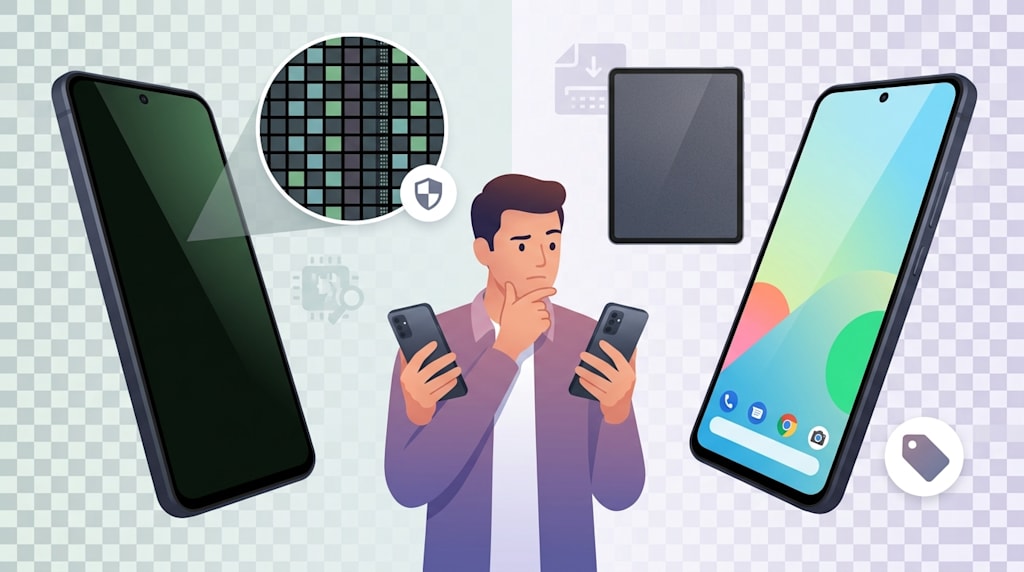
A hardware privacy display uses two sets of pixels. Regular pixels show the image normally. Privacy pixels have tiny light-blocking structures on both sides. With privacy mode off, both sets work together. With privacy mode on, the regular pixels shut off. Only the privacy pixels light up. From the front, the screen looks bright enough. From the side, the light is blocked, so nearby people see a dark panel.
The trade-off is physical. A privacy display has a narrow viewing angle by design.
Even with privacy mode off, the privacy pixels remain. They still take part in the image, and they still carry the narrow-angle structure. Look from the side and brightness drops. Colors shift. The screen can look green. Some users describe it as looking through gray film. Others say it never returns to a clear image.
This is not a software bug. Privacy and wide viewing angles pull in opposite directions. You can have privacy. You can have accurate color from an angle. Hardware privacy makes it hard to have both.
Where Xiaomi’s approach improves
Leaks suggest Xiaomi 18 Pro handles privacy better than Samsung’s earlier version.
It uses a Full RGB lossless layout. Every pixel has its own red, green, and blue subpixels. It does not borrow from neighbors like PenTile. Regular and privacy pixels alternate. When privacy mode turns on, the screen removes half the pixel groups in a checkerboard pattern.
The result: less grain and fewer jagged edges. Full RGB keeps sampling even. You avoid the row-skipping look. Samsung’s diamond layout creates more grain in privacy mode. That is not a knock on Samsung’s engineering. The pixel arrangement itself makes uniform sampling harder.
Xiaomi’s version still has a limit. It reduces image loss when privacy mode is on. It does not remove the optical cost of hardware privacy. With privacy mode off, the narrow-angle pixels remain. Side color shift and brightness falloff can still appear. For someone who does not need privacy, the screen is still not the best option.
A no-privacy version is a reasonable request
Some readers will say: if you don’t need privacy, buy the standard model.
That advice misses a detail. Standard and Pro models often differ in cameras, chips, materials, and charging speed. A buyer may want the Pro camera and performance but not the privacy screen. That is the conflict.
Xiaomi already uses this logic in tablets. The Pad 7 Pro matte display exists for people who want less glare or a softer look. The Pad 9 Pro nano-matte version costs 200 yuan more than the regular version. Buyers who want the matte finish pay extra. Buyers who don’t get the regular screen, which looks better to them, for less.
The same logic could apply to phones.
If Xiaomi 18 Pro sold a no-privacy version for 200 or 400 yuan less, buyers who don’t need privacy would get a wider viewing angle, less color shift, and a clearer screen for less money. That is a straightforward trade.
The price question
A lower price sounds simple. Production is not.
Two screen versions for one flagship means two supply chains, two production runs, and two inventory risks. Research, marketing, and stock planning all get more complex. Xiaomi may not pass the full panel savings to buyers. The no-privacy version could end up barely cheaper and hard to find.
A cleaner solution: make the standard model the no-privacy, display-first option. Keep the privacy screen as a Pro feature. Buyers who want privacy pay for it. Buyers who want a better screen and a lower price get the standard model.
If the standard model’s screen is good, it becomes the best no-privacy version by default.
If you already own one
If you already have a phone with a hardware privacy display and don’t need the feature, a few adjustments can help.
Keep the phone perpendicular to your line of sight. Avoid side angles. Adjust color mode or temperature in display settings to reduce green or blue shifts. Check eye comfort and adaptive color settings. Software tweaks can soften the problem. A regular high-definition film can prevent extra brightness loss from a privacy film, though it won’t change the hardware.
These fixes ease the issue. They do not solve it. The optical side effects come from the hardware. Turning privacy mode off does not restore a standard screen.
The choice matters
The comment under Lei Jun’s post asks for a no-privacy version. The deeper request is choice.
A privacy display can be useful. Business travelers, confidential roles, and people who handle sensitive data in public need it. Many other users rely on simple habits: keep the phone in hand, place it face down, avoid opening private files in crowded places. They care more about clarity, viewing angle, and color.
A flagship should not force every feature on every buyer. It should let buyers pick the features they need. If Xiaomi 18 Pro releases a cheaper no-privacy version with a better screen, that would be a strong user-first move. If it doesn’t, making the standard model the display-first option would achieve most of the same goal.
Most phone buyers can live without privacy mode. All of them need a screen that looks good.
Under the comment, one person wrote:
“I don’t want privacy. Just give me a good screen.”
That line is the whole argument.
About the Creator
Jin
Writer of reamstories
https://reamstories.com/jin
Enjoyed the story? Support the Creator.
Subscribe for free to receive all their stories in your feed. You could also become a paid subscriber, letting them know you appreciate their work.
Comments
There are no comments for this story
Be the first to respond and start the conversation.