
Why Your Smartphone Is About to Become Your Only Computer — And Why That Should Excite You
Smartphones are evolving fast
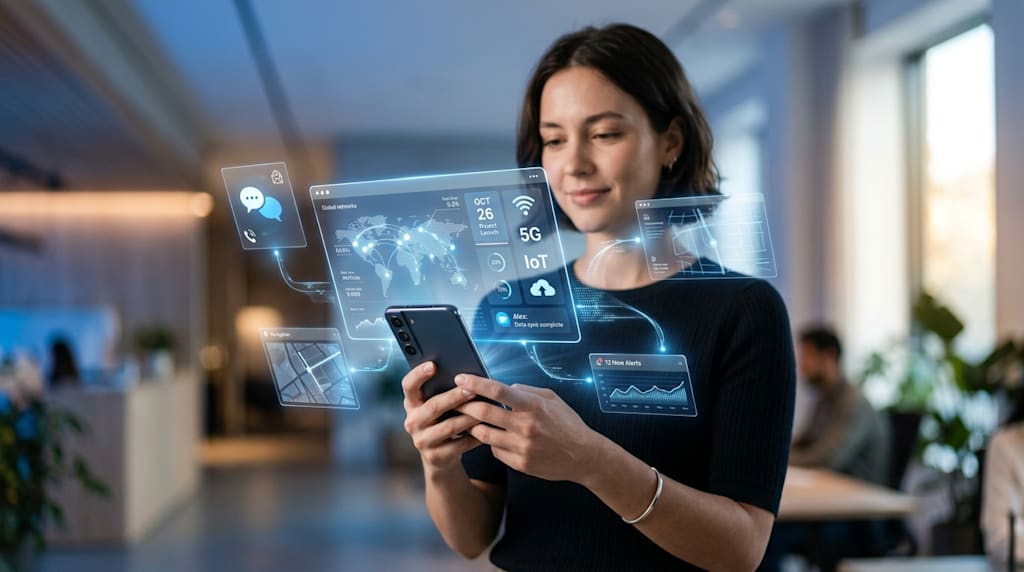
Five years ago, the idea of ditching your laptop entirely for a smartphone felt radical. Today, it feels inevitable. The smartphone has been quietly absorbing the responsibilities of the traditional computer for over a decade, and we're approaching a tipping point where the pocket-sized device in your hand will genuinely be the only computing machine most people need.
This isn't hyperbole. It's a convergence of hardware, software, and cloud infrastructure that's accelerating faster than most people realise. Understanding why this matters — and what's actually driving it — could change how you think about every device you buy from here on out.
The Hardware Gap Is Closing Faster Than You Think
The traditional argument against smartphones as primary computers was simple: raw power. Laptops had superior processors, more memory, and thermal headroom that allowed sustained high performance. Smartphones were great for email and social media, but serious work demanded serious hardware.
That argument collapsed somewhere around 2023 and hasn't been valid since. The A17 Pro chip in Apple's iPhone 15 Pro, and its successor in the iPhone 16 series, delivers benchmark scores that rival desktop processors from just a few years ago. Apple's M-series chips proved that ARM-based architecture could compete with Intel at the workstation level, and that architecture now powers everything from the MacBook Air to the iPhone Pro.
The consequence is that your phone now has more computing power than most people used for daily work in 2019. The hardware ceiling for mobile processing keeps rising, and the form factor ceiling — constrained by heat, battery, and physics — is proving far less limiting than critics predicted.
The Software Ecosystem Finally Caught Up
Hardware without software is just an expensive paperweight. For years, the mobile productivity story was hamstrung by apps that felt like watered-down versions of their desktop counterparts. You could check email on your phone, but you couldn't do real spreadsheet work. You could write documents, but the formatting tools were rudimentary.
That changed dramatically in 2024 and 2025. Apple's iPadOS and iOS now run full versions of professional software that were previously desktop-only. Pixelmator became a genuine Photoshop alternative on mobile. LumaFusion turned the iPad into a professional video editing suite. Apps like Craft and Obsidian brought serious knowledge management to tablets and phones.
The shift that matters most, though, is the consolidation of ecosystem-level features. When your phone can run iPad apps, when your tablet can function as a second display for your phone, when your smartwatch unlocks your computer and your phone pays for your coffee, the boundaries between devices become arbitrary lines on a continuum of capability.
The Cloud Removes the Last Excuse
Even with powerful hardware and capable software, the traditional computer still offered one irreplaceable advantage: local storage. Your files lived on your machine. Your applications ran on your machine. The processing happened on your machine.
Cloud computing has systematically dismantled that advantage. Google Docs runs entirely in a browser. Notion stores everything on their servers. Adobe's Creative Cloud has been cloud-first for years. Even Microsoft Windows now offers a cloud PC experience — Windows 365 — that streams a full desktop operating system to any device with a screen and a connection.
The practical consequence is that the local machine no longer needs to be powerful — it just needs to be a reliable display and input surface for cloud-based computation. Your phone can now access computing resources that dwarf anything that could physically fit in your pocket, streamed on demand.
The Docking Revolution Nobody Talks About
The hardware story isn't just about the phone itself. The accessories ecosystem has matured to the point where a single USB-C cable can transform your smartphone into a full desktop replacement. Samsung DeX turns compatible Galaxy phones into a full desktop interface when connected to a monitor. Apple Continuity allows iPhones to hand off tasks to Macs and vice versa.
Belkin, Anker, and others now produce docks specifically designed for mobile devices that provide multiple display outputs, ethernet, USB-A peripherals, and charging in a single hub. Connect your phone to one of these, add a Bluetooth keyboard and mouse, and the experience is indistinguishable from a traditional desktop setup.
What This Actually Means For You
The smartphone-as-only-computer transition isn't about forcing everyone to work on a five-inch screen. It's about recognising that the constraints of mobile computing are rapidly becoming optional. When you can dock your phone to a monitor for heavy work, run full desktop applications when needed, and access unlimited cloud computing on demand, the question shifts from "is my phone powerful enough?" to "why would I pay for two devices when one does both?"
This is already happening at the margins. Digital nomads have been living phone-first lives for years, using tablets and foldables as their primary screens. Enterprises are increasingly issuing phones instead of laptops for roles that don't require specialized workstation software. The generations coming of age now have a fundamentally different relationship with computing — their phone isn't a supplement to their computer, it IS their computer.
The exciting part isn't that smartphones are replacing laptops. It's that computing itself is becoming invisible — a utility that flows to whatever screen is in front of you, regardless of form factor. Your phone happens to be the most personal and portable version of that utility. And that, genuinely, is something worth being excited about.
Conclusion
The smartphone's transformation from communication device to primary computer isn't a distant future scenario. It's happening now, it's accelerating, and the reasons behind it are more interesting than the surface-level "phones are getting better" narrative suggests. It's a story about architecture convergence, cloud maturity, accessory ecosystems, and a fundamental shift in what we expect from computing.
The next time someone tells you they do all their work on their phone, don't assume they're limiting themselves. Assume they've seen something you might have missed.
About the Creator
Enjoyed the story? Support the Creator.
Subscribe for free to receive all their stories in your feed.
Comments
There are no comments for this story
Be the first to respond and start the conversation.